 Lynden Exterior
 Siding Installation for Maple Falls Homes
Maple Falls sits in a part of Whatcom County where weather doesn't do things halfway. Homes here take on long stretches of driving rain, damp air that never fully clears, and a moss season that can run most of the year on shaded roof and wall surfaces. Siding installed without that reality in mind tends to show it early — soft spots, streaking, and trim that swells before the rest of the house shows any age at all. We install siding in this area regularly, and the approach we use here is built around what actually holds up, not what looks fine on a dry install day.
This page covers what we do differently for a Maple Falls installation: material choice, water management, and the sequence of steps that keeps a new siding job performing for decades instead of years.
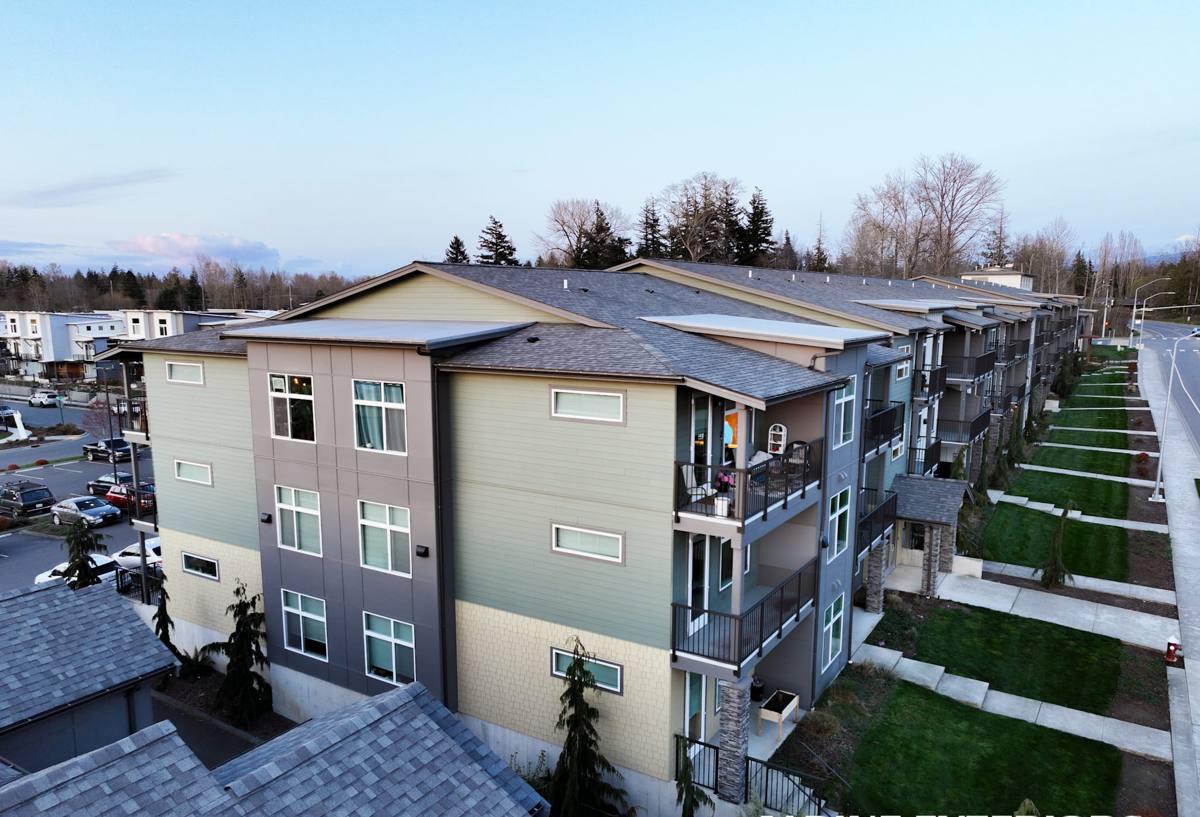
What This Climate Does to Siding Over Time
Moisture That Doesn't Leave
Whatcom County's marine-influenced climate means humidity lingers, rain arrives sideways as often as straight down, and surfaces facing prevailing weather stay wet longer than surfaces on a more sheltered elevation. Siding materials that absorb water, or that rely on paint film alone to keep water out, are working against the climate from day one.
Moss and Organic Growth
Shaded walls, north-facing elevations, and anything near mature trees or dense landscaping will collect moss, algae, and mildew faster here than in drier parts of the state. That growth holds moisture against the surface it's growing on, which accelerates whatever damage the moisture itself was already causing.
Salt Air and Corrosion
Being close enough to Pacific-influenced weather systems means fasteners, flashing, and trim accessories see more corrosive exposure than an equivalent home further inland. Cheap fasteners or the wrong flashing metal will fail years before the siding field does, and once fasteners go, the whole installation is compromised.
Why We Only Install James Hardie Fiber Cement
We don't install vinyl, LP SmartSide, cedar, primed spruce, Cemplank, or Allura. That's a deliberate standard, not a sales pitch, and it's worth explaining honestly rather than just stating it.
What Those Products Get Right
Vinyl is inexpensive and low-maintenance in mild climates. Engineered wood products like LP SmartSide have real strength and workability. Cedar has genuine curb appeal and a long tradition in the Pacific Northwest. None of these are junk products — they're just not what we've chosen to stand behind on homes in this climate.
Why We Made the Switch
Vinyl expands, contracts, and can warp under sustained damp-and-dry cycling, and it doesn't hold paint if a homeowner ever wants a color change. Engineered wood siding is wood-based at its core, meaning any breach in the factory coating or a caulking failure at a seam gives moisture a path into a material that swells and deteriorates when wet. Cedar and primed spruce require an ongoing maintenance commitment — staining, sealing, repainting — that most homeowners underestimate until the first sign of rot shows up at a butt joint or lower course.
James Hardie fiber cement is cement, sand, and cellulose fiber. It doesn't rot, it isn't a food source for the organic growth that thrives in this climate, and it's non-combustible. The ColorPlus factory finish is baked on under controlled conditions, which gives it more consistent, longer-lasting color than field-applied paint. For a house in Maple Falls, that combination addresses the two biggest threats — sustained moisture and biological growth — at the material level, not just at the surface.
What Correct Installation Involves
Water Management Comes First
Siding is the visible layer, but the water-resistive barrier and flashing underneath it are what actually keep a wall assembly dry. Before any siding goes up, we confirm proper house wrap coverage, correctly lapped and sealed seams, and flashing at every horizontal transition — window and door heads, deck ledgers, roof-to-wall intersections. In a climate that gets this much sustained rain, a shortcut here is the single most common cause of hidden rot behind siding that still looks fine from the street.
Rainscreen Gap
We install with a rainscreen furring strip system wherever the wall assembly allows it. That small gap between the back of the siding and the water-resistive barrier lets any moisture that gets past the cladding drain and dry out instead of sitting against the sheathing. In a wetter, moss-prone climate like this one, that gap is one of the highest-value details in the whole job.
Fastening and Clearances
James Hardie publishes specific fastener, nailing pattern, and clearance requirements, and we follow them exactly — not as a formality, but because deviating from them is where warranty claims and premature failures both originate. That includes maintaining proper clearance from grade, roof lines, decks, and other siding-to-trim intersections so water has somewhere to go instead of wicking up into the board.
Caulking and Joint Treatment
Butt joints, corners, and penetrations get treated according to Hardie's specifications, using compatible sealants rather than whatever's on the shelf. Poor joint treatment is one of the fastest ways an otherwise correct installation starts letting water in at the seams.
Comparing Siding Options for This Climate
| Material | Moisture Behavior | Moss/Algae Resistance | Maintenance | Typical Lifespan Here |
|---|---|---|---|---|
| Vinyl | Doesn't absorb water, but seams and expansion joints can let moisture behind panels | Moderate — surface growth cleans off, but panels can warp | Low, but limited repair/color options | 15-25 years in this climate |
| Cedar / Primed Spruce | Wood-based; absorbs moisture if coating fails | Low — organic material is a growth surface | High — recurring stain/paint/sealant cycles | 10-20 years without diligent upkeep |
| LP SmartSide (Engineered Wood) | Wood-strand core; vulnerable at breached edges/seams | Moderate — factory treated, but edge exposure is a risk | Moderate — seam and edge inspection needed | 20-30 years with good maintenance |
| James Hardie Fiber Cement | Cement-based; doesn't absorb or swell like wood | High — not an organic food source | Low — periodic wash, factory finish holds color | 30+ years, backed by transferable warranty |
Our Installation Process
- On-site assessment — we look at sun exposure, tree cover, drainage patterns around the foundation, and existing moisture damage before quoting anything.
- Tear-off and sheathing inspection — old siding comes off and sheathing gets checked for rot or soft spots before anything new goes on.
- Water-resistive barrier and flashing — house wrap, window/door flashing, and all horizontal transitions get sealed to spec.
- Rainscreen furring — installed where the assembly calls for it, to keep the wall drying properly over time.
- Hardie board installation — fastened, clearanced, and jointed to manufacturer specification.
- Trim, caulking, and final inspection — every joint and penetration checked before we call the job done.
What to Check Before Hiring Anyone for This Job
- Do they carry James Hardie certification or documented manufacturer training, not just general siding experience?
- Will they show you the water-resistive barrier and flashing plan before siding goes up, or is it treated as an afterthought?
- Do they use a rainscreen gap, or just nail siding straight to the house wrap?
- Can they explain fastener and clearance specs without checking a manual on the spot?
- Do they have local experience with this specific climate — moss, sustained rain, corrosion-prone fasteners — or is their background mostly drier-climate work?
- Is the warranty they offer backed by the manufacturer, or just a verbal promise from the crew?
Why a Local Crew Matters Here
Whatcom County's weather isn't uniform county-wide — a wall that stays wet longer because of tree cover or orientation in Maple Falls behaves differently than the same wall would in a more exposed, wind-scoured location. A crew that installs siding across this region regularly has already seen which details matter most for a given site: where moss builds up fastest, which elevations take the worst of the driving rain, and where corrosion shows up first on fasteners and flashing. That's not something you get from a general read of manufacturer instructions — it comes from doing this work, on homes like yours, in this specific climate, over and over.
Being based in Lynden means we're not driving in from out of the area for a service call, a warranty question, or a follow-up after a rough winter. We're already working in Whatcom County, and Maple Falls is part of that territory.
Get a Straightforward Estimate
If your siding is showing moss buildup, soft spots, or paint that won't hold anymore, we're happy to take a look and give you a straightforward assessment — no pressure, no inflated scare tactics. Use the form below to request a free estimate for your Maple Falls home.