 Lynden Exterior
 Board & Batten Siding for Maple Falls Homes
Board and batten has a strong following in Maple Falls and the surrounding Lynden countryside, and it's not just about the look. The vertical lines, deep shadow reveals, and farmhouse-to-modern range that board and batten offers happen to suit the rural and semi-rural lots common in this part of Whatcom County — barns, outbuildings, and newer custom builds alike. But the reason we get called out to Maple Falls specifically isn't style. It's that this siding profile has to survive a climate that doesn't let up: long stretches of driving rain, salt-tinged marine air working in off the Sound, and a moss season that can run most of the year on shaded north and west walls. Board and batten done wrong in this environment fails faster than almost any other siding style, because every seam and every batten is a potential water trap if it's not detailed correctly.
This page covers what board and batten siding actually needs to hold up on a Maple Falls home, what a correct installation looks like underneath the boards, and why we only install it in James Hardie fiber cement rather than the other materials that get marketed for this style.
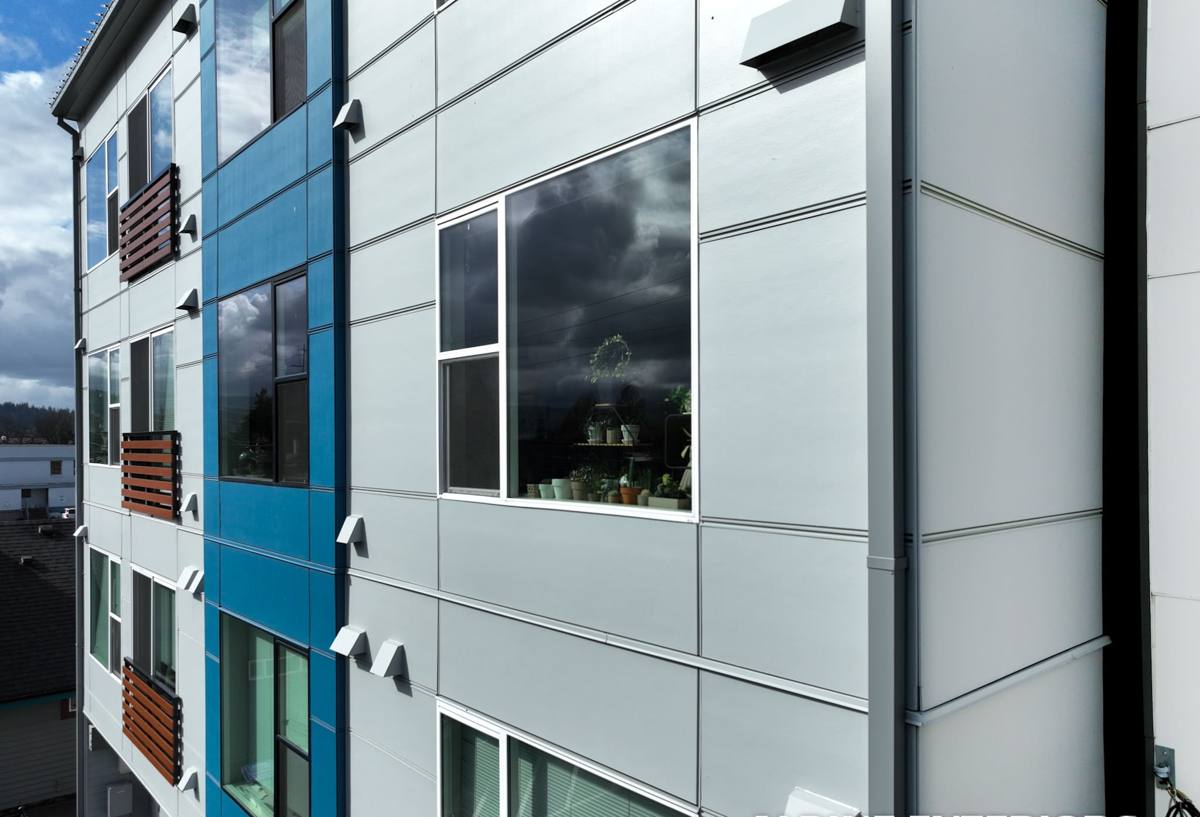
What Whatcom County's Climate Does to Vertical Siding
Board and batten is a vertical siding system, which changes how water moves across it compared to horizontal lap siding. Instead of shedding down and off at each course, water on a board and batten wall runs the full height of the panel and pools at the bottom before it's directed away. In a climate like Lynden's — wet fall through spring, humid summers, moss-friendly shade on tree-lined lots — that vertical water path exposes every weakness in the installation.
- Driving rain: wind-driven rain off the foothills and lowland weather systems pushes water sideways into batten seams, not just straight down.
- Salt air: the marine influence that reaches this part of Whatcom County accelerates corrosion on fasteners and trim that aren't rated for it.
- Moss and mildew: shaded walls and mature tree cover keep siding damp longer, and moss holds moisture against the substrate if the siding can't dry out.
- Freeze-thaw swings: cold snaps followed by wet thaws stress any siding material that absorbs water, expanding and contracting in ways that crack paint and open seams.
None of that is unique to board and batten — but board and batten amplifies it, because the style depends on tight, consistent seams staying tight for decades.
Why Some Board & Batten Jobs Fail Early
Most premature board and batten failures we see on older Whatcom County homes trace back to the same handful of causes: battens face-nailed directly through both boards without any drainage gap behind them, no rainscreen or furring strategy, caulk used to "seal" joints that should have been designed to shed water instead, and fasteners that weren't rated for coastal exposure. Caulk is not a substitute for correct flashing and gapping — it's a maintenance item, and it always fails eventually. A board and batten wall that depends on caulk to stay dry is a wall that's going to leak.
What a Correct Board & Batten Installation Involves
Getting board and batten right in this climate comes down to what's happening behind the boards, not just how they're nailed on.
Drainage Plane and Rainscreen Gap
Every board and batten installation we do starts with a weather-resistant barrier over the sheathing, then a vertical furring strip system that creates a drainage gap behind the siding. That gap lets any moisture that gets past the outer layer drain down and evaporate instead of sitting against the wall sheathing. On a wall this exposed to driving rain, skipping the rainscreen gap is the single biggest predictor of early rot.
Fastening and Batten Spacing
Battens need to land over furring strips with solid backing, using corrosion-resistant fasteners driven to the manufacturer's specified pattern — not just wherever's convenient. Spacing has to account for board expansion so panels aren't fighting each other as humidity changes through the seasons.
Flashing at Every Penetration
Windows, doors, hose bibs, light fixtures, and the base of the wall all need proper flashing and kick-out details so water is directed out and away from the substrate, not funneled behind the siding. This is the detail work that separates a board and batten job that lasts 30-plus years from one that needs a re-side in ten.
Factory-Finished, Not Field-Painted
We install James Hardie's ColorPlus factory finish wherever it's an option, which means the color and protective coating are baked on under controlled conditions rather than rolled on outdoors in Whatcom County's unpredictable weather window. Field-applied paint depends on the day's humidity and temperature at the time of application — factory finish doesn't.
Why We Install Board & Batten in James Hardie — and Nothing Else
Board and batten gets marketed in a lot of materials: cedar, primed spruce or pine, LP SmartSide, vinyl, and James Hardie fiber cement. We install James Hardie exclusively, and it's worth being straight about why, since it changes what we can offer compared to a contractor who works in several materials.
| Material | How it handles Maple Falls' wet, humid climate | Long-term consideration |
|---|---|---|
| James Hardie fiber cement | Non-combustible, dimensionally stable, engineered for Pacific Northwest moisture in the HZ5 product line | Factory finish holds color; strong transferable warranty when installed to spec |
| Cedar | Natural material, but absorbs moisture and is a direct food source for the moss and mildew this climate produces | Needs ongoing refinishing, sealing, and vigilant maintenance to avoid rot |
| Primed spruce/pine board and batten | Wood substrate behind a thin primer coat; vulnerable at cut ends and fastener holes | Shorter service life in high-moisture climates; paint failure is common |
| LP SmartSide (engineered wood) | Better than raw wood but still a wood-strand product that relies on edge sealing and coating integrity | Any breach in the coating exposes the wood core to swelling |
| Vinyl board and batten | Won't rot, but expands and contracts significantly with temperature swings and can warp or fade | Not repairable in sections the way fiber cement is; look is often visibly synthetic up close |
Every one of those alternatives gets something right — cedar's texture, LP's workability, vinyl's low upfront cost. What we can't get past is how each behaves over 20-plus years on a wall that faces this much rain and moss pressure. Fiber cement doesn't rot, doesn't feed moss the way wood does, and doesn't warp with temperature swings the way vinyl can. That's the whole reason we standardized on one manufacturer instead of offering all five options — we'd rather be excellent at installing one system correctly than average at installing several.
Our Process for a Maple Falls Board & Batten Project
- On-site walkthrough: we look at existing siding condition, wall exposure to wind and rain, moss and moisture patterns, and any trim or window details that affect the plan.
- Detailed estimate: a written scope covering tear-off (if needed), drainage plane and rainscreen approach, board profile and reveal width, color, and trim.
- Prep and removal: old siding comes off, sheathing is inspected and repaired where needed before anything new goes up — this is the point where hidden rot or water damage gets caught.
- Weather barrier and furring installation: the drainage plane and vertical furring go on first, setting up the rainscreen gap.
- Board and batten installation: panels and battens go up to spec, with flashing integrated at every window, door, and penetration as we go — not added afterward.
- Final walkthrough: we go over the finished job together before calling it done.
Maintenance and Longevity in This Climate
One of the practical advantages of James Hardie board and batten in a place like Maple Falls is how little ongoing attention it needs compared to wood alternatives. It doesn't need repainting every few years, it resists the moss and mildew that thrive in shaded, damp conditions, and the factory finish is engineered to hold color through UV exposure and the region's long wet season. That doesn't mean zero maintenance — gutters still need to stay clear so water isn't dumping down the wall face, and any landscaping should be kept trimmed back so airflow can reach the siding and it can dry between rain events. But it's a fundamentally lower-maintenance system than cedar or primed wood, which matters on a material this exposed to Whatcom County weather.
What to Look for in a Board & Batten Contractor
Board and batten is more sensitive to installation quality than standard lap siding, so the contractor's actual process matters more here than the brand name on the quote. Before hiring anyone for a Maple Falls board and batten project, it's worth asking:
- Do they install a drainage plane and rainscreen gap behind the boards, or nail battens directly to the sheathing?
- Can they explain their flashing plan at windows, doors, and the base of the wall before work starts?
- Are they using corrosion-resistant fasteners rated for this region's marine-influenced air?
- Do they carry manufacturer certification for the specific product line they're installing?
- Will the finished job include a written, transferable warranty — and do they explain what voids it?
- Have they worked on homes in Lynden or the surrounding Whatcom County area before, with a real understanding of local exposure conditions?
Why a Crew That Already Works Maple Falls Matters
Board and batten installed correctly in a marine, moss-prone climate isn't a generic skill — it's specific to understanding how wind, rain, and shade patterns behave on lots like the ones around Maple Falls and greater Lynden. A crew that already works this area knows which wall orientations take the worst of the driving rain, where moss pressure tends to be worst, and how to plan drainage and flashing accordingly, instead of applying a one-size-fits-all approach built for a drier climate. That local familiarity, paired with sticking to one well-engineered material system, is what keeps a board and batten install looking and performing right well past the point where a cheaper approach would already be showing problems.
If you're weighing board and batten for a home in Maple Falls or anywhere around Lynden, we're happy to take a look and walk you through what your specific walls need. Reach out for a free, no-pressure estimate — there's no obligation, and you'll get a straight answer about what the job actually involves.