 Lynden Exterior
 Siding Repair for Laurel: What This Page Covers
Laurel is a small, largely rural community in the Lynden area of Whatcom County — a mix of farmland, older homes, and newer residential development that doesn't get the same contractor attention as denser parts of the county. That's a problem when a siding issue shows up, because a lot of siding repair work is judgment-heavy: knowing whether a damaged section is isolated or a symptom of something bigger behind the wall takes a crew that's actually looked at a lot of homes in this specific area, not a generic bid sheet.
This page is specifically about siding repair — patching, replacing damaged sections, and fixing the moisture and flashing problems that cause siding to fail in the first place — not a full re-side. Repair is often the right call, and doing it correctly the first time is what keeps it that way instead of turning into a series of return visits. We work Laurel regularly as part of our Lynden service area, and this page covers what local homes need from a repair, what a correct job actually involves, and how our process runs.
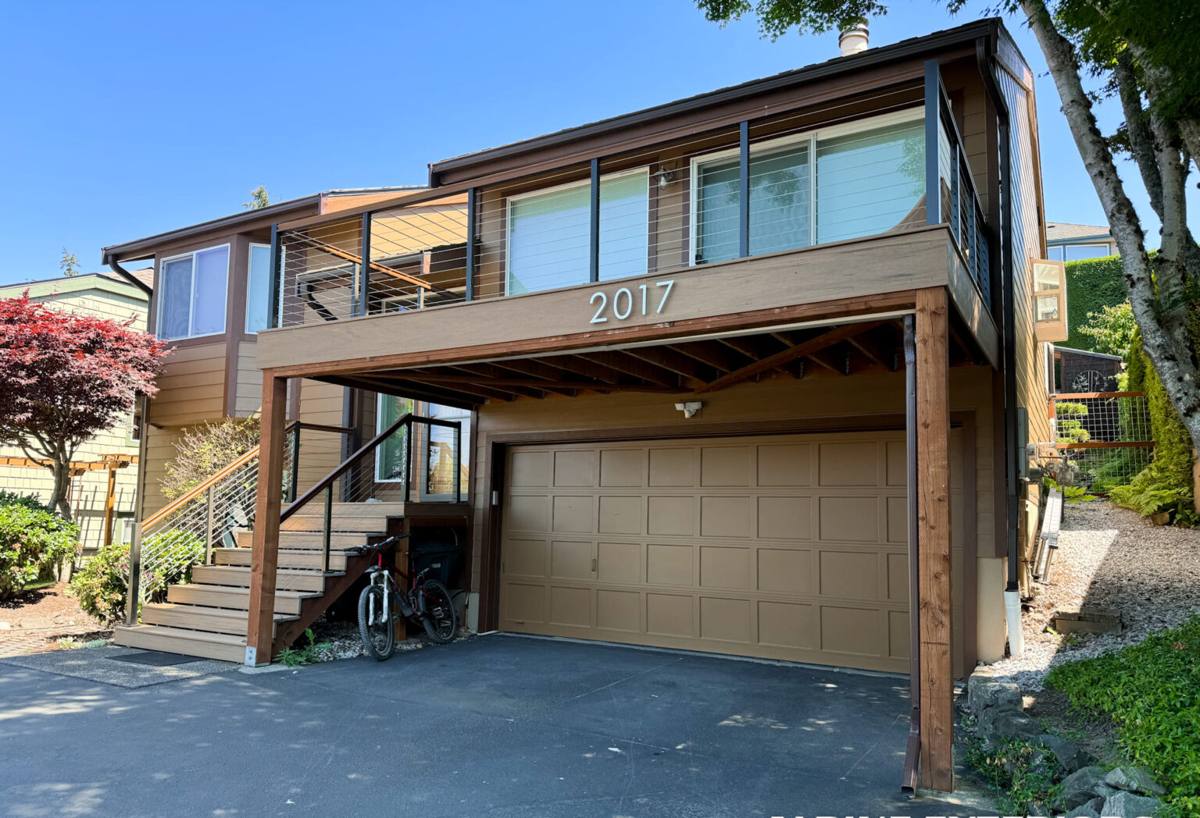
What Laurel's Climate Puts a Siding Repair Through
Salt Air
Laurel sits inland from the immediate coastline, but marine air still moves across this part of Whatcom County and reaches homes here over time. Salt-laden air accelerates corrosion on fasteners, flashing, and trim hardware — slowly, but steadily — which matters directly for repair work, since a patch fastened with the wrong hardware can start failing again well before the surrounding siding does.
Driving Rain
Rain through fall and winter rarely falls straight down here. Wind pushes it sideways into wall assemblies, trim joints, and any gap in flashing or caulking. A repair that only addresses the visible damage and ignores how water is actually reaching that spot tends to fail again in the next storm season, because the underlying path water is taking never got corrected.
A Long Moss Season
Mild temperatures and consistent moisture keep moss and mildew active across most of the year on shaded and north-facing walls, which describes a lot of tree-lined and farm-adjacent properties around Laurel. Organic growth holds moisture against the siding surface longer than it would otherwise sit, which is part of why repaired sections in shaded spots need the same drainage and clearance attention as the rest of the wall, not just a color-matched patch.
Repair or Replace? How We Make That Call
Not every damaged section needs to become a full re-side, and not every repair candidate should stay a repair. We look at a few specific things before recommending either path:
| Factor | Leans Toward Repair | Leans Toward Replacement |
|---|---|---|
| Extent of damage | Isolated to one or two boards or a single wall section | Recurring across multiple walls or found in several unrelated spots |
| Age of existing siding | Siding is mid-life and otherwise sound | Siding is near or past its expected service life |
| What's behind the damaged section | Sheathing and framing test dry and solid once opened up | Sheathing shows rot, softness, or staining beyond the immediate patch area |
| Root cause | A single identifiable cause — impact damage, one failed flashing point | A systemic moisture or material issue affecting the whole wall assembly |
The honest answer is that a repair only makes sense if the cause has actually been fixed, not just covered. If we open up a damaged section and find water has been getting in for years through a chronic flashing gap, patching the visible board without correcting that path just delays the same call a year or two down the road.
Common Repair Calls We See Around Laurel
Impact and Storm Damage
Fallen branches, wind-driven debris, and equipment contact around outbuildings and driveways are common on the more rural, open-lot properties in and around Laurel. This kind of damage is usually the easiest repair call, since the cause is obvious and the fix is a straightforward board or panel replacement once the substrate behind it checks out dry.
Moisture and Soft Siding Near Grade
Siding installed with insufficient clearance above grade, decks, or landscaping beds stays wetter longer and is one of the more common repair triggers we see, especially on older homes where clearance standards weren't always followed at original installation. Fixing this correctly usually means correcting the clearance issue, not just swapping the damaged board for a new one at the same height.
Failed Caulk and Flashing Joints
Caulk has a service life, and once it cracks or pulls away at trim boards, window returns, or panel joints, driving rain finds its way behind the siding at exactly that point. This is a smaller-scope repair on its own, but it's also one of the most common root causes behind damage that looks bigger — water tracking down from a failed joint well above where the actual soft spot shows up.
Fastener Corrosion and Nail Pops
Corroded or improperly seated fasteners loosen their grip over time, letting boards shift, gap, or pop loose at the nail line. This is a direct entry point for wind-driven rain and one we check for specifically any time we're already repairing a nearby section, since replacing one board while leaving corroding fasteners nearby just sets up the next repair call.
What a Correct Siding Repair Actually Involves
A repair that's done right involves more steps than swapping a damaged board for a new one, and skipping them is exactly how a repair turns into a recurring problem:
- Find the actual water path, not just the visible damage — tracing where moisture is entering before deciding what to open up
- Check the substrate behind the damaged section for rot, softness, or staining that extends beyond what's visible from outside
- Correct the root cause — reflash a window or penetration, restore proper clearance, replace failed fasteners — before closing anything back up
- Match the material as closely as the existing siding allows, including profile, exposure, and finish
- Reseal and refinish using products and methods appropriate to the material, so the repaired section performs the same as the surrounding wall, not just looks similar on install day
Skipping straight to step four — just matching the board and putting it back up — is the single most common shortcut that turns a repair into a repeat visit.
Why the Material Behind Your Siding Affects the Repair
How repairable a section of siding is, and how well a repair holds up afterward, depends heavily on what the siding is made of. We install James Hardie fiber cement exclusively on new work and full re-sides, for reasons we've written about elsewhere on this site, but Laurel has homes with a range of existing siding materials, and repair calls come in on all of them.
| Material | Repair Behavior | What to Expect |
|---|---|---|
| James Hardie fiber cement | Dimensionally stable; cuts and matches cleanly against existing boards | Color-matching is the main variable, especially on older ColorPlus runs that may no longer be in current production |
| Vinyl siding | Panels interlock, so a damaged section usually means replacing a full panel run | Older vinyl can be brittle and prone to cracking further during removal, and exact color matches fade with age |
| LP SmartSide / engineered wood | Wood-strand core is moisture-sensitive at any newly cut edge | Repaired edges need the same sealing the manufacturer specifies for original installation, or they become the next failure point |
| Cedar or primed wood | Repairable board-by-board, but prone to repeat failure without ongoing maintenance | A patched section often weathers differently than the surrounding wood until repainting brings it back into line |
We'll assess and repair what's actually on the house, regardless of brand, when a targeted repair genuinely solves the problem. Where we draw an honest line is when a home is on its third or fourth repair call for the same underlying material weakness — at that point, we'll say so directly and walk through why replacing that section, or eventually the whole elevation, with James Hardie is worth considering instead of continuing to patch a product that's failing systematically.
Our Repair Process, Start to Finish
Inspection and Diagnosis
We start by looking at the damage itself and everything around it — trim, flashing, grade clearance, and any sign the problem extends further than what prompted the call. This is where we decide, honestly, whether a repair is the right scope or whether we're looking at something bigger.
Written Scope and Estimate
Once we know what's actually going on, we put together a scope that covers the root cause fix along with the visible repair, not just the visible repair on its own. You'll know what's being done and why before any work starts.
The Repair Itself
Substrate check, root cause correction, material replacement, and refinishing happen in that order. We don't close up a wall section until we're confident what's behind it is dry and sound.
Walkthrough and Care Notes
We walk the finished repair with the homeowner, point out what was found and fixed, and cover any ongoing maintenance — recaulking schedules, touch-up paint, or grade and landscaping adjustments — that helps the repair hold.
Signs a Laurel Home Might Need a Siding Repair
- Soft or spongy siding, especially low on the wall or around window and door trim
- Cracked, buckled, or missing boards or panels after a windstorm
- Caulk that's visibly cracked, shrunk, or pulled away from trim and joints
- Moss or dark staining that returns quickly after cleaning on shaded or north-facing walls
- Rust streaking running down from fasteners or trim hardware
- Gaps, bowing, or boards that have visibly shifted out of line
- Musty odors or staining on interior walls that back up to exterior siding
Any one of these on its own might be a small, contained repair. Several of them together, or the same problem recurring in the same spot, usually means the root cause hasn't been addressed yet — and that's worth a real inspection rather than another patch.
Why It Matters That We Already Work in Laurel
A siding repair call is a bad place for guesswork, and guesswork is what you get from a crew that doesn't already know how this specific area behaves — which walls take the worst of the driving rain, which properties hold moss longest, which older homes in and around Laurel were built with clearance standards that don't hold up to what the climate demands now. Being part of the regular Lynden service area means we're not learning that on your job; we've already seen it on the last one.
If you're dealing with a damaged section, a chronic soft spot, or you're just not sure whether what you're looking at is a quick fix or something more, we're glad to take a look and give you a straight answer. Reach out below for a free, no-pressure estimate.