 Lynden Exterior
 Kendall Homes Face a Different Kind of Wear
Kendall sits in a part of Whatcom County where the weather rarely does anything dramatic — it just doesn't stop. Long stretches of drizzle, driving rain that comes in sideways off passing fronts, moisture-laden air moving in from the Sound, and a moss season that can run most of the year on shaded walls. None of that is unusual for northwest Washington, but it adds up differently on siding than it does on a roof or a driveway. Siding is a wall's first and last line of defense against water, and in Kendall that defense gets tested nearly every week of the year, not just during a few big storms.
That steady exposure is why siding replacement in this area isn't just a cosmetic decision. It's a chance to correct the moisture-management mistakes that show up over time — mistakes that are common in older siding jobs and in products that were never engineered for a climate like this one.
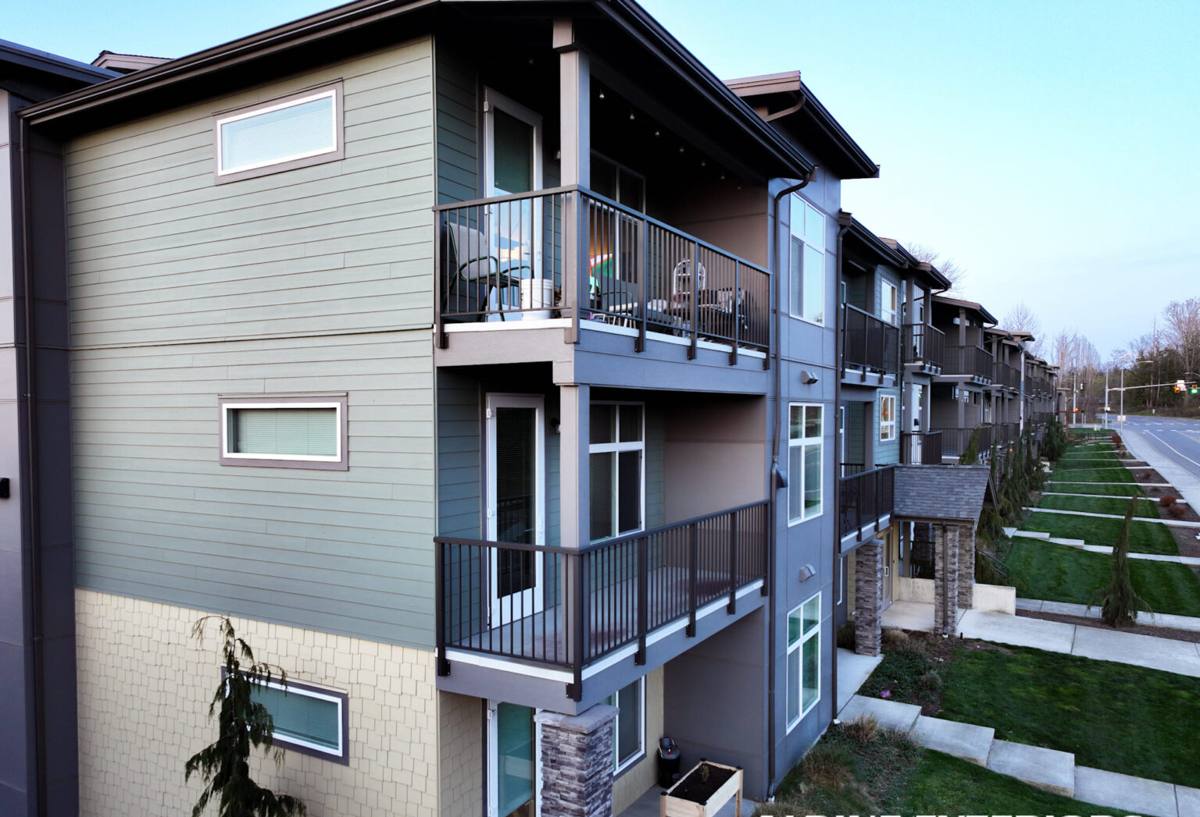
What Driving Rain and Moss Do to a Siding System
Moisture at the Laps, Trim, and Fasteners
Most siding failures we see don't start in the middle of a wall. They start at the seams — lap joints, butt joints, window and door trim, and fastener penetrations. Driving rain doesn't just fall on siding, it pushes against it, forcing water sideways and upward into gaps that would stay dry in a calmer climate. Over years, that repeated wetting and drying cycle is what causes swelling, delamination, and rot in siding products that aren't built to handle it, and it's what causes paint and caulk to fail early even on products that hold up structurally.
Moss, Algae, and Shaded Walls
North- and east-facing walls in Kendall, especially ones shaded by trees or a neighboring structure, stay damp longer after every rain. That constant dampness is exactly what moss and algae need to take hold. On some siding materials this is mostly a cleaning problem. On others — particularly wood-based and engineered wood products — sustained moss growth traps moisture against the surface and accelerates the underlying material's breakdown, which is a maintenance problem that never really goes away.
Why This Matters More Here Than in Drier Parts of the State
A siding product that performs fine in eastern Washington's dry summers and cold winters can behave very differently after a decade of Whatcom County rain. The product itself matters, but so does the moisture-management system behind it — the weather-resistive barrier, the flashing details, and the gap for drainage and drying. A siding replacement done right in Kendall has to treat all three as one system, not just swap old panels for new ones.
Why We Install Only James Hardie Fiber Cement
We standardized on James Hardie fiber cement siding for every home we work on, including here in Kendall, and we don't install vinyl, LP SmartSide, primed spruce, cedar, or other fiber cement brands. That's a deliberate professional standard, not a sales position, and it comes down to how these products actually perform under sustained rain and moisture exposure over decades, not just how they look going in.
Fiber cement is non-combustible and dimensionally stable — it doesn't swell, warp, or absorb water the way wood-based products can, which matters directly in a climate where siding stays wet more often than it stays dry. Hardie's HZ5 product line is engineered specifically for climates like the Pacific Northwest, with a moisture-resistant formulation suited to freeze-thaw cycles and sustained damp exposure. The factory-applied ColorPlus finish is baked on under controlled conditions, which gives it better fade and moisture resistance than field-applied paint, and it comes with its own finish warranty on top of the product warranty. For a homeowner in Kendall, that combination means fewer repaint cycles, less vulnerability at the seams, and a product warranty that's actually transferable if the home sells.
What a Correct Siding Replacement Involves
Tear-Off and What's Underneath
Replacing siding is also an inspection. Once the old siding comes off, we're looking at the sheathing for soft spots, staining, or rot — signs of water that's been getting behind the old siding for years, sometimes without any obvious symptoms from the outside. Any damaged sheathing gets repaired before anything new goes up, because new siding installed over compromised sheathing just hides the problem for a few more years.
Weather-Resistive Barrier and Flashing
This is the layer that does the real work of keeping driving rain out of the wall assembly, and it's the layer that gets rushed or skipped on lower-quality jobs. A correct installation means a properly lapped weather-resistive barrier, correctly integrated flashing at every window, door, and roofline intersection, and attention to how water sheds at every horizontal transition. In a climate that pushes rain sideways, these details matter more than the siding material itself.
Installation to Manufacturer Spec
James Hardie siding has specific requirements for fastener placement, clearances, and gapping that are there for a reason — they're what let the product manage moisture and movement the way it's designed to. Nail placement that's too tight, missing clearance at grade, or panels butted without expansion room are common shortcuts that void warranty coverage and set up future problems, even though they're invisible once the job is finished.
Our Process for Kendall Projects
- Assessment: We walk the exterior, check for existing moisture damage, and look at how each elevation is exposed to prevailing rain and shade.
- Plan and quote: We spec the right Hardie profile and color for the home and give a clear, itemized estimate — no vague allowances.
- Tear-off and repair: Old siding comes off, sheathing is inspected and repaired as needed before anything new is installed.
- Weather barrier and flashing: Installed and integrated correctly at every penetration, corner, and transition.
- Hardie installation: Installed to manufacturer spec for fastening, clearance, and gapping.
- Final walkthrough: We go over the finished work with the homeowner and clean the site thoroughly before we leave.
Cost Factors for Siding Replacement in Kendall
Every home is different, but these are the factors that most often move a project's scope and cost:
| Factor | Why It Matters Here | Effect on the Project |
|---|---|---|
| Sheathing condition | Years of rain exposure can hide rot behind old siding | May require repair before new siding goes on |
| Home size and wall complexity | More corners, trim, and penetrations means more flashing detail | Affects labor time and material cuts |
| Existing siding type | Some materials remove faster and cleaner than others | Affects tear-off time and disposal |
| Shaded or moss-prone elevations | North-facing walls often need extra prep and cleaning | May add prep time on specific sides |
| Trim and accent work | Window and door trim replacement is often bundled with siding | Adds material and labor, but improves the moisture seal |
Signs Your Kendall Home Needs Siding Replacement Now
- Soft, spongy, or bubbling spots on the siding surface
- Paint that keeps failing within a couple of years of repainting
- Persistent moss or dark staining that returns quickly after cleaning
- Visible gaps, warping, or cracking at seams and corners
- Musty smell or staining on interior walls near exterior corners
- Siding that's original to a home built more than 20-25 years ago
Any one of these on its own might just need a repair. Several at once, especially combined with an older siding system, usually means the underlying moisture-management layer has been compromised and a full replacement is the more honest recommendation.
Why Hiring a Crew That Already Works in Kendall Matters
A siding job done to spec on paper can still underperform if the crew installing it hasn't accounted for how a specific property sits relative to prevailing weather — which walls take the brunt of driving rain, which ones stay shaded and damp longer, where snow or debris tends to pile against the foundation line. Crews that regularly work homes in and around Kendall and greater Whatcom County have seen these patterns repeat across enough properties to plan for them up front, rather than learning them the hard way after a callback.
There's also a practical side to it: local availability for warranty follow-up, familiarity with the area's permitting and inspection expectations, and a crew that isn't guessing at how the region's rain and moss season will treat a given installation five or ten years down the road.
Ready to Talk About Your Siding
If your Kendall home is showing signs of wear, or you're just planning ahead, we're happy to take a look and give you a straightforward, no-pressure estimate — including an honest read on whether you need a full replacement or just targeted repair. Fill out the form below and we'll get in touch.