 Lynden Exterior
 Why Aldergrove Decks Take a Beating
Aldergrove sits close enough to the border that it shares the same weather pattern as Lynden and the rest of Whatcom County — damp, mild, and persistent. Decks here don't usually fail because of one big storm. They fail slowly, from months of standing moisture, freeze-thaw cycling in the shoulder seasons, and a moss and algae season that can stretch from fall through spring. Add in salt-tinged coastal air moving inland off the Strait and Georgia Basin weather systems, and you've got a combination that quietly works on fasteners, ledger boards, and joists long before anything looks visibly wrong on the surface.
Most homeowners don't notice deck damage until it's already past the easy-fix stage — a soft spot underfoot, a railing that flexes more than it used to, or boards that stay wet two days after everyone else's yard has dried out. Repair work done early, while the damage is still limited to a few boards or a section of framing, is a fraction of the cost of waiting until the structure itself is compromised.
Warning Signs You Shouldn't Ignore
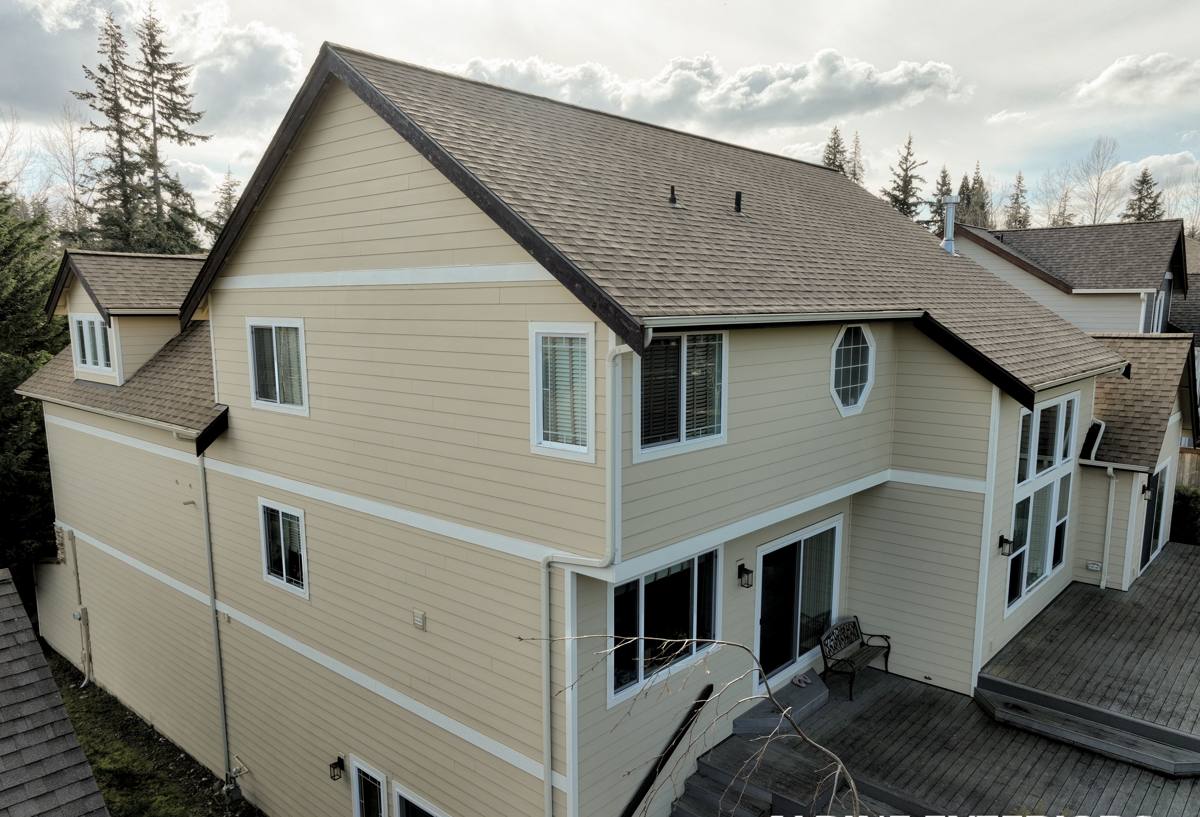
A lot of deck problems give warning signs for months before they become safety issues. Homeowners in Aldergrove and the surrounding area should walk their deck a couple times a year and check for the following:
- Boards that feel spongy, springy, or noticeably softer than the boards around them
- Gaps opening up between decking boards, or boards that have cupped or crowned
- Rust streaking around fastener heads, or fasteners backing out on their own
- A railing or post that wiggles when you push on it — even slightly
- Green or black staining that keeps coming back within weeks of cleaning
- Water pooling in the same spot after every rain instead of draining off
- Visible gaps or separation where the deck ledger board meets the house
- Stair stringers that feel uneven or bounce when you walk down them
Any one of these on its own might be minor. Two or three together usually means moisture has been getting into the structure for a while, and it's worth having someone look underneath rather than just at the surface.
What a Proper Deck Repair Actually Involves
"Deck repair" covers a wide range of work, and a big part of doing it right is figuring out how far the damage actually extends before you start replacing boards. A repair that only addresses what's visible from above, without checking the framing underneath, tends to fail again within a season or two.
Framing and Structure
The ledger board — where the deck attaches to the house — is the single most important connection to check. It's also the one most prone to hidden rot, since it sits against the house siding or rim joist where water can get trapped. Joists, beams, and posts get inspected for soft spots, checked with a probe rather than just eyeballed, and any compromised structural member gets sistered or replaced rather than patched over.
Decking Boards and Fasteners
Individual boards get replaced where they're cracked, cupped, or soft, matched as closely as possible to the existing decking so the repair doesn't stand out. Old nails or screws that have started to corrode or back out get pulled and replaced with fasteners rated for treated lumber and coastal moisture exposure — mismatched or under-spec fasteners are one of the more common causes of repeat failures we see.
Railings and Stairs
Railings and stair systems take a lot of direct load and a lot of weather exposure at the same time, which makes them a common failure point. Post bases, baluster attachments, and stair stringers all get checked for both structural soundness and current code clearance requirements, since older decks were often built to standards that have since changed.
Choosing Materials for the Repair
When you're repairing a section of an existing deck, material choice matters less than matching what's already there — but when a homeowner is deciding whether to also upgrade during the repair, it helps to know the real trade-offs rather than marketing claims.
| Material | Moisture Behavior | Maintenance | Best Use |
|---|---|---|---|
| Pressure-treated lumber | Resists rot when properly sealed; can still cup or check if left unfinished | Needs re-staining or sealing every 2-3 years in this climate | Framing, and decking on a budget |
| Cedar | Naturally rot-resistant, but surface greys and softens without upkeep | Regular oiling or staining to hold color and shed water | Visible decking where appearance matters |
| Composite | Doesn't rot, but can trap moisture underneath if drainage isn't right | Low — occasional washing, no staining | Full or partial decking replacement, high-traffic areas |
Our standard on framing is straightforward: structural members get pressure-treated lumber rated for ground contact where applicable, installed with proper flashing and drainage — not composite trim boards or synthetic framing products, which can hide moisture problems rather than shed them. That's a maintenance and moisture-management judgment call, not a knock on any manufacturer.
Repair or Replace? Weighing the Real Factors
This is the question almost every homeowner asks, and the honest answer depends on how much of the deck is affected and how old the rest of it is.
| Factor | Leans Toward Repair | Leans Toward Replacement |
|---|---|---|
| Extent of damage | Isolated boards or one framing section | Rot or damage spread across multiple areas |
| Age of structure | Deck is under 10-12 years old | Deck is original to an older home, near end of service life |
| Ledger board condition | Solid, properly flashed | Deteriorated or never flashed correctly |
| Footings and posts | Sound, set to proper depth | Undersized, shifted, or frost-heaved |
| Homeowner goals | Keep current layout and footprint | Want a different size, shape, or added features |
We'll tell you plainly if a repair is going to be a temporary patch rather than a real fix. There's no benefit to either of us in replacing boards on top of framing that's going to need attention again in two years — and there's equally no benefit in talking a homeowner into a full rebuild when a targeted repair will genuinely hold up.
How We Approach a Deck Repair Job
- Inspection from below. We go underneath the deck first, not just across the top, to check framing, ledger connection, and footings before quoting anything.
- Honest scope. You get a clear breakdown of what's failing structurally versus what's just cosmetic wear, so you can decide how far to take the repair.
- Demo of the affected area only. We remove only what needs to come out — sound material stays, which keeps cost and disruption down.
- Structural correction first. Framing, ledger flashing, and post connections get addressed before a single new decking board goes down.
- Matching and finishing. New boards, railings, or stair components are matched to the existing deck as closely as the original material allows.
- Walkthrough. We go over what was done and what to watch for going forward, including realistic maintenance timing for this climate.
Moss, Algae, and Long-Term Drainage
The moss season in this region is long enough that it's really a maintenance consideration all its own. Moss and algae hold moisture directly against wood or composite surfaces, which accelerates both rot in wood decking and the kind of surface degradation that shortens the life of any deck finish. A repair that doesn't also correct the drainage or airflow problem that let moisture collect in the first place is just going to need the same repair again.
Part of doing a repair correctly means checking that decking boards have proper gapping for drainage, that any low spots are addressed rather than just patched, and that the space underneath the deck has enough airflow to actually dry out between rain events. In a climate where boards can stay damp for days at a stretch, that airflow and drainage detail is often the difference between a repair lasting five years or fifteen.
Serving Aldergrove From Just Across the Line
Aldergrove is close enough to Lynden that we treat it as part of our regular service area, not a special trip. That matters more than it sounds like it should — a crew that's used to driving out to the same general area regularly can schedule follow-up visits, source matching materials, and be responsive if something comes up after the job is done, instead of treating it as a one-off.
It also means we're working with the same building conditions on both sides of the border: the same coastal-influenced rain patterns, the same long damp season, the same moss and drainage issues. A deck built or repaired to handle Whatcom County weather is built to handle what Aldergrove sees too. That familiarity with local conditions — not just general carpentry skill — is what tends to separate a repair that lasts from one that doesn't.
If you've got a deck in Aldergrove that's showing some of the signs above, we're happy to come take a look and give you a straight answer on what it actually needs. The estimate is free, there's no pressure attached to it, and if the honest answer is "this only needs a small repair," that's exactly what we'll tell you. Use the form below to get in touch and we'll set up a time to come out.