 Lynden Exterior
 Roofing in Custer Takes a Different Kind of Beating
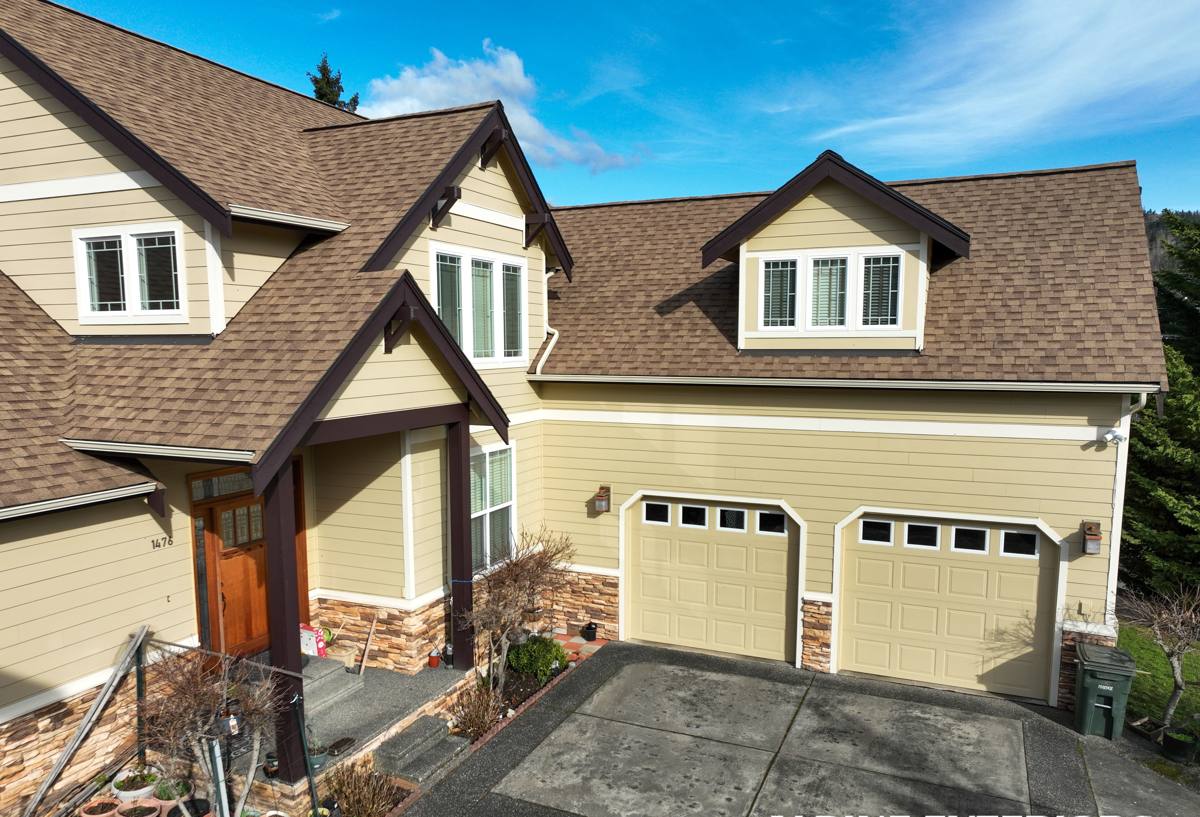
Custer sits close enough to the water and open farmland north of Lynden that its roofs deal with a combination most inland Whatcom County homes don't see as intensely: salt-laden air drifting in off the coast, wind-driven rain that gets pushed sideways under flashing and shingle tabs, and a moss season that can run eight or nine months out of the year in shaded, north-facing sections of a roof. None of these things destroy a roof overnight. They work slowly, and that's exactly why so many repair calls we get in this area are for damage that's been quietly building for a year or two before anyone noticed a stain on the ceiling.
A roof repair here isn't just patching a leak. It's understanding why that specific spot failed first, and whether the rest of the roof is a few seasons behind it.
What Salt Air Actually Does to a Roof
Homes closer to the coast get a fine mist of salt carried on the wind, especially during winter storms. It doesn't matter that Custer isn't beachfront — prevailing weather still carries enough of it inland to matter over time.
Metal Components Take the First Hit
Flashing, drip edge, roofing nails, vent caps, and gutter hardware are usually the first casualties. Salt accelerates corrosion on exposed or poorly coated metal, and once a fastener or flashing seam starts to corrode, it stops sealing the way it was designed to. A roof can still look fine from the ground while the metal details that actually keep water out are quietly failing.
Shingles and Sealants Age Faster
Salt air combined with UV exposure and constant damp-dry cycling breaks down asphalt shingle sealant strips and rubberized boot flashings faster than in a drier inland climate. We see this most on the windward-facing slopes of a roof — the side that takes the brunt of weather coming off the water.
Driving Rain: Whatcom County's Real Roof Enemy
Straight-down rain is easy for any roof to shed. The problem in this part of Washington is wind-driven rain that hits at an angle, works its way up under shingle tabs, and finds gaps around chimneys, skylights, vent pipes, and wall-to-roof transitions. This is why so many "mystery leaks" in Custer homes don't show up directly below the actual entry point — water travels along the underlayment or roof decking before it finally drips through somewhere else entirely.
Repairs that don't account for this pattern often fail again within a season, because the crew patched where the water appeared instead of tracing it back to where it actually got in.
The Long Moss Season
Between the rainfall totals and the amount of tree cover around many Custer properties, moss has a long window to establish itself — often starting in fall and not drying out fully until well into summer. Moss isn't just cosmetic.
How Moss Damages a Roof
- It holds moisture directly against the shingle surface far longer than open air would allow
- Its rhizoids work into the granule layer and shingle mat, lifting edges over time
- Thick moss mats redirect water sideways instead of letting it run off, pushing it toward laps and fasteners
- It adds weight and traps debris, which holds even more moisture against the roof
Why We Don't Recommend Pressure Washing
Pressure washing strips moss fast, but it also strips protective granules and can force water up under shingles — trading a moss problem for a leak problem. Our standard is soft treatment methods and manual removal, paired with addressing the shade and drainage conditions that let moss take hold in the first place. It's slower, but it doesn't shorten the life of the roof to solve a surface problem.
Signs a Custer Roof Needs Repair Now
- Granules collecting in gutters or at downspout outlets
- Dark streaking or thick moss growth on north-facing or shaded slopes
- Curling, cupping, or lifted shingle edges, especially on the weather-exposed side
- Rust staining around vent pipes, flashing, or gutter seams
- Soft or discolored spots on interior ceilings, especially after a windy rainstorm
- Daylight visible through the roof deck from inside the attic
- Flashing that's separated, bent, or missing sealant around chimneys and skylights
What a Correct Repair Actually Involves
A proper repair is more than swapping a few shingles. On the roofs we work on around Custer, a repair typically includes:
- Tracing the leak path from the interior stain or attic evidence back to its true entry point, not just the nearest visible damage
- Checking underlayment condition in the affected area, not just the shingles on top of it
- Inspecting and replacing corroded or failed flashing, not just resealing it
- Matching shingle type, weight, and where possible color, so the repair doesn't stand out or perform differently than the surrounding roof
- Checking attic ventilation and insulation near the repair area, since poor airflow contributes to both moisture buildup and premature moss growth
- Clearing and assessing gutters and downspouts feeding the repaired section, since a clogged gutter can undo a good repair within one storm season
Skipping any of these steps is how a "fixed" roof ends up leaking again from the same general area a year later — just from a slightly different spot.
Repair or Replace? What Actually Drives the Decision
Not every damaged roof needs full replacement, and not every roof is worth continuing to patch. These are the factors that actually matter when we're evaluating a Custer roof:
| Factor | Favors Repair | Favors Replacement |
|---|---|---|
| Roof age | Under 15-20 years, depending on material | Near or past expected material lifespan |
| Extent of damage | Localized to one slope or section | Spread across multiple slopes or the whole roof |
| Decking condition | Solid, no rot or soft spots | Soft, delaminated, or rotted decking found underneath |
| Moss/algae history | Recent, hasn't compromised the mat | Long-term growth with granule loss and lifted shingles |
| Number of past repairs | First or second repair in this area | Repeated repairs in the same section over the years |
| Salt/wind exposure | Moderate, materials in fair shape | Heavy corrosion on flashing, fasteners, and metal detailing |
We'll always tell you honestly which side of this table your roof falls on. A repair that's genuinely going to hold is a better use of your money than a replacement you don't need yet — and the reverse is true when a roof is past the point where patching makes sense.
Our Process for Custer Repair Calls
1. Ground and Roof Inspection
We look at the whole roof, not just the spot you called about. A leak in one area is often the first symptom of a broader moss, flashing, or ventilation issue affecting the rest of the roof too.
2. Straight Answer on Scope
You'll get a clear explanation of what's actually wrong, what caused it, and whether a repair is the right call — with the reasoning behind it, not just a number.
3. The Actual Repair
We fix the root cause, not just the visible symptom — replacing failed flashing, damaged decking, and shingles as needed, and matching materials so the repair blends in and performs like the rest of the roof.
4. Post-Repair Check
Before we consider the job done, we confirm gutters are clear, flashing is sealed properly, and there's no secondary damage nearby that could turn into next season's call.
Why a Crew That Already Works This Area Matters
Roofing problems in Custer follow patterns — which slopes take the worst weather, which tree lines create the shadiest and mossiest sections, which older flashing details are common on homes built in a certain era in this part of Whatcom County. A crew that repairs roofs here regularly recognizes those patterns faster, which means less time spent diagnosing and more time spent fixing the actual problem. It also means we're not guessing at how Lynden-area weather behaves — we're accounting for it from the first inspection.
Keeping a Repair From Becoming a Recurring Job
Between repairs, a few habits go a long way in this climate: keep gutters and downspouts clear heading into fall, trim back tree limbs that keep a section of roof shaded and damp, and have moss treated before it establishes rather than after it's already lifted shingles. A quick seasonal look at flashing and vent boots catches small issues while they're still small — and still cheap to fix.
If you're dealing with a leak, visible moss buildup, or just want an honest read on where your roof stands, we're happy to take a look. The estimate is free, there's no pressure to act on anything, and you'll get a straight answer about what your roof actually needs.