 Lynden Exterior
 Blaine's Roofs Work Harder Than Most
Blaine sits right on the water at the northern edge of Whatcom County, and that location shapes everything about how a roof ages there. Homes along Semiahmoo Bay and Drayton Harbor catch salt-laden air off the Strait of Georgia almost year-round, while the rest of the property deals with the same driving Pacific rain and long, damp moss season that affects the whole county. It's a combination that wears on roofing faster than a typical inland home ever sees, and it's why repairs that would hold up fine somewhere drier can fail early in Blaine.
We're based just down the road in Lynden, and we've worked on plenty of roofs in and around Blaine over the years. That proximity matters more than it might seem — a roof repair crew that's actually seen how Blaine's coastal exposure treats shingles, flashing, and fasteners makes different decisions than one working from a generic checklist.
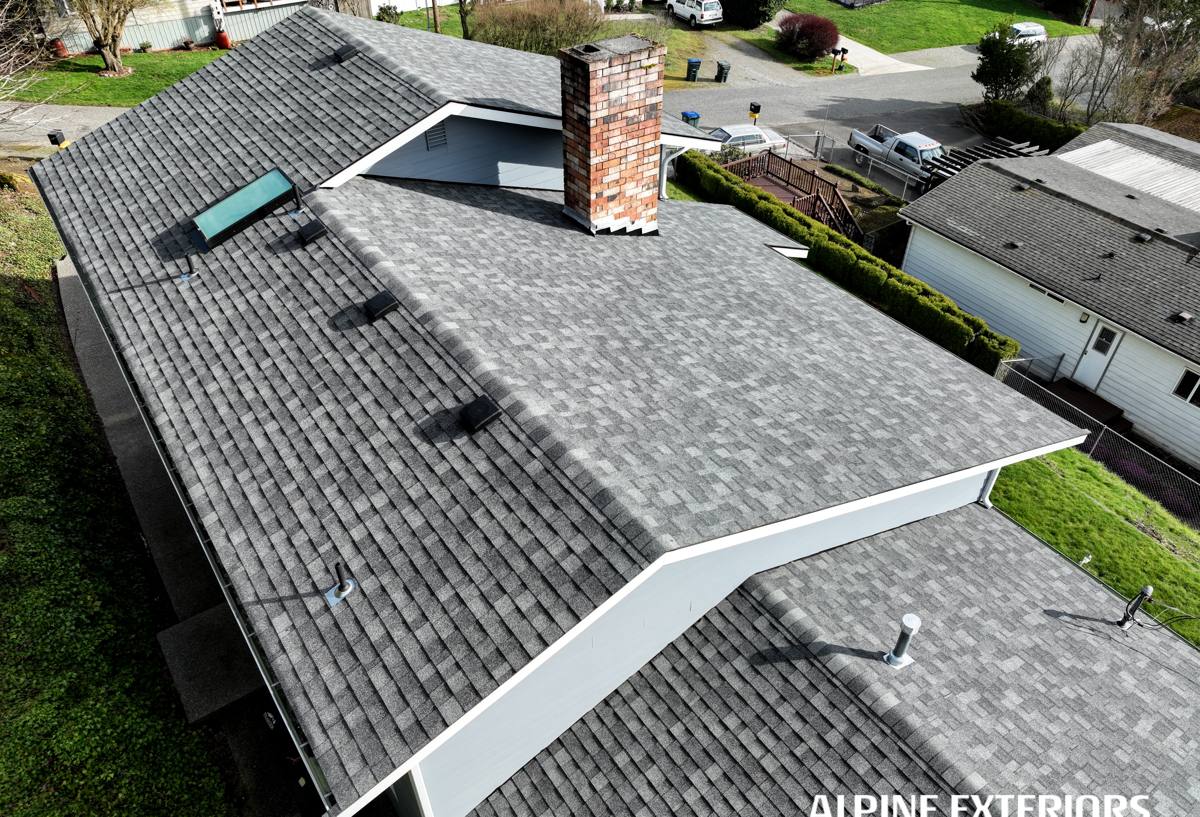
How Salt Air and Coastal Rain Damage a Roof
Salt air is corrosive in ways that aren't always obvious from the ground. It accelerates rust on exposed metal fasteners, flashing, and vent caps, and it can degrade the coatings on some metal roofing products faster than the manufacturer's inland-climate estimates suggest. Combine that with the near-constant moisture from marine rain systems, and you get a roof environment that punishes any weak point — a slightly under-sealed nail head, a flashing lap that's an inch short, a shingle tab that didn't seal down properly — much sooner than it would elsewhere.
Driving rain adds a second problem: wind-driven water doesn't just fall straight down, it gets pushed sideways and upward under laps, around chimneys, and into vent penetrations that would stay dry in a calmer climate. A repair that only addresses the visible leak point and ignores how water actually moves across a Blaine roof during a storm is a repair that comes back.
Moss: The Slow, Quiet Damage
Whatcom County's moss season runs long — shaded, north-facing slopes and anything under tree cover can stay damp for months at a stretch. Moss doesn't just look bad. Its root structures work into shingle granules and butt seams, holding moisture against the roofing material and gradually lifting edges that then become entry points for water. By the time moss is visible from the ground, it's often already doing damage underneath.
Signs a Blaine Roof Needs Repair, Not Just a Look
- Granules collecting in gutters or at downspout discharge points — a sign of asphalt shingle wear
- Dark streaking or thick moss growth on shaded or north-facing roof planes
- Soft or discolored ceiling spots, especially after a windy rainstorm
- Rust staining running down from metal flashing, vents, or fasteners
- Lifted, curling, or missing shingle tabs, particularly on corners and ridges exposed to wind
- Daylight visible through the attic roof deck, or damp insulation below it
- Flashing that's pulled away from chimneys, skylights, or sidewalls
- Gutters holding standing water or sagging away from the fascia
Any one of these on its own might be minor. Several together, especially on a roof that's ten or more years old, usually means it's time for an honest inspection rather than a guess.
What a Correct Roof Repair Actually Involves
A roof repair done right isn't just patching the spot where water showed up inside the house. Water travels along the underlayment and roof deck before it finds a way in, so the visible leak and the actual failure point are often several feet apart. A proper repair traces that path.
| Repair Step | What It Addresses | Why It Matters in Blaine |
|---|---|---|
| Locate true entry point | Follow water staining and deck moisture back to the actual breach | Wind-driven rain can push water sideways well past the visible damage |
| Remove and inspect surrounding material | Check shingles, underlayment, and decking around the failure | Salt air and moisture often weaken a wider area than the leak alone suggests |
| Replace damaged decking if needed | Soft or delaminated plywood/OSB is cut out and replaced | Long moss season keeps decking damp longer, increasing rot risk |
| Reflash penetrations and laps | New flashing, corrosion-resistant fasteners, proper laps | Coastal corrosion shortens the life of standard fasteners and thin flashing |
| Reseal and match roofing material | New shingles or panels tied into the existing roof correctly | A mismatched or poorly sealed patch becomes tomorrow's leak |
| Clear and treat moss-affected areas | Remove moss, treat growth, correct drainage where possible | Reduces the chance of the same failure recurring next moss season |
Our Roof Repair Process in Blaine
1. Inspection First, Estimate Second
We start by getting on the roof, not just estimating from photos or a drive-by. That's the only way to see what's actually happening under moss growth, around flashing, and inside the attic where water often shows up first. We'll tell you plainly what we find — including when a repair is the right call and when the roof is past the point where patching makes financial sense.
2. A Written Scope Before Any Work Starts
You'll know exactly what's being repaired, what materials we're using, and roughly what it will cost before we start. No surprise add-ons once the roof is opened up, unless we find something that genuinely wasn't visible beforehand — and if that happens, we stop and talk to you before proceeding.
3. Repair Work
We remove only what needs to come out, replace damaged decking and underlayment as needed, and reflash and reseal using materials suited to a marine climate — not just whatever's cheapest or most common inland. Fastener choice matters here; we use corrosion-resistant options appropriate for coastal exposure rather than standard-grade hardware that can start rusting within a few seasons this close to the water.
4. Cleanup and Walkthrough
We clear debris, check gutters and downspouts near the repair for anything that could cause repeat problems, and walk the work with you before we consider the job done.
Repair or Replace? An Honest Comparison
Not every roof problem in Blaine needs a full replacement, and not every leak is fixable with a simple patch. Here's roughly how we think through it:
| Factor | Repair Usually Makes Sense | Replacement Usually Makes Sense |
|---|---|---|
| Roof age | Under 15-20 years, depending on material | Near or past the material's expected lifespan |
| Extent of damage | Isolated to one section or penetration | Widespread granule loss, multiple failed areas |
| Decking condition | Solid, dry, no rot beyond the immediate repair area | Soft or rotted decking in multiple locations |
| Leak history | First occurrence or a single recurring known spot | Repeated leaks in different areas over time |
| Moss/staining pattern | Localized, treatable growth | Heavy, long-term moss damage across large roof planes |
We'll never push a full replacement when a repair will genuinely hold up — but we also won't sell you a patch on a roof that's already failing in multiple places, because that just delays the real cost while your home takes on more water damage in the meantime.
Materials That Hold Up to Blaine's Conditions
For coastal Whatcom County homes, we lean toward roofing materials and hardware with proven resistance to salt exposure and sustained moisture — stainless or hot-dip galvanized fasteners over standard steel, properly rated underlayment that won't break down under long-term dampness, and flashing details sized generously enough to handle wind-driven rain rather than the bare minimum. We'll walk you through the trade-offs of whatever material is already on your roof, including maintenance expectations, so you know what you're working with rather than just what looks good going on.
Why a Local Crew Matters for This Kind of Repair
A contractor who works Blaine and the surrounding Whatcom County coastline regularly has already seen how different roof types hold up here over years, not just on install day. That experience shapes real decisions — which flashing details actually stay watertight against driving rain off the Strait, which fastener grades are worth the extra cost this close to salt water, and which moss-prone roof sections need a different repair approach than the same spot would on an inland home. Being close by also means we can get to a leak quickly when weather turns, and we're around afterward if a question comes up.
After the Repair: Keeping Moss and Salt From Coming Back
- Keep gutters and downspouts clear, especially heading into fall storm season
- Trim back overhanging branches to reduce shade and debris on moss-prone slopes
- Rinse accumulated debris off the roof periodically rather than letting it sit and hold moisture
- Have flashing and fasteners checked every couple of years given the accelerated coastal corrosion rate
- Address small moss patches early, before root structures work into the shingle surface
A repair is only as good as what happens to the roof afterward. A few minutes of seasonal upkeep goes a long way toward making sure the work we do lasts as long as it should.
If you're dealing with a leak, moss buildup, or storm damage on a Blaine roof, we're happy to take a look and give you a straight assessment — no pressure, no upsell. Fill out the form below and we'll set up a time to get up there and see what's really going on.