 Lynden Exterior
 Why Birch Bay's Coastal Climate Is Hard on Roofs
Birch Bay sits right on the water, and that changes what a roof has to deal with compared to a house a few miles inland in Lynden. Homes here face a combination most roofers in drier parts of the country never have to think about: constant salt-laden air, wind-driven rain coming straight off the water, and a moss season that runs most of the year in Whatcom County. None of these alone is unusual for Western Washington. Together, on an exposed shoreline lot, they wear a roof down faster and make storm damage harder to spot until it's already caused a leak.
Salt Air and Metal Fatigue
Salt air corrodes exposed metal faster than it corrodes anything else on a roof. Nail heads, flashing, drip edge, and any exposed fasteners are the first things to show pitting and rust on a Birch Bay roof, sometimes years before the shingles or panels around them show real wear. Once fasteners start to corrode, they lose their grip, and that's exactly what a storm needs to start peeling material back at an edge or ridge.
Driving, Wind-Driven Rain
Rain that comes in sideways off the water behaves differently than rain falling straight down. It gets pushed up under shingle tabs, into vents, and along flashing laps that were never designed to shed water moving that direction. A roof that's held up fine for years can start leaking the first time a storm hits from an angle it hasn't seen before, especially if age or minor storm damage has already loosened a seal somewhere.
A Long Moss Season
Whatcom County's wet, mild climate keeps moss growing on north-facing and shaded roof slopes for most of the year. Moss holds moisture against the roofing material, works its way under shingle edges, and lifts tabs just enough for wind and rain to get underneath. A roof that looks fine from the ground can already have moss-related lift that turns a moderate windstorm into a real leak.
What Counts as Storm Damage (Beyond the Obvious)
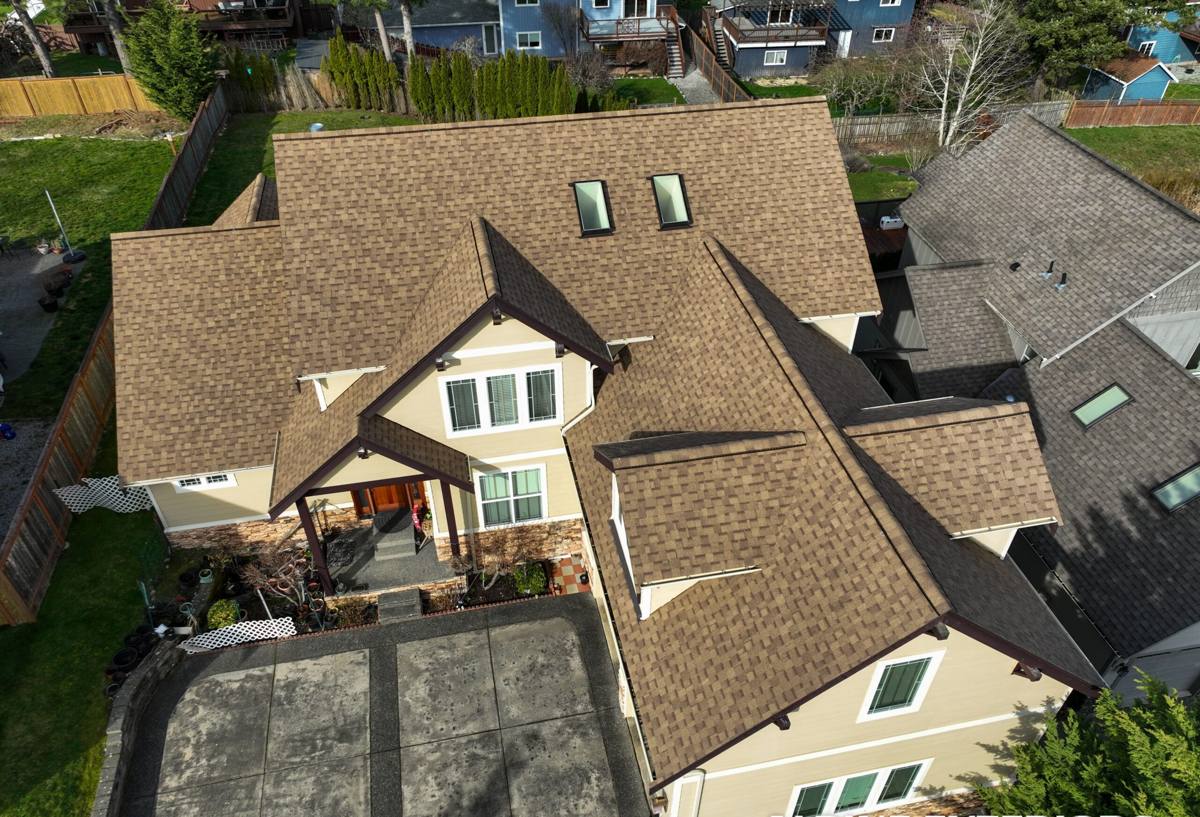
Missing shingles and a hole in the roof are easy to spot. Most of the storm damage we actually get called out for in Birch Bay is less obvious, and it's the kind that causes the most trouble if it sits unaddressed through another storm season.
- Shingle tabs that were lifted or creased by wind but didn't blow off — they no longer seal properly against wind-driven rain
- Flashing around chimneys, vents, and roof-to-wall transitions that was bent, pulled loose, or had its sealant cracked
- Fastener backout, where nails work loose from repeated wind flexing and slowly rise above the shingle surface
- Granule loss from wind-blown debris or hail, which thins the shingle's UV and weather protection even without a visible hole
- Gutter and downspout damage that redirects water onto fascia, siding, or foundation areas it was never meant to touch
- Soft spots in the decking underneath, found only once a roofer gets on the roof and walks it
This is why a proper storm inspection isn't just a walk-around from the driveway. It means getting on the roof, checking penetrations and edges by hand, and looking in the attic for staining, damp insulation, or daylight where there shouldn't be any.
What a Correct Storm Damage Repair Involves
A storm repair that's done right addresses the cause, not just the visible symptom. Patching a shingle over a compromised area without checking what's underneath is how the same leak comes back after the next storm.
Full Inspection Before Any Repair
We look at the whole roof, not just the area a homeowner points to. Storm damage in one spot is often a sign of stress across the whole roof plane, especially on an exposed Birch Bay lot where wind loads hit certain slopes harder than others. We check the decking, the underlayment where it's exposed, flashing, vents, and the attic side before deciding on a repair plan.
Matching Materials and Proper Tie-In
Repairs need to tie into the existing roofing correctly — same shingle profile and weave pattern where possible, proper nailing pattern, and flashing that's integrated with the existing water path rather than caulked over it. A patch that isn't woven into the surrounding courses correctly becomes its own weak point the next time wind gets underneath it.
Fastener and Flashing Upgrades Where It Makes Sense
Given how hard salt air is on exposed metal here, we'll often recommend corrosion-resistant fasteners and flashing during a repair, even if that wasn't the original spec. It costs a little more up front and saves a callback in a few years when standard fasteners start to rust in a coastal exposure.
Our Process, From Call to Completed Repair
- Contact and scheduling. We get basic details over the phone — when the damage happened, what you've noticed, and whether there's an active leak that needs a temporary tarp right away.
- On-roof inspection. We walk the roof and check the attic, documenting what we find with photos so you have a clear record, whether or not you're filing an insurance claim.
- Written scope and estimate. You get a plain-language explanation of what's damaged, what needs to be repaired versus what's just cosmetic, and a written price before any work starts.
- Repair work. We complete the agreed repair, matching materials and reintegrating flashing and underlayment properly rather than surface-patching.
- Final walkthrough. We show you what was done and what to keep an eye on, particularly if there are other aging areas of the roof worth watching.
Repair vs. Replacement: What Actually Drives the Decision
Not every storm-damaged roof needs to be replaced, and not every roof that looks rough from the ground is actually a repair candidate. The honest answer depends on a few factors we weigh together during the inspection.
| Factor | Favors Repair | Favors Replacement |
|---|---|---|
| Roof age | Under roughly two-thirds of expected material lifespan | Nearing or past expected lifespan for the material |
| Extent of damage | Isolated to one slope or a small area | Spread across multiple slopes or the whole roof |
| Decking condition | Solid, no soft spots found | Soft, delaminated, or water-stained decking in multiple areas |
| Prior repair history | First significant repair on this roof | Multiple past patches and repeat leaks in different spots |
| Material availability | Matching shingles/panels still obtainable | Original material discontinued, making blending difficult |
We'll always tell you honestly which side of that table your roof falls on. A repair that's likely to need another repair within a year or two isn't a favor to you — it just delays a decision you'll end up making anyway, usually after another storm.
Storm Damage and Insurance Claims
Many storm-related roof repairs in Birch Bay are covered in some form by homeowners insurance, but coverage details vary a lot by policy, deductible, and the specific cause of damage. We're not insurance adjusters and won't promise a claim outcome, but we can provide a clear, photo-documented inspection report that you can hand to your insurer, and we're glad to walk an adjuster through what we found on the roof if that's helpful. Getting a straightforward, honest assessment early — before more water gets in — tends to make the whole claims process smoother, whichever way it goes.
Reducing Repeat Storm Damage on a Birch Bay Roof
Because of the moss, salt air, and wind exposure specific to this area, a roof here benefits from a bit more upkeep than the same roof would need further inland. None of this is complicated, but it's easy to let slide until a storm turns a small issue into a leak.
- Keep gutters and downspouts clear so wind-driven rain has somewhere to go instead of backing up under the roof edge
- Have moss treated and removed from shaded slopes before it has a chance to lift shingle tabs
- Check attic ventilation — trapped moisture accelerates decking rot and undermines the roof from underneath
- After any significant windstorm, do a visual check from the ground for lifted or missing shingles, displaced flashing, or debris in the gutters
- Have flashing and fastener condition checked periodically, especially on roofs older than ten to fifteen years, since salt air corrosion doesn't announce itself until it fails
Why It Matters That We Already Work in Birch Bay
A roofer who mostly works drier, inland jobs can still do competent repair work, but they're often applying a general approach to a roof that's dealing with conditions they don't see every day. Working roofs along the Whatcom County coastline regularly means we already know which fastener types hold up, which flashing details fail first in salt air, and which slopes on a typical Birch Bay lot take the worst of the wind. That's not a marketing point — it's the difference between a repair that's built for this specific climate and one that's built for roofs in general.
It also means we're not guessing at local conditions when we write an estimate or explain what we found in an inspection. We can tell you plainly whether what you're looking at is normal wear for a coastal roof or genuine storm damage that needs attention now.
Get a Straight Answer About Your Roof
If a recent storm has you wondering whether your roof needs attention, we're happy to take a look. The estimate is free, there's no pressure to move forward, and you'll get an honest answer about whether you're looking at a simple repair, something more involved, or nothing urgent at all. Use the form below to get started.