 Lynden Exterior
 Roof Repair Built for Acme's Wet, Wooded Climate
Acme sits in the forested foothills east of Lynden, along the Nooksack River valley, where tall conifers shade most rooflines for a good part of the day. That canopy is beautiful to live under, but it changes how a roof ages. Roofs here stay damp longer after a storm, collect more organic debris, and grow moss earlier in the season and later into it than roofs on open lots closer to town. A roof repair in Acme has to account for that reality, not just patch whatever is leaking today.
Moss Is the Default, Not the Exception
Under heavy tree cover, moss isn't a sign of neglect — it's what happens on almost every asphalt or composition roof given enough shade and moisture. Moss spores settle into shingle granules, hold water against the surface, and over a season or two work their way under shingle tabs. Once moss is established, it lifts edges, breaks the shingle's seal, and gives wind-driven rain a path underneath. Left alone, that's how a small moss patch turns into a soft spot in the decking a few years later.
Rain That Sits Instead of Runs Off
Western Whatcom County gets a substantial share of its annual rainfall as slow, steady systems rather than short downpours, and even away from the coast, moisture-laden marine air settles into forested valleys like this one and lingers. Add tree cover that blocks the sun and wind a roof would otherwise use to dry out, plus needle and leaf litter that collects in valleys, behind chimneys, and around skylights, and you get water sitting in places it was never designed to sit. That's where the majority of the leaks we find in Acme actually start — not from a failed shingle in the open field of the roof, but from a dammed-up valley or a clogged gutter backing water under the roofing.
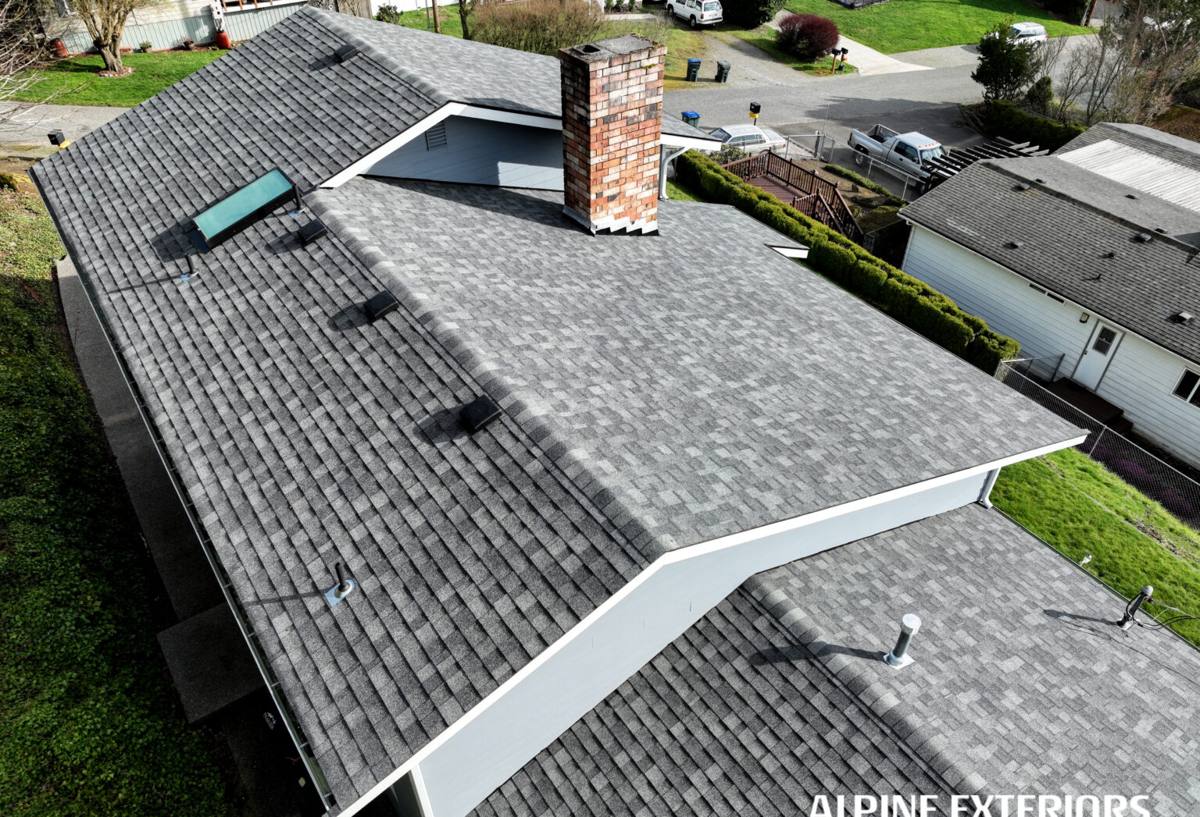
Signs an Acme Roof Needs Repair
Most roof repairs get more expensive the longer they're ignored, because trapped moisture doesn't just sit on the surface — it works into the decking underneath. Here's what we tell homeowners to watch for, especially on north-facing or shaded slopes:
- Thick moss mats, especially where a roof slope faces away from the sun or sits under overhanging branches
- Granules collecting in gutters or at downspout outlets, a sign shingles are wearing thin
- Dark streaking or green-black staining across the shingle surface
- Soft, spongy spots when walked (our crew checks this — homeowners shouldn't walk their own roof)
- Water stains or discoloration on ceilings or in the attic after a heavy rain
- Daylight visible through the roof deck from inside the attic
- Curling, cupping, or missing shingle tabs, particularly after a windstorm
- Rust or gaps at flashing around chimneys, vents, and skylights
- Gutters or fascia boards pulling away from the roofline
What a Correct Roof Repair Actually Involves
A roof repair done right starts with figuring out where the water is actually getting in — which is often not directly above the stain you can see. Water follows the slope of the decking and the path of least resistance along rafters before it shows up as a mark on drywall, so a repair based only on where the ceiling is stained can miss the real entry point entirely.
Finding the Real Source
We inspect from both sides: the attic, where we can see sheathing discoloration, staining trails, and any daylight coming through, and the exterior, where we check flashing, valleys, penetrations (vents, skylights, chimneys), and the shingles themselves. On a shaded, moss-prone roof like most of what we see in Acme, we pay particular attention to valleys and anywhere debris can build a small dam, since that's where slow leaks most often originate.
Common Repairs We Handle in Acme
| Repair Type | Typical Cause Locally | What the Fix Involves |
|---|---|---|
| Moss and organic growth removal | Shade plus needle and leaf litter trapping moisture | Soft-wash treatment, hand removal of moss mats, and often a zinc or copper control strip near the ridge |
| Valley and flashing leaks | Debris damming water at valleys, chimneys, or skylights | Remove and replace flashing, re-seal transitions, clear the valley channel |
| Storm-damaged shingles | Wind gusts channeled through the valley, falling branches or limbs | Remove and replace the affected courses, matching existing shingle type and color as closely as available |
| Soft or rotted decking | Prolonged moisture trapped under moss mats or a long-standing minor leak | Cut back to sound wood and replace sheathing before any new roofing goes down |
| Gutter and fascia damage | Overflow from needle-clogged gutters | Clear debris, repair or replace damaged sections, and add guards where they'll actually help |
Materials and Methods We Use — and Why
We soft-wash moss and organic growth rather than pressure-wash it. High-pressure washing strips the protective granules right off asphalt shingles, which shortens the life of the roof and can void the shingle manufacturer's warranty — trading a short-term clean look for real long-term damage. Soft-washing takes more time but doesn't do that.
For long-term moss control, we favor zinc or copper strips installed near the ridge over relying on chemical spray treatments alone. Rain carries trace metal ions down the roof slope every time it falls, which suppresses new moss growth season after season without repeat chemical applications. It's not instant and it won't remove existing heavy moss on its own, so it's a companion to a proper cleaning, not a substitute for one.
On flashing and fasteners, we use materials rated for a wet marine climate rather than the cheapest option that happens to fit. Galvanized fasteners and mismatched metals corrode faster here than they would in a drier inland climate, and a flashing failure a few years down the road usually costs more to fix than the small difference in material cost up front.
Our Roof Repair Process, Start to Finish
- Initial call or request: tell us what you're seeing — a stain, visible moss, missing shingles — and roughly how long it's been happening.
- On-site inspection: we check the roof surface, valleys, flashing, and the attic from the inside to trace the actual source of the problem.
- Written estimate: a clear scope of work and price before anything starts, including options if there's more than one reasonable way to address it.
- Scheduling and site protection: we plan around weather windows and protect landscaping, gutters, and anything below the work area.
- The repair itself: matching materials where possible, replacing decking if it's compromised rather than covering over it, and re-flashing rather than just re-sealing where flashing has failed.
- Cleanup and haul-away: old shingles, cut decking, and debris leave the site — we don't leave moss and granule debris in your gutters or yard.
- Final walkthrough: we go over what was done and what to watch for going forward.
What Affects the Cost of a Roof Repair in Acme
Repair costs vary more than people expect, mostly because the extent of hidden damage isn't known until shingles come up. These are the factors that actually move the price:
| Factor | Why It Matters |
|---|---|
| Roof pitch and access | Steep roofs and roofs with limited ladder or equipment access take longer and require more safety setup |
| Extent of moss or organic buildup | Light surface moss is a straightforward clean; established mats often mean checking decking underneath |
| Decking condition once opened up | Sound sheathing costs far less to work around than rotted decking that has to be cut out and replaced |
| Material match | Matching an older or discontinued shingle color or profile can take longer to source than a common current product |
| Site access | Wooded lots, long driveways, or limited staging space add setup and material-handling time |
Keeping a Repaired Roof Ahead of Moss and Debris
A repair fixes what's failed; a bit of regular upkeep is what keeps the next repair years away instead of months away. On a shaded, tree-lined lot like most of what we see in Acme, that upkeep matters more than it would on an open, sunny roof.
- Clear needles and leaves from valleys and gutters at least twice a year, more if you're under conifers
- Trim back branches that overhang the roofline to cut down shade and let the surface dry between rains
- Check zinc or copper control strips periodically to confirm they haven't been covered by debris
- Have the roof looked at after any significant windstorm, even if nothing looks obviously wrong from the ground
- Watch for new ceiling stains or musty attic smells after a stretch of heavy rain
Why a Crew That Already Works in Acme Matters
A roofer who mostly works drier, more open parts of Whatcom County will treat an Acme roof like any other repair — patch the visible spot and move on. A crew that already works this area knows that a leak here is more likely to trace back to a debris-dammed valley than a simple worn shingle, knows how fast moss re-establishes under heavy tree cover, and doesn't need to relearn the climate on your roof. That local familiarity shows up in fewer repeat callbacks and repairs that are sized to what your roof actually needs, not a generic checklist.
It also means faster response when you need it. Knowing the roads and typical access conditions around Acme's wooded lots lets us get a crew out and assessed without the delays that come with someone unfamiliar with the area.
If you're seeing moss, a stain on the ceiling, or storm damage on your Acme roof, we're happy to take a look and give you a straightforward, no-pressure estimate — use the form below to get started.