 Lynden Exterior
 Siding That Has to Work in the Nooksack Valley, Not Just Look Good
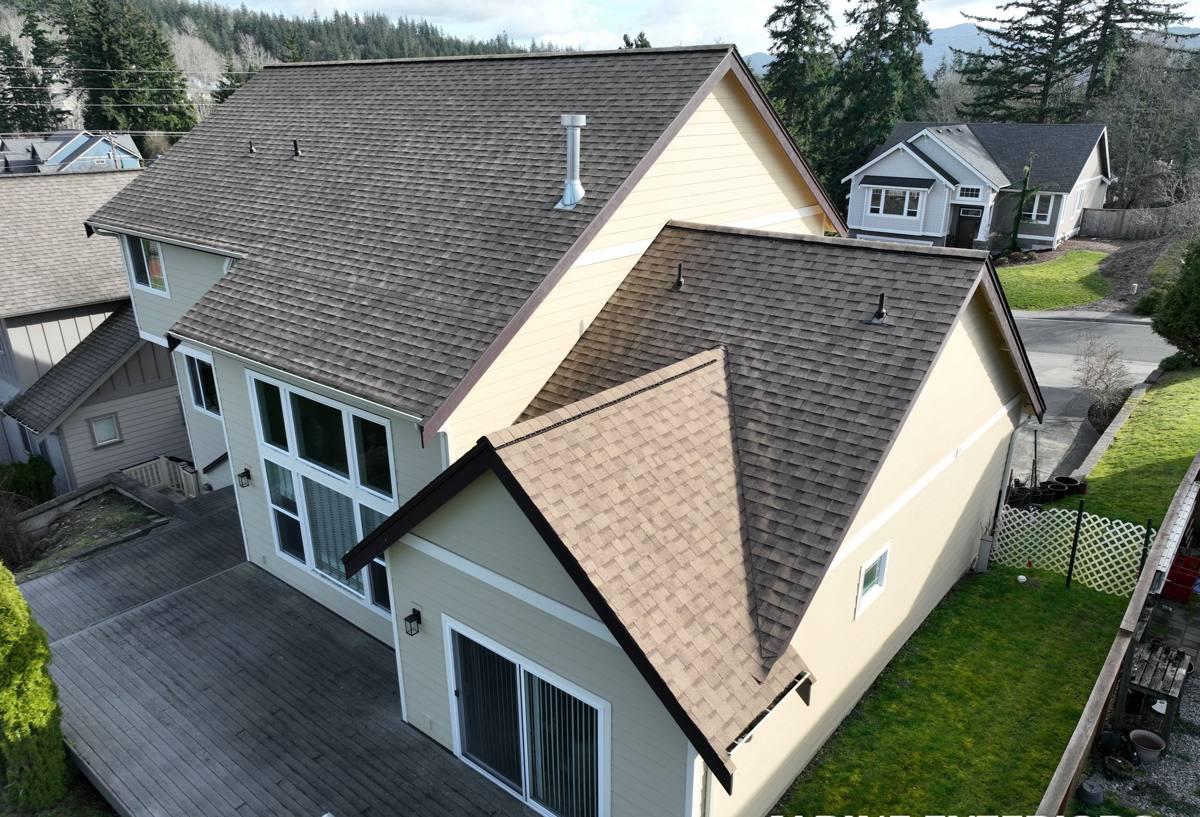
Homes in and around Acme sit in one of the wettest, greenest corners of Washington State. Whatcom County gets long stretches of low, steady rain, heavy morning dew, and enough humidity most of the year to keep moss and algae in business on anything that holds moisture. Add in salt-laden air that moves inland off Bellingham Bay and the greater Puget Sound on prevailing westerly winds, and you have a climate that is genuinely hard on exterior building materials. Siding here isn't just a cosmetic choice — it's the first line of defense against a very persistent, very damp environment.
We install James Hardie fiber cement siding exclusively. Not as a marketing angle, but because after years of pulling failed siding off homes in this exact climate, it's the product we trust to hold up to what this region actually does to a house.
What This Climate Does to Siding Over Time
It helps to understand the specific stresses at play before talking about the fix.
Driving Rain and Wind-Driven Moisture
Storms coming off the water don't just drop rain straight down — wind pushes it sideways into wall assemblies, seams, and trim joints. Any siding product with weak seams, absorbent edges, or poor flashing detail behind it will eventually let that moisture in, even if the face of the material looks fine.
Moss, Algae, and the Long Wet Season
Whatcom County's moss season runs long — shaded walls, north-facing elevations, and anywhere airflow is restricted can stay damp for weeks at a stretch. Organic growth isn't just unattractive; on porous or wood-based siding it holds moisture against the surface and accelerates rot underneath.
Salt Air and Corrosion
Coastal-influenced air carries fine salt particulate that settles on exterior surfaces and fasteners. Over years, that accelerates corrosion on lower-grade fasteners and trim hardware, and it degrades unprotected wood fiber faster than a dry inland climate would.
Temperature and Moisture Cycling
Whatcom County doesn't get brutal heat, but it does get repeated freeze-thaw and wet-dry cycling through fall, winter, and spring. Materials that expand and contract with moisture content — rather than staying dimensionally stable — loosen fasteners, open seams, and crack paint films over time.
Why James Hardie Fiber Cement Is the Right Fit Here
James Hardie siding is an engineered cement-fiber product, not a wood product with a coating. That distinction matters in a climate like this one.
- Non-combustible core — fiber cement doesn't feed a fire the way wood-based products can, which matters for insurance and code considerations regardless of climate.
- Engineered for wet climates — James Hardie's HZ5 product line is specifically formulated for regions with high moisture exposure, including the Pacific Northwest, with a composition designed to resist swelling, cracking, and moisture intrusion better than standard wood-fiber siding.
- ColorPlus factory finish — the finish is baked on at the factory under controlled conditions, rather than field-applied paint. That gives it stronger adhesion and better resistance to the fading and peeling that constant damp weather causes on site-painted siding.
- Dimensional stability — fiber cement moves far less with humidity swings than wood or wood-composite siding, which means fewer open joints and less strain on fasteners and caulk lines over the years.
None of that means Hardie siding is maintenance-free or installation-proof. It still depends entirely on correct detailing — which is where most siding failures in this region actually start.
What a Correct Installation Involves
Fiber cement siding fails almost exclusively at the details, not the material itself. In a climate that pushes water sideways into every gap it can find, these details aren't optional extras — they're the whole job.
Flashing and Water Management
Every window head, door, deck ledger, and horizontal trim transition needs proper flashing integrated with a weather-resistant barrier behind the siding — not just caulk covering a gap. Caulk is a backup, not a strategy.
Clearances
James Hardie's own installation instructions call for minimum clearances from grade, roof lines, and decks. Skipping these clearances is one of the most common shortcuts we see on homes that were sided by crews unfamiliar with the product, and it's a direct path to moisture wicking into the bottom edge of the boards.
Fastening
Fastener type, spacing, and depth all affect how the siding performs over decades, not just years. Corrosion-resistant fasteners matter more here than in a dry inland climate, given the salt content in the air.
Joint Treatment
Butt joints and panel seams need to be treated per manufacturer spec — sealed, flashed, or shiplapped correctly — so they don't become the entry point for wind-driven rain.
Ventilation Behind the Cladding
A proper rain-screen or drainage plane behind the siding lets any moisture that does get past the cladding dry out instead of sitting against the wall sheathing. This is especially important on shaded or north-facing walls where things simply don't dry as fast.
Our Process for Homes in the Acme Area
- On-site assessment — we walk the exterior, check current siding condition, look at trim, flashing, and moisture staining, and identify shaded or exposed elevations that need extra attention.
- Product and color selection — we help you choose the right James Hardie plank profile, texture, and ColorPlus color for the home and the neighborhood.
- Detailed, written estimate — scope, materials, and timeline in writing, no vague allowances.
- Tear-off and substrate check — we don't side over hidden rot or damaged sheathing; anything we find gets addressed before new siding goes up.
- Weather barrier and flashing install — this is the step that determines whether the job lasts, and it happens before a single plank is hung.
- Siding installation to manufacturer spec — correct clearances, fastening, and joint treatment throughout.
- Final walkthrough — we go over the finished work with you before calling the job done.
Comparing Siding Options in This Climate
| Factor | James Hardie Fiber Cement | Vinyl | Wood/LP-Style Composite |
|---|---|---|---|
| Moisture resistance | Engineered for wet climates (HZ5 line) | Doesn't absorb water, but seams and expansion gaps can let it behind the panel | Prone to swelling and moisture uptake if the coating is compromised |
| Fire resistance | Non-combustible core | Melts and can contribute fuel in fire exposure | Wood-based, combustible |
| Finish durability | Factory-baked ColorPlus finish | Color molded in, but fades and chalks over time | Field-applied or factory coating, dependent on maintenance |
| Dimensional stability | Very stable with humidity swings | Expands/contracts noticeably with temperature | More movement than fiber cement, especially with wet-dry cycling |
| Long-term maintenance | Occasional wash, repaint on a longer cycle | Low maintenance but limited repairability | Higher maintenance, more susceptible to rot at damaged spots |
We only install the James Hardie column of that table. If a homeowner wants vinyl or a wood-composite product, we're glad to explain why we've standardized on fiber cement, but we don't install products we don't stand behind for this climate.
Maintaining Hardie Siding in a Wet, Mossy Climate
Correctly installed James Hardie siding is low-maintenance, not no-maintenance. A short annual routine keeps it performing the way it's designed to.
- Rinse siding annually with a garden hose and soft brush — avoid high-pressure washing, which can force water behind panels and damage the finish.
- Check shaded and north-facing walls for early moss or algae growth and clean it promptly before it spreads.
- Inspect caulk lines around windows, doors, and trim each fall before the wet season sets in; recaulk any cracked or separated joints.
- Keep gutters clear and downspouts directed away from the wall so runoff isn't sheeting down the siding face.
- Trim back vegetation and shrubs so air can circulate along the wall and siding can dry between rain events.
- Watch for any soft spots, staining, or bubbling paint, which can indicate a flashing or joint issue worth checking early.
Why a Crew That Already Knows This Area Matters
Siding performance in Whatcom County isn't uniform from one property to the next. A home tucked into trees along the Nooksack drainage dries differently than one on an open, wind-exposed lot. A crew that already works this area has seen how local shade patterns, prevailing wind direction, and rainfall intensity affect real houses — not just what a spec sheet says in general. That translates into better decisions on flashing details, clearance adjustments, and which elevations need extra attention, before problems show up rather than after.
It also means straightforward logistics — material lead times, permitting familiarity, and scheduling that accounts for this region's weather windows rather than fighting them.
If you're planning a siding project on an Acme-area home and want a straight answer about what your house actually needs, we're happy to walk the property with you and put together a clear, no-pressure estimate using the form below.