 Lynden Exterior
 Siding Repair for Abbotsford, BC and the Lynden Border Communities
Homes in and around Abbotsford, BC sit in one of the wettest, greenest corners of the Pacific Northwest. Moist marine air pushes inland from the Salish Sea and Puget Sound region, driving rain comes in sideways off the Fraser Valley for months at a stretch, and the long gray stretch between fall and spring gives moss and algae plenty of time to take hold on anything that stays damp. Siding here doesn't fail because it's old — it fails because water and organic growth found a way in and nobody caught it early. That's the repair work we see most often, and it's why a repair job that only addresses what's visible on the surface usually comes back within a year or two.
Lynden Exterior Co works this border area regularly — Abbotsford homeowners, Lynden homeowners, and everyone in the Whatcom County and Fraser Valley communities between them. We know what this climate does to siding because we're looking at it every week, not flying in from somewhere with a different weather pattern.
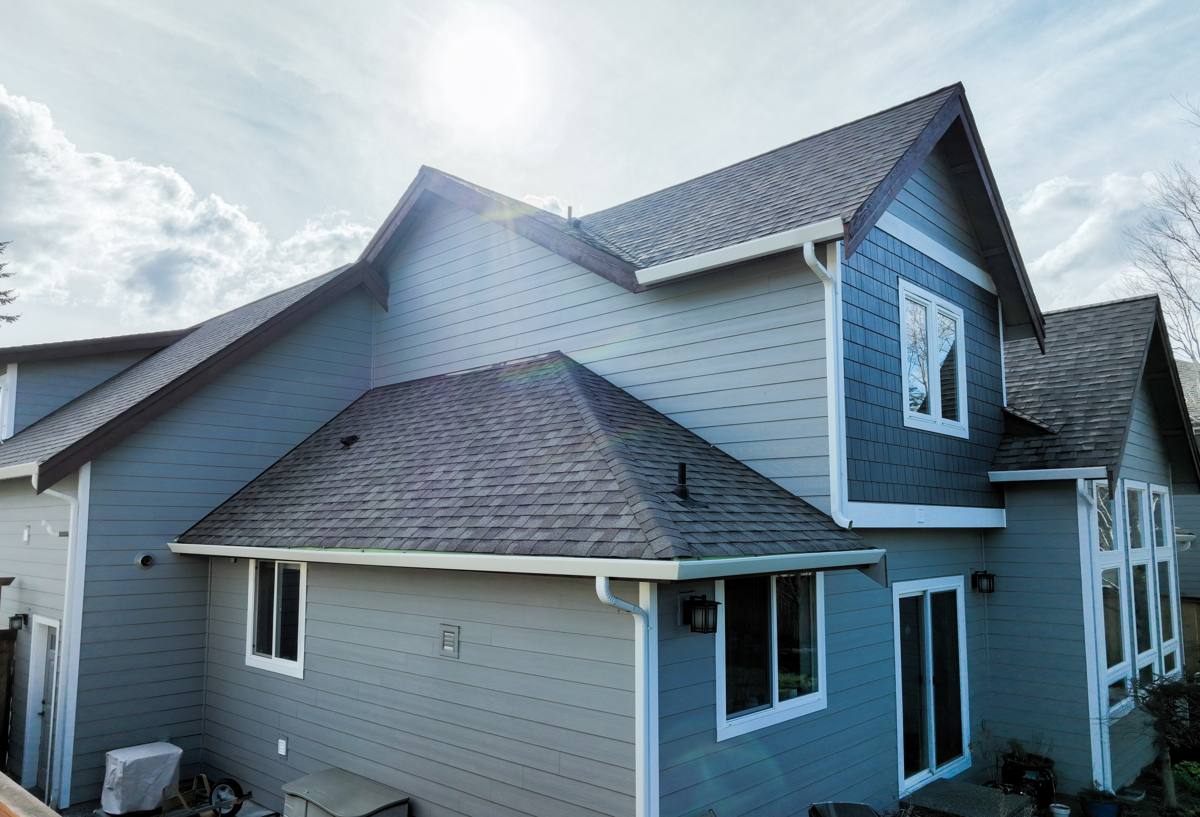
What This Climate Does to Siding Over Time
Driving Rain and Wind-Driven Moisture
Rain in this region rarely falls straight down. Wind pushes it into seams, under lap joints, and behind trim where it was never meant to sit. Over years, that moisture works its way past caulk and flashing that was installed correctly at first but has since shrunk, cracked, or separated.
A Long Moss and Algae Season
Shaded walls, north-facing elevations, and anywhere siding sits close to trees or fences stay damp for weeks at a time in fall and winter. Moss and algae aren't just a cosmetic issue — they hold moisture directly against the siding surface and, on wood-based products, accelerate rot underneath.
Freeze-Thaw Cycles
This area doesn't get brutal winters, but it does get repeated cycles of freezing nights and above-freezing days. Water that's already worked its way into a crack or seam expands when it freezes, widening the damage a little more each time.
Marine Air Exposure
Being close to the Salish Sea means siding, fasteners, and trim deal with more airborne moisture and salt-laden air than homes further inland. Uncoated or poorly coated metal fasteners and trim corrode faster here, and that corrosion often shows up as staining on the siding face long before anyone notices the fastener itself has failed.
Signs Your Siding Needs Repair, Not Just Paint
A fresh coat of paint can hide a lot of problems for a season or two — which is exactly the problem. Watch for these signs before deciding paint alone will fix it:
- Soft or spongy spots when you press on the siding, especially near the bottom courses or under windows
- Bubbling, peeling, or blistering paint in the same spots year after year
- Dark staining or streaking that returns shortly after cleaning
- Visible gaps at butt joints, corners, or where siding meets trim, windows, or doors
- Persistent moss or algae growth on the same panels every season
- Warping, cupping, or panels that no longer sit flat against the wall
- A musty smell or visible staining on interior walls that back up to exterior siding
Repair or Replace? How We Make That Call
Not every damaged section needs a full re-side, and not every repair is worth doing. The right call depends on how much of the wall is affected, what's underneath the siding, and how the existing material has held up.
| Factor | Points Toward Repair | Points Toward Replacement |
|---|---|---|
| Extent of damage | Isolated to one or two areas | Recurring across multiple walls or elevations |
| Sheathing condition | Dry, solid wood behind the siding | Soft, rotted, or stained sheathing found on inspection |
| Material age | Siding is otherwise sound and mid-life | Siding is near or past its expected service life |
| Color/material match | Original product still available or close match found | Discontinued color or material, patches will always stand out |
| Root cause | Cause identified and correctable (flashing, caulk, fastener) | Systemic issue — original install or product-wide moisture problem |
What a Correct Siding Repair Actually Involves
A repair that lasts starts with figuring out why the siding failed in the first place — not just cutting out the bad section and screwing in a new piece.
- Diagnose the source. We trace the moisture path back to its cause — failed caulk, missing or damaged flashing, a fastener that backed out, or a gap that's been letting water behind the panel for years.
- Open it up and check the sheathing. Any competent repair includes pulling back enough siding to see what's underneath. If the sheathing or house wrap is compromised, patching over it just hides the problem for another season.
- Replace the weather barrier where needed. House wrap or building paper that's torn or degraded gets replaced, not taped over.
- Match the material correctly. Panel profile, reveal, and thickness all need to match the existing siding so the repair doesn't create a new water path at the seam.
- Fasten and flash to spec. Corrosion-resistant fasteners, correct flashing details at joints and penetrations, and proper caulk joints — not just enough sealant to make it look finished.
- Finish and blend. Paint or factory finish matched as closely as the product allows so the repair doesn't stand out as an obvious patch.
Why We Repair With James Hardie Components
Lynden Exterior Co installs James Hardie fiber cement siding exclusively — we don't install vinyl, LP SmartSide, Cemplank, Allura, primed spruce, or cedar. That standard carries into repair work too. When we're patching a section of Hardie siding, we're working with a product system we know inside and out: how it fastens, how it takes paint, how it handles moisture, and how the factory finish behaves over time.
ColorPlus Finish Matching
Hardie's ColorPlus factory finish is baked on and holds color more consistently over time than field-applied paint. Matching a repair section to weathered ColorPlus siding still takes care — sun exposure and age change the shade slightly — but starting from a factory-consistent product gives us a far better match than trying to blend field paint on wood-based or vinyl siding that's already faded unevenly.
HZ5 Climate Engineering
Hardie's HZ5 product line is engineered specifically for wetter, colder climates like this one — it resists moisture absorption and holds up to the freeze-thaw pattern this region sees every winter. When we do need to replace a full section rather than patch it, we're not introducing a different material into the wall system; we're extending the same performance the rest of the house was built with.
If your home currently has vinyl or LP SmartSide and needs significant repair, we'll always give you an honest assessment. Sometimes a targeted repair on the existing material is the right, most cost-effective move. But when a section needs to come off entirely, we'll explain why fiber cement is what we'd put back — non-combustible, dimensionally stable, and not prone to the moisture-driven swelling and edge deterioration that engineered wood products can develop over time.
Our Process for Abbotsford, BC and Lynden Homeowners
We treat this whole border area as one service territory, not two separate markets. A siding problem in Abbotsford behaves the same as one in Lynden — same rain patterns, same moss season, same freeze-thaw cycle — so the process is the same on both sides:
- An on-site inspection where we open up the damaged area, not just look at it from the ground
- A clear explanation of what caused the damage and whether repair or replacement makes more sense
- A written estimate before any work starts — no surprise costs once we're into the wall
- Repair work that matches existing material as closely as possible, or a straightforward conversation about what a full-section replacement in Hardie would involve
- A final walkthrough so you can see exactly what was done and why
For homeowners in Abbotsford, we handle the logistics of working across the border as part of scheduling the job — that's on us to manage, not something you need to sort out.
Why Hiring a Crew That Already Works This Area Matters
A contractor who only occasionally works in Whatcom County or the Fraser Valley is learning this climate on your house. A crew that's out here regularly already knows which elevations take the worst weather, where moss builds up fastest, and what a properly flashed joint needs to look like to survive another wet season. That familiarity is the difference between a repair that gets ahead of the problem and one that just resets the clock for a year or two.
We're not asking you to take our word for it sight unseen. If you're seeing soft spots, recurring stains, persistent moss, or gaps opening up in your siding anywhere from Abbotsford, BC through Lynden and the surrounding communities, we'll come take a look, tell you honestly what we find, and give you a free, no-pressure estimate for fixing it right.