 Lynden Exterior
 Deck Repair Built for Abbotsford's Wet Season, Not Just a Patch Job
A deck in the Abbotsford area lives outside for ten or eleven months a year in weather that never really gives it a break. Long stretches of steady Pacific rain, moisture-heavy air moving up the Fraser Valley from the Salish Sea, and short winter days that keep wood surfaces damp for weeks at a time all add up to a slow, steady breakdown of whatever is holding your deck together. We work this same climate belt from our base in Lynden, just across the line in Whatcom County, and we see the same failure patterns on both sides of the border: soft ledger boards, rusted-out fasteners, and moss creeping into every joint that never fully dries out.
Deck repair done right in this region isn't about swapping a board that looks bad and calling it finished. It's about understanding why that board failed in the first place and fixing the moisture path that caused it, so the repair actually holds through the next few wet seasons instead of failing again in the same spot.
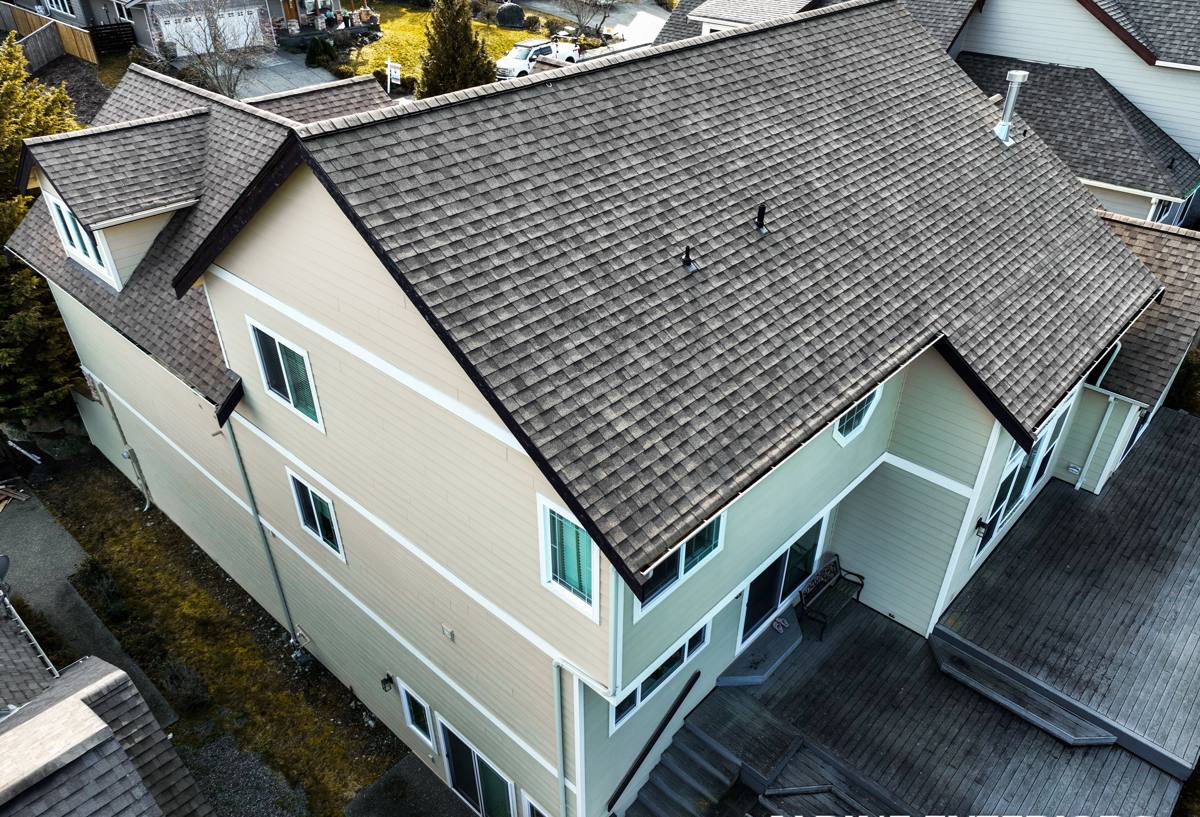
Why Abbotsford Decks Wear Out Faster Than the Manual Says
Most decking and framing lumber is rated assuming reasonable drying time between rain events. That's not really how weather works here. The combination of driving rain, humid air, and a long moss season means wood surfaces in this region often don't get a proper dry-out window for months at a stretch. A few specific problems show up again and again on local decks:
- Ledger board rot where the deck attaches to the house — the single most common serious repair we find, often hidden behind the rim joist flashing
- Moss and algae buildup on horizontal surfaces, which holds moisture against the wood far longer than open rain exposure alone
- Corroded fasteners and connectors, especially on older decks built before corrosion-resistant hardware was standard practice
- Soft or spongy decking boards near stair stringers and rail posts, where water pools and drains poorly
- Railing post rot at the base, where end grain sits closest to standing moisture
None of these are unusual for the region — they're just what happens to an exterior wood structure that spends most of the year damp. The difference between a deck that lasts and one that doesn't usually comes down to whether these issues get caught and corrected early.
Signs Your Deck Needs Repair Now, Before It Gets Worse
Deck problems rarely announce themselves loudly. They show up as small, easy-to-ignore details that quietly get worse each wet season. Worth checking for:
- Boards that feel spongy, bounce slightly, or flex more than they used to underfoot
- A screwdriver or awl that sinks into wood at the ledger, post bases, or stair stringers with light pressure
- Visible gaps opening up between the deck and the house at the ledger connection
- Rust streaks below fasteners or connector hardware
- Green or black staining that doesn't wash off with a light scrub
- Railings that wiggle at the post connection, even slightly
Any one of these on its own might just mean a spot repair. Several together, especially near the ledger or stair connections, usually mean it's time for a proper inspection before the damage spreads into framing that's more expensive to fix.
What an Honest Deck Repair Actually Involves
Structural first, cosmetic second
The framing underneath — ledger board, joists, beams, and post footings — carries the load. If any of that is compromised, replacing surface boards without addressing what's underneath just hides the problem for another season. We check structural connections before we touch anything cosmetic, because a deck that looks fine on top can still be unsafe underneath.
Matching materials correctly
Repairs should use lumber and fasteners rated for the same exposure as the original build, not whatever's on hand. Mixing incompatible metals — say, standard steel screws into pressure-treated lumber with copper-based preservatives — accelerates corrosion and creates a repair that fails faster than the wood around it.
Addressing the moisture source, not just the symptom
A rotted board is usually a symptom of a drainage or flashing problem, not just an aging-lumber problem. We look at how water moves across and off the deck — flashing at the ledger, gaps between boards, slope away from the house — before finishing any repair, so the same spot doesn't fail again in two years.
Repair, Refinish, or Rebuild: How to Tell Which You Need
| Condition | Likely Fix | Why |
|---|---|---|
| Surface graying, minor mildew staining, structure solid | Clean and refinish | Wood is sound; the issue is purely cosmetic weathering |
| A few soft boards, isolated to one area | Spot board replacement | Framing underneath is intact; only the surface layer failed |
| Ledger board or joist rot, wobbly posts | Structural repair | Load-bearing components need replacement before anything else is addressed |
| Widespread rot, multiple failed framing members, deck older than 20-25 years | Full rebuild | Cost of piecemeal repair approaches or exceeds rebuilding with current materials |
We'll always tell you honestly which category your deck falls into. A repair that only delays an inevitable rebuild by a year or two isn't a good use of your money, and we'd rather say so upfront than sell a patch job we don't believe in.
Our Repair Process
1. Full inspection
We check the ledger connection, framing, post bases, stair stringers, and decking surface, probing anywhere moisture is likely to have collected. This tells us what's actually structural versus cosmetic.
2. A clear, written plan
You get a straightforward explanation of what needs fixing, what can wait, and what it will cost — no vague allowances or surprise add-ons partway through.
3. The repair itself
Rotted or compromised material is cut back to solid wood, not just covered over. Framing repairs are completed and inspected before any decking or railing goes back on. Fasteners and hardware are matched to the materials in use to avoid corrosion issues down the line.
4. Sealing and finish work
Any repair is only as good as the protection over it. New and existing wood gets appropriately sealed or finished so the repaired area weathers at the same rate as the rest of the deck, rather than standing out — or failing again — ahead of schedule.
Choosing Materials for a Repair That Lasts
What we use to repair a section depends on what's already there and what you want long-term. Each option comes with real trade-offs worth understanding before you decide:
- Pressure-treated lumber — the most common structural and decking choice locally; affordable and readily available, but requires periodic sealing to perform well through our wet seasons
- Cedar — naturally rot-resistant and a strong appearance match for older decks, though it's a softer wood that needs more attentive maintenance in a climate this damp
- Composite decking — very low maintenance and resistant to rot and moss staining, at a higher upfront material cost, and it requires the framing underneath to still be sound
We won't push composite decking as a universal upgrade during every repair — if your existing framing and railing system is wood and in good shape, mixing in composite boards can sometimes create more maintenance complexity than it solves, particularly around fastening and expansion behavior. We'll walk through what actually makes sense for your specific deck rather than defaulting to the newest product on the market.
Why It Matters That We Already Work This Corridor
Abbotsford sits close enough to Lynden that we're regularly working decks on both sides of the border, and that matters more than it might seem. A crew that mostly works drier regions inland doesn't always account for how aggressively moss and standing moisture attack a deck here — they'll spec a repair that would hold up fine in a different climate and undersell what this one actually demands. Working this corridor consistently means we know which connection points fail first in this weather, what finish products actually hold up through a full wet season, and how to sequence a repair so it isn't undone by the next few months of rain before it's even had a chance to cure properly.
It also means straightforward logistics — scheduling, materials, and follow-up visits — without the friction of a crew that only occasionally crosses into the area.
Keeping a Repaired Deck in Good Shape
Once a repair is done right, a little regular upkeep goes a long way toward not needing another one for years:
- Sweep leaves and debris off the deck surface regularly, especially in fall — trapped organic matter holds moisture and feeds moss growth
- Clean moss and algae off with a soft-bristle brush and appropriate cleaner rather than a pressure washer, which can strip wood fibers and force water into joints
- Check railing posts and stair connections once a year for movement or softness
- Reseal or refinish wood decking on the schedule appropriate to the product — don't wait until graying and cracking are already visible
- Keep gutters and downspouts near the deck clear so runoff isn't draining directly onto or under it
If you're noticing soft spots, movement, or staining on a deck in the Abbotsford area, it's worth having it looked at before another wet season passes. We're happy to come take a look and give you a straightforward, no-pressure estimate on what it would take to fix it right — just fill out the form below.