 Lynden Exterior
 Building New Near Wiser Lake Comes With Its Own Window Rules
Wiser Lake sits in a part of Whatcom County that gets more weather than most people expect until they've lived through a full year here. If you're framing a new home near the lake, the windows you choose and how they're installed will matter more than almost any other exterior decision you make. New-construction window work is not the same job as a replacement — there's no old frame to work around, no compromise forced by an existing rough opening. That's an advantage, but only if the crew doing the work treats it like one. Done right, new-construction installation lets us build the water management into the wall assembly from the start. Done wrong, it bakes a leak path into the house that won't show up for a few years.
We work new-construction window installs for builders and owner-builders around Lynden and the lake regularly, and we've seen both outcomes. This page is about what a correct job looks like for a home going up in this specific spot, not a generic rundown of window brands.
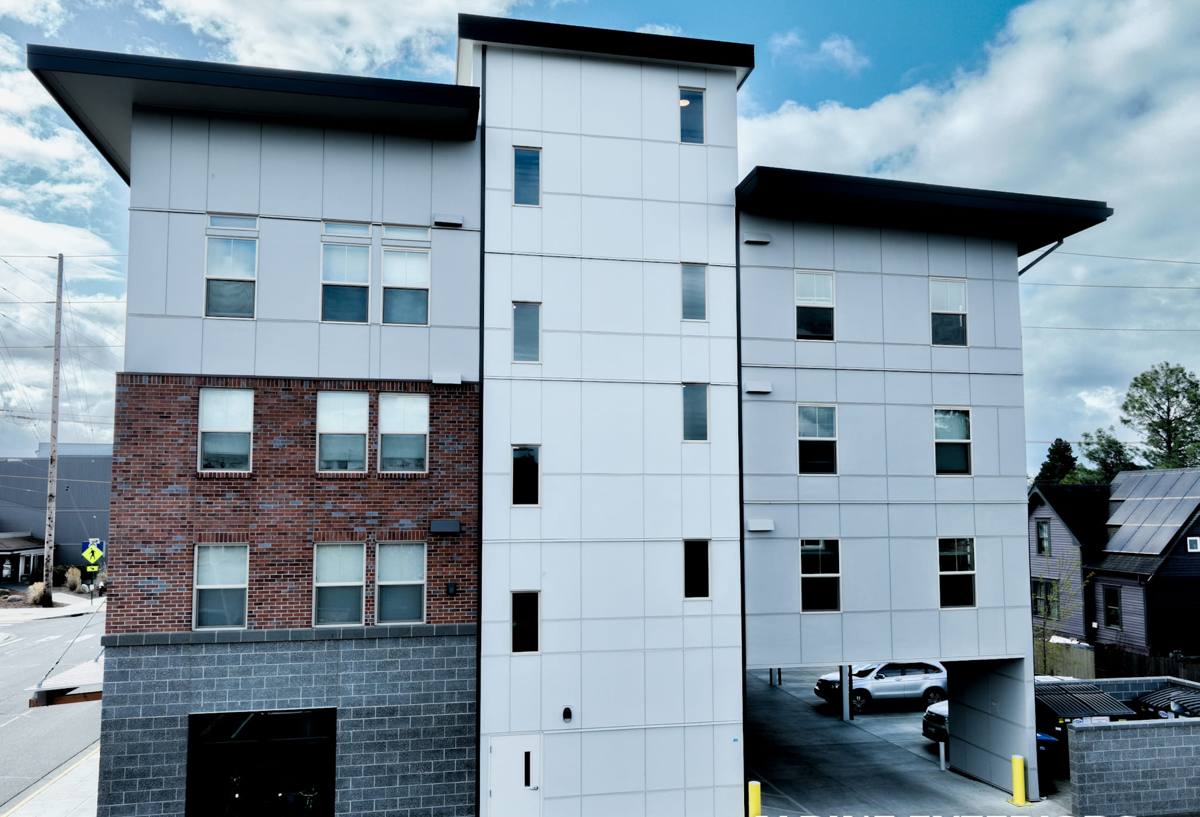
What Wiser Lake's Climate Actually Demands
This part of Whatcom County sees a mix that's tough on building envelopes: salt-tinged marine air moving in off the Sound, long stretches of driving, wind-pushed rain rather than gentle straight-down rain, and a moss season that can stretch for months given the shade and moisture around the lake. None of that is unusual for the region, but it changes what "good enough" means for a window install.
Driving Rain
Wind-driven rain doesn't just fall on a window — it gets pushed sideways and upward under sills and around trim. A window that's air-sealed but not properly flashed will hold up fine in a light shower and fail during the kind of sideways storm that rolls off the lake and across open fields in the winter months.
Moss and Constant Dampness
Around Wiser Lake, shaded north and east elevations stay damp longer than open exposures. That moisture supports moss and algae growth on siding, trim, and window sills, which holds even more water against the frame. A new-construction install needs sill details and drainage planes that don't give moss a foothold right at the window opening.
Salt-Influenced Air
Whatcom County's proximity to marine air brings a low but steady dose of salt into the environment, which accelerates corrosion on hardware, fasteners, and lower-grade cladding over the life of a house. It's not the aggressive salt exposure you'd see right on the water, but over a few decades it adds up, especially on unprotected metal components.
What a Correct New-Construction Install Actually Involves
The window unit itself is only part of the job. The other part — the part that determines whether the house stays dry for the next 30 years — is the integration between the window and the wall assembly. On a new build we get to do this in the right order, which is the whole point of doing it during construction instead of retrofitting later.
- Rough openings framed to the exact manufacturer specification, not "close enough" — undersized or oversized openings force shims and gaps that become leak points
- A sloped sill pan installed under every window, so any water that gets past the sash has somewhere to go besides the framing
- Weather-resistant barrier (house wrap) integrated in proper shingle-lap order — bottom flashing first, side flashing next, top flashing last, always lapping over the layer below
- Corner patches and sealant at all flashing transitions, since corners are where most window leaks actually start
- Nailing fins fastened per the manufacturer's schedule — skipping fasteners to save time is a common shortcut that shows up later as air and water infiltration
- Interior air sealing with backer rod and sealant or low-expansion foam, separate from the exterior water management layer
- Final flashing tape and cladding integration once siding or stone veneer goes on, so the drainage plane stays continuous
Skipping or reordering any of these steps is the single most common reason a "new" window leaks within a few years. The window product almost never fails first — the installation around it does.
Frame Material: What Actually Holds Up Here
For a new build near the lake, frame material affects both up-front cost and how much attention the windows will need over time. We install different materials depending on budget, elevation, and how exposed the window is to weather. Here's how the common options compare for this climate:
| Frame Material | Moisture Performance | Maintenance | Typical Cost Position |
|---|---|---|---|
| Vinyl | Good — won't rot, but seams and corners need quality welds | Low — occasional cleaning | Lower |
| Fiberglass | Very good — dimensionally stable, resists warping in wet/dry cycles | Low | Mid to upper |
| Wood-clad | Good exterior protection, but interior wood still needs a sound seal | Moderate — finish and seals need periodic checks | Upper |
| Aluminum | Prone to condensation and corrosion in marine air unless thermally broken | Moderate to high | Varies |
We don't push one material on every job. A vinyl or fiberglass window installed correctly will outperform a premium wood-clad window installed poorly, every time. The install quality is the bigger variable — the material choice mostly comes down to your budget, the look you want, and how much long-term upkeep you're willing to do.
Glass and Energy Code Considerations
Washington's energy code sets minimum performance requirements for new-construction windows, and those requirements have gotten stricter in recent code cycles. For a home near Wiser Lake, we typically recommend double or triple-pane low-E glass that meets or exceeds the current U-factor requirements for this climate zone, both for comfort and to keep the build compliant at inspection. Your builder or designer should already have a target U-factor as part of the plans — our job is to make sure the units we install actually hit it, not just claim to.
How Our Process Works on a New Build
Because new-construction work happens on someone else's timeline — the framer's, the builder's, the inspector's — coordination matters as much as installation skill.
- Plan review and rough opening verification — we check window schedules against actual framed openings before anything gets installed, catching sizing mistakes while they're still cheap to fix.
- Sill pan and flashing sequence — installed in the correct shingle-lap order described above, inspected before house wrap covers it.
- Window setting and shimming — units set plumb, level, and square, fastened to the full manufacturer schedule.
- Interior and exterior sealing — air sealing on the inside, water management sealing on the outside, kept as separate systems.
- Cladding integration — coordinating with siding or trim crews so the drainage plane stays continuous once exterior finishes go on.
- Final walkthrough — operation check, hardware check, and a look at every sill and corner before we call it done.
We also communicate directly with builders and GCs on scheduling, since window installation on a new build has to land at exactly the right point — after weather barrier, before cladding — and slipping that window causes delays for every trade after us.
Why It Matters to Hire a Crew That Already Works Wiser Lake
A lot of window problems in this region trace back to installers who do great work in a drier climate zone and don't adjust for what Whatcom County actually throws at a house. Wiser Lake in particular has enough shaded, damp lots that a flashing detail that's "fine" in an open, sunny subdivision can fail here within a few wet seasons. A crew that's already installed windows on lake-adjacent lots knows which elevations need extra attention, which sill details hold up against driving rain, and how the local moss and moisture pattern behaves differently than it does even a few miles away in more open parts of Lynden.
There's also a practical side: familiarity with local building department expectations and inspection sequencing saves real time on a new build, where a failed rough-in inspection can push back the whole schedule.
Questions Worth Asking Before Windows Go In
- Are sill pans being installed under every window, not just the ones facing the weather?
- Is the flashing sequence shingle-lapped correctly with the house wrap, top layer over the one below?
- Do the specified U-factors actually meet the current Washington energy code for this climate zone?
- Is someone checking rough openings against the window schedule before units arrive on site?
- Who is responsible for the cladding-to-window transition once siding goes on — is that coordinated, or assumed?
- Are corner flashing patches being used at every opening, not just where it's convenient?
If you're building near Wiser Lake and want windows installed the way this climate actually requires, we're glad to walk the plans, look at the site, and give you a straightforward, no-pressure estimate using the form below.