 Lynden Exterior
 Metal Roofing in Sumas: A Roof Built for This Corner of Whatcom County
Sumas sits right up against the border, out on the flat farmland east of Lynden, and the roofs out here take a different kind of beating than roofs twenty miles south in Bellingham. You've got open exposure with little tree cover to break the wind, damp air rolling off the Nooksack valley, and long stretches of gray, wet weather that don't let a roof dry out for days at a time. A roof here needs to shed water fast, hold up to wind-driven rain, and resist the moss and algae that build up on anything that stays damp too long.
Metal roofing handles that combination better than most other materials, but only when it's specified and installed correctly for this climate. A metal roof put on the way you'd do it in a dry inland climate won't perform the same way here. This page covers what Sumas and Lynden homes actually need from a metal roof, what a correct installation involves, and how we approach the job.
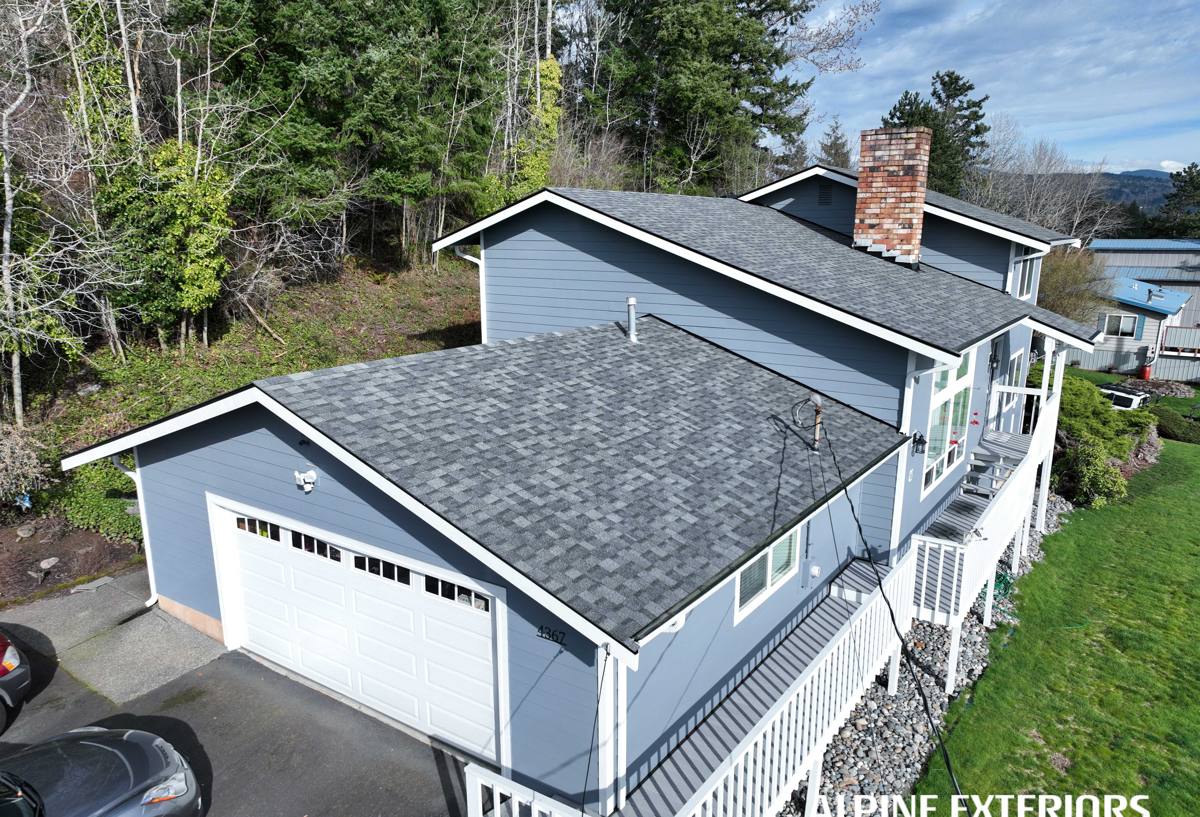
What This Climate Actually Demands From a Roof
Driving rain and wind exposure
Storms coming off the Strait of Georgia and up the Fraser Valley don't just drop rain straight down — wind pushes it sideways, up under laps and into fastener penetrations that would stay dry in a calmer climate. Out on the open farmland around Sumas, there's less windbreak than in town, so roofs see more of this wind-driven exposure. That means underlayment, flashing, and fastener choices matter more here than they would on a sheltered in-town lot.
A long moss season
Whatcom County's wet season runs long, and anything on a roof that holds moisture — valleys, north-facing slopes, areas shaded by trees or outbuildings — becomes a place where moss and algae take hold. Moss doesn't just look bad. It holds water against the roofing material, works into seams and laps, and on some materials it accelerates decay underneath. A roof surface that sheds water quickly and doesn't give moss anything to grip is worth more here than in a drier region.
Salt air and corrosion
This part of Whatcom County gets enough marine influence in the air that metal components — fasteners, flashing, panel edges — need real corrosion resistance, not just a painted finish. Cutting corners on fastener quality or panel coating shows up years later as rust streaks and premature failure at the exposed edges.
Temperature swings and freeze-thaw
Winters here aren't brutally cold, but freeze-thaw cycles happen enough that trapped moisture under a roofing material can do real damage over a season. Proper ventilation and underlayment matter as much as the roofing material itself.
Why Metal Roofing Fits This Climate
Metal roofing isn't the right choice for every home or every budget, but for the conditions Sumas and Lynden see, it has real advantages:
- Steep water-shedding profile that doesn't give wind-driven rain time to work backward under a lap
- A hard, smooth surface that gives moss and algae far less to grip than shingles or wood
- Long service life when the coating and fasteners are matched to a marine-influenced climate
- Better performance under heavy, wind-driven storms than most other roofing materials at a comparable price point
- Lighter weight than many alternatives, which is a factor on older farmhouse framing common in this area
Not every metal roofing system is built the same way, and the differences matter a lot in this climate.
Comparing Metal Roofing Types
| System | How It's Fastened | Best Fit | Climate Trade-offs |
|---|---|---|---|
| Standing seam | Concealed clips, no exposed fasteners on the field | Homes wanting the longest service life and lowest maintenance | Best performance against wind-driven rain; higher upfront cost |
| Exposed fastener panel | Screws driven through the panel face | Outbuildings, shops, budget-conscious re-roofs | Lower cost, but fastener washers age and need periodic checking |
| Stone-coated steel | Interlocking panels styled like shingle or tile | Homeowners wanting a traditional look with metal's durability | Good moss resistance; more seams than standing seam |
For most homes in the Sumas and Lynden area, we recommend standing seam for the primary roof and reserve exposed-fastener panel for shops, barns, and outbuildings where the cost savings make more sense and the maintenance is easy to keep up with.
What a Correct Metal Roof Installation Involves
Metal roofing is unforgiving of shortcuts. A panel that looks fine on installation day can leak within a season or two if the details underneath were rushed. On every metal roof we install, the work includes:
- Tear-off and inspection of the existing roof deck for rot, soft spots, or prior water damage before anything new goes down
- Ice-and-water shield membrane at eaves, valleys, and around every penetration — the areas most exposed to wind-driven rain
- A synthetic underlayment layer sized for the whole field, not just the vulnerable spots
- Proper ridge and soffit ventilation so trapped moisture has somewhere to go instead of condensing under the panels
- Corrosion-resistant fasteners and clips matched to the panel material, not generic hardware
- Custom-fabricated flashing at every valley, wall transition, and penetration — not stock trim stretched to fit
- Panel layout planned to minimize seams in high-exposure areas and to keep cut edges away from valleys where water concentrates
Skipping any one of these doesn't usually cause a problem right away. It shows up two, five, or ten years later as a leak that's hard to trace back to its source — which is exactly why the underlayment and flashing details matter as much as the visible panel.
How Our Process Works
1. On-site assessment
We walk the roof, check the deck condition, look at existing ventilation, and note trouble spots — valleys, chimneys, dormers, anywhere moss has been building up. For Sumas properties, we also look at wind exposure and how open the lot is, since that affects fastening and flashing decisions.
2. A written scope and honest product recommendation
We tell you which panel system fits your home and budget, and why — not the most expensive option by default. If exposed-fastener panel is the right call for your situation, we'll say so.
3. Tear-off and deck repair
Any soft or damaged decking gets replaced before a single panel goes on. Installing new roofing over a compromised deck just hides a problem instead of fixing it.
4. Underlayment, flashing, and panel installation
This is where a correct install earns its keep — done in the order and to the detail level described above, not rushed to hit a schedule.
5. Final walkthrough
We walk the finished roof with you, point out what was done at valleys and penetrations, and go over any maintenance that's worth doing on your schedule.
Cost Factors for a Sumas Metal Roof
| Factor | Why It Moves the Price |
|---|---|
| Panel system | Standing seam costs more upfront than exposed-fastener panel |
| Roof complexity | Valleys, dormers, and multiple roof planes add labor and flashing work |
| Deck condition | Rot or soft decking found during tear-off adds repair cost |
| Ventilation upgrades | Older homes often need ridge or soffit vent work added during the re-roof |
| Access and pitch | Steep or hard-to-reach roofs take more time and equipment |
We don't quote a number without seeing the roof — anyone who does is guessing. What we can tell you honestly is that metal roofing costs more upfront than asphalt shingles but typically outlasts it by decades, which changes the math over the life of the roof.
Keeping a Metal Roof Ahead of Moss and Debris
Metal roofing needs far less maintenance than shingle or wood roofing, but "far less" isn't "none." In this climate, a little attention goes a long way:
- Keep gutters and valleys clear of fir needles and leaf litter so water has a clean path off the roof
- Trim back overhanging branches that shade the roof and keep it damp longer than it needs to be
- Have fasteners and flashing checked periodically on exposed-fastener systems, since washers age faster than the panel itself
- Address any scratched or damaged coating promptly to prevent a corrosion point from starting
Why It Matters to Hire a Crew That Already Works in Sumas
Metal roofing done right requires knowing how the wind loads a roof out on open farmland, where moss actually builds up on a given roof plane, and which flashing details hold up against the driving rain this area gets in the winter months. A crew that installs roofs across Whatcom County, not just in one neighborhood, has seen how these choices play out over years — which details matter and which ones don't. That's the difference between a metal roof that quietly does its job for decades and one that needs attention within the first few winters.
If you're weighing a metal roof for your home in Sumas or the surrounding Lynden area, we're happy to take a look and give you a straight assessment — no pressure, no upsell. Use the form below to request a free estimate.