 Lynden Exterior
 Why Blaine Siding Wears Differently Than Siding Ten Miles Inland
Blaine sits right on Semiahmoo Bay, and that waterfront position changes what siding has to survive. Homes here take on salt-laden air, near-constant marine humidity, and driving rain that comes in sideways off the water during winter storms. Add in the shaded, damp microclimates common along the Whatcom County coastline and you get a longer moss and algae season than homes see just a few miles inland in Lynden or Ferndale. None of this is dramatic on any single day. It's cumulative — siding that would show minor wear after a decade inland can show real damage in the same timeframe on a Blaine lot with heavy bay exposure.
We're based in Lynden and work Blaine regularly, so this isn't theoretical for us. We see the same failure patterns repeat on house after house: moisture getting behind seams that were never properly flashed, moss holding water against siding faces long after a storm has passed, and fasteners or trim details that were fine for a drier climate but weren't built for salt air. Repairing siding correctly here means understanding those patterns before you ever pull a piece off the wall.
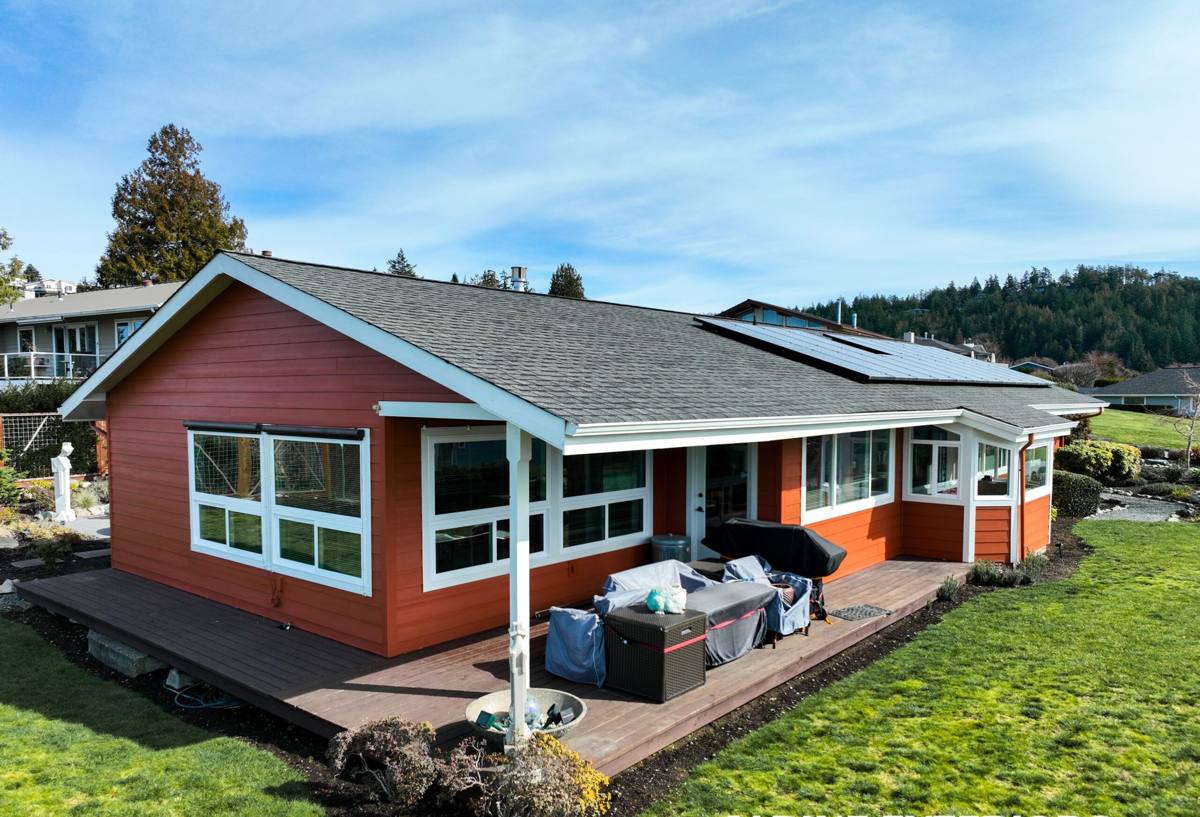
What Salt Air and Moisture Actually Do to Siding
It helps to know what you're up against, because it explains why some repairs hold for years and others fail again within a season.
Salt Air
Airborne salt is corrosive to metal fasteners, flashing, and trim hardware. Over time it can also degrade certain paint and coating systems faster than they'd wear in a non-coastal environment, leading to chalking, fading, or finish breakdown around joints and edges.
Driving Rain
Wind-driven rain doesn't just fall — it gets pushed sideways and upward into seams, laps, and butt joints that were designed for water running straight down. Any gap in flashing, caulking, or panel overlap becomes an entry point.
Extended Moss and Algae Season
Shaded, moisture-retentive spots — under eaves, along fence lines, on north-facing walls — stay damp longer near the bay. Moss and algae hold that moisture directly against the siding surface, which accelerates rot in wood-based products and can stain or degrade coatings on other materials.
How Different Siding Materials Hold Up in This Climate
Repair decisions depend a lot on what's already on the house. Here's how the common materials we encounter in Blaine actually behave under this kind of exposure.
| Material | Common Coastal Issue | Repair Reality |
|---|---|---|
| Cedar / primed spruce | Moisture absorption, rot at laps and butt joints, moss growth | Rot spreads under paint before it's visible; repairs often reveal more damage than expected |
| Vinyl | Warping from heat/cold cycling, cracking in cold snaps, seams that let wind-driven rain behind the panel | Color-matching old, sun-faded panels is difficult; damaged sections often can't be patched invisibly |
| LP SmartSide (engineered wood) | Edge swelling if factory seal is compromised, moisture wicking at cut ends and fastener points | Once moisture gets into the substrate, the affected section typically needs full replacement, not a patch |
| James Hardie fiber cement | Not moisture-absorbent; issues are almost always installation-related (bad flashing, poor caulking, wrong fasteners) | Repairs are usually localized — fix the install detail, replace the affected piece, done |
This is the core reason we standardized on James Hardie for full installs: it's not organic material, so it doesn't rot, swell, or feed moss the way wood-based products can. But we still repair whatever material is already on your Blaine home — the table above is about setting realistic expectations for what a repair can and can't fix, depending on what you're starting with.
Signs Your Blaine Home Needs a Siding Repair
Because damage here often starts hidden, we tell homeowners to check a specific set of trouble spots rather than just scanning for obvious cracks.
- Soft or spongy spots when you press on siding near the bottom edges or around window trim
- Persistent moss or dark streaking that keeps coming back after cleaning, especially on shaded or north-facing walls
- Peeling or bubbling paint concentrated around seams, corners, or fastener heads rather than spread evenly
- Gaps or separation at butt joints and corner trim, which lets wind-driven rain track behind the siding
- Rust streaking from fasteners or flashing, a common coastal-air symptom
- Warped, bowed, or buckled panels, particularly on walls that catch the most wind off the bay
- Interior clues — a musty smell, discolored drywall, or peeling interior paint on an exterior wall — that point to moisture getting through from outside
What a Correct Repair Actually Involves
A siding repair that's done right isn't just "replace the bad board." It's diagnosis first, then repair, in this order:
1. Find the Real Source
Damaged siding is usually a symptom, not the root cause. We look at flashing above windows and doors, caulking at trim joints, and how water is actually moving across the wall before we touch a single piece of siding. Replacing a rotted board without fixing the flashing detail behind it just buys a few more years before it fails again.
2. Assess What's Underneath
Once siding is off, we check the water-resistive barrier (house wrap) and the sheathing behind it. If moisture has gotten past the siding for a while, there can be damage to the layers underneath that needs to be addressed before anything new goes back on.
3. Match or Transition Thoughtfully
If we're repairing an existing Hardie installation, matching ColorPlus finish and profile is straightforward. If the home has an older or discontinued siding product, we'll talk through whether a patch, a partial re-side of the affected elevation, or a full replacement makes the most financial and practical sense — and we'll give you the honest version of that answer, not the version that sells the biggest job.
4. Detail It for the Next 20 Years, Not Just the Next Storm
Proper flashing, correctly lapped house wrap, and fasteners rated for coastal exposure go back in regardless of what the original installer used. This is the step that gets skipped most often on quick patch jobs, and it's the step that determines whether the repair actually lasts.
Repair vs. Replace: How We Help You Decide
Not every damaged section needs a full re-side, and we're not going to tell you it does. But there's a point where repeated patching costs more over time than doing the job right once. A few factors that tip the decision:
| Factor | Leans Toward Repair | Leans Toward Replacement |
|---|---|---|
| Extent of damage | Isolated to one or two elevations or sections | Spread across multiple walls or recurring in the same spots |
| Underlying material | Existing Hardie or sound fiber cement | Rotted wood-based or failing engineered wood siding |
| Age of siding | Under 10-15 years, single clear cause | Original siding nearing or past its practical service life |
| Root cause | One fixable flashing or caulking failure | Systemic issue — wrong material for this exposure, widespread moisture intrusion |
Why James Hardie Holds Up Better in a Bay-Front Climate
When we do recommend replacement — whole-wall, whole-elevation, or whole-house — we install James Hardie fiber cement, and only Hardie. It's not because it's trendy; it's because fiber cement doesn't absorb water the way wood-based products do, so it doesn't swell, rot, or feed moss growth the way cedar, primed spruce, or engineered wood siding can under sustained coastal moisture. Hardie's HZ5 product line is specifically engineered for climates with more moisture exposure, which fits Blaine's bay-front conditions well. The factory-applied ColorPlus finish is baked on under controlled conditions, which holds up better against salt air and UV than field-applied paint, and it carries a strong transferable warranty when installed to spec — which matters, because Hardie's own installation instructions are specific about flashing, gaps, and fastening, and skipping those details is what causes most of the "Hardie problems" people hear about. We install to spec every time, which is exactly why the repairs we get called back for are almost always on other products, not ours.
Why a Crew That Already Works Blaine Matters
Siding repair in a coastal Whatcom County town isn't identical to siding repair in a drier inland market. A crew that already works Blaine knows which elevations take the worst of the wind-driven rain, how long the moss season actually runs here compared to Lynden or Ferndale, and what weather windows are realistic for getting a repair done without rushing a job that needs to cure or seal properly. We also know the practical side — permitting expectations, typical construction in this area, and what's actually common on Blaine homes versus what's more typical a few miles inland. That local pattern recognition is what turns a repair from a guess into a diagnosis.
What Affects the Cost of a Siding Repair
We don't publish flat repair prices because the range is genuinely wide — a single-board fix and a multi-elevation moisture repair aren't the same job. The main cost drivers we walk through with every Blaine homeowner:
| Factor | Why It Matters |
|---|---|
| Extent of hidden damage | What's found behind the siding once it's opened up often changes the scope |
| Access and elevation height | Second-story or hard-to-reach walls take more time and equipment |
| Material match | Matching existing siding (especially older or discontinued products) can add time versus a straightforward Hardie-to-Hardie repair |
| Flashing and moisture barrier condition | Repairing the water management system properly, not just the visible siding, adds labor but prevents repeat failures |
Keeping Repaired Siding in Good Shape Afterward
A correct repair should hold for years, but coastal conditions mean a little upkeep goes a long way:
- Rinse moss and algae off shaded or north-facing walls before it builds up a heavy layer
- Keep gutters clear so overflow isn't running down the siding face during winter storms
- Trim back vegetation that keeps a wall shaded and damp longer than it should be
- Do a visual check after major windstorms for lifted trim, loose panels, or new gaps at joints
- Call about small issues (a soft spot, a gap, a stain) before they become a larger repair
If your Blaine home has siding damage — or you're just not sure whether what you're seeing is cosmetic or something that needs attention now — we're happy to come take a look. The estimate is free, there's no pressure to sign anything on the spot, and you'll get a straight answer about whether it's a repair, a partial re-side, or something you can leave alone for now.