 Lynden Exterior
 Siding That Has to Work in Sumas, Not Just Look Good on a Brochure
Sumas sits out in the Nooksack River valley near the Canadian border, and homes here take on a different kind of weather load than a house closer to Bellingham Bay or up on higher ground. You get long stretches of damp, marine-influenced air moving through Whatcom County, driving rain that comes in sideways during winter storms, and a moss and algae season that can run most of the year on north-facing walls and anything shaded by trees or a neighboring structure. Any siding material installed here has to shed water fast, resist moisture wicking at the joints, and stand up to organic growth without turning chalky, cupping, or rotting at the bottom courses within a decade.
This page is specifically about James Hardie fiber cement siding installed on homes in and around Sumas — what the climate actually demands, what a correct installation looks like, and how our process works when we're on your property. We only install James Hardie. That's not a marketing line; it's a standard we hold because we've seen what happens when the wrong product or a rushed install meets this valley's weather.
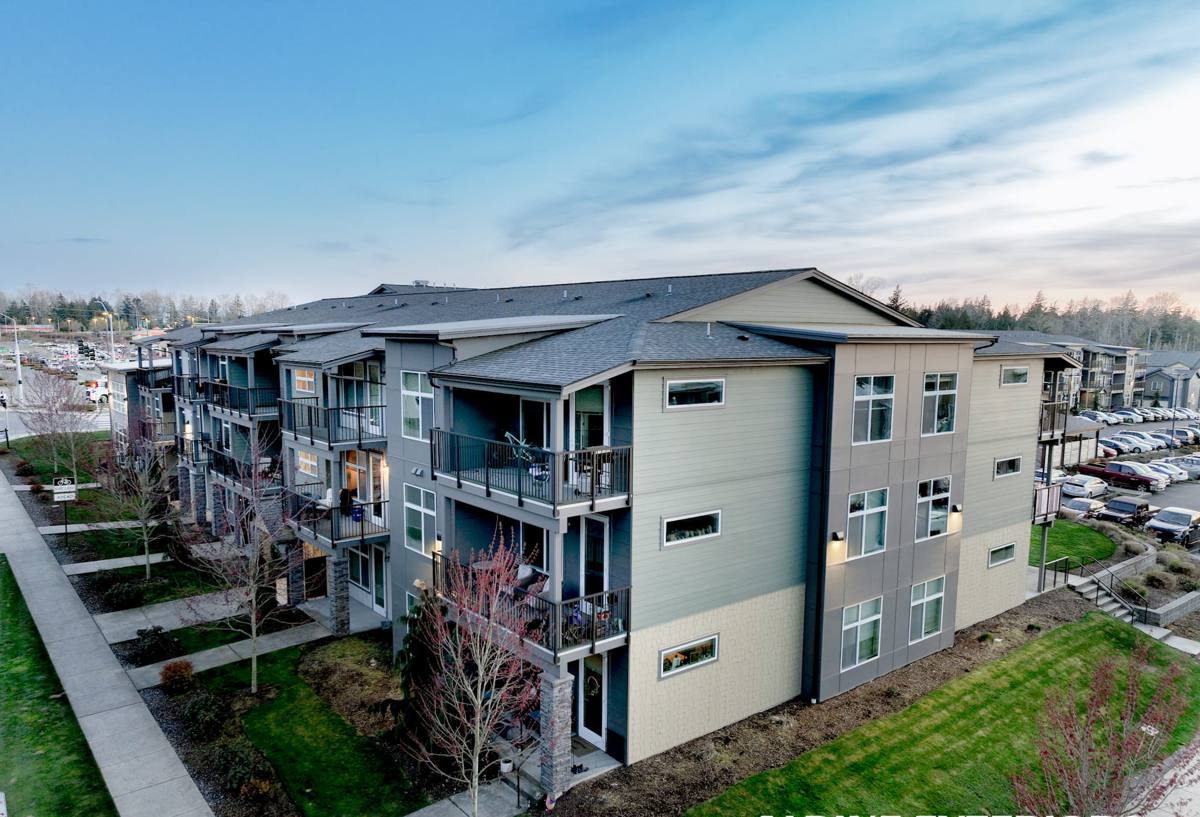
What Driving Rain and a Long Moss Season Do to Siding
Two climate factors matter most for Sumas homes: wind-driven rain and prolonged surface moisture.
Driving Rain and Wind-Driven Water
When rain comes in at an angle instead of falling straight down, it gets pushed up under laps, into butt joints, and behind trim if the flashing details and gaps aren't right. Water that gets behind the siding plane doesn't evaporate quickly in this climate — it sits against the wall sheathing, and that's where rot, mold, and sheathing damage start. This is a workmanship issue as much as a material issue. Even a premium siding product installed with tight-butted joints, missing flashing, or no rainscreen gap will trap water the same as a cheap one.
Moss, Algae, and Constant Surface Moisture
Shaded walls, tree cover, and the valley's tendency to hold morning fog and dew mean some sections of a house rarely fully dry out between rain events. Vinyl and wood-based products are especially prone to green and black staining under these conditions, and once algae gets a foothold in a porous or damaged surface, pressure washing only knocks it back temporarily. Siding here needs a factory finish and a substrate that doesn't feed organic growth or absorb water into the material itself.
Why We Only Install James Hardie in Sumas
James Hardie fiber cement is a cement, sand, and cellulose fiber composite. It's non-combustible, it doesn't swell or delaminate the way wood-based products can when they take on repeated moisture, and its factory-applied ColorPlus finish is baked on and warranted separately from the substrate — which matters in a climate where UV isn't the main enemy, but moisture cycling is. We don't install LP SmartSide, vinyl, Cemplank, Allura, primed spruce, or cedar. Those are legitimate products with their own strengths, but they each ask a homeowner to accept a maintenance burden, a moisture vulnerability, or a warranty structure that we don't think holds up as well against the specific combination of driving rain and long-duration dampness that a Sumas property deals with year after year.
Standardizing on one product also means our crews aren't relearning installation quirks on every job. They know Hardie's fastening patterns, gapping requirements, and factory finish handling cold, and that consistency is part of what keeps a siding job from becoming a callback five years later.
The Hardie Product Lines We Use on Whatcom County Homes
James Hardie engineers its siding by climate zone (called "HZ" zones), and Western Washington falls into the wetter, milder HZ5 zone. That affects the formulation Hardie ships to this region versus what gets sold in a dry, hot climate. On top of that, we select specific product lines based on the house and its exposure.
HardiePlank Lap Siding
The most common choice for Sumas homes — horizontal lap siding available in several profiles and textures (smooth, cedarmill, beaded). It's the workhorse product for full re-sides and does well on walls that take direct rain exposure.
HardiePanel Vertical Siding
Used for accent sections, gable ends, or a more modern look, often paired with battens. Vertical orientation sheds water differently than lap siding, so the flashing details change accordingly.
HardieShingle
Staggered or straight-edge shingle profiles for accent gables or a more traditional look — useful on homes where a full shingle wall or a decorative gable feature is part of the design.
HardieTrim
Fiber cement trim boards for corners, window and door casing, fascia, and frieze boards. Pairing Hardie trim with Hardie siding avoids the mismatched expansion and moisture behavior you get when fiber cement siding is trimmed out in wood or PVC.
What a Correct James Hardie Installation Actually Involves
The product is only half the equation. Most of the siding failures we get called out to inspect in this region trace back to installation shortcuts, not the material itself. On a climate like this one, the details below aren't optional extras — they're what keeps water out of the wall assembly.
- Weather-resistive barrier installed and lapped correctly behind the siding, with all penetrations sealed
- A drainage gap or rainscreen strategy so any water that gets behind the siding plane can drain and the wall can dry
- Proper starter strip at the base course so the first row of siding sits at the correct angle and height
- Manufacturer-specified nail placement and fastener spacing — over-driven or under-driven nails are a common failure point
- Correct gapping at all butt joints and around windows, doors, and trim to allow for material movement
- Flashing above windows, doors, and any horizontal trim, plus kick-out flashing where a roofline meets a wall
- Factory-cut and field-cut edges sealed or caulked per Hardie's install guidelines before they're closed up
- Minimum clearance maintained between the bottom of the siding and grade, decks, or roof lines to keep splashback and standing water away from the material
Skip any one of these and you can still end up with moisture problems behind Hardie siding — the product resists water well, but it isn't a substitute for a correctly built wall assembly.
Our Process, Start to Finish
- On-site assessment. We walk the exterior, check the condition of the existing siding, sheathing, and trim, and look at exposure — which walls take the most weather, where moss and algae are already showing, and where water has clearly been getting behind the current siding.
- Scope and estimate. We put together a written scope covering removal (if applicable), any sheathing repair, house wrap, flashing details, the Hardie product lines and profiles we recommend for each elevation, and trim.
- Tear-off and inspection. Once the old siding comes off, we inspect the sheathing and framing underneath. This is when hidden rot or moisture damage from a prior installation typically shows up, and we address it before anything new goes on the wall.
- Weather barrier and flashing. House wrap, flashing, and drainage details go in first — this stage matters more to long-term performance than the siding itself.
- Hardie installation. Siding, trim, and any accent shingle or panel work goes up to manufacturer spec, with attention to fastening, gapping, and joint placement.
- Final detailing and walkthrough. Caulking, touch-up paint on any field-cut edges, cleanup, and a walkthrough so you know what was done and what maintenance (if any) to expect going forward.
What Affects the Cost of a Sumas Siding Project
Every home is different, so we don't quote a project without seeing it, but these are the main factors that move the price up or down on a Hardie re-side in this area.
| Factor | Why It Matters |
|---|---|
| House size and number of stories | More square footage and taller walls mean more material, more labor, and more staging/scaffolding |
| Condition of existing siding and sheathing | Rot or moisture damage found during tear-off adds repair scope before new siding can go on |
| Number of corners, trim details, and gables | Cutting and fitting around windows, dormers, and accent gables takes more labor than flat wall runs |
| Product line selection | HardiePlank, HardiePanel, and HardieShingle carry different material and labor costs |
| Access and site conditions | Tight lot lines, fencing, landscaping, or a hard-to-reach second story affect setup time |
| Paint versus ColorPlus factory finish | Factory-finished ColorPlus siding costs more upfront but carries its own finish warranty and skips a field-paint step |
Why Hiring a Crew That Already Works in Sumas Matters
A siding contractor who mostly works elsewhere in Whatcom County or across the state line can still do competent work, but there's real value in a crew that's used to this specific valley's weather pattern — the fog that sits in low ground, the way wind-driven rain hits certain elevations harder than others, and how long a north wall stays damp compared to a south-facing one. That local pattern recognition shows up in small decisions: where we push for extra flashing, which walls we flag for a rainscreen gap even when it's not strictly required, and how we sequence a job around the wetter months so materials and sheathing aren't sitting exposed longer than necessary.
It also matters for accountability. A local crew is the one you call if something needs a look five years down the road, not a company that did one job in the area and moved on.
Is Your Sumas Home Ready for a Siding Assessment?
If your current siding is cupping, showing dark streaks that won't wash off, or you've noticed soft spots near the bottom courses or under windows, those are signs it's worth having someone take a real look before it turns into a bigger repair. We're happy to walk your property, tell you honestly what we see, and put together a written estimate for a James Hardie siding install — no pressure, no obligation. Use the form below to get started.