 Lynden Exterior
 Storm Damage Roof Repair for Kendall Homes
Kendall sits close enough to the foothills and open farmland east of Lynden that roofs here take a different kind of beating than roofs in town. Wind funnels down out of the passes, driving rain sideways during winter storms, and the tree cover along the Nooksack corridor drops branches and debris that most homeowners never see land. When a storm passes through and something on your roof shifts, cracks, or starts leaking, you need a repair that accounts for how this specific area weathers a roof, not a generic patch job.
We work Kendall regularly as part of our Lynden service area, which means we already know the roofing profiles common out here, the pitch and exposure issues that show up on acreage properties, and the difference between damage that needs a targeted repair versus damage that's telling you the roof is further along than it looks.
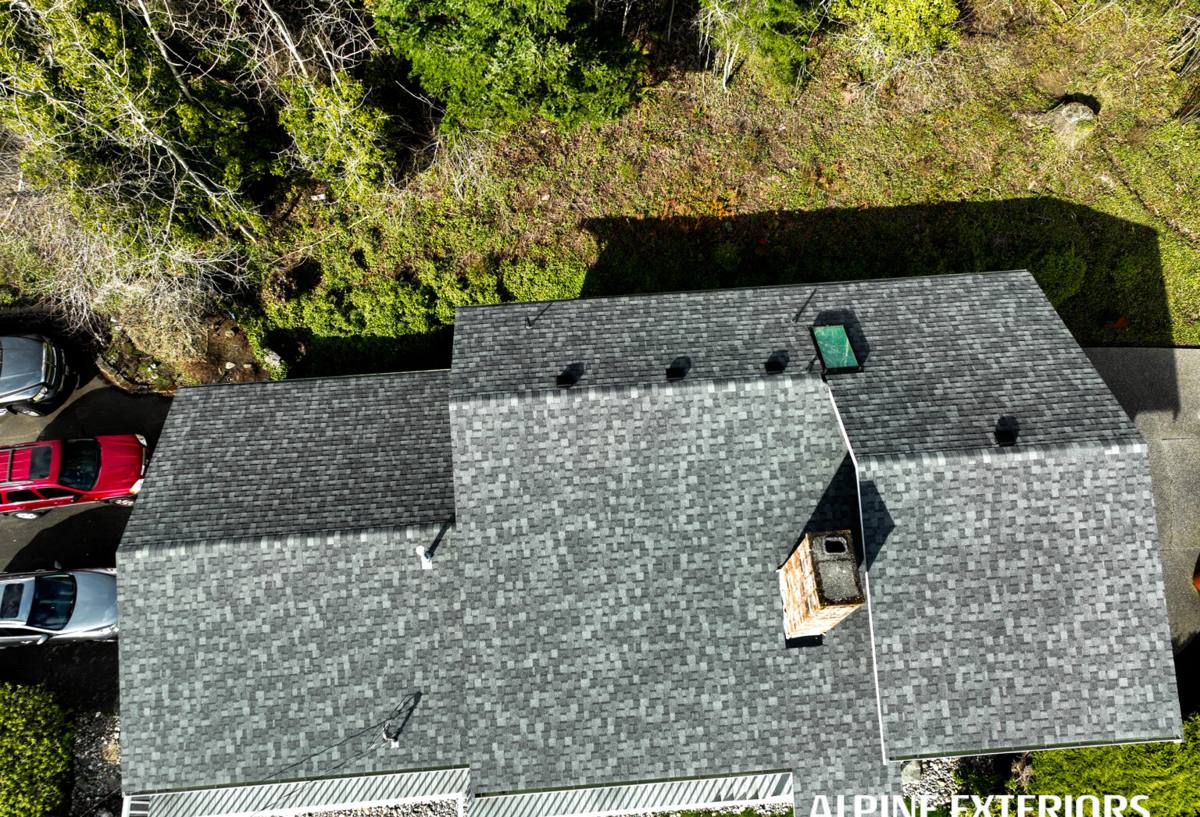
Why Storm Damage Looks Different in Whatcom County
Three things drive most of the storm-related roof calls we get in this part of the county, and they compound each other over a Pacific Northwest roof's lifespan.
Salt Air and Moisture Load
Even inland from Bellingham Bay, marine air moves through Whatcom County constantly. That moisture keeps roofing materials, fasteners, and flashing damp for long stretches of the year. Metal components corrode faster than they would in a dry climate, and any gap in a seal becomes an entry point for water that doesn't get a chance to dry out between rain events.
Driving Rain and Wind-Driven Damage
Storms in this area rarely bring straight-down rain. Wind pushes it sideways and up under shingle edges, ridge caps, and flashing that would shed water fine in a calmer climate. This is why storm damage often shows up first as a leak somewhere the roof looks intact from the ground — the failure point is a lifted edge or a flashing seam, not an obvious hole.
Long Moss Season
Shade, moisture, and mild temperatures give moss a long growing window here, often eight months or more out of the year. Moss holds water against the roofing surface, lifts shingle edges as it grows, and adds weight. A storm that would cause minor damage to a clean roof can cause real damage to a moss-covered one, because the moss has already compromised the surface and the fasteners underneath.
What Storm Damage Actually Looks Like
Homeowners in Kendall usually notice one of a few signs after a storm. None of these are things to wait out.
- A new water stain on a ceiling or in the attic, especially after a windy rain event
- Shingles or panels visibly lifted, cracked, or missing after high wind
- Granules collecting in gutters or at downspout outlets — a sign of shingle surface wear accelerated by impact
- Flashing pulled away from a chimney, skylight, or sidewall
- A branch or limb strike that dented, cracked, or punctured roofing material
- Sagging or soft spots on the roof deck, which usually means water has been getting in for longer than one storm
Some of this is visible from the ground with binoculars. Some of it isn't visible at all until someone gets on the roof and checks the parts that don't show from the driveway — valleys, behind chimneys, under ridge caps.
Our Storm Damage Inspection Process
When we get a storm damage call in Kendall, we don't start with a sales pitch. We start with a straight assessment of what's actually wrong.
Step 1: Ground and Attic Check
Before anyone climbs a ladder, we look at what the ground and attic are telling us — debris patterns, gutter contents, and any interior staining or dampness that points to where water is getting in.
Step 2: Full Roof Walk
We physically walk the roof and check every plane, valley, and penetration point — chimneys, vents, skylights, sidewalls. Storm damage doesn't always concentrate where the wind hit hardest; it often shows up at the weakest existing point in the roof system.
Step 3: Honest Scope Assessment
We tell you what's storm damage, what's pre-existing wear the storm exposed, and what's cosmetic versus functional. Not every issue we find needs to be fixed today, and we'll say so.
Step 4: Written Repair Plan
You get a clear explanation of the repair scope, the materials involved, and a realistic timeline — before any work starts.
What a Correct Repair Involves
A storm damage repair that actually holds up in this climate goes beyond swapping out the obviously broken shingles or panels. It has to address the water path, not just the visible damage.
| Repair Element | Why It Matters Here |
|---|---|
| Matching shingle or panel replacement | Mismatched materials weather differently and can create new water pathways at the seam |
| Flashing inspection and resealing | Wind-driven rain exploits flashing gaps first; this is the most common leak source we find |
| Decking check where leaks occurred | Prolonged moisture exposure can soften or rot decking, which won't show until it's opened up |
| Fastener and seam check on surrounding sections | Salt-laden marine air corrodes fasteners faster; storm stress can loosen ones nearby that look fine |
| Moss and debris clearing | Leaving moss in place after a repair undermines the new work almost immediately |
Repair Versus Replacement — How We Decide
Not every storm-damaged roof in Kendall needs a full replacement, and we're not going to tell you it does. The honest factors we weigh:
- Extent of the damage: Isolated damage to one section is usually a repair. Damage spread across multiple planes, especially combined with existing wear, points toward replacement.
- Age of the roofing material: A repair on a roof already near the end of its expected service life is a short-term fix. We'll tell you if that's the case.
- Underlying deck condition: If water has been getting into the decking for a while, patching the surface without addressing the deck just delays the same problem.
- Moss and moisture history: A roof with heavy, long-term moss buildup has usually lost more of its service life than the surface damage alone suggests.
- Insurance considerations: If the damage is storm-related and significant, a documented repair estimate can matter for a claim — we'll give you clear, itemized documentation either way.
Working with Insurance on Storm Claims
Storm damage claims move faster and more smoothly when the documentation is clear from the start. We photograph and document the damage during the inspection, note the likely cause, and provide a written scope and estimate that you can hand directly to your adjuster. We're not an insurance company and we don't promise claim outcomes — but we won't inflate a scope to chase a bigger payout, and we won't downplay real damage to make a quick sale. You get a straight account of what's wrong.
Why a Local Kendall Crew Matters
A roofing crew that already works out here shows up already knowing a few things a crew from farther away doesn't: how exposed Kendall properties tend to be relative to the roads and tree lines, how fast moss establishes on north-facing planes given the local shade and moisture pattern, and which flashing details tend to fail first on the roofing systems common to this area. That familiarity shortens the inspection, sharpens the diagnosis, and means fewer surprises once a repair is underway.
It also means we're not driving an hour-plus each way to check on a repair, follow up on a warranty question, or come back out if something needs a second look after the next storm. Being local to Lynden and the surrounding area, including Kendall, is part of how we keep repairs accountable.
A Practical Post-Storm Checklist
After a significant wind or rain event, here's what's worth checking before you call anyone:
- Check the attic for new damp spots, staining, or daylight showing through the roof deck
- Look at ceilings and around interior chimneys or skylights for staining
- Check gutters and downspouts for excess granules or debris buildup
- Scan the yard for shingle pieces, flashing, or panel fragments
- Note any large branches that came down near or on the roofline
- Photograph anything visible from the ground for your own records, even before a professional inspection
If any of these turn up something, get an inspection sooner rather than later. Storm damage left exposed to more rain — which, in this climate, is never far off — tends to get worse fast.
Get a No-Pressure Roof Inspection
If a recent storm has you wondering about your roof, we're glad to come take a straight look and tell you exactly what we find — repair, monitor, or replace. There's no pressure and no charge for the estimate. Just fill out the form below and we'll get a local crew out to your Kendall property.