 Lynden Exterior
 Why Siding Repair in Nooksack Isn't a One-Size Job
Nooksack sits in the Nooksack River valley in Whatcom County, close enough to the water and low enough in elevation that the marine air pushing in off the Salish Sea reaches it just as reliably as it reaches the coast. That means the same combination that wears down siding all over northwest Washington shows up here too: salt-tinged marine air, long stretches of driving rain, and a moss season that can run from fall through spring. Add in the valley's shade from tree cover and its cooler, damper microclimate compared to more open parts of Whatcom County, and you get siding that ages differently than siding on a dry, sun-exposed lot even a few miles away.
That's the backdrop for every siding repair call we take in this area. A repair here isn't just patching a hole or replacing a cracked board — it's understanding why that board cracked or that corner started absorbing water in the first place, and making sure the fix doesn't just cover the symptom for a season or two.
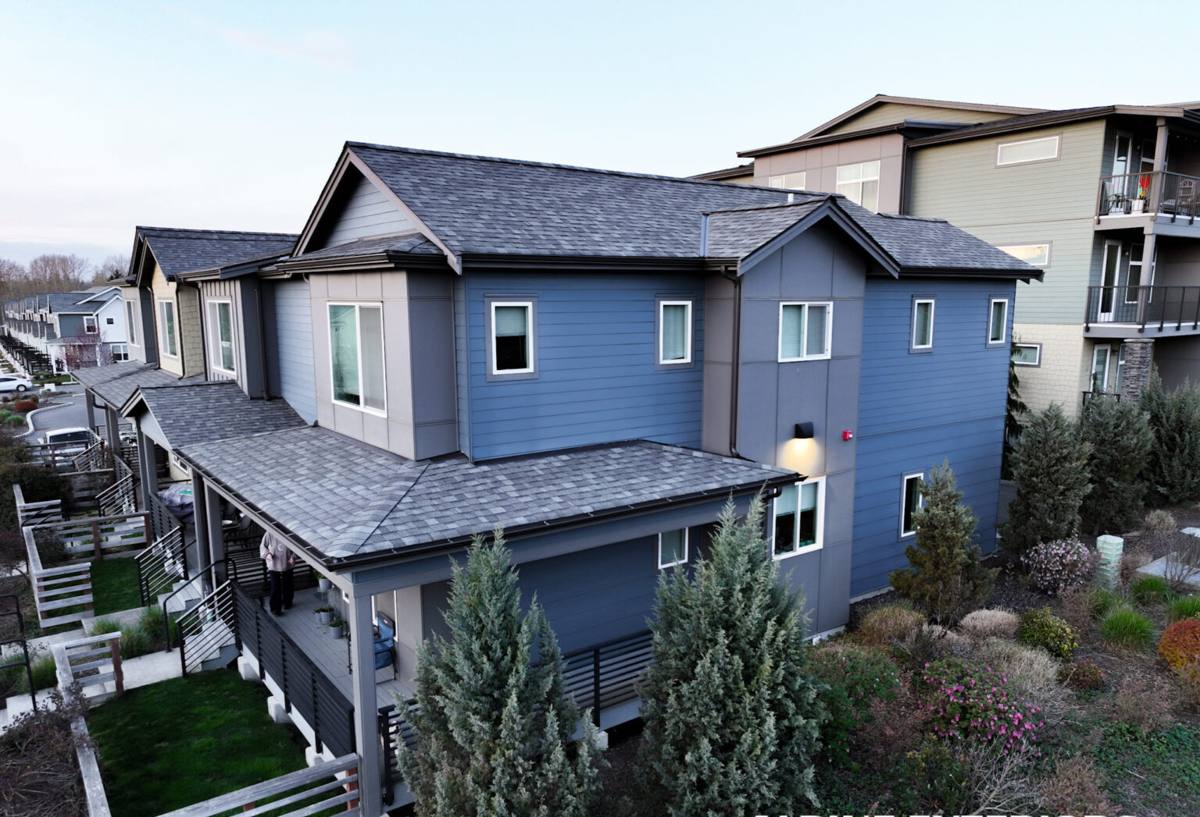
What the Local Climate Actually Does to Siding
Moisture That Doesn't Let Up
Whatcom County gets a lot of rain, but it's the pattern that matters more than the total. Long, low-intensity rain events soak siding for hours or days at a time rather than dumping and clearing out. Wood-based products swell and shrink with that cycle. Seams, butt joints, and any spot where caulk has failed become entry points, and once water gets behind the siding, it can sit there far longer than it would in a drier climate.
Moss and Algae Growth
Moss doesn't just look bad — it holds moisture directly against the siding surface and, on horizontal laps and trim, it can work into seams and lift edges over time. In shaded parts of Nooksack, especially yards backed by trees or facing north, moss and algae growth can start earlier in the fall and persist later into spring than it does on more open, sun-exposed properties.
Temperature Swings and Freeze-Thaw
Whatcom County doesn't get brutal winters, but it does get enough freeze-thaw cycling — especially on cold, clear nights after a wet stretch — to stress any siding material that has already absorbed moisture. Water trapped in a joint or a soft spot that freezes and expands can turn a small crack into a bigger one within a single winter.
Signs Your Siding Needs Repair
Most siding problems give warning signs well before they become structural. Catching them early is what keeps a repair a repair, instead of turning it into a full re-side.
- Soft or spongy spots when you press on the siding, especially near the bottom courses or around windows and doors
- Visible cracking, splitting, or bubbling paint, particularly on south- and west-facing walls that take the most weather
- Persistent moss, algae, or dark streaking that keeps returning after cleaning
- Gaps or separation at seams, corners, or trim boards where caulking has failed or shrunk
- Warping or buckling panels that no longer sit flat against the wall
- Peeling or bubbling paint that suggests moisture is trapped underneath rather than a simple weathering issue
- Musty smells or interior wall staining near exterior walls, which can point to moisture that's already gotten past the siding
What a Correct Repair Actually Involves
Diagnosing the Real Problem First
The most common mistake in siding repair isn't a bad patch — it's patching the wrong thing. A cracked panel might be the visible damage, but the actual cause could be a failed flashing detail above a window, a gap where two trim pieces meet, or a downspout dumping water against a wall every time it rains. We start by tracing water paths, not just replacing what's obviously broken, because a repair that ignores the source will fail again in the same spot.
Matching Material and Finish
Once we know what's actually failing, the repair itself has to match the surrounding siding in reveal, profile, and finish — a patch that's visibly a different shade or a slightly different board width sticks out for years and undercuts curb appeal even when the repair itself is sound. Where we're replacing sections rather than patching around existing material, we use James Hardie fiber cement with a factory-applied ColorPlus finish, which holds color more consistently over time than field-painted patches.
Sealing and Flashing Details
Most siding failures trace back to a flashing or sealing detail, not the siding material itself. Proper repair means re-flashing around windows, doors, and any penetration where the original detail has failed, and using sealants and house wrap correctly rather than just caulking over a gap and calling it done. A repair that skips this step is cosmetic, not structural.
Repair or Replace? How We Decide
Not every damaged section needs a full re-side, and not every re-side can be avoided with a patch. We look at a handful of factors together rather than any single one in isolation.
| Factor | Leans Toward Repair | Leans Toward Replacement |
|---|---|---|
| Extent of damage | Isolated to one or two sections or elevations | Spread across multiple walls or the whole exterior |
| Underlying cause | Identifiable, fixable source (flashing, sealant, downspout) | Systemic moisture intrusion behind large sections of wall |
| Material condition | Surrounding siding is sound and holding paint or finish well | Surrounding siding is aging out, chalking, or delaminating broadly |
| Age of existing siding | Relatively recent, still within expected service life | Original siding is decades old and nearing end of life |
| Match quality achievable | New material can blend closely with existing | Product is discontinued or won't match without a full re-side |
When the honest answer is repair, we tell you that. When it's replacement, we explain why — we don't upsell a re-side when a targeted repair will hold up, and we don't recommend a patch when we know it's going to need attention again in a year or two.
Why We Repair With James Hardie Fiber Cement
We install James Hardie fiber cement siding exclusively, and that carries into how we handle repairs. When a repair calls for new panel or trim sections rather than a patch, we use Hardie product rather than mixing in vinyl, engineered wood, or another manufacturer's fiber cement. There are practical reasons for that beyond consistency of the finished look. Hardie's fiber cement doesn't absorb and swell with moisture the way wood-based or engineered wood products can, and it isn't a fuel source the way vinyl or wood siding is — relevant in a region where wildfire smoke and fire risk have become a bigger part of the conversation even west of the Cascades. The ColorPlus factory finish also means a repaired section holds its color closer to the original over time than a section that has to be field-painted to match.
We won't tell you every repair requires ripping out sound siding to install Hardie — if your existing siding is a different material and it's still performing, a targeted, honest repair is still the right call. But when material is actually being replaced, we use what we trust enough to put our name behind, and that's Hardie.
Our Process for Nooksack Repairs
- On-site inspection that includes the damaged area and the surrounding wall assembly, not just the visible spot
- Tracing the likely moisture path — flashing, seams, penetrations, grading, or gutter and downspout issues
- A clear explanation of what's causing the damage and a repair-versus-replace recommendation in plain language
- A written estimate before any work starts, with no pressure to upgrade scope
- Repair work: removing compromised material, correcting the underlying flashing or sealing issue, and installing matched siding sections
- Final check for proper sealing, fastening, and paint or finish match before we call the job done
Why Local Experience Matters for a Repair Like This
A siding repair contractor who works Whatcom County regularly has already seen how Nooksack's tree cover, valley humidity, and rain patterns play out on real houses across multiple seasons — not just in a training manual. That matters when you're trying to figure out whether a damaged section is an isolated event or the first sign of a bigger moisture problem working its way across a wall. It also matters for something more basic: knowing which details tend to fail first on homes in this area, whether that's a particular corner trim detail, a common downspout placement issue, or the kind of shaded, slow-drying wall section that needs extra attention during any repair.
A contractor unfamiliar with the area might treat every repair as a generic patch job. A crew that already works Nooksack and the surrounding Lynden area treats it as a chance to fix the actual cause, because they've already seen what happens when that step gets skipped.
Keeping Repaired Siding From Needing Repair Again
A good repair should buy you years, not months. A few habits make a real difference in a climate like this one:
| Maintenance Step | Why It Matters Here |
|---|---|
| Clean moss and algae off siding and trim annually | Prevents moisture from being held against the surface through the wet season |
| Check and clear gutters before fall rains | Overflowing gutters are a leading cause of repeat siding damage at roof lines |
| Inspect caulking at trim and penetrations yearly | Caulk is a wear item and shrinks or cracks well before the siding itself fails |
| Keep vegetation trimmed back from walls | Improves airflow and drying time on shaded elevations |
| Confirm downspouts discharge away from the foundation and walls | Reduces splashback and standing moisture at the base of the siding |
None of this requires special equipment or a big time commitment — it's the kind of basic upkeep that, done consistently, keeps a repair from becoming a recurring one.
Get a Straight Answer on Your Siding
If you're seeing cracked, soft, or moss-covered siding on a Nooksack-area home, the sooner it gets a real diagnosis, the smaller the fix usually is. We'll take a look, tell you honestly whether it's a repair or something bigger, and give you a straightforward estimate with no pressure either way. Reach out below for a free, no-obligation estimate.