 Lynden Exterior
 Building Decks for Deming's Wooded, Wet Terrain
Deming sits back from Lynden in the timbered foothill country along the Nooksack River drainage, and that setting changes what a deck has to deal with. Properties out here tend to be larger, shaded by fir and cedar, and further from full sun exposure than a typical in-town lot. That shade is part of what makes Deming beautiful, and it's also exactly what keeps wood surfaces damp longer after every Whatcom County storm rolls through.
A deck built for a sunny, open lot in town and a deck built for a shaded Deming property are not the same project, even if the plans look identical on paper. Drainage, material selection, and airflow underneath the structure all need to account for a site that dries out slower and holds moisture longer than average.
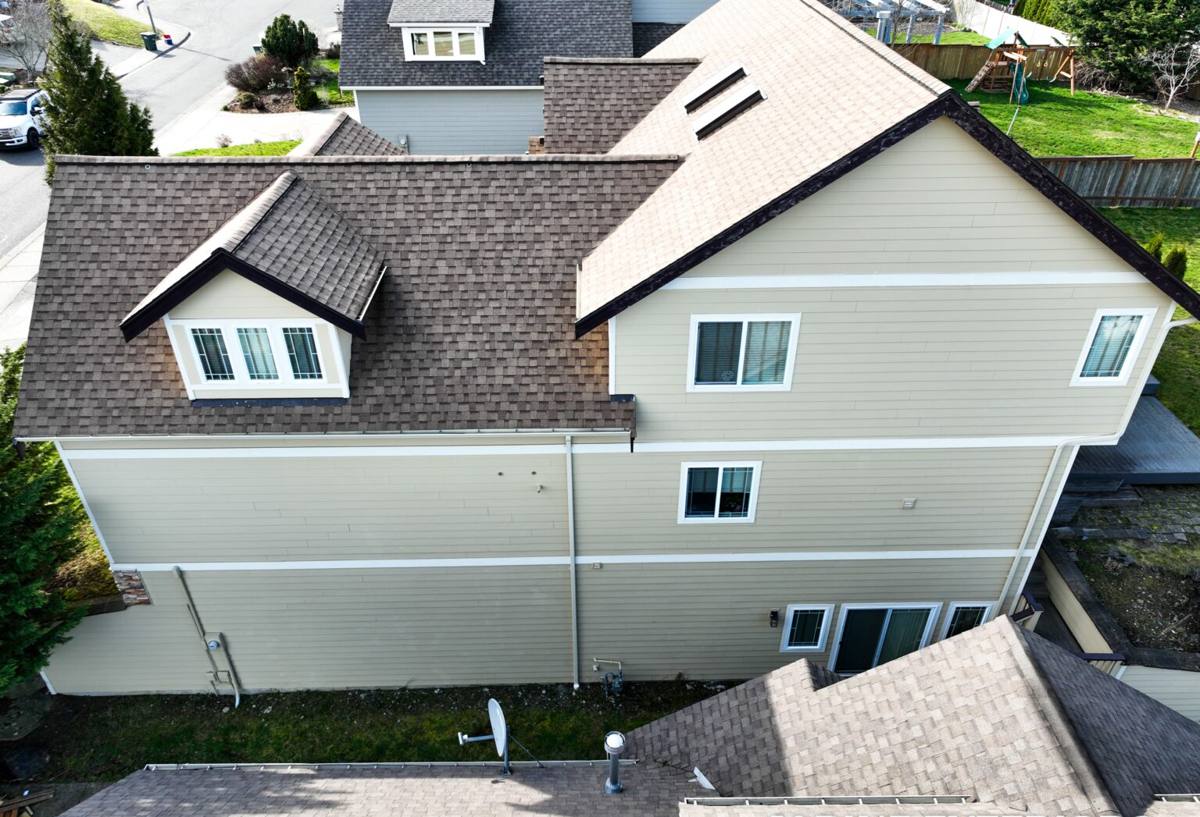
What Driving Rain and a Long Moss Season Actually Do
Whatcom County's wet season isn't just rain falling straight down — driving rain pushed sideways by wind drives moisture into joints, under railings, and along ledger boards where a deck meets the house. On a wooded Deming lot, that rain doesn't evaporate quickly because tree cover blocks the sun and slows air movement across the deck surface.
The result is a moss season that runs long, sometimes most of the year on the shadiest parts of a deck. Moss and algae aren't just cosmetic problems. They hold water against the decking surface, they make boards slick and dangerous underfoot, and on untreated or poorly finished wood they accelerate rot from the top down. Even the marine-influenced air that moves through the lowlands from the Salish Sea carries enough moisture and salt content to speed up corrosion on cheap fasteners and hardware, which is one more reason we don't cut corners on the metal that holds a deck together.
Where the damage usually starts
- Ledger board connections where the deck attaches to the house, if flashing wasn't installed correctly
- Gaps between deck boards that are too tight to let water and debris drain through
- Shaded corners and under railings where moss gets a foothold and never fully dries
- Fasteners and hardware that aren't rated for exterior, high-moisture exposure
- Post bases sitting in standing water instead of proper drainage
Choosing Decking Material for a Deming Property
There's no single "best" decking material — there's the right material for your site, your budget, and how much maintenance you actually want to do. For a shaded, moisture-heavy lot like most of what we see around Deming, we weigh these trade-offs honestly with every homeowner.
| Material | How it handles moisture and moss | Maintenance | Typical lifespan |
|---|---|---|---|
| Pressure-treated wood | Good if properly sealed; moss and mildew form fast in shade without upkeep | Annual cleaning and re-sealing recommended | 15-20 years with upkeep |
| Cedar | Naturally rot-resistant, still needs sealing in shaded, wet spots | Periodic cleaning and finish maintenance | 20-25 years with care |
| Capped composite | Won't rot, but grooved boards can trap moisture and grow surface algae if not cleaned | Occasional washing, no sealing or staining | 25-30+ years, manufacturer warranty |
| PVC decking | Fully moisture-resistant, least prone to moss staining | Low — occasional rinse | 25-30+ years, manufacturer warranty |
We're straightforward about composite and PVC products: they solve the rot problem, but they don't solve moss and algae on their own. A dark, grooved board in full shade will still grow surface algae if it's never cleaned — it just won't rot from it the way wood can. We'll walk you through what each option actually costs to own over ten or twenty years, not just what it costs to install.
Framing and Substructure — the Part That Determines Whether a Deck Lasts
The decking boards are what you see and walk on, but the framing underneath is what determines whether a deck survives its first decade in this climate. On shaded, damp Deming lots, we pay particular attention to a few things that get skipped on cheaper jobs:
- Ledger flashing — proper flashing where the deck ties into the house keeps water from working its way into the band joist and wall framing, which is one of the most common sources of hidden rot
- Joist tape and hardware — covering the tops of joists and using corrosion-rated connectors slows water intrusion at the fastener points, where damage usually starts first
- Footings sized for the soil — foothill lots can have inconsistent soil conditions, and footings need to be sized and set to local code, not guessed at
- Airflow underneath — enough clearance and ventilation below the deck so the structure has a chance to dry out between storms instead of staying damp for days
None of this is visible once the deck is finished, which is exactly why it matters who builds it. A deck that looks right on day one and a deck that's actually built right often look identical until year five or six.
Designing Around a Wooded, Sloped Lot
Deming properties are often larger and less flat than in-town lots, with more tree cover to design around. That changes some practical decisions: deck height and stair layout need to work with the natural grade instead of fighting it, and we try to avoid cutting or crowding root systems on mature trees that give a property its shade and privacy in the first place.
Railing height, guard spacing, and stair rise-and-run all fall under Washington building code regardless of how remote a property feels, and we design to code from the start rather than treating it as a final inspection hurdle. On sloped or elevated sites, that also means getting footing depth and structural support right the first time — retrofitting a deck that was under-built for its site is a far bigger job than building it correctly from the start.
How We Handle a Deming Deck Project
1. Site visit and honest assessment
We walk the actual site — sun exposure, tree cover, grade, drainage, and how the deck will connect to the house — before we talk materials or design. On a shaded, wooded lot, this step tells us more than a set of drawings ever could.
2. Design and material selection
We go over material trade-offs in plain terms, including what each option will actually require from you in year five, not just what it looks like on install day.
3. Permitting
Deck permitting in Whatcom County depends on size, height, and attachment to the structure. We handle the permit process as part of the job rather than leaving it for the homeowner to sort out.
4. Build
Framing, flashing, and structural connections are inspected steps, not afterthoughts — this is the part of the job that decides whether the deck is still solid in fifteen years.
5. Walkthrough
We go over the finished deck with you, including what maintenance it actually needs given your specific site and sun exposure.
Living With a Deck in Moss Season
Even a well-built deck needs some seasonal attention in a climate like this. The goal isn't to eliminate maintenance — no exterior product in Whatcom County is maintenance-free — it's to keep it manageable and catch small issues before they become structural ones.
- Sweep needles, leaves, and debris off the deck surface regularly, especially in fall and through the wet season
- Rinse or scrub shaded areas and gaps between boards where moss and algae tend to establish first
- Check that gaps between boards are clear so water can drain through instead of pooling
- Inspect railings, stairs, and ledger connections once a year for movement, soft spots, or staining
- Re-seal or re-stain wood decking on the schedule the finish product actually calls for, not just when it looks faded
- Keep gutters and downspouts near the deck clear so runoff isn't dumping extra water onto the structure
Why a Crew That Already Works in Deming Makes a Difference
Building decks around Lynden and out into communities like Deming means knowing the practical realities that don't show up on a set of plans — longer driveways and gravel access, wells and septic systems that affect where footings and equipment can go, and the specific microclimate that comes with heavier tree cover and slower-drying ground. A crew that's worked these properties before doesn't have to relearn those lessons on your job.
It also means understanding Whatcom County's permitting process for this area specifically, and building to a standard that accounts for the driving rain and long moss season this part of the county actually gets, rather than a generic spec sheet.
If you're planning a new deck or need to replace one that's struggling with rot or moss in Deming, we're happy to come take a look and give you a straightforward, no-pressure estimate. Use the form below to get started.