 Lynden Exterior
 Siding in Deming's Shaded, Wet Corner of Whatcom County
Deming sits up the Nooksack River valley toward Mount Baker, in a part of Whatcom County where tall timber, river-bottom humidity, and long stretches of shade define the microclimate. It's a different exposure than the open, wind-driven coastline closer to the Sound, but the underlying problem for exterior siding is the same one that shows up across this county: siding here almost never gets a chance to fully dry out. Between the tree canopy, the valley's moisture, and a moss season that can stretch from fall through spring, the wall assembly behind your siding is under near-constant low-grade attack. Add in driving rain events off the marine air that reaches even the inland valleys, and salt-laden air that migrates further inland than people expect on windy days, and you've got a climate that punishes any siding product with a weak moisture story.
That's the lens we use on every Deming siding installation service call: not "what looks good going up," but "what still looks good and performs correctly in year eight, in year fifteen, in year thirty."
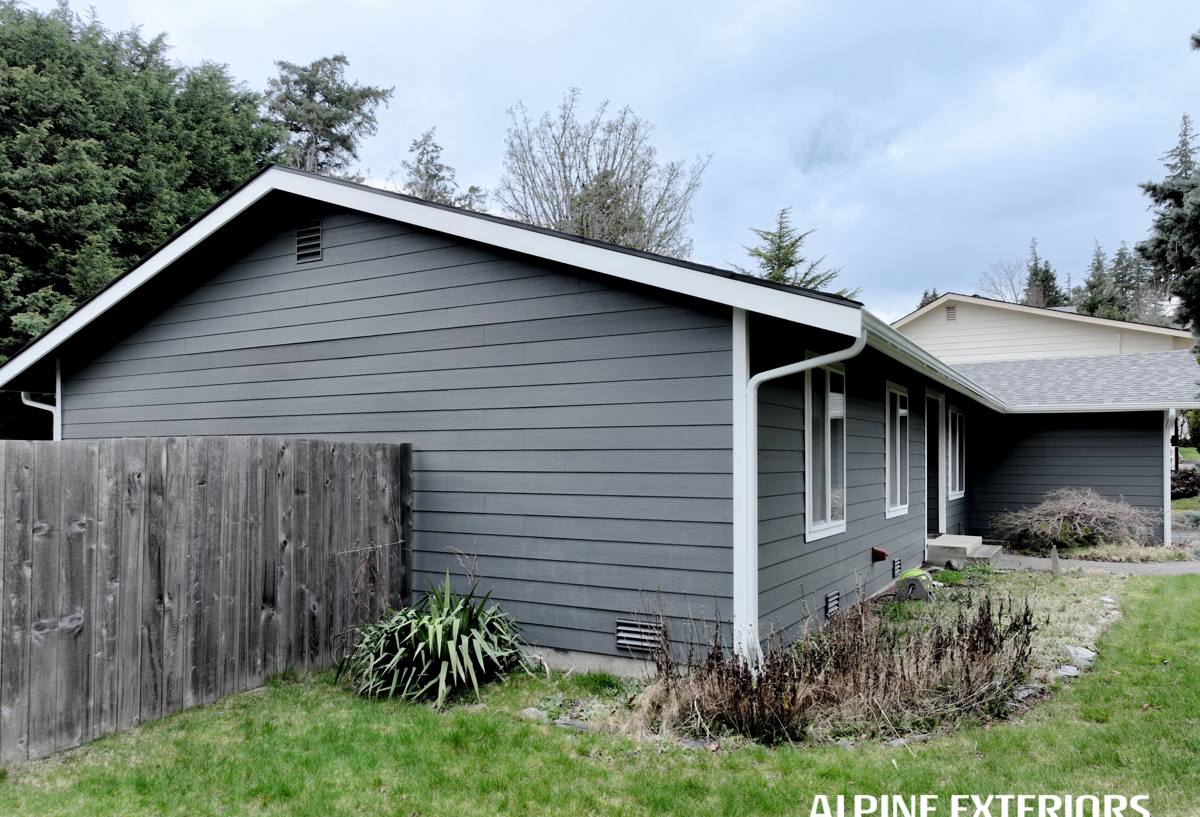
What Deming Homes Specifically Need From Their Siding
Rural and semi-rural properties in the Deming area tend to share a few traits that change how a siding job should be approached:
- Heavy tree cover that keeps large sections of the exterior shaded and slow to dry after rain
- Proximity to the Nooksack River corridor, which raises ambient humidity compared to more open parts of Lynden and greater Whatcom County
- Longer moss and algae growing seasons on north- and east-facing walls that never see direct sun
- Wider setbacks and larger lots, meaning gutters, downspouts, and grading often get less routine attention than in-town properties
- Older homes on well and septic systems where site access and staging for a full siding tear-off take more planning than a standard in-town lot
None of that is a reason to avoid siding replacement — it's a reason to be deliberate about the product and the install details. A siding system that's marginal on moisture management in a dry, sunny climate becomes a real liability in a shaded river valley.
Why We Install James Hardie Fiber Cement Here — and Nothing Else
We install James Hardie fiber cement siding exclusively. We don't offer vinyl, LP SmartSide, Cemplank, Allura, or wood siding like primed spruce or cedar, and that's a deliberate professional standard, not a sales pitch. Fiber cement is non-combustible, dimensionally stable in swings between soaked and dry, and doesn't feed the moss and mildew growth the way wood-based products can when they stay damp for weeks at a time. James Hardie's ColorPlus factory finish is baked on and warrantied against fading and flaking, which matters on a shaded lot where UV isn't going to bake a field-applied coating cured properly to begin with.
James Hardie also engineers regional HZ product lines specifically for climate zones like ours — the HZ5 line used in the Pacific Northwest accounts for our wetter, cooler conditions rather than treating siding as one national product. For a Deming property surrounded by trees and dealing with a long wet season, that climate-specific engineering is the difference between a wall system that sheds water correctly and one that's fighting its environment from day one.
What Wood and Vinyl Struggle With in This Microclimate
Wood siding needs regular sun and airflow to dry out between rain events — something a heavily treed Deming lot often can't provide, which shortens repaint cycles and raises the odds of rot at butt joints and corners. Vinyl siding expands and contracts more than fiber cement and can warp or bow under freeze-thaw cycling and prolonged damp conditions, and it doesn't offer the same fire-resistance profile. We'd rather explain that trade-off honestly up front than install something we know is a poor match for this valley.
What a Correct Siding Installation Actually Involves
The siding itself is only part of the system. Most siding failures we get called to inspect trace back to what's underneath, not the product on top. A correct installation includes:
- A continuous water-resistive barrier (weather barrier/house wrap) installed shingle-style so every seam sheds water downward
- Properly flashed windows, doors, and any wall penetrations, integrated with the water-resistive barrier rather than caulked over the top of it
- Correct fastener placement and spacing per James Hardie's published installation instructions — this is what keeps the manufacturer's warranty valid
- Proper clearance between the bottom of the siding and grade, decks, roofs, and patios, so water and moss-prone debris can't sit against the bottom course
- Rain screen or drainage gap detailing where the wall assembly calls for it, to let incidental moisture drain and the assembly breathe
- Factory-cut and factory-primed edges wherever possible, with any field cuts properly sealed per Hardie's specs
Skip any one of these and the siding can look fine for a year or two while water is already getting behind it — which is exactly the kind of failure that's expensive to diagnose after the fact and cheap to prevent during installation.
Our Siding Installation Process
1. On-Site Assessment
We walk the property, check existing siding and sheathing condition, look at drainage and grading, and note shade patterns and moss growth — all of which inform product selection (lap width, texture, color) and install sequencing.
2. Tear-Off and Sheathing Inspection
Old siding comes off and we inspect the sheathing and framing underneath before anything new goes up. On a shaded, humid site like Deming, this step matters more than most — hidden rot behind old siding is common enough that we treat this as a required checkpoint, not an optional add-on.
3. Water-Resistive Barrier and Flashing
Any damaged sheathing gets addressed, then a new water-resistive barrier goes on correctly lapped, with window, door, and penetration flashing integrated into the system.
4. James Hardie Installation to Spec
Siding, trim, and accessories go up following James Hardie's fastening, clearance, and joint-treatment requirements, keeping the manufacturer's transferable warranty intact.
5. Final Detailing and Cleanup
Caulking at appropriate joints, touch-up painting of any field-cut edges, and a full site cleanup, including magnetic sweep for stray fasteners.
Siding Options Compared for a Deming Property
| Factor | James Hardie Fiber Cement | Vinyl | Wood (cedar/primed spruce) |
|---|---|---|---|
| Performance in shaded, damp conditions | Strong — engineered HZ5 line for PNW moisture | Fair — can warp with prolonged damp/cold cycling | Weak — needs sun/airflow to dry between rain events |
| Moss/algae resistance | High, factory finish resists staining | Moderate, surface can hold algae film | Low, organic material feeds growth when damp |
| Fire resistance | Non-combustible | Combustible, can melt/deform near heat | Combustible |
| Finish longevity | Factory ColorPlus finish, long warranty | Color molded in, can fade over time | Field-applied paint/stain, shorter repaint cycle |
| Typical maintenance | Occasional wash, caulk check | Occasional wash | Regular repaint/reseal, rot inspection |
We don't install two of the three columns above — but the comparison is worth seeing plainly so a homeowner understands what they're weighing when they get quotes from contractors who do offer all three.
Before You Hire a Siding Contractor in Deming
- Ask whether they install to the manufacturer's written specification, not just "how they've always done it"
- Ask what happens to your sheathing if it's found damp or rotted during tear-off — get that answer before signing, not after the wall is opened up
- Ask how they handle drainage and clearance at grade, decks, and roof lines, especially with mature trees and gutters on site
- Confirm whether the manufacturer's transferable warranty is preserved by their installation method
- Ask if they've worked on properties in your specific area and understand the access, staging, and site conditions involved
Why a Crew That Already Works in Deming Matters
Rural Whatcom County properties come with logistics that in-town jobs don't: longer driveways, limited staging area, septic and well locations to work around, and material delivery that has to be planned rather than assumed. A crew that's already done siding work out along the Nooksack corridor knows to check for the extra week of dry-out time shaded walls need, knows moss growth patterns on north-facing elevations in this valley, and doesn't have to relearn the area's access and permitting realities on your dime. That familiarity shows up in fewer surprises mid-project and a tighter, more predictable schedule.
Living With Fiber Cement Siding in a Moss-Prone Climate
Even the right product needs basic upkeep. In Deming's shaded, humid conditions, we recommend an annual visual check of north- and east-facing walls for moss or algae buildup, a gentle wash (never high-pressure blasting directly at joints or fastener heads) when growth appears, and keeping gutters and downspouts clear so water isn't sheeting down the wall face. Trim back vegetation that's crowding the siding — airflow is one of the cheapest defenses against moss you have. None of this is heavy maintenance; it's the kind of light attention that keeps a properly installed Hardie system looking correct for decades instead of years.
If your Deming home's siding is showing moss staining, soft spots, or you're simply planning ahead for a replacement, we're happy to take a look and give you a straightforward, no-pressure estimate — no obligation, just an honest read on what your home needs.