 Lynden Exterior
 Siding in Acme: What Whatcom County Weather Actually Does to a House
Acme sits in a part of Whatcom County where the weather doesn't let up for long. Homes here deal with a wet, marine-influenced climate for much of the year — driving rain that hits siding at an angle instead of falling straight down, humid air that lingers in low spots and under tree cover, and a moss season that can stretch across most of the fall, winter, and spring. Add in the salt air that moves inland from the Puget Sound and Strait of Georgia on windy days, and you have a combination that's tough on almost every exterior building material, but especially hard on siding that isn't built to shed water and resist rot.
None of this means Acme homes need anything exotic. It means the basics — water management, ventilation, and material choice — have to be done right the first time, because a mediocre siding job here shows its problems faster than it would in a drier climate. That's the lens we bring to every siding installation in this area: what does this specific house, on this specific lot, need to actually hold up?
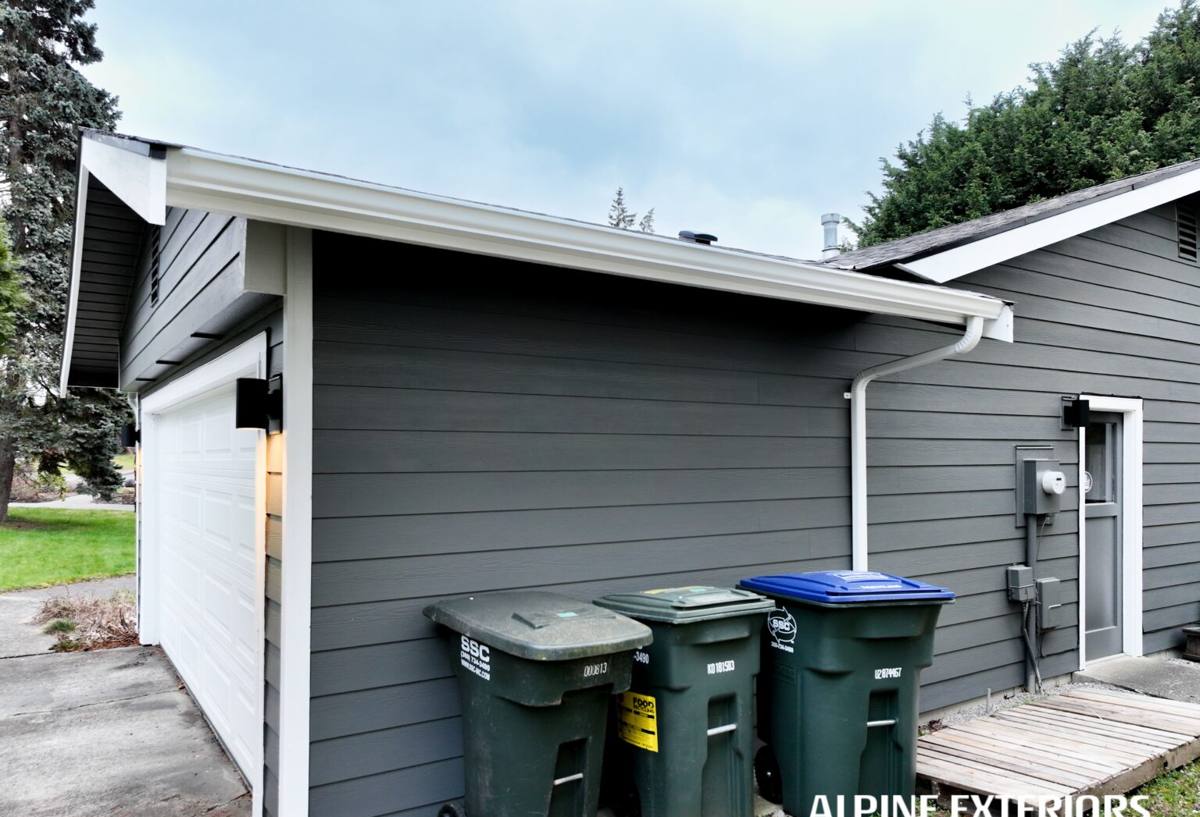
Why We Install Only James Hardie Fiber Cement Siding
We don't install vinyl, LP SmartSide, primed spruce, cedar, or other fiber cement brands. We install James Hardie exclusively, and in a climate like Lynden's, that's not a brand preference — it's a practical one. Hardie's fiber cement is non-combustible, dimensionally stable in wet-dry cycling, and manufactured with climate-specific HZ (HardieZone) formulations designed for regions that see exactly what Acme sees: sustained moisture, temperature swings, and long stretches without direct sun to dry things out.
The factory-applied ColorPlus finish matters here too. A baked-on finish resists the fading and chalking that can happen faster near salt-influenced air, and it means the color goes on before the material ever gets exposed to job-site weather — not brushed or rolled on-site where humidity and temperature can affect cure quality. Combined with a strong transferable warranty, it's a system built to be installed once and last.
We're honest that other products have their place and their advocates. But once you've re-sided enough Whatcom County homes that were sided with something that couldn't keep up with the moisture and moss, you standardize on what actually works. For us, that's Hardie.
What Correct Installation Requires
Fiber cement performs the way it's supposed to only when it's installed to spec. That's true everywhere, but it matters more in a climate that gives moisture-management mistakes no time to hide. A correct installation includes:
- A weather-resistant barrier installed and lapped correctly beneath the siding, with all seams and penetrations sealed
- Proper flashing at windows, doors, and every horizontal trim transition, so water is directed out and away rather than behind the cladding
- Correct fastener type, spacing, and depth per Hardie's installation instructions — over- or under-driven nails are one of the most common causes of early siding failure
- Manufacturer-specified clearances from grade, roofing, and decks, so the bottom edge of the siding isn't sitting in a moisture trap
- Caulking only where Hardie's instructions call for it — not as a substitute for proper flashing
- Adequate gapping and expansion allowance at butt joints and trim, since fiber cement moves slightly with temperature and moisture
Skip any one of these steps and you can still end up with siding that looks fine on install day but starts showing streaking, soft trim, or moss buildup within a year or two — especially in a yard that stays shaded or damp for long stretches, which is common on wooded Acme lots.
How We Approach a Siding Installation in Acme
1. On-Site Assessment
We walk the exterior and look at more than the siding itself — grading around the foundation, roof drainage points, gutter condition, tree cover, and any areas that already show moss or staining. These tell us where water tends to collect and where the new installation needs extra attention.
2. Tear-Off and Substrate Check
Once the old siding comes off, we inspect the sheathing underneath for rot or water damage. In a climate this wet, it's common to find soft spots behind old siding that never got caught — those get repaired before anything new goes on, because siding installed over a compromised substrate fails regardless of what brand it is.
3. Weather Barrier and Flashing
This is the step that determines whether the siding actually keeps water out over the next 30-plus years, not just the next few. We install and lap the weather-resistant barrier correctly and flash every window, door, and horizontal transition before a single piece of Hardie board goes up.
4. Installation
Hardie siding, trim, and any soffit or fascia components go on per manufacturer spec — correct fasteners, correct spacing, correct clearances. We keep an eye on plumb and reveal consistency throughout, not just at the corners.
5. Final Walkthrough
We inspect the finished work with you, check that trim and caulking lines are clean, and go over basic care so the siding performs the way it's supposed to for its full service life.
What Siding Installation Typically Costs
Every home is different, and final pricing depends on square footage, the amount of trim and detail work, the condition of the substrate once old siding comes off, and site access. The table below outlines the main factors that move a project's cost up or down — it's not a quote, just context for what you're actually paying for.
| Factor | Why It Matters |
|---|---|
| Home size and wall complexity | More corners, gables, and dormers mean more cuts, more trim, and more labor hours |
| Substrate condition | Rot or water damage found during tear-off requires repair before new siding goes on |
| Siding profile and trim style | Lap width, board-and-batten, and trim detail level all affect material and labor |
| Existing siding removal | Tear-off and disposal of old material adds time versus installing over a bare wall |
| Site access | Tight lots, slopes, or landscaping near the house can slow staging and scaffolding |
| Color and finish selection | Factory ColorPlus finishes vary slightly in cost by line and color |
Why It Matters to Hire a Crew That Already Works This Area
Siding installation looks similar on paper everywhere, but the details that make it last change with the site. A crew that regularly works Acme and the surrounding Lynden area already knows what this climate does to a house over time — where moss tends to build up fastest, how driving rain behaves against different wall orientations, and which detailing habits actually hold up through a full Whatcom County winter instead of just looking good on install day. That's not something you can fully substitute with a generic install crew working from a manual, no matter how skilled they are in general.
There's also a practical side: a local crew is easier to reach if a question comes up after the job, and they're not guessing at permitting or inspection expectations for the area — they already know them.
Signs Your Current Siding Is Telling You It's Time
Before deciding on a full replacement, it helps to know what's actually normal wear versus what signals the siding is past its useful life. Watch for:
- Soft or spongy spots when you press on siding or trim near the bottom edge of walls
- Persistent moss or algae growth that returns quickly after cleaning
- Visible warping, cupping, or separation at seams and corners
- Paint that's failing repeatedly in the same spots even after repainting
- Increased drafts or higher heating bills that suggest the wall assembly is compromised
- Cracking or chalking that exposes bare material underneath
One or two of these on their own might just mean a repair. Several together, especially combined with soft substrate, usually means the wall assembly needs a proper reset — not another patch.
Caring for Hardie Siding After Installation
One advantage of fiber cement in a climate like this is that it doesn't need much. A periodic rinse to knock down moss and grime, prompt attention to any caulking that starts to separate at trim joints, and keeping gutters clear so water isn't sheeting down the wall are really the main things. Because the ColorPlus finish is baked on rather than field-applied, you're not signing up for a repainting cycle the way you would with some other siding materials — which, in a place where exterior work is weather-dependent for a good chunk of the year, is worth something on its own.
If your Acme home's siding is showing its age, or you're planning ahead of a renovation, we're happy to take a look and talk through what a correct installation would involve for your specific house — no pressure, no obligation. Request a free estimate using the form below.