 Lynden Exterior
 Siding Built for Nooksack's Climate, Not Just Its Curb Appeal
Nooksack sits in that stretch of Whatcom County where marine air off Bellingham Bay, moisture pushed inland from the Nooksack River valley, and long gray winters combine into one of the tougher climates in the state for exterior building materials. Homes here don't fail because owners neglected them — they fail because the siding wasn't built for what this specific area throws at a house year-round. Salt-tinged air corrodes fasteners and trim. Driving rain, often wind-driven sideways off open farmland, finds every gap in flashing and caulk. And the moss season — which here can stretch from October through April — keeps north-facing walls and anything shaded by trees damp for months at a time.
When we install siding in Nooksack, we're not installing the same product and details we'd use in a dry inland climate. We install James Hardie fiber cement, and we detail every job around moisture management first, because in this area moisture management is what determines whether a siding job lasts 10 years or 40.
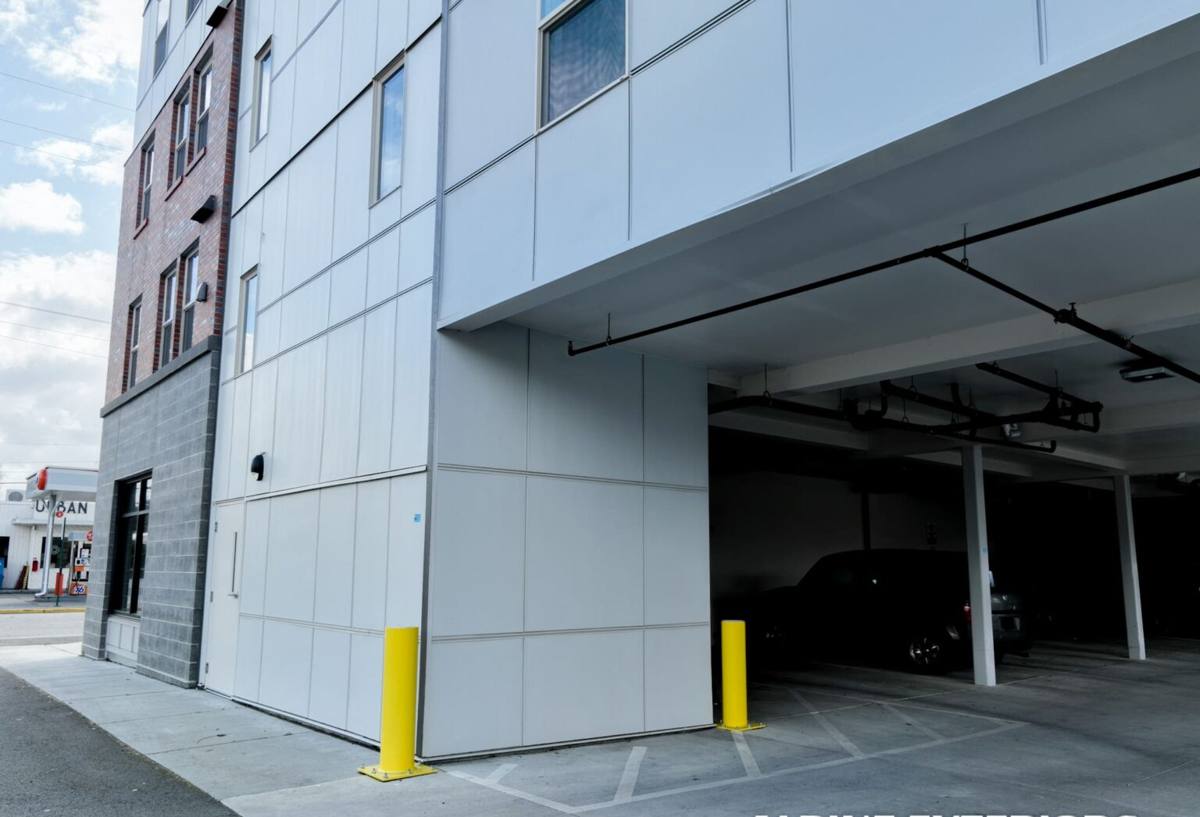
What Nooksack Homes Actually Need From Their Siding
Moisture Resistance That Doesn't Depend on Perfect Caulking
Caulk fails. Sealant joints shrink, UV exposure breaks them down, and nobody re-caulks their house on schedule. A siding system that only stays watertight because every seam is perfectly sealed is a system that will eventually leak — it's just a matter of when. Fiber cement doesn't solve this by itself; correct flashing, drainage planes, and rainscreen detailing behind the siding do. That's where the installation matters as much as the product.
Rot Resistance at Ground Level and Grade Transitions
A lot of the failures we see on older Nooksack homes start at the bottom few feet of wall — where siding sits too close to grade, where sprinkler overspray hits it daily, or where a deck or porch roof dumps runoff against the wall. Wood-based siding products are especially vulnerable here because once moisture gets behind or into the material, it doesn't dry out fast in this climate — there simply isn't enough sun and wind to do it.
Moss and Algae Resistance on Shaded and North-Facing Walls
Whatcom County's tree cover and long wet season mean north walls, walls under eaves, and anything shaded by neighboring structures stay damp far longer than south-facing walls. Moss and algae aren't just cosmetic — sustained moisture against a porous or absorbent surface accelerates decay underneath. Factory-applied, baked-on finishes hold up to this kind of exposure far better than field-applied paint, which is one of the reasons finish quality matters as much as the base material.
A Finish That Doesn't Need Repainting Every Few Years
Repainting a full exterior isn't cheap, and in a climate with a short dry-weather window, finding the right stretch of days to do it right is its own challenge. A factory finish designed to hold color and resist cracking for well beyond a typical field paint job saves homeowners from fighting the calendar every few years.
Why We Only Install James Hardie Fiber Cement
We've made a deliberate decision not to install vinyl siding, LP SmartSide, or engineered wood products, even though we get asked about them. It comes down to how those products perform specifically in a climate like Nooksack's over a 20-30 year horizon, not just how they look going up.
- Vinyl expands and contracts with temperature swings, can warp or crack in wind-driven rain events, and its seams and J-channels are common water entry points over time.
- Wood-based engineered siding (LP SmartSide) performs well when it stays dry, but this region rarely gives it the chance — cut edges, fastener penetrations, and any breach in the factory coating are places moisture can start working into the wood strand core.
- James Hardie fiber cement is non-combustible, dimensionally stable across temperature and humidity swings, and doesn't have an organic wood core for moisture to break down. It's engineered specifically for climate zones like ours through Hardie's HZ10 product line, built for Pacific Northwest exposure.
We're not saying every other product is unusable everywhere — we're saying that for what Nooksack's climate does to a wall over decades, fiber cement is the material we're willing to warranty our workmanship on.
Product and Finish Comparison
| Factor | James Hardie Fiber Cement | Vinyl Siding | Engineered Wood (LP SmartSide) |
|---|---|---|---|
| Moisture core risk | None — cement-based, no organic core | Low core risk, but panel warping/gapping | Moderate — wood strand core can absorb moisture at breaches |
| Fire rating | Non-combustible | Combustible, can melt/deform | Combustible |
| Finish longevity | ColorPlus factory finish, 15-year finish warranty | Color baked into panel, fades over time | Factory primed or coated, repaint needed sooner |
| Dimensional stability | High — minimal expansion/contraction | Moderate — expands/contracts with heat | Moderate |
| Typical service life (PNW) | 30-50 years installed to spec | 20-30 years | 15-25 years, climate dependent |
What a Correct Siding Installation Involves
The siding material is maybe 40% of what determines how a job performs. The rest is installation detail — and it's where corners get cut on rushed jobs.
Weather-Resistive Barrier and Drainage Plane
Every wall gets a continuous weather-resistive barrier installed with proper shingle-lap sequencing so water is directed out and down, never trapped behind the siding. On many Nooksack homes, especially anything with a history of moisture issues, we install a rainscreen gap behind the Hardie panels so any incidental moisture that does get behind the siding has somewhere to drain and dry rather than sitting against the wall assembly.
Flashing at Every Penetration
Windows, doors, hose bibs, light fixtures, vents — every penetration through the siding plane is a potential leak point. Correct flashing detail at each one, integrated with the weather-resistive barrier (not just caulked over it), is non-negotiable on our jobs.
Fastening to Hardie's Specification
Fiber cement has specific fastener spacing, embedment depth, and corrosion-resistance requirements. Over- or under-driven nails, wrong fastener spacing, or non-compliant fasteners are common causes of premature siding problems — and they're also common reasons manufacturer warranties get denied on jobs installed by unfamiliar crews.
Proper Clearance at Grade and Hard Surfaces
Hardie specifies minimum clearance between the bottom of the siding and grade, decks, roofs, and other hard surfaces. We hold those clearances even when it means adjusting trim or grading details, because ignoring them is exactly how the ground-level rot problems mentioned above get started.
Our Process on a Nooksack Siding Installation
- On-site assessment — we look at existing siding condition, wall assembly, moisture history, sun/shade exposure, and any problem areas specific to your lot.
- Tear-off and sheathing inspection — once old siding is off, we check sheathing for hidden rot or moisture damage before anything new goes up.
- Weather barrier and flashing installation — the part of the job that determines long-term performance, done before a single piece of Hardie goes on the wall.
- Hardie panel/plank installation — installed to manufacturer fastening and clearance specs, with attention to butt joints, corners, and trim integration.
- Final detailing and walkthrough — caulking at appropriate joints only (not as a substitute for flashing), trim paint touch-up, and a walkthrough so you know what was done and why.
Why Hire a Crew That Already Works Nooksack and Whatcom County
Installation details that work in a dry climate can be the wrong call here. A crew that mostly works other regions may not think twice about rainscreen gaps, moss-resistant finish selection, or grade clearance around irrigation systems — details that matter constantly in Whatcom County but rarely come up elsewhere. Working this area regularly also means we're familiar with local permitting expectations and the kinds of moisture and rot patterns specific to Nooksack's mix of open farmland exposure and tree-shaded residential lots.
Signs It's Time to Consider Replacement
- Soft or spongy spots when you press on siding, especially near the bottom courses
- Persistent moss or algae growth that returns within weeks of cleaning
- Paint that's peeling, bubbling, or won't hold more than a couple of years
- Visible warping, cupping, or gaps opening at seams and corners
- Rising heating bills that coincide with drafts or cold spots near exterior walls
- Cracks or holes that let moisture behind the siding, especially after storm damage
Get a Straight Answer on Your Siding
If you're noticing any of the signs above, or you're just planning ahead for a Nooksack home that's due for new siding, we're happy to come take a look and give you an honest assessment — no pressure, no upsell. Fill out the form below for a free estimate and we'll walk the property with you and talk through what your home actually needs.