 Lynden Exterior
 Siding Built for the Nooksack Corridor
The Nooksack area sits in a stretch of Whatcom County where the weather doesn't do things halfway. Homes here take on wind-driven rain off the valley, damp air pulled in from the Salish Sea, and long stretches of gray, wet months where nothing on the exterior of a house ever really gets a chance to fully dry out. That combination is hard on siding, and it's especially hard on the wrong siding. When we get called out to look at a failing exterior in this part of Lynden, the pattern is almost always the same: a product that wasn't built for sustained moisture exposure, installed in a way that gave water too many chances to get in and not enough chances to get back out.
This page is about doing that job right, specifically for homes in and around Nooksack, using James Hardie fiber cement siding — the only siding system we install.
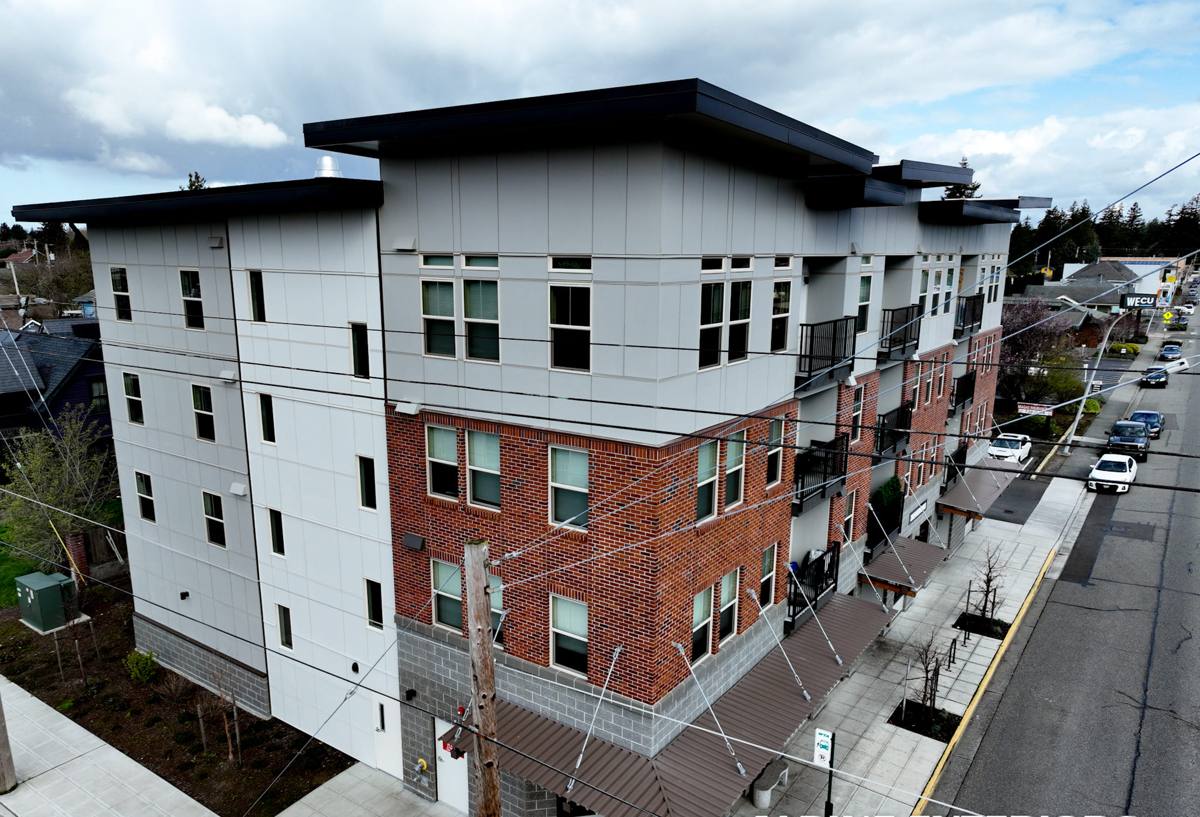
What the Local Climate Actually Does to Siding
Salt Air and Moisture Load
Whatcom County isn't oceanfront, but the marine influence off the Salish Sea still carries salt-laden moisture inland, and Nooksack's low-lying position near the river valley means humidity tends to linger rather than clear out quickly after a storm. Materials that absorb moisture — or that rely on a perfect, unbroken paint film to keep water out — are working against the climate from day one.
Driving Rain
Storms in this part of the county rarely come straight down. Wind pushes rain sideways into wall assemblies, which means the siding isn't just shedding water off a vertical face — it's fighting water that's actively being forced toward seams, laps, and penetrations like hose bibs, light fixtures, and vent caps. Every one of those details is a place where a marginal installation shows up as a leak two or three years down the road, not immediately.
Moss Season
Lynden and the surrounding valley get a moss season that runs long — shaded north walls, tree-lined lots, and consistent dampness give moss and algae everything they need to take hold on siding, trim, and roofing alike. Porous or fibrous siding materials give moss something to grip into over time; a dense, factory-finished fiber cement surface gives it much less to hold onto, which matters when a home is going to spend months of the year sitting damp.
Why We Only Install James Hardie
We don't install vinyl, LP SmartSide, cedar, primed spruce, Cemplank, or Allura, and that's a deliberate standard, not an oversight. Each of those products has legitimate uses somewhere, but none of them line up well with what Nooksack's climate demands over a 30-plus year ownership horizon:
- Vinyl expands and contracts with temperature swings, can warp or crack in wind-driven storms, and doesn't hold paint if a homeowner ever wants to change the color.
- LP SmartSide and primed spruce are wood-based (engineered strand or solid wood). Wood-based sidings are dimensionally stable when dry, but they depend on an intact factory or field-applied coating to keep moisture out — any breach at a cut edge, fastener, or lap joint gives water a path into a material that can swell, rot, or delaminate.
- Cedar is a beautiful, traditional material, but it requires ongoing maintenance — refinishing, caulking, moisture monitoring — that most homeowners underestimate, and in a climate this wet, the maintenance interval gets tighter, not looser.
- Cemplank and Allura are also fiber cement, and fiber cement as a category is the right call for this climate. Where they differ from Hardie is in the specifics we care about most: regional-specific engineering, factory finish process and warranty structure, and the manufacturer support behind the product once it's on a wall.
James Hardie fiber cement is non-combustible, dimensionally stable in wet-dry cycling, and available in HZ5 formulation engineered for the cold, wet Pacific Northwest climate zone that includes Whatcom County. The ColorPlus factory finish is baked on under controlled conditions — not brushed on in the field — which gives a harder, more consistent, longer-lasting color layer than field-applied paint, with a matching finish warranty. That's the combination that holds up through a Nooksack winter and still looks right ten winters later.
What a Correct Installation Involves
Fiber cement siding is only as good as the assembly behind it. A rushed or undertrained crew can put James Hardie boards on a wall and still leave a home vulnerable to the same moisture problems as a cheap product, because the failure points aren't usually the boards themselves — they're the details around them.
The Details That Actually Matter
- A drainable water-resistive barrier behind the siding, so any moisture that does get past the cladding has a path to drain and dry rather than sitting against the sheathing.
- Proper fastener placement and spacing per Hardie's installation instructions — over-driven or under-driven nails compromise both the weather seal and the board's ability to move slightly with temperature changes.
- Correct clearance at the bottom of the siding above grade, decks, patios, and roof lines, so splash-back and snowmelt don't wick moisture into the board edge.
- Factory-primed or factory-finished cut edges sealed in the field, since a raw cut edge is the single most common entry point for moisture in any fiber cement installation.
- Flashing integrated correctly at windows, doors, and penetrations — sealant is a backup, not a substitute for proper flashing and lap sequencing.
- Rain-screen or gap detailing where the wall assembly calls for it, to keep the back side of the siding ventilated and drying.
Every one of those items is invisible once the job is finished and the paint or ColorPlus finish is on the wall. That's exactly why the crew doing the work matters as much as the product going on it.
Our Process for Nooksack-Area Homes
| Step | What Happens | Why It Matters Here |
|---|---|---|
| Site walk and assessment | We inspect existing siding, sheathing condition, and moisture-prone areas (north walls, low clearances, deck intersections) | Identifies pre-existing rot or moisture damage before it's covered up |
| Water-resistive barrier review | Confirm or install a drainable WRB system suited to a high-rainfall assembly | Gives the wall a way to dry between storm cycles |
| Flashing and detail plan | Map out flashing at every window, door, and penetration before boards go up | Driving rain finds gaps at these details first |
| James Hardie installation | HZ5 boards installed to manufacturer spec — fastening, clearances, sealed cut edges | Correct install is what makes the manufacturer warranty and the climate rating mean anything |
| Final inspection | Walk the full exterior checking laps, caulking, and clearances against spec | Catches anything that needs correction before it becomes a callback |
Why a Crew That Already Works Nooksack Matters
Installing siding correctly isn't just about following a manufacturer's printed instructions — it's about knowing how those instructions need to be applied to the specific conditions of a given lot. A crew that regularly works in and around Nooksack and greater Lynden already understands things a general contractor from outside the area has to learn on the job: which wall orientations take the worst of the driving rain, where moss and algae growth tends to be worst, how local permitting and inspection work, and what clearance and drainage details actually hold up through a full Whatcom County winter rather than just looking right on installation day.
That local repetition is also what keeps a crew fast and clean on-site. There's less guesswork, fewer surprises, and a better sense of how to sequence the job around whatever the weather is doing that week — which, in this part of the county, is worth planning around.
Signs Your Current Siding Is Already Losing the Fight
- Soft or spongy spots when you press on the siding, especially near the bottom courses or below windows
- Visible moss or algae buildup that keeps returning within a season of cleaning
- Paint that's bubbling, peeling, or failing faster than it used to
- Warping, cupping, or visible gaps opening up at seams and laps
- Musty smell or visible staining on interior walls that share an exterior wall
None of these are emergencies on their own, but they're all signs that moisture is getting further into the wall assembly than it should. Catching it early is a lot less expensive than catching it after it reaches the framing.
What This Typically Involves
Every home is different — square footage, number of stories, existing siding removal, trim complexity, and site access all affect scope. In general terms, a full fiber cement siding replacement is a multi-week project once removal, WRB and flashing work, installation, and finish detailing are accounted for, and it's priced based on the specifics of the house rather than a flat per-square-foot number. We walk every property and give a written estimate before any work starts — there's no way to responsibly price this kind of job without seeing the actual walls, trim, and existing conditions first.
If you're in Nooksack or the surrounding Lynden area and want a straight answer on what your home's siding actually needs, we'll come take a look. The estimate is free, there's no pressure, and you'll get a clear explanation of what we see and why — fill out the form below to get started.