 Lynden Exterior
 Why Nooksack Decks Wear Out Faster Than You'd Expect
Nooksack sits in a part of Whatcum County where the weather doesn't do decks any favors. Homes here deal with a long wet season, damp marine air drifting in off the Puget Sound region, and stretches of overcast, low-drying-power weather that can run from October well into spring. Add in the moss and algae that thrive in that kind of shade and moisture, and a deck that looked fine three years ago can quietly be losing structural integrity underneath a coat of green film.
Salt-tinged coastal air, driving rain that gets pushed sideways by wind, and a moss season that lasts longer than most homeowners realize are the three things we plan around on every deck repair we do out this way. None of that is unique to any one yard in Nooksack, but it's a very different set of conditions than what a deck in a dry inland climate has to survive, and it changes what "repair" actually needs to mean here.
What We're Usually Called Out to Fix
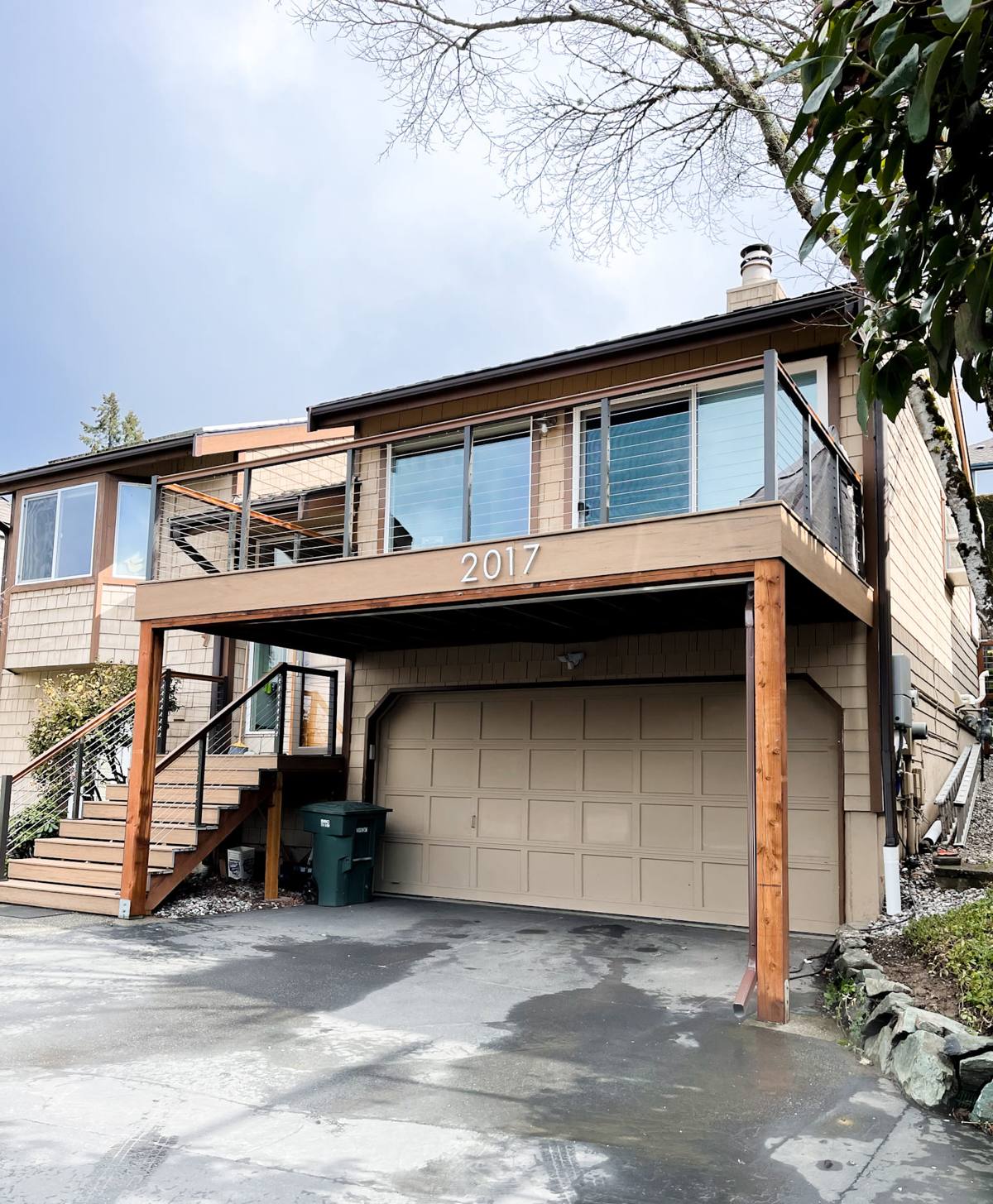
Deck problems in this area tend to follow a pattern. The failures are rarely random — they show up in the same spots, for the same reasons, on deck after deck.
- Soft or spongy boards near planters, gutters downspouts, or anywhere water collects and sits
- Moss and algae buildup on the north side or shaded sections that stays damp for days after a storm
- Rusted or corroding fasteners, brackets, and joist hangers from long-term moisture exposure
- Ledger board attachment issues where the deck meets the house — often the most serious find
- Railing posts that have loosened or rotted at the base where they meet the decking
- Stair stringers showing early rot before the rest of the deck does, since they take the brunt of runoff
- Gaps, cupping, or warping in boards that were never properly spaced or sealed for this climate
Individually, most of these look minor. Left alone through another wet Whatcom County winter, several of them turn into safety issues rather than cosmetic ones.
What a Correct Repair Actually Involves
A repair that just swaps a rotten board for a new one and calls it done is a temporary fix, not a real one. If the framing underneath is compromised, or if the fasteners are corroding, the same failure shows up again a season or two later. A repair we stand behind starts with figuring out why the damage happened, not just where it is.
Structural Inspection First
Before any board comes off, we check the framing underneath — joists, beams, posts, and especially the ledger board connection to the house, since that's the single most common source of serious deck failures. We're checking for soft wood, rust staining, movement in connections, and any sign that water has been getting trapped rather than draining away.
Matching the Fix to the Cause
If a section is failing because of poor drainage or a spot where water pools, replacing the boards without addressing the drainage just resets the clock on the same problem. Sometimes that means adjusting board spacing, adding flashing where the deck meets the house, or improving how water sheds off the surface.
Fasteners and Hardware Matter as Much as Lumber
In a climate with this much sustained moisture, using the wrong grade of fastener is one of the most common shortcuts that causes early failure. We use coated or stainless hardware rated for exterior and ground-contact use, since standard fasteners corrode faster here than they would in a drier climate, and a rusted connector is a hidden weak point long before it's visible.
Repair or Replace? How We Help You Decide
Not every deck problem calls for a full rebuild, and not every deck is worth patching indefinitely either. The right call usually comes down to how much of the structure is still sound.
| Situation | Repair usually makes sense | Replacement usually makes sense |
|---|---|---|
| Framing condition | Joists and beams are solid, damage is limited to surface boards | Multiple joists or the ledger board show rot or damage |
| Age of the deck | Deck is under 10-15 years old with isolated issues | Deck is older and multiple systems are failing at once |
| Extent of moss/rot | Confined to one or two boards or a single shaded section | Widespread across most of the deck surface |
| Railings and stairs | Stable with only cosmetic wear | Loose posts, soft stringers, or code-non-compliant spacing |
| Budget goal | Extend the deck's life a number of years affordably | Want a long-term reset, possibly with different materials |
We'll give you a straight answer on which side of that line your deck falls on — we're not in the business of selling a full rebuild when a targeted repair will genuinely hold up.
How Our Repair Process Works
- On-site assessment. We walk the deck, check the framing from underneath where accessible, test boards for soft spots, and look closely at the ledger connection and any high-moisture zones.
- Written scope and honest pricing. You get a clear breakdown of what needs to be replaced, what can be cleaned and restored, and roughly what it will cost — no vague allowances.
- Demo of only what's necessary. We remove failed boards, hardware, and framing members, but we don't tear out sound material just to pad the job.
- Rebuild with climate-appropriate materials. Correct fastener grade, proper flashing at the house connection, and board spacing that accounts for how much this region's rain and humidity make lumber expand and contract.
- Cleanup of moss and algae. Where organic growth is part of the problem, we treat and clean affected surfaces so the repair isn't compromised again within a season.
- Final walkthrough. We check railings, stairs, and fastener tightness before calling the job done.
Decking Materials: What Holds Up Best Here
Whatcom County's wet season is hard on any decking material, but some handle it better than others, and repairs are a good time to think about whether your current material is still the right fit.
Wood Decking
Pressure-treated and cedar decking are common here and can last a long time when properly maintained — but "properly maintained" is the key phrase. Wood needs periodic sealing and cleaning to keep moisture from soaking in, and it's the material most vulnerable to the moss and algae growth this climate produces. Repairs on wood decks often reveal how much sealing was skipped in prior years.
Composite Decking
Composite resists rot and doesn't need staining, which makes it appealing in a climate like this. That said, composite isn't maintenance-free — it can still grow surface mildew or algae film in shaded, damp spots, and it needs to be installed with the right spacing and fastening system, since composite behaves differently than wood under moisture and temperature swings. We install and repair composite decks strictly to the manufacturer's spacing and fastening specifications, since cutting corners there is a common cause of the warping and fastener pop-through we get called to fix.
Hardware and Framing
Regardless of the decking material on top, the framing underneath should always use ground-contact rated lumber and corrosion-resistant connectors in this climate. It's the part nobody sees, and it's the part that matters most for how long a repair actually lasts.
A Homeowner's Deck Maintenance Checklist
Between repairs, a few simple habits go a long way toward avoiding the next one, especially given how long the moss season runs here:
- Sweep leaves and debris off the deck regularly, especially in fall — trapped debris holds moisture against the boards
- Check and clear gaps between boards so water can drain instead of pooling
- Look at the area where the deck meets the house once or twice a year for staining or soft wood
- Clean moss and algae off shaded sections before it spreads, rather than waiting until it's thick
- Check railing posts and stair stringers for movement or softness, particularly after a hard winter
- Reseal wood decking on the schedule the product calls for — skipping a cycle compounds fast in this climate
- Keep planters and hoses from sitting directly on deck boards for extended periods
Why It Matters That We Already Work in Nooksack
A crew that only occasionally works this area has to relearn the local conditions on every job. We already know how the driving rain moves across an exposed deck, which sides of a house tend to hold moss longest, and what fastener and framing choices actually hold up through a full Whatcom County wet season rather than just looking good on install day. That's less guesswork for you and fewer surprises once the work is done.
We also know that homeowners in and around Lynden and Nooksack want a straight answer, not a sales pitch — whether that answer is "this is a simple repair" or "here's what's actually going on underneath, and here's what it'll take to fix it right."
Get a Free, No-Pressure Estimate
If your deck has soft spots, persistent moss, or just doesn't feel as solid as it used to, it's worth having someone look at it before another wet season adds to the damage. Fill out the form below for a free estimate — no pressure, just a straight assessment of what your deck actually needs.