 Lynden Exterior
 Building a Deck That Actually Holds Up in Nooksack
Nooksack sits in the kind of Whatcom County weather that punishes outdoor structures quietly, over years, rather than all at once. A deck here doesn't usually fail because of one big storm — it fails because it was built for a drier climate and nobody accounted for what happens when wood, fasteners, and framing stay damp for months at a stretch. Between the driving rain off the Pacific, the marine-tinged air that moves up the valley, and a moss season that can run from fall clean through spring, a deck built to a generic national spec is fighting an uphill battle from day one.
We build custom decks for homes in and around Nooksack, and the design decisions we make — material selection, framing spacing, drainage detailing, fastener choice — are all shaped by what this specific stretch of Whatcom County does to a structure over ten, twenty, thirty years. That's a different job than building a deck in eastern Washington or inland California, even if the finished product looks similar from the yard.
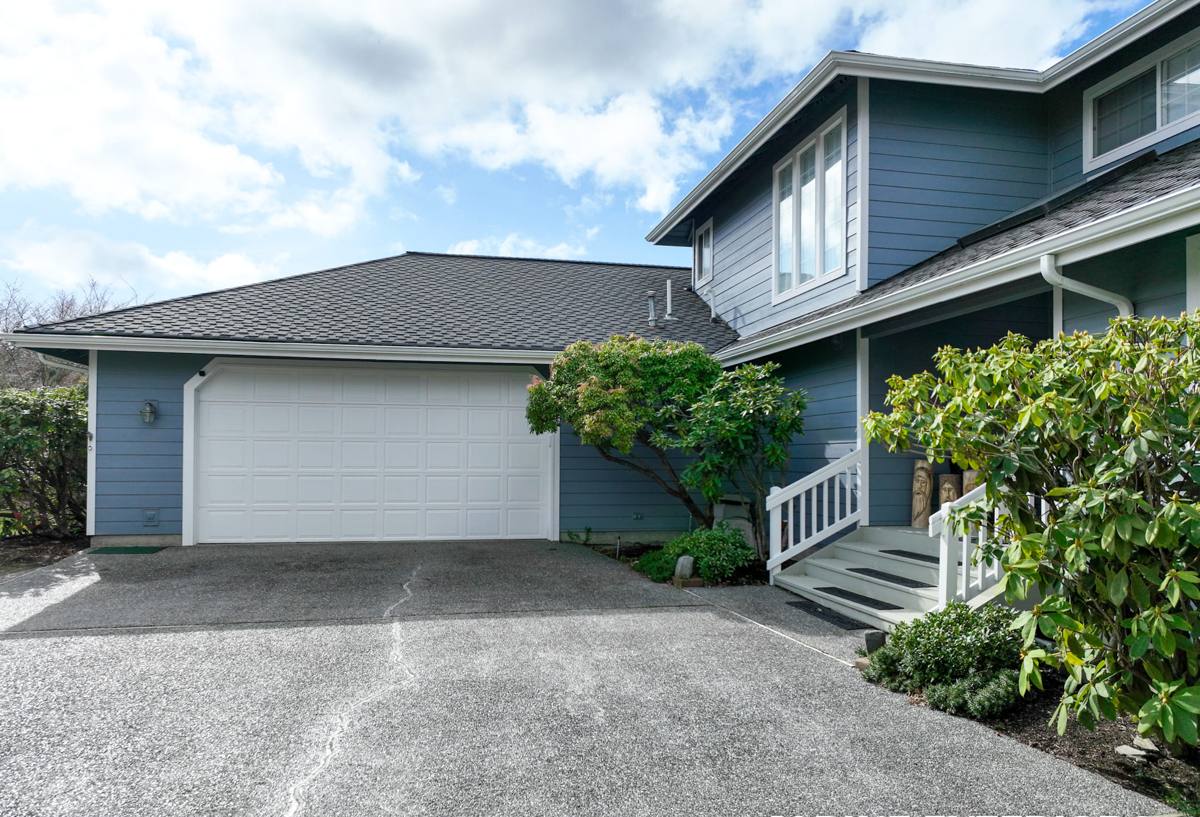
What Nooksack's Climate Does to a Deck Over Time
Moisture That Never Fully Leaves
The biggest threat to any deck near Nooksack isn't a single hard rain — it's the fact that wood surfaces here rarely get a long enough dry stretch to fully release moisture before the next system rolls through. That constant damp-dry cycling is what drives rot in ledger boards, joists, and post bases if those areas weren't detailed correctly during construction.
Moss and Algae Growth
A long moss season means any decking surface that holds water — low spots, tight board gaps, north-facing shaded areas under overhangs — will start growing moss and algae faster than homeowners expect. Beyond looking bad, moss holds moisture against the wood surface and creates a slip hazard on stairs and walking surfaces.
Fastener and Hardware Corrosion
Salt-tinged marine air moving through the region accelerates corrosion on fasteners, brackets, and hardware that aren't rated for it. A deck can look structurally sound on the surface while the hidden screws and joist hangers holding it together are quietly rusting away underneath.
Freeze-Thaw Stress
Whatcom County winters aren't brutal, but they're not mild enough to ignore either. Repeated freeze-thaw cycles on wet lumber and around footings can loosen fasteners, crack improperly sealed cuts, and stress connections that were installed a little too tight or a little too loose.
Choosing the Right Decking Material for This Area
There's no single "best" decking material for every home — it depends on budget, how much upkeep you're willing to do, and how the deck is oriented relative to sun and shade. Here's how the common options actually perform in Nooksack's conditions:
| Material | Moisture Performance | Moss/Algae Resistance | Maintenance |
|---|---|---|---|
| Cedar | Naturally moisture- and rot-resistant when properly finished; needs the finish maintained | Moderate — still needs cleaning in shaded areas | Refinish every 2-3 years |
| Pressure-Treated Pine | Good if detailing (flashing, gaps, fastener choice) is correct; treatment protects against rot | Low-moderate — prone to moss in shaded spots without sealing | Seal/stain every 1-2 years |
| Composite Decking | Excellent — doesn't absorb water or rot | Higher resistance, though surface algae can still form in constant shade | Periodic cleaning, no staining/sealing |
| Tropical Hardwoods (e.g., Ipe) | Excellent natural density and rot resistance | Good, but surface can still grey and host light growth | Occasional oiling to maintain color |
We'll walk through these trade-offs honestly during your estimate. Composite has become popular for good reason in this climate — low maintenance matters a lot when a deck sits under Whatcom County rain for half the year — but it's not automatically the right call for every budget or every home's style. A well-detailed cedar or treated-lumber deck can perform for decades if it's built and maintained correctly.
Framing and Substructure: Where Decks Actually Fail
Homeowners tend to focus on the decking boards because that's what they see, but the substructure is where most deck failures actually start. Joists, beams, posts, and especially the ledger board connection to the house are doing the structural work — and they're also the components most exposed to trapped moisture.
Correct substructure work for this climate includes:
- Proper ledger board flashing where the deck attaches to the house, so water is directed away from the wall assembly instead of into it
- Joist tape or flashing on the tops of joists to keep fasteners from sitting in standing water
- Post bases set above grade with proper drainage, not buried or sitting flush in soil that holds moisture
- Corrosion-resistant fasteners and connectors rated for treated lumber and coastal-influenced air
- Adequate spacing between deck boards for airflow and drainage, sized correctly for the material chosen
Skipping any one of these doesn't cause an immediate problem — it causes a problem in year six or eight, usually hidden under the decking where it's expensive to find and fix.
Drainage and Moisture Management
Good drainage design is the single biggest factor in how long a deck lasts here. That means grading the ground under and around the deck so water moves away from posts and footings, keeping planting beds from directing runoff toward the structure, and making sure gutters or roof runoff near the house aren't dumping water onto or under the deck. For decks with a usable space underneath, a proper under-deck drainage system keeps that area dry instead of turning it into a perpetually damp crawlspace that feeds rot from below.
Our Process, From Estimate to Finished Deck
We keep the process straightforward and transparent from the first conversation:
- On-site assessment — we look at your yard's grading, sun/shade exposure, existing structure (if replacing a deck), and how the space will actually be used.
- Design and material discussion — we talk through decking material, layout, railing style, and any structural considerations specific to your lot.
- Written estimate — clear scope, materials, and timeline, no vague allowances.
- Permitting — we handle the permit process where required, including structural details for inspection.
- Site prep and framing — grading, footings, posts, and substructure built to hold up in this climate, not just to pass a minimum code check.
- Decking, railing, and finish work — installed with attention to fastener choice, board spacing, and drainage detailing.
- Final walkthrough — we go over the finished deck with you and cover basic maintenance for the material you chose.
Permits and Whatcom County Considerations
Most custom deck projects require a building permit, particularly for decks attached to the house, elevated structures, or anything involving new footings. Requirements can vary depending on your property's specific jurisdiction within Whatcom County, deck height, and proximity to property lines. We handle the permitting conversation as part of the project rather than leaving it for the homeowner to sort out — it's part of doing the job correctly rather than an extra step tacked on at the end.
Maintenance That Actually Protects Your Investment
Even a well-built deck needs some seasonal attention in this climate. A short, realistic maintenance routine goes a long way toward preventing the moss buildup and moisture damage that shorten a deck's lifespan:
- Sweep debris and standing leaves off the deck surface regularly, especially in fall
- Clean moss and algae from shaded areas and stair treads before they build up and become slippery
- Check and clear drainage paths under and around the deck each spring
- Inspect fasteners, railings, and stair connections annually for looseness or corrosion
- Reapply sealant or stain on schedule if you chose wood or treated lumber
- Trim back vegetation that shades the deck and keeps it from drying out between rains
Why Hiring a Crew That Already Works in Nooksack Matters
A deck contractor who mostly works in drier climates will often make reasonable decisions that simply don't hold up here — under-detailing drainage, using standard fasteners instead of corrosion-resistant hardware, or not accounting for how much shade and moss a north-facing deck will deal with. None of that shows up on day one. It shows up three or four years in, as soft spots, loosening railings, or a deck surface that's slick half the year.
Working regularly in Lynden and the surrounding Whatcom County area means we're not guessing at how a deck will hold up here — we're building to what we've already seen work and not work in this specific climate, on this specific soil, under this specific amount of rain.
Get a Free, No-Pressure Estimate
If you're planning a new deck or need to replace one that's showing its age, we're happy to take a look and walk you through your options honestly — materials, layout, budget ranges, and what it would take to build something that actually lasts in Nooksack's climate. Use the form below to request a free estimate with no pressure and no obligation.