 Lynden Exterior
 Why Maple Falls Roofs Take a Different Kind of Beating
Homes in and around Maple Falls sit under a lot of tree cover, catch long stretches of overcast, moisture-laden weather moving in off the Sound, and rarely get a real dry season to reset. That combination is hard on a roof in ways that don't always show up until the damage is already done. Driving rain finds any weak flashing detail. Shade and humidity feed a moss and algae season that runs most of the year. And salt-tinged coastal air, even well inland, slowly works on exposed metal fasteners and flashing if they aren't rated for it. A roof built for a drier, sunnier climate simply doesn't last as long out here.
We install roofs across Whatcom County, but a job in Maple Falls gets planned with this specific mix of shade, moisture, and moss pressure in mind — not a generic spec sheet.
What a Correct New Roof Installation Actually Involves
"New roof" gets treated like a single line item, but it's really a stack of individual decisions, and the ones that matter most are the ones a homeowner can't see once the shingles are down. Getting a new roof right in this climate means getting each layer right, not just the top one.
Deck Inspection and Repair
Once the old roofing is stripped, we inspect the decking itself — plywood or planking — for soft spots, delamination, or rot, which is common on older Whatcom County homes where a leak sat unnoticed for a season or two. Any bad decking gets replaced before anything else goes down. Roofing over a compromised deck is one of the most common shortcuts that leads to an early failure, and it's not something you can inspect after the fact without tearing the new roof back off.
Underlayment and Ice-and-Water Protection
Given how much rain this area sees, we don't treat underlayment as filler. Synthetic underlayment goes down across the field for its tear resistance and water-shedding, with self-adhered ice-and-water membrane at the eaves, valleys, and any low-slope transitions — the spots where wind-driven rain is most likely to work its way backward under the shingles.
Flashing Details
Flashing failures, not worn-out shingles, cause the majority of roof leaks we get called out to repair. Chimneys, skylights, sidewall step flashing, and valleys all get new metal, properly lapped and sealed — never just caulked over old flashing to save a step. In driving rain, a caulk-only fix is a matter of when it fails, not if.
Ventilation
A roof deck that can't breathe traps moisture underneath the roofing, which shortens shingle life and can lead to rot and mold in the attic — a real issue in a climate this damp. We balance intake at the eaves with exhaust at the ridge so the attic space actually moves air instead of sitting stagnant.
Choosing Roofing Materials for This Climate
There's no single "best" roofing material — the right choice depends on your budget, roof pitch, tree cover, and how much long-term maintenance you want to take on. Here's how the common options actually perform under Maple Falls conditions:
| Material | Moisture & Moss Resistance | Typical Lifespan | Maintenance Burden |
|---|---|---|---|
| Architectural asphalt shingle | Good with proper algae-resistant granules; still needs periodic cleaning under heavy shade | 25–30 years | Low to moderate |
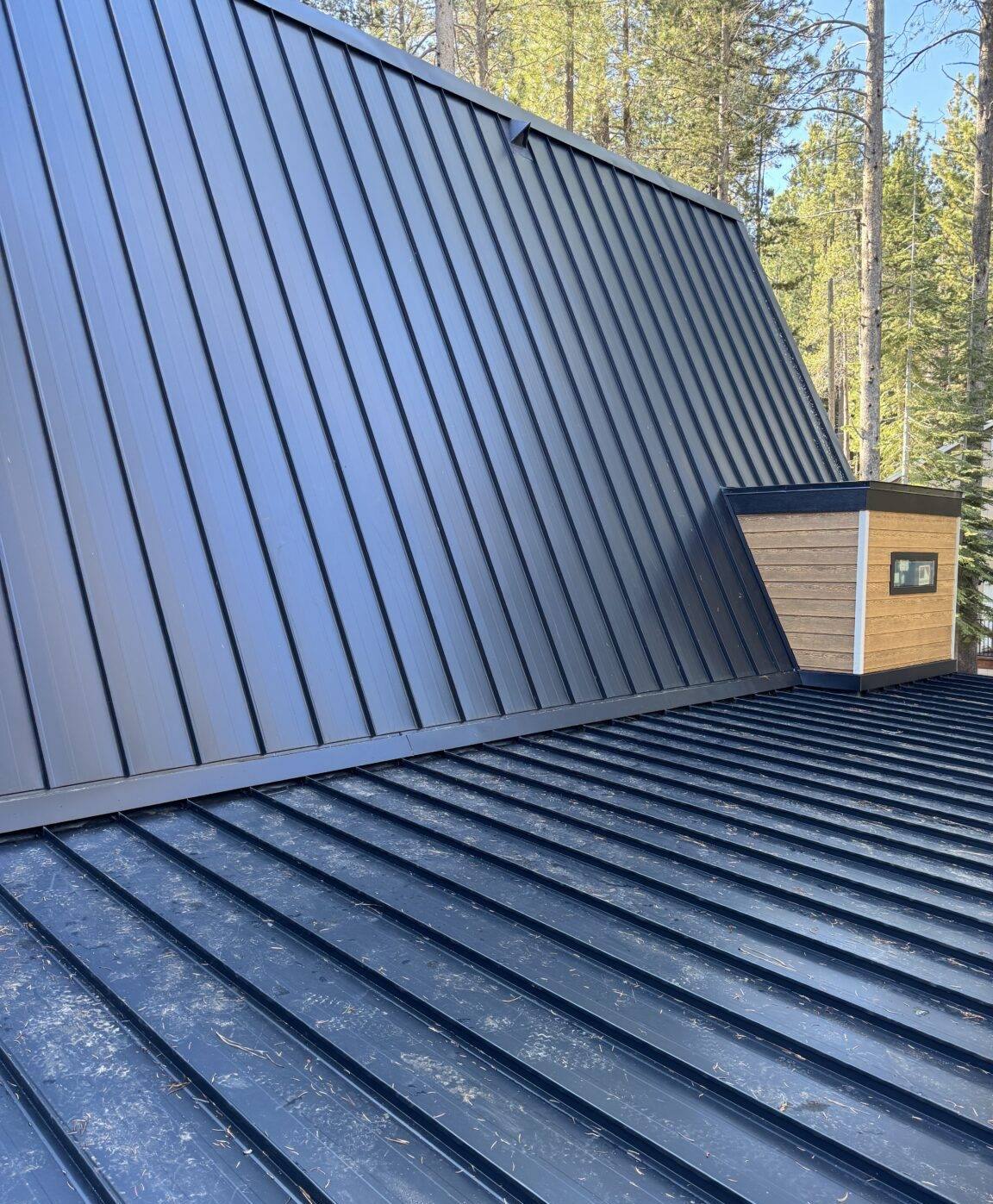
| Standing seam metal | Excellent — sheds moisture fast, minimal surface for moss to grip | 40–60 years | Low |
| Synthetic/composite shake | Very good; resists moisture absorption better than wood | 30–50 years | Low |
| Cedar shake | Fair — attractive but absorbs moisture and needs active moss/algae management | 20–30 years with upkeep | High |
We install asphalt shingle, metal, and synthetic composite roofing. We steer most Maple Falls homeowners away from untreated cedar shake for primary roofing not because it can't look good, but because the maintenance schedule needed to keep it performing in this much year-round moisture is more than most people want to sign up for. If you love the look, synthetic shake gives you close to the same profile without that upkeep burden.
Moss, Algae, and Keeping a New Roof Looking New
A long moss season is one of the defining features of roofing out here, and it starts working on a new roof faster than most homeowners expect — often within the first couple of years on shaded north-facing slopes. A few things make a real difference:
- Algae-resistant shingles with embedded copper or zinc granules, which slow regrowth without chemical treatment
- Zinc or copper strips at the ridge on shaded roofs, letting rain carry trace metal down the slope
- Keeping overhanging branches trimmed back so the roof gets more light and airflow
- Gentle, low-pressure moss removal on a normal schedule instead of waiting until it's thick — pressure-washing a roof surface can strip granules and shorten its life
We build moss resistance into the installation itself rather than treating it as an afterthought you deal with later.
Our Installation Process, Step by Step
- On-site inspection and honest assessment of whether you need a full replacement or targeted repair
- Written estimate covering materials, scope, and timeline — no vague allowances
- Permit pull with Whatcom County where required
- Tear-off of the old roofing and disposal
- Deck inspection, with any repairs made before new roofing is installed
- Underlayment, ice-and-water membrane, and flashing installation
- Roofing material installation to manufacturer specifications
- Ventilation check and correction if intake/exhaust is unbalanced
- Final walk-through and cleanup, including a magnetic sweep for stray nails
Timeline, Permits, and What to Expect During the Job
Most single-family roof replacements in this area take one to three days of active work once materials are on site, though rain can push that out — we schedule with Whatcom County's weather in mind and won't rush a tear-off into an open sky if a storm is inbound. Whatcom County requires a building permit for most reroofing projects; we handle the pull and inspection scheduling as part of the job rather than leaving it on the homeowner's plate. Expect noise, some vibration inside the house during tear-off, and a work zone around the perimeter for staging and debris — we keep that area contained and cleaned up daily.
What Drives the Cost of a New Roof
Every roof is different, but the same handful of factors move the price up or down. A straightforward, simple-pitch roof in asphalt shingle sits at the lower end of the range; steep or complex rooflines, metal, or extensive deck repair push it higher.
| Factor | Why It Matters |
|---|---|
| Roof size and number of planes | More material and more labor, and more seams and valleys to flash correctly |
| Pitch and access | Steep roofs take longer and require more safety setup |
| Deck condition | Rot or soft decking found during tear-off adds material and labor to fix before roofing can go on |
| Material choice | Asphalt shingle is the most budget-friendly; metal and synthetic composites cost more upfront but last longer |
| Tear-off layers | Removing multiple existing layers of roofing takes more time and disposal cost than a single layer |
We give a firm written number after the inspection, not a phone-quote guess — the only way to price a roof accurately is to actually look at the deck, the pitch, and the access.
Signs Your Roof Needs Replacing, Not Just Repair
- Shingles that are curling, cupping, or losing granules in large patches
- Daylight visible through the roof deck from inside the attic
- Soft or spongy spots when walking the roof
- Repeated leaks in different spots after past repairs
- Heavy moss growth that's lifted or displaced shingles rather than just sitting on the surface
- A roof approaching or past the manufacturer's expected lifespan for its material
Why Hiring a Crew That Already Works Maple Falls Matters
A roofer who mainly works drier, more open areas will often spec a roof the same way regardless of site conditions. A crew that regularly works Maple Falls and the surrounding Whatcom County terrain already knows which slopes hold moss longest, where driving rain tends to find weak flashing, and how much ventilation a shaded, tree-covered lot actually needs versus a textbook calculation. That local pattern recognition shows up in fewer callbacks and a roof that's still performing well after the material warranty on a generic install would already be showing its age.
If you're weighing a repair against a full replacement, or you just want a straight answer on where your current roof stands, we're happy to take a look. Reach out for a free, no-pressure estimate using the form below.