 Lynden Exterior
 Building New in Deming: What the Windows Actually Need to Do
Deming sits up the Nooksack River valley east of Lynden, in the wetter, more heavily wooded part of Whatcom County. If you're framing a new home or outbuilding out here, the windows you choose and how they're installed matter more than they would in a drier climate. This area sees long stretches of steady, wind-driven rain, heavy tree cover that keeps moisture on the exterior longer, and a moss and algae season that can run most of the year on north-facing walls. New construction gives you one real advantage: you get to build the window opening and the water management around it correctly from the start, instead of retrofitting a fix later.
That's the whole case for doing this stage right. A window that's flashed and sealed properly on day one, in a house that hasn't settled or been painted over six times, has a much better shot at going 20-30 years without a callback. Get it wrong at rough-in, and you're looking at rot, stuck sash, or fogged glass in the wall cavity before the house is even a decade old.
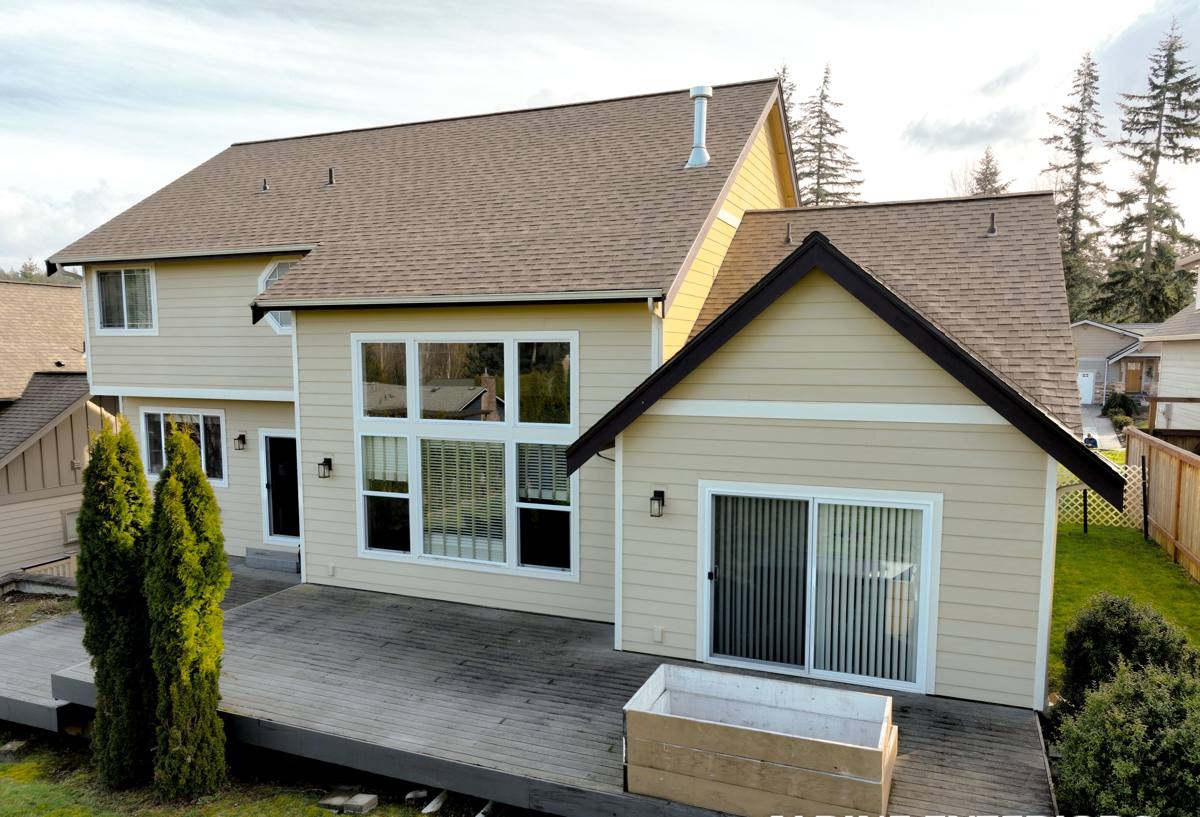
New-Construction vs. Retrofit Windows: Why the Distinction Matters
"New-construction" isn't just a marketing term — it describes a specific window design and installation method. New-construction windows have a nailing flange (fin) around the perimeter that gets fastened directly to the sheathing and integrated into the house wrap and flashing before siding goes on. Retrofit (or "pocket") windows are built to slide into an existing frame without disturbing the exterior finish, which is the right call on a remodel but the wrong call on a new build.
- New-construction: flange fastens to sheathing, full flashing integration, siding laps over the flange — the standard for ground-up builds and additions.
- Retrofit/pocket: installs into the old frame, minimal exterior disruption — built for existing siding you don't want to touch.
Using a retrofit-style window on new construction (or vice versa) is one of the more common mistakes we see when we get called in to fix water intrusion on a relatively young house. On a new build in Deming, there's no reason to cut that corner — the flange system is the more weathertight option and it's not more expensive to do correctly the first time.
What a Correct New-Construction Install Involves
The window unit itself is only part of the job. The sequence around it is what actually keeps water out over time:
- Rough opening checked for square, level, and correct size before the window ever shows up on site.
- Sill pan flashing installed first, sloped to drain any water that gets past the window back to the exterior — not into the wall cavity.
- Window set, shimmed, and fastened per the manufacturer's schedule (skipping fastener locations is a common warranty-voider).
- Jamb and head flashing integrated with the house wrap in the correct shingle-lap order, so water always sheds outward and downward.
- Backer rod and sealant at the exterior trim joint, plus low-expansion foam or backer rod at the interior gap — never solid foam pressed directly against the frame, which can bow it.
- Final check for square operation, smooth locking, and a water test where conditions call for it.
Any one of these steps done out of order or skipped is where leaks start. It's rarely the window itself that fails — it's the flashing detail around it.
Flashing, Moisture, and Code in a Wet Climate
Whatcom County's building code follows the Washington State Energy Code and residential building code, which set minimum requirements for water-resistive barriers and flashing at window openings. Those are minimums. In a valley location like Deming, where rain sits longer under tree cover and driving wind can push water sideways under a shallow eave, we typically build in more margin than code strictly requires — extra sill pan depth, fully adhered flashing tape rather than just building paper laps, and attention to how the window head ties into any roof or porch flashing above it.
Moss and algae growth on north and shaded elevations is a maintenance issue more than a leak issue, but it does affect window choice: dark vinyl or fiberglass frames on a shaded wall will show growth and staining faster than the same product on a sun-exposed wall. That's a cosmetic tradeoff worth knowing about before you pick frame color, not a defect in the product.
Choosing Materials for This Climate
| Frame Material | Moisture Behavior | Maintenance | Typical Fit |
|---|---|---|---|
| Vinyl | Won't rot; handles constant damp exposure well | Low — occasional wash to keep moss/algae film off | Most new-construction homes; best value |
| Fiberglass | Very stable in wide temperature and moisture swings | Low | Larger openings, higher-end builds |
| Wood (clad exterior) | Interior wood needs to stay dry; exterior clad protects from rain | Higher — interior finish care, clad exterior is low-maintenance | Homeowners wanting a wood interior look |
| Bare wood (no clad) | Needs consistent exterior paint/finish upkeep to resist this area's rain load | Highest | We don't recommend it for exposed elevations here |
We steer most Deming builds toward vinyl or fiberglass for anything on an exposed or shaded wall, simply because the maintenance burden of bare wood in a valley climate like this is real — it's not that wood windows are a bad product, it's that they ask for upkeep this area's rain and shade don't make easy to skip.
Glass Packages Worth Considering
Standard double-pane, low-E glass is adequate for most builds, but a few upgrades are worth pricing out during new construction, since it's far cheaper to spec them now than to replace glass later:
- Low-E coating: reduces heat loss in winter and heat gain in summer — a reasonable baseline for this climate rather than an upgrade.
- Argon or krypton gas fill: improves the insulating value of the sealed unit, worth it on a long-term build.
- Laminated glass: adds sound dampening and impact resistance — more relevant on a road-facing elevation than a moisture concern, but worth knowing about.
- Tempered glass: required by code near doors, low sills, and wet areas regardless of climate.
Cost Factors on a New-Construction Window Package
Every build is different, so we won't quote a number here that doesn't mean anything without seeing your plans. What actually moves the price on a Deming project:
| Factor | Why It Matters |
|---|---|
| Number and size of openings | Larger units and more openings mean more material and labor |
| Frame material | Vinyl is typically the most economical; fiberglass and clad-wood cost more |
| Glass package | Gas fill, laminated, or tempered glass all add cost per unit |
| Wall height and access | Second-story and steep-site openings take more time and equipment |
| Flashing detail complexity | Openings under decks, near rooflines, or on shaded/exposed walls need extra flashing work |
The most useful thing you can do to control cost is get us involved during framing, not after siding is on order. Changing a rough opening size after the fact is expensive; getting it right the first time is not.
Why a Crew That Already Works Deming and Lynden Matters
A window install is only as good as the flashing detail around it, and that detail should change slightly depending on the wall it's going on — how much shade it gets, how exposed it is to wind-driven rain, what's above it. A crew that works Whatcom County regularly has already seen how these details hold up (or don't) five and ten years later on homes just like the one you're building. That's not something you can get from a national supplier or a crew passing through on one job.
We also know the local permitting and inspection process, which keeps the schedule moving instead of stalling on a flagged detail. And because we're local, warranty and service calls aren't a multi-hour drive for either of us — if something needs a look five years from now, we're still here.
A Simple Checklist Before Your Windows Go In
- Rough openings measured and confirmed square before windows are ordered
- New-construction (flange) units specified, not retrofit/pocket units
- Sill pan flashing planned into the sequence, not added as an afterthought
- Frame material matched to sun/shade exposure on each elevation
- Glass package (low-E, gas fill, tempered where required) decided before ordering
- Manufacturer's fastening schedule to be followed exactly, not shortcut
If you're framing a home or addition in Deming and want the window package planned out correctly from rough opening to trim, we're glad to come look at the plans or the site and give you a straightforward, no-pressure estimate.