 Lynden Exterior
 New Construction Is the One Time You Only Solve This Once
When you're building new, windows get specified early and then mostly forgotten until they show up on a truck. That's a mistake almost everywhere, but it's a bigger one for a home going up in Abbotsford. Once the siding, trim, and interior finishes are closed in around a window opening, you've lost your access to fix how it was flashed and sealed. Get it right during rough-in and it's right for the life of the house. Get it wrong and you're chasing a leak or a rot pocket behind brand-new siding a few winters later. New construction is the cheapest and easiest point in a home's whole life to install windows correctly — which is exactly why it deserves more attention than it usually gets.
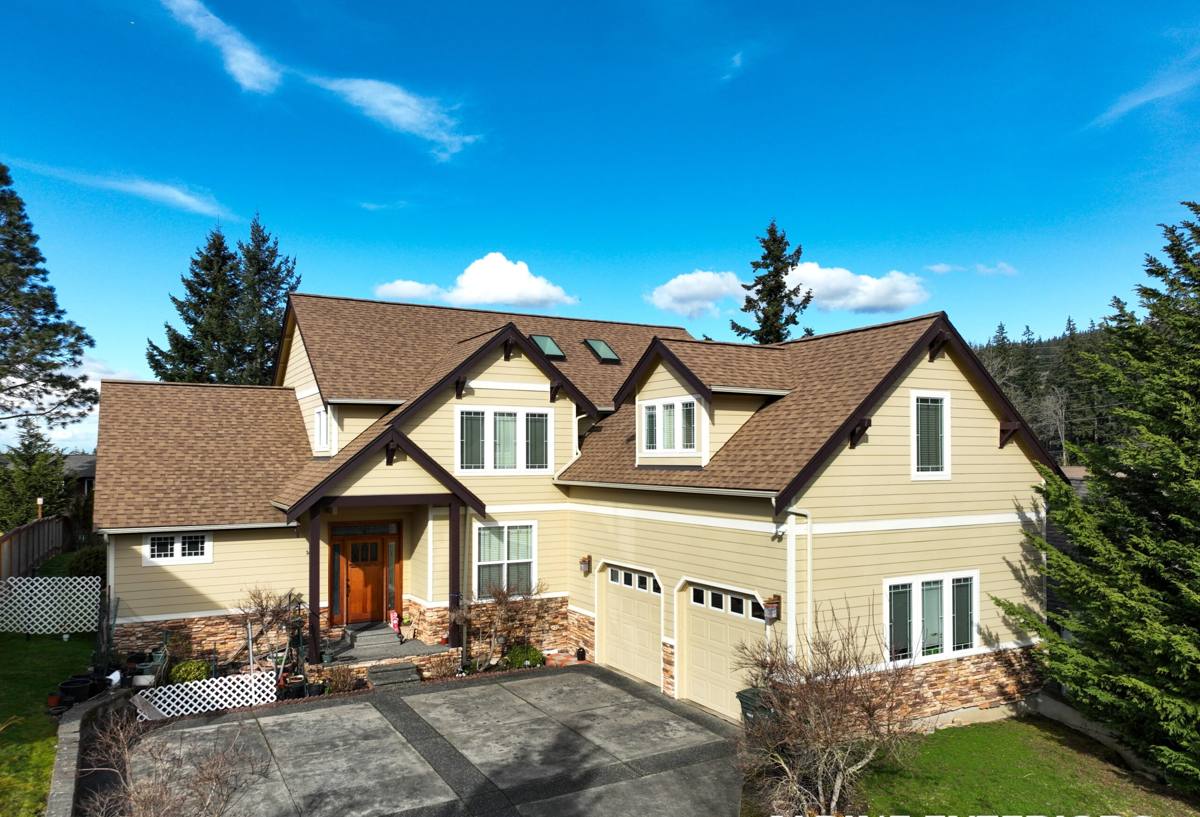
What Fraser Valley Weather Asks of a New Build's Windows
Abbotsford sits in the Fraser Valley, funneled between mountains that wring a lot of moisture out of incoming Pacific systems. Homes here deal with long stretches of steady, driving rain rather than short downpours — the kind of weather that tests a window's water management over hours and days, not minutes. That same damp, mild pattern also produces a long moss season on roofs, fences, and north-facing wall assemblies, which is a good proxy for how much of the year exterior surfaces here stay wet.
Add in the salt-laden air that rides inland off the Strait of Georgia and Boundary Bay during onshore weather, and you've got a climate that's genuinely hard on exterior building components — it corrodes fasteners and hardware faster than a dry inland climate would, and it keeps humidity elevated around window openings for more of the year. None of this is exotic or alarming; it's just the normal cost of building in a coastal valley. But it means the flashing details, sealants, and hardware specified for a new build here need to be chosen for sustained wet exposure, not just rated for "rain" in general.
New-Construction Windows vs. Replacement Inserts — Why the Install Method Changes Everything
A replacement window gets set into an existing, already-clad opening — the installer works with what's there, sealing around the edges of the old frame. A true new-construction window is a different animal: it has a nailing fin around its perimeter and gets installed into an open stud wall before the weather-resistive barrier, flashing, and siding go on. That access is the whole point. It means the sill, jambs, and head of every opening can be flashed and drained correctly from scratch, with no old caulk, old trim, or hidden rot to work around.
That access is also where things go wrong if it's rushed. Because a new-construction opening is buried under siding and trim as soon as the crew moves past it, a shortcut taken here doesn't show up as a problem for years — usually not until moss and mildew patterns on the exterior wall, or a soft spot on an interior sill, tell you water's been getting behind the cladding the whole time. On a new build, the window installer isn't just placing glass in a hole. They're building the first and most important layer of the wall's water management system.
Building to BC Code From a Crew That Works Both Sides of the Line
Lynden sits close enough to Abbotsford that it's a short drive across the border, but the two sides don't share a building code, a window rating system, or even a measurement standard. Windows destined for a BC new build need to meet BC Building Code requirements and are typically rated to CSA A440/NAFS performance classes rather than the US-only NFRC labeling homeowners see on windows sold south of the line. Window schedules, rough openings, and energy requirements on a Canadian permit set are usually written in metric, and a builder's inspector will expect documentation that matches BC's code, not Washington's.
A crew that regularly works Abbotsford new builds already has this sorted — the right product documentation on hand, familiarity with what the local building inspector wants to see at each stage, and the paperwork that comes with crossing the border for work sorted out ahead of time. That's not a small thing on a new-build schedule, where a framing or siding crew is often waiting on window rough openings to be signed off before they can move forward. A crew learning BC requirements for the first time on your project is a scheduling risk you don't need to take on.
How a Correct New-Construction Window Installation Goes, Step by Step
Rough Opening and Sill Pan
Before a window ever gets set, the rough opening needs to be square, plumb, and sized correctly for the unit specified — and on a home built for this climate, it should get a sloped sill pan. That pan gives any water that finds its way to the sill a built-in path back outside instead of a flat surface where it can pool against the framing.
Weather-Resistive Barrier and Flashing Sequence
Flashing tape and the weather-resistive barrier get integrated in a specific shingle-lap order — sill first, then jambs, then head — so that water draining down the wall always laps over the layer below it rather than behind it. This sequencing matters more in a climate with long, steady rain events than it does somewhere drier, because the wall assembly spends more cumulative hours wet.
Setting, Shimming, and Fastening the Window
The window gets set into the flashed opening, shimmed level and plumb at the correct points (not just at the corners), and fastened through the nailing fin per the manufacturer's schedule. Fastener choice matters here — hardware that can't stand up to a damp, salt-influenced coastal climate over time is a slow-motion failure point.
Sealing and Interior Air Seal
Exterior sealant goes around the fin per the manufacturer's instructions, and the gap between the rough opening and the window frame gets air-sealed on the interior side with a compatible foam or sealant — not stuffed with fiberglass insulation, which does nothing to stop air movement and can hold moisture against the frame.
Choosing a Window Line for an Abbotsford New Build
There's no single "correct" frame material for every new build — it depends on the home's design, budget, and how much long-term maintenance the owner wants to take on. What matters is picking with this climate in mind rather than picking on price or looks alone.
| Frame Material | How It Handles This Climate | Maintenance | Where It Fits Best |
|---|---|---|---|
| Vinyl | Good moisture and corrosion resistance; won't rot; performance is proven in coastal PNW builds | Low — no painting, occasional cleaning | Most standard new-build homes on a defined budget |
| Fiberglass | Very stable through temperature and humidity swings; strong long-term durability in wet climates | Low | Larger openings, higher-end builds, owners planning to stay long-term |
| Wood-clad (aluminum or vinyl exterior, wood interior) | Good if the cladding and flashing details are done correctly; the wood core is the risk point if water gets behind the cladding | Higher — depends on cladding integrity over time | Homes prioritizing a wood interior look, where installation quality really can't be an afterthought |
Whatever line you land on, buy from a supplier who can document that the specific units meet BC Building Code and CSA A440/NAFS requirements for your permit — not just "similar" US-market equivalents.
Our Process When You're Building in Abbotsford
Working with a builder or homeowner on a new-construction project follows a fairly consistent sequence, whether the lot is in Abbotsford proper or elsewhere in the Fraser Valley:
- Review the window schedule and rough opening sizes against the actual framing plans, and flag any mismatches before the crew is on site.
- Confirm the specified windows carry the right BC/CSA documentation for the permit — not just an assumption that a product is "code compliant."
- Coordinate timing with the general contractor so windows go in right after the weather-resistive barrier is up and before siding starts, not squeezed in around other trades.
- Install sill pans, flashing, and windows in the correct sequence, with photos of each stage kept on file for the builder's records.
- Walk the openings with the builder or homeowner before siding closes them in, so there's a clear last look at the flashing before it's hidden for good.
Mistakes That Don't Show Up Until the Second Wet Winter
Because new-construction flashing is buried under siding almost immediately, a bad install rarely announces itself right away. These are the shortcuts that tend to surface as problems once a home has been through a couple of full wet seasons:
- Flashing installed out of sequence, so water runs behind a layer instead of over it
- No sill pan, or a flat sill pan with no slope to drain water back out
- Caulk used as the only water management strategy, with no proper flashing tape underneath it
- Interior gaps stuffed with fiberglass batting instead of air-sealed with foam or sealant
- Fasteners that aren't suited to a damp, salt-influenced coastal climate
- Window schedules ordered to a US standard without confirming they satisfy the BC permit
Most of these are invisible on move-in day. They show up later as a soft spot on a sill, a musty smell near a window in wet months, or moss and staining patterns on the siding that suggest water is tracking somewhere it shouldn't.
Why Hiring a Crew That Already Works Abbotsford Matters
A new build in Abbotsford only gets one chance at a correct window installation before everything closes in around it. A crew that's already worked Abbotsford new builds brings more than a truck and tools — they bring familiarity with BC's code requirements, an eye tuned to what this specific climate does to a wall assembly over years (not just what looks fine on install day), and the border logistics already worked out so your build schedule doesn't stall waiting on paperwork. Being based just across the line in Lynden means that familiarity comes without the premium of hiring a crew that has to learn BC requirements on your project.
If you're building new in Abbotsford and want windows specified and installed correctly the first time, we're happy to walk through your plans and give you a straightforward, no-pressure estimate — just fill out the form below.