 Lynden Exterior
 Maple Falls Homes Take a Different Kind of Beating
Maple Falls sits in a corner of Whatcom County where the weather doesn't do anything by half measures. Homes here see long stretches of damp, overcast days, driving rain that comes in sideways more often than straight down, and a shade-heavy tree canopy that keeps north- and east-facing walls wet long after the rest of the county has dried out. Add in the salt-tinged air that moves through the broader region on a west wind, and you've got a climate that's genuinely hard on exterior building materials — not in a dramatic, one-time way, but in a slow, cumulative way that shows up as soft trim boards, chalky paint, and green-black staining creeping up from the ground line.
Siding that isn't built for this specific combination of moisture, shade, and moss pressure tends to fail quietly. Caulk lines separate. Paint stops holding. Wood-based products swell and soften at butt joints and corners long before anything looks obviously wrong from the curb. By the time a homeowner notices a problem, there's often already water damage behind the cladding. That's the reason this page exists as its own thing rather than a copy of a general siding page — what Maple Falls needs from its siding, and what a contractor needs to get right installing it, is specific to this pocket of Lynden's service area.
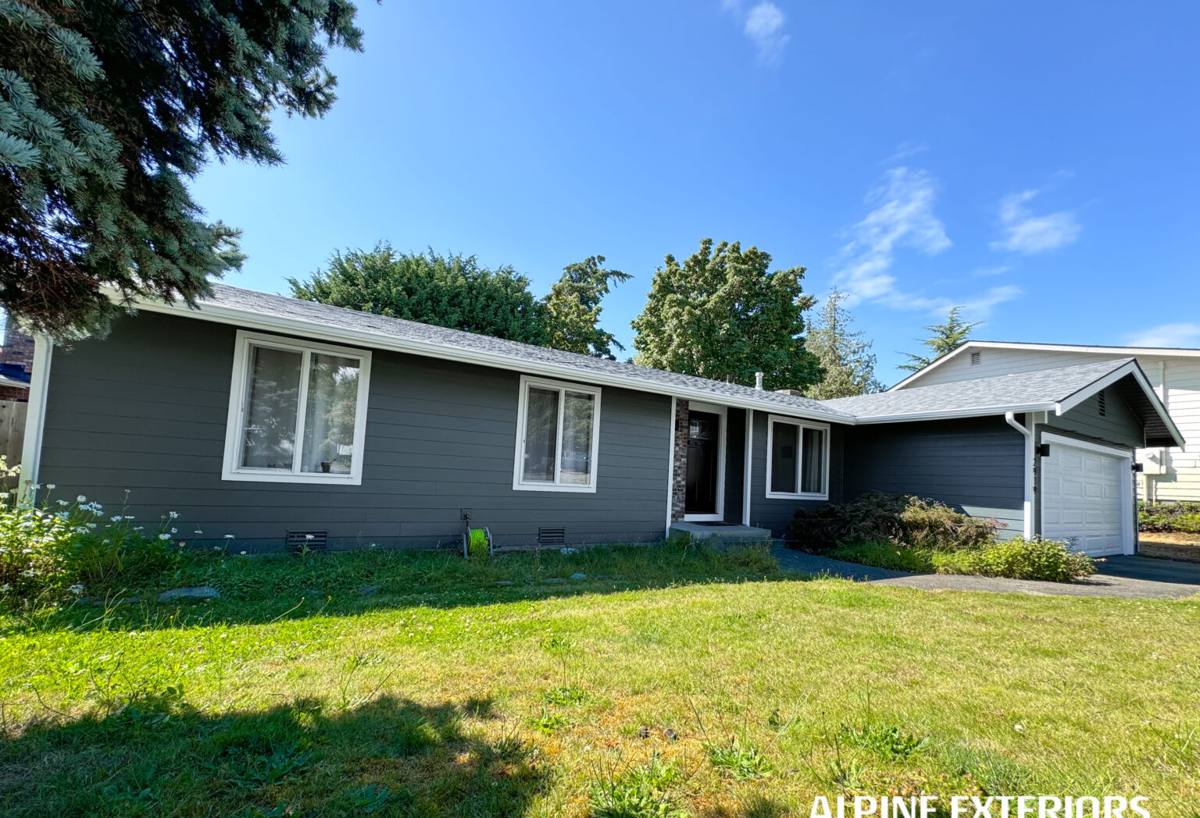
Why Fiber Cement Is the Right Material Here
Fiber cement is cement, sand, and cellulose fiber pressed and cured into a rigid board. It doesn't absorb water the way wood or wood composite products do, it doesn't rot, and it doesn't feed moss and mildew growth the way organic materials can. For a property that spends a good part of the year under cloud cover and tree shade, that's the difference between siding that needs constant upkeep and siding that just sits there doing its job.
We install James Hardie fiber cement exclusively — not Cemplank, not Allura, not the vinyl or engineered wood products some crews still offer as a lower-cost alternative. That's a deliberate standard, not a sales pitch. Hardie's ColorPlus factory finish is baked on and warranted separately from the board itself, which matters in a climate where field-applied paint takes a beating from UV-starved, moisture-heavy conditions. Their HZ5 product line is engineered specifically for climates like ours — repeated wet-dry cycling, freeze risk in the foothills, and sustained humidity — rather than being a generic board sold everywhere. We'd rather install one product correctly and stand behind it than offer three options and hope one works out.
What "Climate-Engineered" Actually Means
It's not a marketing phrase. Hardie manufactures different formulations for different moisture and temperature zones, and HZ5 is the version specified for the Pacific Northwest. It's formulated to resist moisture-related expansion and to hold paint adhesion better in regions that don't get long dry stretches to let coatings cure and settle. For a Maple Falls home, that's not a nice-to-have — it's the baseline spec.
What Correct Installation Involves in This Climate
Fiber cement is only as good as the install behind it. In a low-sun, high-moisture area, a few details matter more than they would somewhere drier:
- Rainscreen or drainage gap: A ventilated gap behind the siding lets bulk water and condensation drain and dry instead of sitting against the wall assembly — important on shaded elevations that never get direct sun to help them dry out.
- Correct clearance at grade and roof lines: Hardie's own install specs call for minimum clearances from soil, decks, and roofing — skip these and you're wicking moisture into the board from below no matter how good the material is.
- Proper fastening pattern: Nail placement, spacing, and depth affect both the warranty and how the boards handle expansion and contraction through wet winters and drier summers.
- Sealed and flashed penetrations: Every window, vent, and hose bib penetration is a place water can get behind the cladding. Flashing detail here isn't optional trim work — it's the actual weatherproofing.
- Factory-cut edges kept sealed: Field cuts expose raw fiber cement edges; those get sealed with the manufacturer-approved product, not skipped to save time.
None of this is exotic. It's just easy to shortcut, and shortcuts don't show up as problems for a year or two — which is exactly long enough for a crew to be gone and hard to track down.
Our Process for a Maple Falls Siding Job
1. On-Site Assessment
We walk the property and look specifically at the elevations that take the most weather — shaded north and west walls, areas near grade, and anywhere we see existing moss, staining, or soft trim. This tells us if there's hidden moisture damage under the current siding before we ever talk numbers.
2. Tear-Off and Sheathing Check
Once the old siding is off, we inspect the sheathing and framing underneath. This is the point where hidden rot from years of trapped moisture gets found — and it's far cheaper to address now than to discover later.
3. Weather-Resistive Barrier and Drainage Plane
We install or verify the house wrap and drainage gap before a single piece of Hardie goes up. This step is the one most likely to get skipped by crews trying to move fast, and it's the one that determines whether the siding actually performs in our climate.
4. Installation to Manufacturer Spec
Boards, fastening, clearances, and flashing all go in to Hardie's published installation requirements — not "close enough." This is also what keeps the manufacturer's product warranty intact if it's ever needed.
5. Final Walkthrough
We go over caulking, trim details, and touch-up paint at seams and cut edges before calling the job done.
Cost Factors for a Maple Falls Project
Every home is different, but the same handful of factors drive most of the price variation we see on fiber cement jobs in this area:
| Factor | Why It Matters Here |
|---|---|
| Existing damage behind old siding | Shaded, moisture-heavy walls are more likely to need sheathing or framing repair discovered at tear-off |
| Home size and wall complexity | Dormers, multiple gables, and cut-up elevations mean more flashing detail and cutting |
| Siding profile chosen | Lap, shingle, and panel profiles differ in material and labor cost |
| Trim and accessory scope | Fascia, soffit, and trim replacement alongside siding adds cost but avoids mismatched new siding against old trim |
| Access and site conditions | Sloped lots, tree cover, and setbacks common in the Maple Falls area can affect staging and scaffolding needs |
We give a firm, written estimate after the on-site assessment — not a phone-quote guess — because the tear-off findings genuinely change scope often enough that a drive-by number isn't honest.
Signs a Maple Falls Home Needs Siding Attention Now
A quick self-check before calling anyone:
- Persistent green or black staining that pressure washing only knocks back temporarily
- Soft or spongy spots when you press on siding or trim, especially near the bottom courses
- Paint that's chalking, peeling, or has stopped holding within a few years of the last paint job
- Visible gaps at seams, corners, or where siding meets windows and trim
- A musty smell or visible staining on interior walls that back up to exterior siding
Any one of these on its own might be minor. Two or three together, especially on a shaded elevation, usually means moisture has been getting behind the cladding for a while.
Living With Moss and Moisture After Installation
Fiber cement won't feed moss growth the way wood-based siding can, but moss and algae can still take hold on the surface of any siding in a climate this shaded and damp — it's an airborne, opportunistic organism, not a defect in the material. A yearly gentle rinse (not a high-pressure blast, which can drive water behind trim and damage caulking) keeps growth from getting established. Keeping tree limbs and shrubs trimmed back from walls helps a surprising amount, since air movement and occasional direct sun are what actually discourage moss, more than any coating does.
Why a Crew That Already Works Maple Falls Matters
Fiber cement installation isn't complicated in theory, but the details that keep it performing well in a wet, shaded, moss-prone area are exactly the details a crew learns by working that specific kind of property repeatedly — where water actually collects on a given roofline, which elevations need extra flashing attention, how much clearance really holds up over a wet winter versus what's technically minimum. A contractor who mostly works drier, more exposed sites elsewhere in Whatcom County can install Hardie correctly on paper and still miss the judgment calls that matter here. We'd rather be straightforward about that than pretend all siding jobs in the county are identical, because they aren't.
Get a Straight Answer About Your Home
If you're seeing early signs of trouble, or you're just trying to plan ahead before a small problem becomes an expensive one, we're happy to take a look. We'll give you a free, no-pressure assessment and a written estimate based on what we actually find on your walls — not a generic number. Reach out through the form below to get started.