 Lynden Exterior
 Building a Deck That Can Handle a Maple Falls Lot
Maple Falls sits in one of the wetter, shadier corners of Whatcom County. Many properties here back up to trees, sit on a slope, or get filtered sun for most of the day instead of direct exposure. That combination — shade, moisture, and long stretches of damp weather — is exactly the environment that wears out a poorly built deck fastest. A deck that would be fine on an open, sunny lot in town can struggle here if it wasn't designed with this kind of site in mind.
We build and repair decks for homes throughout the Lynden area, and Maple Falls properties get a different set of decisions from us than a flat, exposed lot would. This page covers what that actually means: the materials, the framing details, and the maintenance habits that keep a deck solid instead of soft, slick, or rotting at the ledger board within a few years.
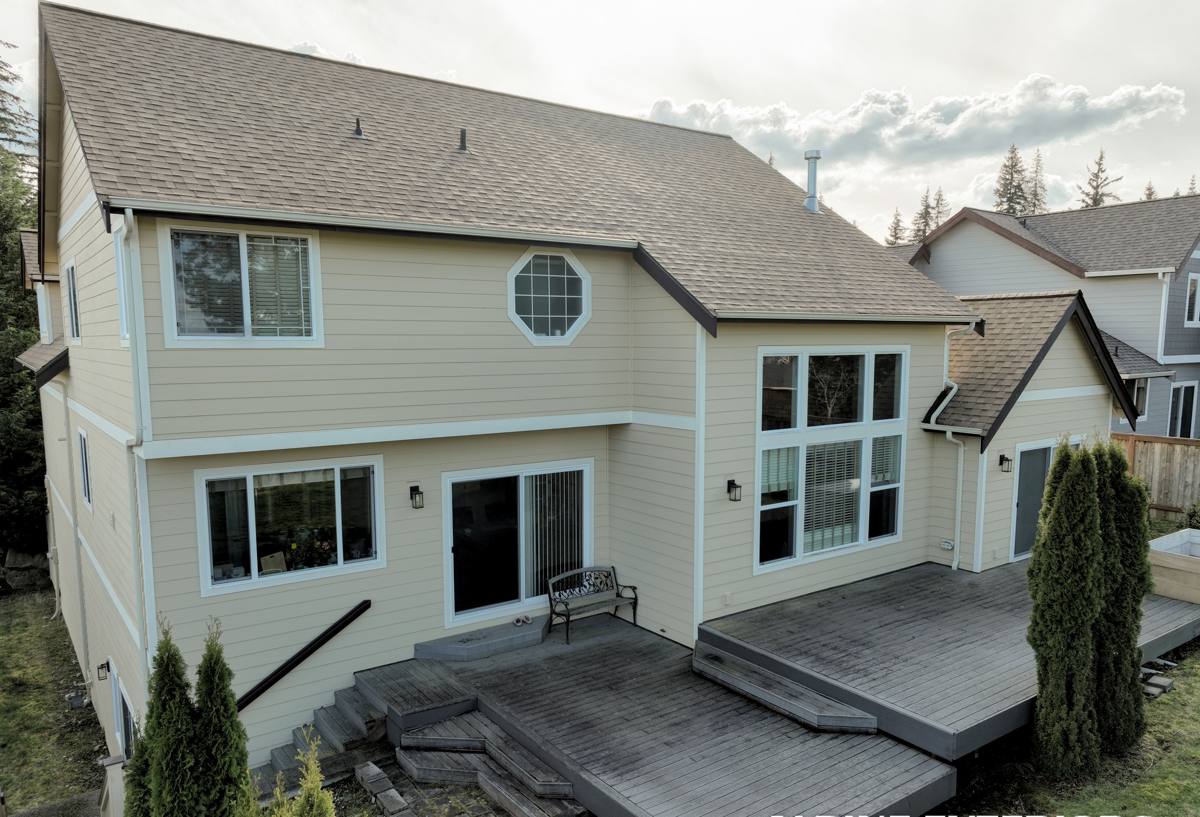
What This Climate Does to an Outdoor Deck
Whatcom County's weather pattern brings long stretches of driving rain, especially in fall and winter, and that moisture doesn't dry off as fast on a shaded, tree-covered lot as it does in an open yard. Add in the salt-tinged marine air that moves through this part of Washington off the Salish Sea, and you've got conditions that push metal hardware toward corrosion faster than a dry inland climate would.
Shade and tree cover also mean a longer moss season. Moss doesn't just look bad — on a walking surface it holds moisture against the wood or decking material, and it gets slick fast, which is a real slip hazard on stairs and landings. A deck built without that in mind will show moss and algae staining within the first year or two, especially on the north-facing or heavily shaded sections.
- Extended damp periods slow drying time between rain events, especially under tree canopy
- Falling needles, leaves, and debris collect in board gaps and hold moisture against the structure
- Fasteners and connectors need real corrosion resistance, not just a basic coating
- Low winter sun angles mean some deck areas may see very little direct light for months
Choosing the Right Decking Material for a Shaded Lot
Pressure-Treated Lumber
Pressure-treated lumber is the most affordable decking option and, when installed correctly, performs well. The trade-off is maintenance: it needs periodic cleaning and resealing to keep moisture out, and on a shaded Maple Falls lot that maintenance schedule tends to be more frequent than the label suggests, simply because the wood doesn't get the sun exposure to dry out between rains.
Cedar
Cedar has natural resistance to decay and insects and a look a lot of homeowners prefer over composite. It still needs regular sealing to hold that resistance over time, and on a heavily shaded lot it's more prone to moss and mildew staining than in full sun. It's a solid choice for homeowners willing to keep up with the upkeep.
Composite Decking
Composite boards — from manufacturers like Trex or TimberTech, among others — cost more upfront but don't absorb moisture the way wood does, which matters on a lot that stays damp longer through the season. We generally steer clients toward a grooved or textured composite surface rather than a smooth one for shaded areas, since texture gives better footing when a board does get a film of moss or algae on it. No decking surface is maintenance-free, but composite cuts down on the sealing and staining cycle considerably.
| Material | Upfront Cost | Moisture / Moss Behavior | Typical Maintenance |
|---|---|---|---|
| Pressure-Treated Lumber | Lowest | Absorbs moisture; slower to dry in shade | Clean and reseal every 1-2 years |
| Cedar | Mid-range | Natural decay resistance; still needs sealing | Clean and reseal every 1-2 years |
| Composite | Highest | Doesn't absorb moisture; textured surface resists slip | Periodic washing, no sealing |
Framing and Footings: Where the Real Durability Comes From
The decking surface is what people see, but the framing underneath is what determines whether a deck lasts fifteen years or thirty-five. On damp, shaded lots we're careful about a few details that make a bigger difference here than they would on a drier site:
- Ground-contact rated posts and footings set below the local frost depth, so the structure doesn't shift with freeze-thaw cycles
- Joist tape or flashing over every cut and fastened surface, so water can't sit in exposed wood fibers
- Ledger board flashing where the deck attaches to the house — this is the single most common point of hidden rot on older decks, and it's worth doing right the first time rather than discovering it during a remodel
- Corrosion-resistant fasteners — stainless steel or a coating rated to match treated lumber's chemical makeup, not standard galvanized hardware that degrades faster in our damp, salt-tinged air
None of this is visible once the deck is finished, which is exactly why it matters to get it right during the build rather than after something fails.
Drainage and Airflow: Where Most Deck Problems Actually Start
A deck that can't shed water and dry out is a deck that's already on a shorter clock. Proper board spacing lets water and debris pass through instead of pooling, and keeping the space underneath the deck open and ventilated lets air move through and speed up drying between rain events. On sloped or wooded Maple Falls lots, we also pay attention to how the ground below the deck is graded and where roof or gutter runoff lands — water dumped right next to a deck post is a slow, steady problem that shows up as rot years down the line.
Railings, Stairs, and Permits
Most decks attached to a house, or built above a certain height, require a permit through Whatcom County, and guardrails need to meet minimum height and baluster spacing requirements designed to prevent falls. The exact numbers can be confirmed through the permit process for your specific project, and we handle that paperwork as part of the job rather than leaving it for the homeowner to sort out. Stairs and landings deserve extra attention on shaded lots specifically because that's where moss buildup turns a minor inconvenience into a real slip hazard.
How We Approach a Deck Project in Maple Falls
- Site visit to assess sun exposure, tree cover, slope, and drainage patterns specific to your lot
- Design and material discussion, including honest trade-offs between wood and composite for your situation
- Permit handling through Whatcom County where required
- Framing and footing work built to the ground-contact and flashing standards described above
- Decking installation with attention to board spacing and drainage
- Final walkthrough covering how to maintain the specific materials we installed
Keeping a Maple Falls Deck in Good Shape Year-Round
Even a well-built deck needs some seasonal attention on a shaded, damp lot. A short annual routine goes a long way toward avoiding bigger repairs later:
- Sweep debris out of board gaps regularly, especially during fall when leaves and needles accumulate
- Wash off moss and algae buildup before it has a chance to stain or get slick, particularly on stairs
- Check that gutters and downspouts near the deck are directing water away from posts and footings
- Inspect the ledger board area where the deck meets the house once a year for any signs of moisture
- Reseal wood decking on the schedule appropriate to the product — don't wait until it looks obviously worn
Why Local Experience on These Lots Matters
A crew that mostly builds decks on open, sunny lots in other parts of the county will make different assumptions than one that regularly works wooded, sloped properties like the ones common around Maple Falls. That shows up in small ways: knowing which lots need deeper footings because of slope, being ready for septic or well setbacks that are common on rural properties, and planning material staging and equipment access on sites without a straightforward driveway. It also shows up in material choices — recommending textured composite or a more aggressive maintenance plan for a heavily shaded yard instead of defaulting to whatever's easiest to install.
We work throughout the Lynden area and know this part of Whatcom County's terrain and weather well enough to build a deck that's designed for the lot it's actually going on, not a generic one.
Get a Free Estimate
If you're planning a new deck or need to replace one that's showing its age, we're happy to take a look and give you an honest read on what your lot needs. There's no pressure and no cost to get a quote — just fill out the form below to get started.