 Lynden Exterior
 Siding Installation Built for Laurel's Particular Climate
Laurel sits in the corridor between Lynden and Bellingham, close enough to the Salish Sea that marine air moves inland on a regular basis, and shaded enough by mature trees and creek-side growth that homes here rarely get a full, uninterrupted dry-out between rain events. That combination — salt-tinged air, driving rain off the water, and a moss season that can run most of the year in shaded spots — is harder on exterior siding than most homeowners realize until they're dealing with soft trim, peeling paint, or siding that's failing years ahead of schedule.
This page covers what siding installation actually needs to look like for a Laurel-area home, what correct work involves, and why we only install James Hardie fiber cement siding rather than the vinyl, LP SmartSide, or cedar products some other crews still offer.
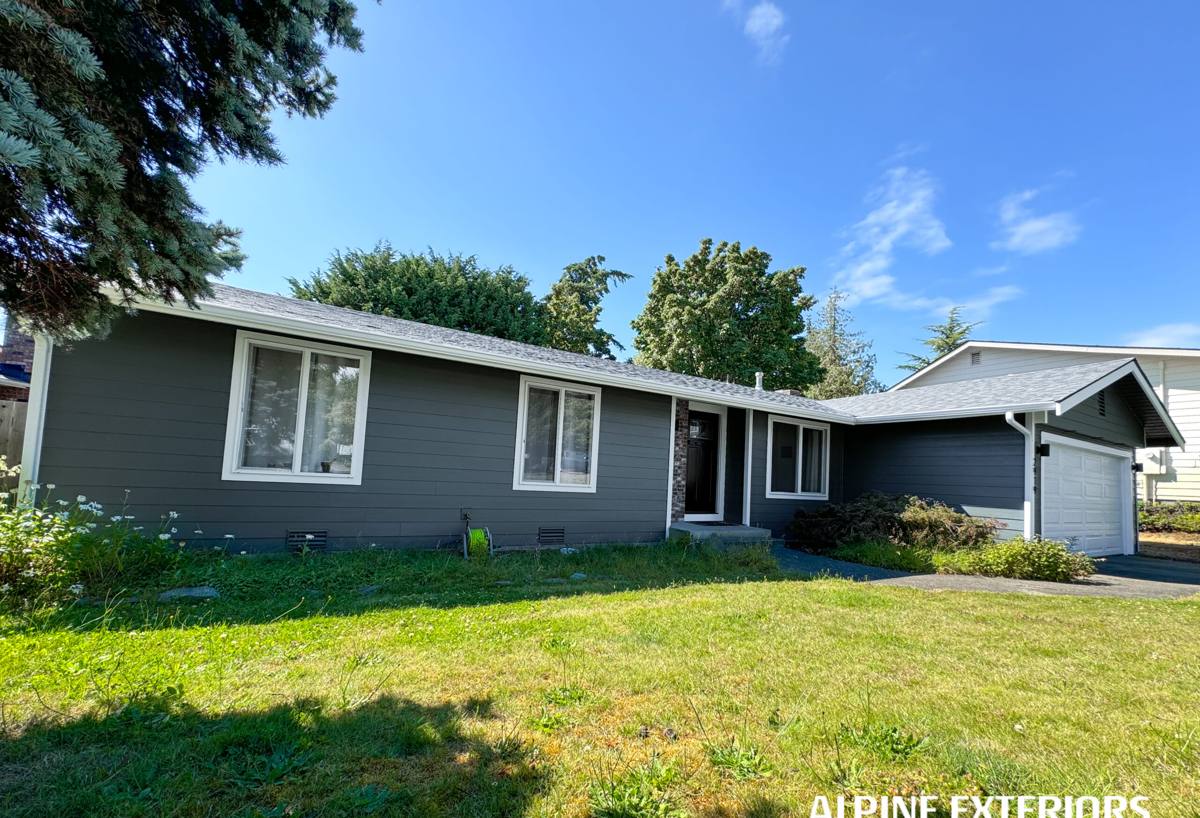
What Local Homes Are Up Against
Salt-Laden, Damp Marine Air
Whatcom County's proximity to Bellingham Bay means the air carries more moisture and salt content than an inland climate would. Over years, that steady exposure accelerates corrosion on exposed fasteners, degrades caulking faster than manufacturer timelines assume, and keeps wood-based siding products at a higher average moisture content — which is exactly the condition that invites rot.
Driving Rain and Wind-Driven Moisture
Rain in this part of Washington rarely just falls straight down. Wind off the water pushes it sideways into wall assemblies, which means the weak points in a siding installation — poorly lapped flashing, gaps at trim, under-caulked penetrations — get tested far more often here than they would in a calmer inland climate.
A Long, Real Moss Season
Between tree cover and consistent dampness, north- and shade-facing walls around Laurel can stay damp for extended stretches. That's ideal growing conditions for moss and algae, which hold moisture against the siding surface and accelerate wear on any product that isn't engineered to handle it.
Why We Install Only James Hardie Fiber Cement
We made a deliberate decision to install one siding system — James Hardie fiber cement — rather than offering a menu of vinyl, LP SmartSide, cedar, or lower-cost fiber cement alternatives. That's not a sales position; it's a standard based on what actually holds up in this climate.
- Non-combustible core: Hardie siding is fiber cement, not wood or wood composite, so it doesn't feed a fire the way wood-based sidings can.
- Climate-engineered product lines: Hardie manufactures its HZ5 line specifically for regions with the freeze-thaw and moisture exposure the Pacific Northwest sees, rather than a one-size-fits-all formulation.
- Factory-applied ColorPlus finish: The color and top coat are baked on at the factory under controlled conditions, which holds up far better against damp, shaded exposure than a field-applied paint job that has to cure in Whatcom County weather.
- Moisture behavior: Fiber cement doesn't absorb and swell with water the way wood and wood-composite products can, which matters directly in a climate that rarely lets siding fully dry out.
- Warranty structure: Hardie backs its products with a strong, transferable warranty — meaningful for homeowners who plan to sell.
We're not going to tell you every other product is worthless — vinyl, LP SmartSide, and cedar all have legitimate uses. But given what Laurel-area weather does to a wall assembly over 10, 20, and 30 years, we decided we'd rather install one product correctly than several products with trade-offs we're not comfortable standing behind.
What a Correct Siding Installation Actually Involves
Siding failures around here are almost never about the product itself — they're about installation shortcuts that don't show up until the third or fourth wet season. A correct install includes:
Water Management Behind the Siding
A properly lapped water-resistive barrier, correctly integrated flashing at every window, door, and penetration, and a drainage plane that lets any moisture that does get behind the siding find its way back out instead of sitting against the sheathing.
Proper Clearances
Siding held at the manufacturer-specified distance from grade, roof lines, decks, and horizontal surfaces so it isn't sitting in standing water or splash-back during the wetter months of the year.
Fastening and Joint Treatment
Corrosion-resistant fasteners driven to the correct pattern and depth, and joints treated the way Hardie's installation guidelines specify — not just caulked over as a catch-all fix.
Ventilation Behind the Cladding
A rainscreen gap where conditions call for it, so air can circulate behind the siding and any incidental moisture can dry out instead of staying trapped — a detail that matters more in a shaded, damp microclimate than in a drier one.
Our Process, Start to Finish
- On-site assessment: We look at your home's exposure — how much shade it gets, which walls take the worst weather, and what condition the sheathing and trim are in underneath the current siding.
- Tear-off and inspection: Old siding comes off and we inspect the sheathing for hidden rot or moisture damage before anything new goes up. Problems found here get addressed, not covered over.
- Water-resistive barrier and flashing: Installed and lapped correctly at every seam, window, and door before any siding is hung.
- Hardie installation to manufacturer spec: Panels or lap siding installed with correct clearances, fastening, and joint treatment.
- Trim and finish work: Trim, corners, and detail work finished to match the ColorPlus system so the whole exterior reads as one consistent job.
- Final walkthrough: We go over the finished work with you before calling the job done.
Choosing the Right Hardie Product for This Area
For most Laurel-area homes, we're specifying Hardie's HZ5 product line, which is engineered for the moisture and temperature swings the Pacific Northwest sees rather than a warmer, drier climate zone. Depending on your home's style, that typically means HardiePlank lap siding for the main field, HardiePanel for accent areas or a more modern look, and matched Hardie trim boards rather than mixing in a different trim material that will age at a different rate than the field siding. ColorPlus finishes come in a range of factory colors, which matters here specifically because a factory-cured finish resists the fading and mildew staining that a field-painted product is more prone to in a shaded, damp environment.
What Drives Cost on a Laurel Siding Project
Every home is different, but the same handful of factors drive most of the cost variation we see on jobs in this area:
| Factor | Why It Matters Here |
|---|---|
| Sheathing condition underneath old siding | Shaded, damp exposure means hidden rot is more common than in drier climates — repairs add cost but prevent a redo |
| Home size and wall complexity | More corners, dormers, and trim detail means more labor and material waste |
| Siding profile chosen | Lap siding, panel siding, and shingle-style Hardie products carry different material and labor costs |
| Trim and accent work | Matching Hardie trim throughout costs more upfront but avoids mismatched wear later |
| Access and site conditions | Tree cover, tight lot lines, and grade around the home affect staging and labor time |
Signs Your Current Siding Is Already Failing
Because of how much moisture and shade this area deals with, siding problems here often show up earlier than a homeowner expects. Worth checking for:
- Soft or spongy spots when you press on the siding, especially near the bottom courses
- Persistent moss or algae growth that comes right back after cleaning
- Paint that's peeling, bubbling, or chalking well ahead of a normal repaint cycle
- Visible gaps or separation at seams, corners, or trim joints
- Staining or streaking that suggests water is tracking behind the siding rather than off of it
- Warping or bowing panels, particularly on shaded or north-facing walls
Any one of these can mean the siding is still doing its job cosmetically while the wall assembly behind it is already taking on moisture.
Why Hiring a Crew That Already Works This Area Matters
A siding crew that mostly works drier, less shaded parts of the state won't necessarily plan for the moss, moisture, and wind-driven rain patterns that are routine in Laurel and the rest of Whatcom County. Knowing which walls on a given lot are going to stay damp longest, how much clearance to leave given local rain patterns, and how to detail flashing for the wind direction this area actually sees isn't something you get from a generic installation manual — it's something that comes from doing the work here, repeatedly, and seeing how it holds up over time.
If you're planning a siding project in Laurel or anywhere around Lynden, we're happy to take a look at your home and give you a straightforward, no-pressure estimate — just fill out the form below.