 Lynden Exterior
 Why Laurel Roofs Wear Differently Than You'd Expect
Laurel sits inland from Bellingham Bay but still gets its share of moisture-laden marine air moving through Whatcom County, layered on top of driving winter rain and a shade-and-moisture combination that keeps roofs damp far longer than homeowners realize. None of that is dramatic on its own. What it adds up to, year after year, is a roof that ages faster than the same product would in a drier inland climate. If you're planning a roof replacement in Laurel, the material choice, the underlayment, and the ventilation details all need to answer to that reality — not to a generic spec sheet.
This page is about one job, done right, for this specific area: a full roof replacement on a Laurel home. Not a repair, not a patch, and not a one-size-fits-all approach borrowed from a drier part of the state.
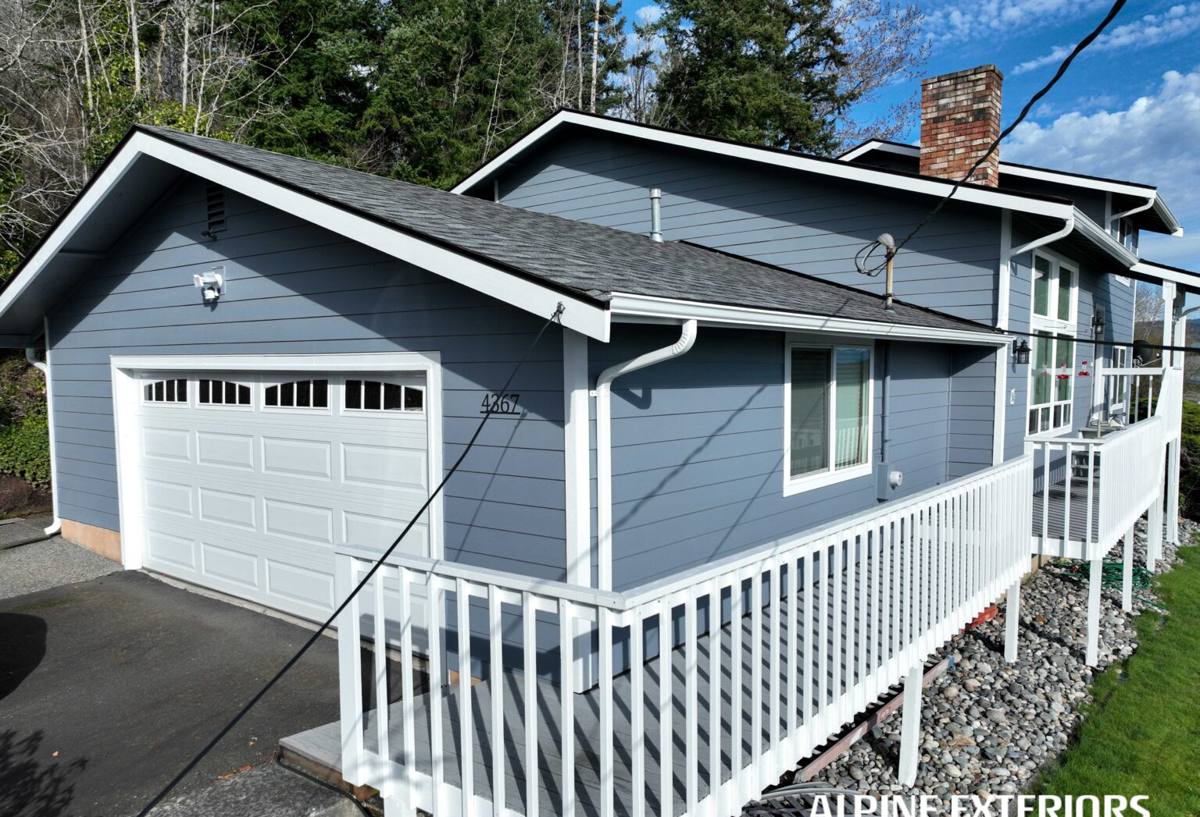
What Whatcom County Weather Actually Does to a Roof
Salt Air and Slow Corrosion
Homes in this part of Whatcom County live with a steady, low-grade exposure to salt-carrying air off the Strait of Georgia and Bellingham Bay. It's not the same intensity you'd see on a beachfront property, but it's constant, and it accumulates. Over years, that salt exposure accelerates corrosion on exposed metal — fasteners, flashing, vent caps, and gutter hardware — well before the shingles or panels themselves are due for replacement. A roof spec that ignores this ends up with rust streaks and failed fasteners a decade before the material's rated life is up.
Driving Rain and Wind-Driven Water
Whatcom County rain doesn't always fall straight down. Wind-driven storms push water sideways and upward under laps, edges, and flashing that would stay dry in a calmer climate. This is the difference between a roof that just sheds water and one that's actually built to resist wind-driven intrusion at every seam, valley, and penetration.
Moss, Shade, and Slow-Drying Surfaces
Between tree cover and a long stretch of the year with limited direct sun, roof surfaces in and around Laurel can stay damp for days after a storm passes. That's exactly the condition moss needs to take hold. Once moss establishes itself, it holds moisture against the roofing material, lifts shingle edges, and works its way under laps — turning a cosmetic nuisance into a moisture problem.
Signs a Laurel Home Needs a Roof Replacement, Not a Repair
Not every roof problem calls for a full replacement, and we won't tell you it does. But there's a point where patching individual issues costs more over time than doing the job once, correctly. Here's what typically tips a roof from "repairable" to "replace":
- Granule loss heavy enough that you can see bare asphalt on multiple shingles, not just one or two spots
- Moss growth that's spread across large sections rather than isolated patches, especially on north-facing or shaded slopes
- Soft spots or sagging when walked, which usually means the deck underneath has taken on moisture damage
- Repeated leaks in different locations after storms, rather than one consistent trouble spot
- Flashing and fasteners showing rust or corrosion beyond what a simple swap can fix
- A roof already past, or close to, its material's realistic service life for this climate — often shorter here than the manufacturer's national average rating
- Daylight visible through the attic decking, or consistently damp attic insulation
If your roof shows one or two of these, a repair may genuinely be the right call — we'll tell you that. If it shows several, replacement is usually the more honest recommendation, because repeated repairs on a failing roof rarely add up to good value.
What a Correct Roof Replacement Involves
Full Tear-Off and Deck Inspection
We don't install new roofing over old material, and we don't recommend it to anyone in this climate. A full tear-off is the only way to actually see the deck underneath — which is where moisture damage from a long moss season or a slow leak tends to hide. Any soft or rotted decking gets replaced before anything new goes down. Skipping this step just buries a problem under a new roof.
Underlayment and Ice-and-Water Protection
Given how much wind-driven rain this area sees, we pay close attention to underlayment coverage — not just meeting minimum code, but extending self-adhered ice-and-water membrane at eaves, valleys, and around every penetration where wind-driven water is most likely to find a way in.
Ventilation That Actually Works
A roof that traps heat and moisture in the attic ages faster from the inside, regardless of what's happening on the surface. Balanced intake and exhaust ventilation helps the deck dry out between storms instead of staying damp, which matters more here than in a drier climate.
Flashing and Detail Work
Most roof failures don't start in the open field of the roof — they start at a flashing detail: a chimney, a skylight curb, a wall intersection, a vent pipe. We treat these as the part of the job that determines whether the roof actually performs, not as a formality to rush through.
Choosing Materials for This Climate
There's no single "best" roofing material for every Laurel home — it depends on your roof's slope, shade exposure, budget, and how long you plan to stay in the house. Here's an honest comparison of the main options we install, weighed against the salt air, rain, and moss conditions common to this area.
| Material | How It Handles This Climate | Maintenance Burden | Typical Lifespan Here |
|---|---|---|---|
| Architectural asphalt shingle | Good performance when properly ventilated and installed with full underlayment coverage; algae-resistant granules help slow moss and dark streaking | Moderate — benefits from periodic moss removal and gutter clearing | 20–30 years, climate-dependent |
| Standing seam metal | Sheds water and moss growth very effectively due to smooth, steep-shedding surface; needs quality fasteners and coatings to resist salt-air corrosion | Low — occasional inspection of fasteners and sealant points | 40+ years with correct materials |
| Cedar shake | Attractive but holds moisture longer than other options, which is a real liability in a long moss season; requires more diligent upkeep to avoid rot | High — regular treatment and moss control needed | Highly variable, shorter without diligent maintenance |
We'll walk through these trade-offs against your specific roof and budget rather than pushing one product. Our standard is picking what will actually perform on your home for the years you plan to own it — not the cheapest option today if it costs more in maintenance and early replacement down the road.
Our Process From First Call to Final Walkthrough
- On-site inspection. We look at the current roof, attic, and any trouble areas in person before recommending anything.
- Straightforward estimate. You get a written scope and price range, with material options explained in plain terms — no pressure to decide on the spot.
- Scheduling around the weather. We plan tear-off and dry-in around Whatcom County's rain patterns so your home isn't exposed longer than necessary.
- Tear-off, deck repair, and installation. Old material comes off, decking issues get addressed, and the new roof system goes on with full underlayment and flashing detail.
- Cleanup and walkthrough. We clear debris and fasteners from the property and walk the finished roof with you before calling the job done.
Why a Crew That Already Works in Laurel Matters
A roof replacement isn't just about the material — it's about the details that respond to local conditions: how much ice-and-water membrane to run at a shaded valley, which flashing hardware holds up against salt air over time, and how to sequence a tear-off around a rainy forecast instead of gambling on it. A crew that regularly works roofs in and around Lynden and greater Whatcom County has already worked out these answers on homes facing the same weather yours does. That's not a marketing point — it's the difference between a roof that's technically installed correctly and one that's actually built for where it sits.
Maintaining Your New Roof Through Moss Season
A well-installed roof still benefits from basic upkeep, especially in a climate that gives moss this many chances to take hold. A few habits go a long way toward protecting your investment:
- Keep gutters clear so water isn't backing up under the roof edge during heavy rain
- Trim back overhanging branches to reduce shade and debris buildup on the roof surface
- Have moss growth removed promptly rather than letting it spread across a full slope
- Schedule a visual inspection after major storms, particularly ones with high wind
- Address small flashing or fastener issues early, before they turn into deck damage
None of this replaces professional inspection, but it meaningfully extends the life of a properly installed roof in this climate.
If your Laurel home's roof is showing its age, or you'd just like a straight answer on whether repair or replacement makes more sense, we're glad to take a look. Use the form below to request a free, no-pressure estimate — we'll walk the roof, explain what we see, and give you options without any obligation.