 Lynden Exterior
 Asphalt Shingle Roofing Built for Blaine's Coastal Climate
Blaine sits right on the water at the northern edge of Whatcom County, and that location shapes everything about how a roof ages here. Homes close to Semiahmoo Bay and Drayton Harbor take on salt-laden air almost year-round, and that air doesn't stay outside — it works into fasteners, flashing, and shingle granules a little more aggressively than it does further inland. Add in driving rain that comes sideways off the water during winter storms, and a moss season that can run most of the year under tree cover, and you have a roofing environment that punishes shortcuts. Asphalt shingle roofing is still one of the most practical, cost-effective choices for Blaine homes, but only when it's installed and maintained with this specific climate in mind.
This page covers what a correct asphalt shingle job looks like for a Blaine property, what tends to go wrong when a roof isn't built for these conditions, and how we approach the work.
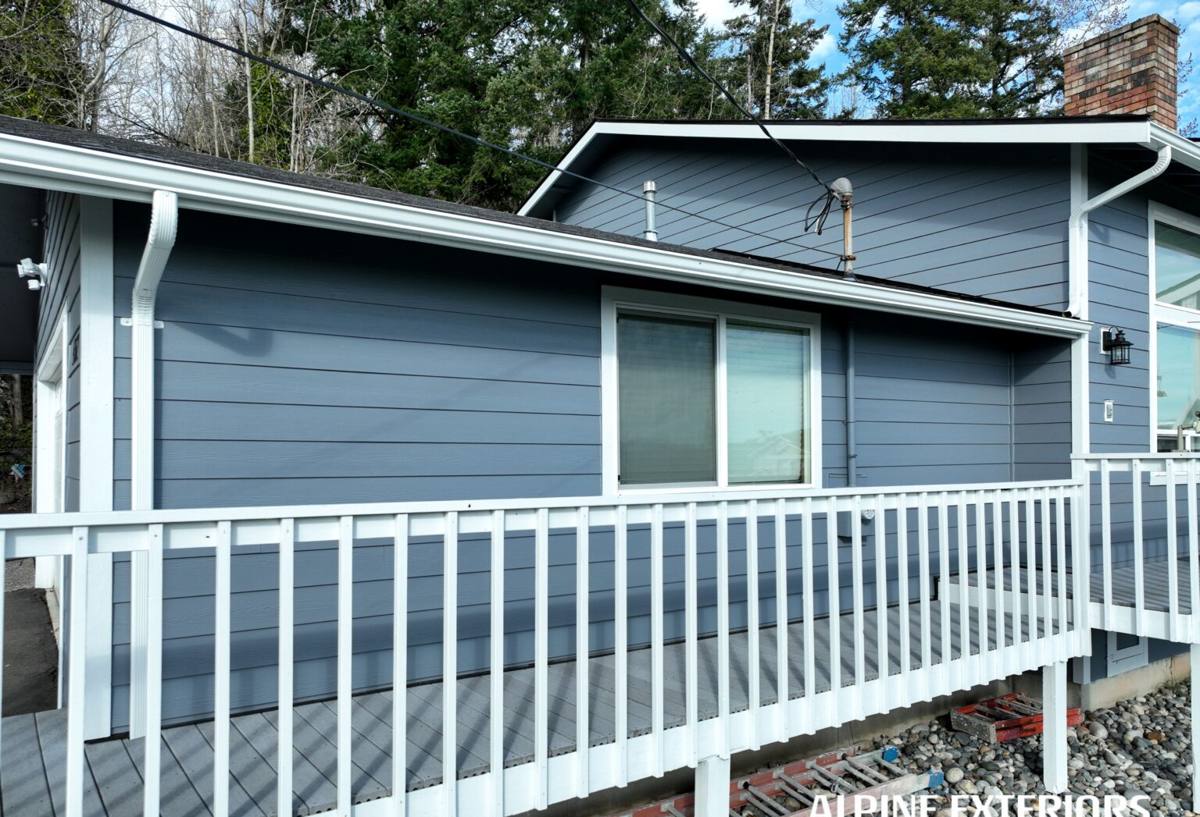
What Salt Air, Rain, and Moss Actually Do to a Roof
Salt Air and Metal Components
Salt air accelerates corrosion on any exposed metal — nail heads, flashing, drip edge, and vent stacks. Standard electro-galvanized fasteners that hold up fine 15 miles inland can start showing rust streaks and weakening within a few years near the water. This matters more than it sounds like it should, because a shingle roof's long-term performance depends heavily on its fasteners and flashing staying sound, not just the shingles themselves.
Driving Rain and Wind-Driven Water
Storms coming off the water don't just drop rain straight down — they push it sideways and up under shingle edges, at valleys, and around penetrations. A roof that would shed water fine in a calm rain can leak in a Blaine windstorm if the underlayment, valley protection, and shingle sealing aren't done correctly. This is one of the most common gaps we find on older roofs in the area: the shingles look fine from the ground, but the details underneath weren't built for wind-driven water.
Moss and Prolonged Moisture
Whatcom County's long wet season, combined with shaded lots and north-facing slopes common around Blaine, gives moss plenty of time to establish. Moss holds moisture against the shingle surface, lifts shingle edges as it grows, and shortens the life of the roofing underneath it. Left unchecked for several seasons, moss growth can do more cumulative damage than any single storm.
What a Correct Asphalt Shingle Job Involves
A shingle roof is a system, not a single product. Each layer has a job, and skipping or downgrading any one of them shows up as a problem within a few years — usually right where the climate is hardest on the roof.
- Deck inspection and repair: Any soft, delaminated, or water-damaged sheathing gets replaced before anything new goes down. Shingles installed over a compromised deck will fail early no matter how good the shingle is.
- Underlayment: A synthetic or felt underlayment rated for the exposure, installed with proper overlaps so wind-driven rain can't work its way underneath.
- Ice and water shield at vulnerable areas: Valleys, eaves, and roof-to-wall transitions get self-adhering membrane, not just standard underlayment, because these are the spots where wind-driven rain and ice concentrate.
- Corrosion-resistant fasteners and flashing: Given the salt exposure in Blaine, we don't treat fastener quality as optional — it's one of the few components that's genuinely hard to fix later without pulling shingles.
- Proper flashing at every penetration: Vent stacks, chimneys, skylights, and wall intersections are common leak points if flashing is reused, undersized, or poorly sealed.
- Ventilation: Balanced intake and exhaust ventilation keeps the attic dry and temperature-stable, which protects the deck from below and helps the shingles last their full rated life.
- Correct nailing pattern and shingle exposure: Manufacturer nailing specs exist for wind resistance, and Blaine gets enough wind off the water that this isn't a detail to skip.
Choosing a Shingle Product for This Climate
Not every asphalt shingle line performs the same way under salt exposure, moss pressure, and driving rain. We tend to steer Blaine homeowners toward products and features that hold up specifically to these conditions rather than whichever option is cheapest per square.
| Feature | Why It Matters in Blaine |
|---|---|
| Algae/moss-resistant granules | Copper-infused or algae-resistant granules slow moss and algae growth on shaded, damp roof sections common near the coast and under tree cover. |
| High wind rating | Coastal wind exposure means a standard wind rating can leave shingles vulnerable at eaves and rakes during winter storms. |
| Corrosion-resistant fastener compatibility | Salt air shortens the life of standard fasteners; the shingle and fastener system need to be matched for the environment, not just for price. |
| Manufacturer warranty structure | Some warranties are prorated or void improper ventilation/installation — worth understanding before, not after, a claim. |
| Impact/tear resistance | Helps with debris from wind events, which are more frequent on exposed coastal lots than sheltered inland ones. |
We don't push a single brand as the only acceptable option — the right product depends on the home's exposure, roof pitch, and the homeowner's budget and priorities. What we won't do is install a shingle system that skips moss- or wind-resistant features on a roof that's clearly going to face both, just to hit a lower number on a bid.
How Our Process Works
1. On-Site Assessment
We look at the current roof condition, deck integrity, ventilation, flashing details, and how exposed the home is to wind and salt air based on its position relative to the water and tree cover. This isn't a five-minute walk-around — the details we find here shape the whole scope of work.
2. Written Scope and Straightforward Pricing
You get a clear breakdown of what's being replaced, what materials are being used, and why — no vague line items. If deck repair or added flashing work is likely, we tell you upfront rather than surprising you mid-project.
3. Tear-Off and Deck Repair
Full tear-off lets us actually inspect and fix the deck, rather than covering up problems that will show up again in a few years. Any damaged sheathing is replaced before new roofing goes down.
4. Installation to Manufacturer and Climate-Specific Standards
Underlayment, ice-and-water membrane at vulnerable areas, corrosion-resistant flashing and fasteners, correct nailing pattern, and balanced ventilation — installed as a system, not a checklist we skim through.
5. Final Walkthrough
We walk the finished roof and the site cleanup with you so you know exactly what was done and what to expect from it going forward, including basic moss and gutter maintenance guidance for your specific property.
Signs a Blaine Roof Needs Attention
A lot of roof damage in this area develops slowly enough that homeowners don't notice until it's affecting the interior. Some signs worth acting on:
- Visible moss growth, especially in shaded valleys or north-facing slopes
- Granules collecting in gutters or at downspout outlets
- Shingle edges curling, cupping, or lifting
- Rust staining around vent stacks, flashing, or fastener heads
- Dark streaking that doesn't wash off with rain (often algae, not just dirt)
- Soft spots or sagging when walked on, which can indicate deck damage underneath
- Daylight visible through the attic roof deck, or damp insulation after storms
Any one of these on its own isn't necessarily an emergency, but on a coastal roof they tend to compound quickly if ignored through another wet season.
Maintenance That Actually Extends Roof Life Here
Asphalt shingle roofs in Blaine benefit from more proactive maintenance than the same roof would need further inland, mainly because of moss and salt exposure. A simple seasonal routine goes a long way:
- Clear moss buildup gently — avoid pressure washing, which strips granules and shortens shingle life
- Keep gutters and downspouts clear so water isn't backing up under eave shingles
- Trim overhanging branches to reduce shade and debris accumulation, both of which feed moss growth
- Have flashing and fasteners checked periodically for corrosion, especially on homes with direct water exposure
- Address small leaks or lifted shingles promptly rather than waiting for a full season to pass
Cost Factors for Blaine Asphalt Shingle Projects
Every roof is different, but the main variables that affect price on a Blaine project are fairly consistent. We provide firm, itemized numbers after an on-site assessment rather than quoting blind.
| Factor | Why It Affects Cost |
|---|---|
| Roof size and pitch | More square footage and steeper pitches increase material and labor time. |
| Deck condition | Rot or delamination found at tear-off adds repair scope that isn't visible beforehand. |
| Shingle tier and features | Moss- and wind-resistant lines cost more per square than basic three-tab shingles but typically last longer here. |
| Number of penetrations and valleys | Each vent, skylight, chimney, or valley adds flashing labor and material. |
| Ventilation upgrades | Adding or correcting intake/exhaust ventilation is sometimes needed to meet warranty requirements. |
| Access and site conditions | Steep lots, limited driveway access, or tall trees near the roofline can affect labor and staging. |
Why Hiring a Crew That Already Works in Blaine Matters
A roofer who mainly works drier, inland areas of Whatcom County can still do competent work, but they may not default to the coastal-specific details that matter here — corrosion-resistant fasteners, moss-resistant shingle selection, and extra attention to wind-driven rain at valleys and eaves. Those aren't exotic upgrades; they're standard practice for a crew that's used to building roofs that face Blaine's specific mix of salt air, storms, and moss pressure day in and day out. We work throughout Lynden and the surrounding Whatcom County communities, including Blaine, and we scope every roof for the conditions it actually faces rather than a generic regional average.
If you're dealing with an aging roof, visible moss, or you're just planning ahead for a home near the water, we're happy to take a look and give you a straight assessment. Reach out for a free, no-pressure estimate using the form below.