 Lynden Exterior
 Roof Repair for Laurel Homes: Built for This Climate, Not a Generic One
Laurel sits in the mix of open farmland and tree-lined properties just outside Lynden, in a stretch of Whatcom County where the weather is rarely dramatic but almost never lets up. That's the part outsiders miss. A roof here doesn't usually fail because of one big storm — it fails because of months of low-grade moisture, shade, and wind-driven rain working on the same weak points year after year. A repair that doesn't account for that pattern tends to come back within a season or two.
This page is about one job — roof repair — done for one place — Laurel and the surrounding Lynden area. Not a general overview of roofing, not a sales pitch for a full tear-off you don't need. Just what actually goes wrong on roofs out here, and what a repair has to do to actually hold.
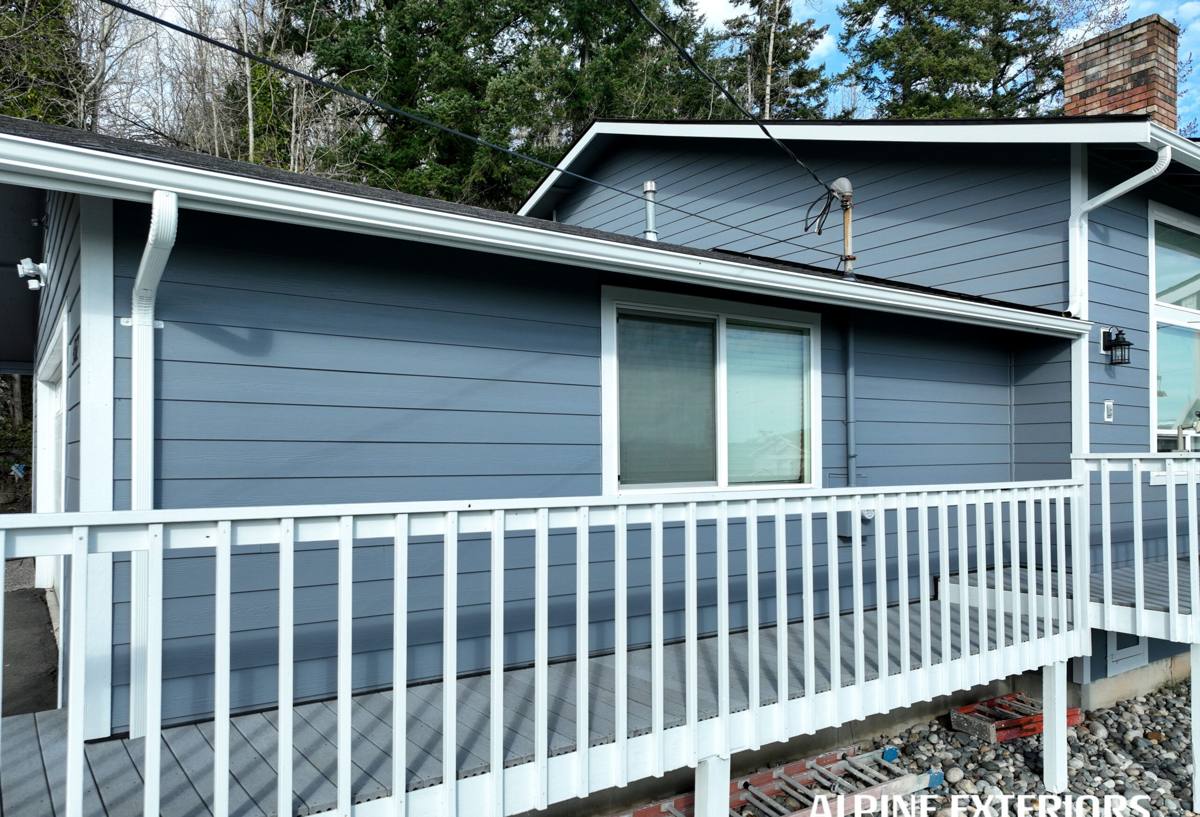
What Whatcom County's Climate Does to a Roof Over Time
Lynden and the Laurel area get a long, wet season that typically runs from fall through spring, with steady rain rather than short heavy downpours. That kind of weather is hard on roofs in a few specific ways:
- Driving rain pushed sideways by wind finds gaps at flashing, valleys, and roof penetrations that a straight-down rain would never reach.
- Extended dampness keeps roofing materials, sheathing, and underlayment wet for days at a time, which accelerates rot and granule loss instead of allowing quick drying.
- Salt-laden air that moves inland during coastal storms can accelerate corrosion on exposed metal flashing, fasteners, and gutter hardware over the years.
- Moss and algae growth thrives in the shaded, moisture-retentive spots common on properties with mature trees or north-facing roof slopes.
None of that is unique to Laurel, but the combination of rural tree cover, open farmland wind exposure, and a genuinely long wet season is fairly specific to this part of Whatcom County. A roof repair strategy built for a drier climate, or for a roof with none of this shade and wind exposure, misses the actual failure points.
Signs a Laurel Roof Needs Repair — Not a Full Replacement
Most roofs don't fail all at once. They show localized trouble first, and catching it early is usually the difference between a repair bill and a replacement bill. Watch for:
- Dark streaking or thick moss patches concentrated in one area, especially under trees or on shaded slopes
- Curling, cracked, or missing shingles in a specific section rather than across the whole roof
- Water stains on interior ceilings near chimneys, skylights, or where two roof planes meet
- Sagging or soft spots you can see from the ground, usually near a valley or low point
- Granules collecting in gutters — a sign of shingle wear, not necessarily failure
- Rusted or lifted flashing around vents, chimneys, or wall intersections
If the damage is contained to one of these areas and the rest of the roofing material is still in reasonable shape, a targeted repair is usually the right call. The judgment part is knowing whether what you see on the surface reflects a small, isolated problem or the early sign of something spread across the whole roof.
When a "Repair" Isn't Really a Repair Anymore
There's a point where patching stops making sense — when the underlying decking is soft in multiple spots, when shingles across the whole roof are past their service life, or when repeated repairs to the same area haven't held. Part of doing this job honestly is telling a homeowner when they've hit that point instead of selling another patch.
Moss and the Long Wet Season: Laurel's Specific Roof Problem
Moss deserves its own section because it's the single most common complaint we hear from homeowners in and around Laurel. It's not just cosmetic. Moss holds moisture directly against the roofing surface, and over a long wet season that constant dampness works granules loose, lifts shingle edges, and gives water a path underneath the roofing material instead of over it.
Roofs under mature trees or on shaded north- and east-facing slopes are the most affected, which describes a lot of the tree-lined properties around Laurel. Moss removal done correctly means gentle methods that clear growth without scraping away the protective granule layer in the process — pressure-washing a roof is one of the fastest ways to shorten its life, not extend it.
A proper moss-related repair also looks at why moss is concentrating where it is. Sometimes it's simply shade and moisture with no fix short of tree trimming. Other times it's a sign that a section of roof is draining poorly, holding water longer than it should, which is a repair issue on its own.
Where Roofs Actually Fail: Flashing, Valleys, and Penetrations
Shingle field damage gets the attention, but the failure points that cause real leaks are almost always at the details:
| Roof Detail | Why It Fails Here | What a Proper Repair Does |
|---|---|---|
| Valleys | Concentrate the volume of driving rain from two roof planes into one channel | Replace worn valley material and confirm proper overlap, not just seal the surface |
| Chimney & wall flashing | Metal expands/contracts and corrodes faster in salt-tinged, damp air over years | Re-flash with new metal and proper counter-flashing, not caulk over old metal |
| Vent boots & pipe jacks | Rubber collars dry out and crack faster under repeated wet-dry cycling | Replace the boot itself, not just patch the crack |
| Roof-to-wall transitions | Wind-driven rain gets pushed sideways into these joints | Correct step flashing and underlayment integration, not surface sealant |
| Gutter edges & drip edge | Constant moisture exposure accelerates rust and wood rot at the fascia | Address both the metal and any wood decay behind it |
The theme across every one of these is the same: a real repair fixes the underlying detail, while a shortcut repair covers the symptom with sealant or a small patch. Sealant-only fixes tend to fail within a wet season or two out here because the volume and duration of moisture is more than they're built to handle long-term.
What a Correct Roof Repair Actually Involves
A repair done right on a Laurel roof generally includes:
- An inspection of the whole roof, not just the reported leak area — leaks often show up inside the house at a distance from where water is actually entering
- Identifying whether the cause is a material failure, a flashing detail, moss/drainage, or ventilation-related moisture buildup in the attic
- Removing damaged material back to sound decking, not just covering over it
- Checking the decking itself for soft spots or rot before replacing anything on top of it
- Matching materials appropriately so the repaired section performs and weathers consistently with the rest of the roof
- Confirming proper flashing and underlayment integration at every transition, not just at the original damage point
Skipping the inspection step is the most common shortcut in this trade. Fixing the visible symptom without confirming the cause means there's a real chance the same leak reappears somewhere else on the roof within a year.
Our Roof Repair Process
For Laurel and the surrounding Lynden area, our process is straightforward:
- Inspection first. We look at the whole roof — field, flashing, valleys, and attic ventilation where accessible — before quoting anything.
- A clear explanation of what we found. You should understand what's actually wrong and why, not just get a line-item invoice.
- An honest repair-vs-replace recommendation. If a repair genuinely makes sense, that's what we'll recommend. If the roof is past the point where patching holds, we'll say so plainly and explain why.
- Repair work that addresses the cause — decking, flashing, and drainage — not just the visible damage.
- A finished roof that matches as closely as reasonably possible so the repair doesn't stand out or perform differently than the surrounding material.
Repair or Replace? The Honest Cost Factors
Every roof and every leak is different, so we won't quote a number without seeing it. But these are the factors that generally push a job toward repair versus full replacement:
| Factor | Favors Repair | Favors Replacement |
|---|---|---|
| Extent of damage | Localized to one area or detail | Multiple areas, or age-related wear across the whole roof |
| Decking condition | Sound, dry decking beneath the damage | Soft or rotted decking found during inspection |
| Roof age | Well within expected service life | Near or past typical service life for the material |
| Repair history | First repair in this area | Repeated repairs to the same spot that haven't held |
| Material availability | Matching material still reasonably available | Discontinued product with no reasonable match |
Roof age and material vary a lot from home to home in Laurel — older farmhouses, newer construction on former farmland, and everything in between — so this really is a case-by-case call rather than a rule of thumb.
Checklist: What to Confirm Before You Hire Anyone
- Do they inspect the whole roof, or just quote off a photo or a quick look at the leak?
- Do they explain the likely cause, not just the fix?
- Are they willing to tell you if a repair won't hold, instead of always upselling replacement — or always defaulting to the cheapest patch?
- Do they carry proper insurance and are they comfortable providing proof of it?
- Do they have experience with this specific climate — wind-driven rain, long wet seasons, and moss-prone shaded roofs?
- Is the repair scope in writing before work starts?
Why Hiring a Crew That Already Works in Laurel Matters
A roofer who works this specific area regularly has already seen what a full Whatcom County wet season does to flashing, valleys, and shaded slopes over several years — not in theory, but on roofs down the road from yours. That matters more than it sounds. Two roofs can look identical from the ground and fail completely differently depending on tree cover, roof orientation, and how the wind typically drives rain across that particular property.
It also means less guesswork about how a repair will hold up. A crew that's repaired roofs through more than one wet season in this area knows which shortcuts don't last here, even if they'd be fine somewhere drier or less wind-exposed.
Get an Honest Look at Your Roof
If you're dealing with a leak, moss buildup, or damage on a roof in Laurel or anywhere around Lynden, we're happy to take a look and give you a straight answer — repair, not repair, or something in between. No pressure, no upsell, just an honest assessment. Use the form below to request a free estimate.