 Lynden Exterior
 Building Decks for Laurel's Damp, Salt-Tinged Climate
Laurel sits in the part of Whatcom County where marine air off the Salish Sea mixes with the wet, low-lying farmland around Lynden. That combination means decks here deal with more than just rain. Homes take on a steady dose of moisture-laden air for most of the year, wood surfaces stay damp longer after a storm because sun exposure is limited in fall and winter, and anything with a north-facing or shaded exposure grows moss almost on schedule every year. Add in the driving rain that comes sideways during winter windstorms, and you have a set of conditions that punishes decks built to a generic spec.
None of this means a deck can't last for decades in Laurel. It means the framing, fasteners, and surface material all need to be chosen and installed with this specific climate in mind, not just picked off a showroom floor. A deck that would hold up fine in a dry inland climate can start showing rot, corrosion, or slick moss growth within a few seasons here if it's built without that in mind.
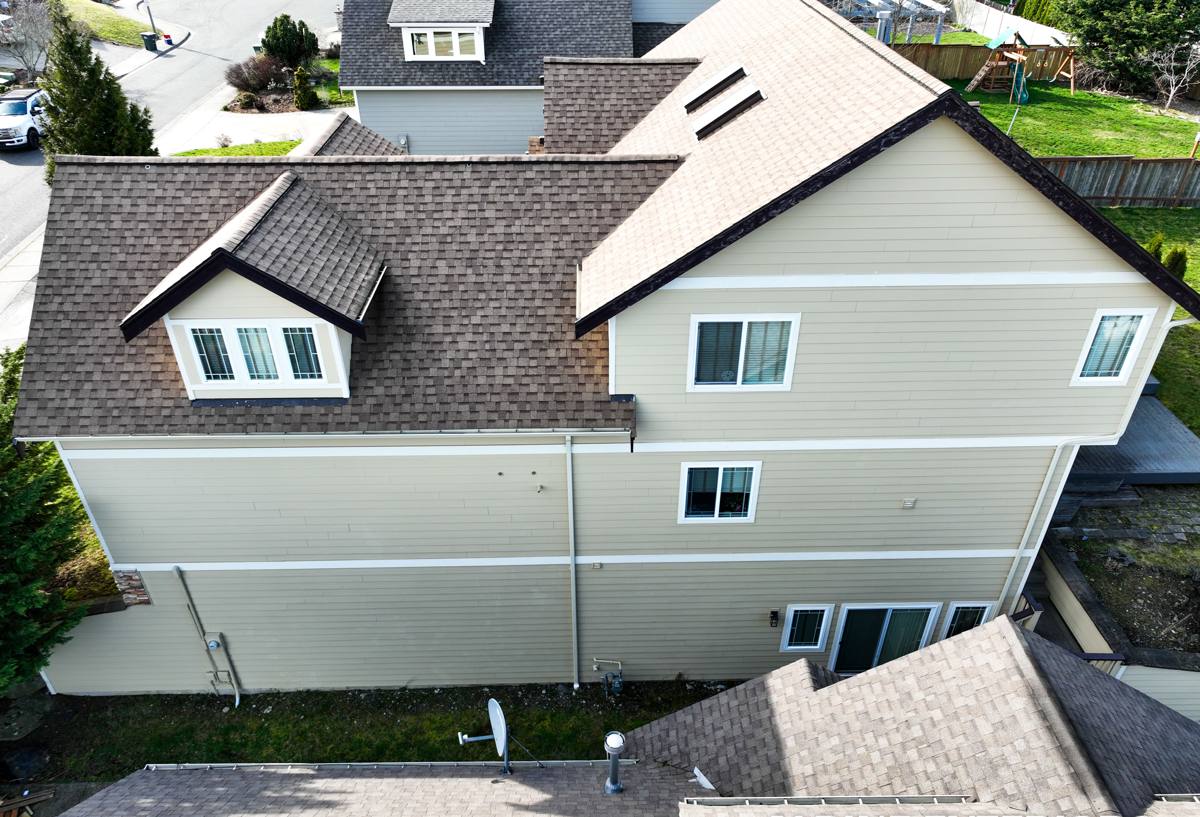
What a Deck Built for This Climate Actually Needs
Footings and Framing
Everything starts below the decking boards. Footings need to be sized and set to local frost depth and soil conditions, not guessed at. Framing lumber should be rated for ground contact where it's close to grade, and we leave real airflow gaps between joists and any solid skirting so the substructure can dry out between rain events instead of staying damp for weeks at a time.
Fasteners and Hardware
Salt-influenced air corrodes ordinary fasteners faster than homeowners expect. We use stainless steel or hot-dip galvanized hardware rated for use with modern ACQ-treated lumber, which is more corrosive to standard fasteners than the old treatments were. Cutting corners here is one of the most common ways a deck fails early — not because the boards rotted, but because the hardware holding it together corroded first.
Decking Surface Choices
The decking surface itself has to handle constant moisture cycling and the moss and algae growth that comes with it. That doesn't mean one material is automatically right for every homeowner — it means each option has real trade-offs worth understanding before you commit.
Decking Material Comparison
| Material | How it handles this climate | Maintenance | Typical lifespan here |
|---|---|---|---|
| Pressure-treated wood | Good if properly sealed and re-coated; can cup or split if neglected | Annual cleaning, re-sealing every 1-2 years | 10-15 years with upkeep |
| Cedar | Naturally rot-resistant, ages gracefully, but still needs sealing to resist moss and moisture staining | Cleaning plus periodic oil or sealer | 15-20 years with upkeep |
| Composite decking | Resists rot and doesn't need sealing; can still grow surface algae in shaded, damp spots | Periodic washing, no sealing/staining | 25+ years, backed by manufacturer warranty |
| Capped PVC decking | Fully moisture-resistant surface, best resistance to moss and algae staining | Occasional washing | 25+ years, backed by manufacturer warranty |
We don't push every homeowner toward the most expensive option. A well-built wood deck with the right fasteners and a realistic maintenance routine can serve a Laurel property well for years. What matters is that the choice is made with eyes open, not based on a sales pitch — and that the substructure underneath is built correctly no matter which surface material sits on top of it.
Moisture Management: The Part Most Decks Get Wrong
Ledger Attachment and Flashing
Where a deck attaches to the house is the single most common failure point on decks in this region. If the ledger board isn't properly flashed to shed water away from the house's siding and framing, moisture works its way in behind the attachment point and rots the structure from the inside, often before it's visible from outside. We flash every ledger connection correctly and use proper structural fasteners rather than relying on nails or undersized lag screws.
Joist and Beam Protection
Cut ends of treated lumber, notches, and drilled holes expose untreated wood underneath. We treat those cut edges before assembly rather than leaving them raw, which is one of the more common shortcuts that shortens a deck's life in a wet climate.
Drainage Under the Deck
Standing water under a low deck accelerates rot and creates the kind of damp, shaded microclimate where moss and mildew thrive. Grading the ground below the deck and keeping vegetation from crowding the structure both help air move and water drain the way it should.
Railings, Stairs, and Code Requirements
Any deck built above a certain height needs a code-compliant guardrail, and stairs need proper rise, run, and handrail specifications. Washington's building code sets minimum guardrail heights and baluster spacing to keep gaps too small for a small child to pass through, and Whatcom County or the local permitting authority will have specific requirements on permits, inspections, and footing depth depending on your property. We handle the permit process and build to code as a matter of course — it's not an upsell, it's the baseline for a deck that's actually safe and that won't cause problems if you sell the house later.
Our Process, Start to Finish
- On-site assessment: We look at your property's grade, sun exposure, drainage, and how the deck will attach to the house before we talk materials or price.
- Design and material selection: We walk through decking, railing, and structural options with honest trade-offs for your budget and how much upkeep you want to take on.
- Permitting: We handle the permit application and coordinate required inspections so you don't have to chase paperwork.
- Footings and framing: Footings are set to proper depth, framing is built with corrosion-resistant hardware, and the ledger connection is flashed correctly.
- Decking, railings, and finish work: Surface material is installed with the fastening pattern and spacing appropriate to the product, followed by railings and stairs.
- Final walkthrough: We go over the finished deck with you, including what maintenance it needs and when.
Cost Factors on a Laurel-Area Deck Project
| Factor | Why it moves the price |
|---|---|
| Size and shape | Larger decks and multi-level or angled designs need more material and framing labor |
| Height off grade | Taller decks need deeper footings, more substructure, and stairs |
| Decking material | Composite and capped PVC cost more upfront than wood but need less ongoing maintenance |
| Railing style | Cable, glass, or custom metal railings cost more than standard wood or composite balusters |
| Site access | Difficult access for equipment or material delivery can add labor time |
| Attachment vs. freestanding | Ledger-attached decks require flashing work tied into the house; freestanding decks need their own full support structure |
Keeping a Laurel-Area Deck Looking Good Through Moss Season
Even a well-built deck needs some regular attention in this climate. A short, honest maintenance routine goes a long way toward avoiding slick, moss-covered boards and premature wear:
- Sweep debris and fallen leaves off the deck regularly, especially in shaded areas where moisture sits longest
- Wash the surface at least once a year to remove early moss and algae growth before it takes hold
- Check and clear gaps between boards so water and debris don't build up and hold moisture against the wood
- Inspect fasteners and railing connections annually for corrosion or loosening
- Reseal or re-stain wood decking on the schedule appropriate to the product, don't wait until it's visibly gray or worn
- Trim back vegetation and keep planters off direct contact with the decking surface to reduce trapped moisture
Why Work With a Crew That Already Builds in Laurel and Lynden
A deck built to a generic national spec sheet doesn't account for what this specific stretch of Whatcom County does to lumber, hardware, and finishes over time. Crews who work this area regularly know which fastener grades hold up, how deep footings need to go for local soil and frost conditions, and how much airflow a substructure needs to actually dry out between rain events instead of staying damp all winter. That local knowledge shows up years later in whether a deck is still solid or already showing rot and corrosion at the connections.
We also know the permitting process for this area, which keeps your project from stalling on paperwork or failing an inspection over a detail that's easy to get right the first time.
If you're planning a new deck or replacing one that's showing its age, we're happy to take a look and give you a straightforward, no-pressure estimate. Use the form below to get started.