 Lynden Exterior
 Siding Repair Built for Kendall's Climate
Kendall sits up against the foothills northeast of Lynden, in the part of Whatcom County where tree cover is heavier, lots are larger, and homes sit closer to creeks, ditches, and wooded buffers than they do in town. That setting is part of why people live out here — but it's also exactly the kind of setting that's hard on exterior siding. Shade from conifers and big-leaf maples keeps walls and north-facing corners damp longer after every rain. The marine air that moves in off Puget Sound and the Strait of Georgia keeps humidity high most of the year. And Whatcom County's long, wet stretch from fall through spring means siding here rarely gets the kind of extended dry-out period that siding in a drier climate gets.
None of that means siding is doomed in Kendall. It means repair work has to account for moisture, not just cosmetics. A patch that looks fine on the day it's installed but doesn't address how water moves behind and around it will fail again — usually within a season or two. This page walks through what actually goes wrong with siding in this area, what a correct repair looks like, and why we approach every repair call in Kendall the same way we approach a full installation: diagnose first, patch second.
Common Siding Problems We See Around Kendall
Moss and Algae Staining
Shaded walls, gutters that stay damp, and long moss season all combine to leave dark green or black staining on siding, especially on north- and east-facing walls and anywhere overhung by trees. Staining itself is mostly cosmetic, but it's often a sign that a wall isn't drying out between rain events — and that same slow-drying condition is what eventually leads to real damage underneath.
Moisture Intrusion at Joints and Trim
Butt joints, corner trim, and anywhere siding meets a window, door, or deck ledger are the most common failure points. Caulking shrinks and cracks over a few Whatcom County winters, and once water gets behind a joint, it doesn't evaporate quickly in a climate this damp. On older homes we're often called to look at soft trim, swollen board edges, or staining that traces back to a single failed joint rather than a whole wall.
Impact and Storm Damage
Wind-driven rain, falling branches, and the occasional ladder or trailer bump crack or dent panels. On fiber cement, a cracked panel is a moisture entry point even if it still looks mostly intact — it needs to be replaced, not just caulked over.
Fastener and Panel Movement
Nails or screws that were set too tight, too loose, or into unstable framing can work themselves proud over time, especially with the seasonal wood movement that comes with our humidity swings. Popped fasteners leave gaps that let water track behind the siding.
What a Correct Siding Repair Actually Involves
A repair that only addresses what's visible from the driveway is a repair that gets called back out in a year or two. Doing it right means a few things happen in order, every time:
Diagnose the Cause, Not Just the Symptom
Before any panel comes off, we want to know why that section failed. Was it a caulking gap, a flashing detail that was never installed correctly, a downspout dumping water onto the wall, or just age? Replacing a cracked board without fixing the underlying cause means the replacement fails the same way.
Check What's Behind the Siding
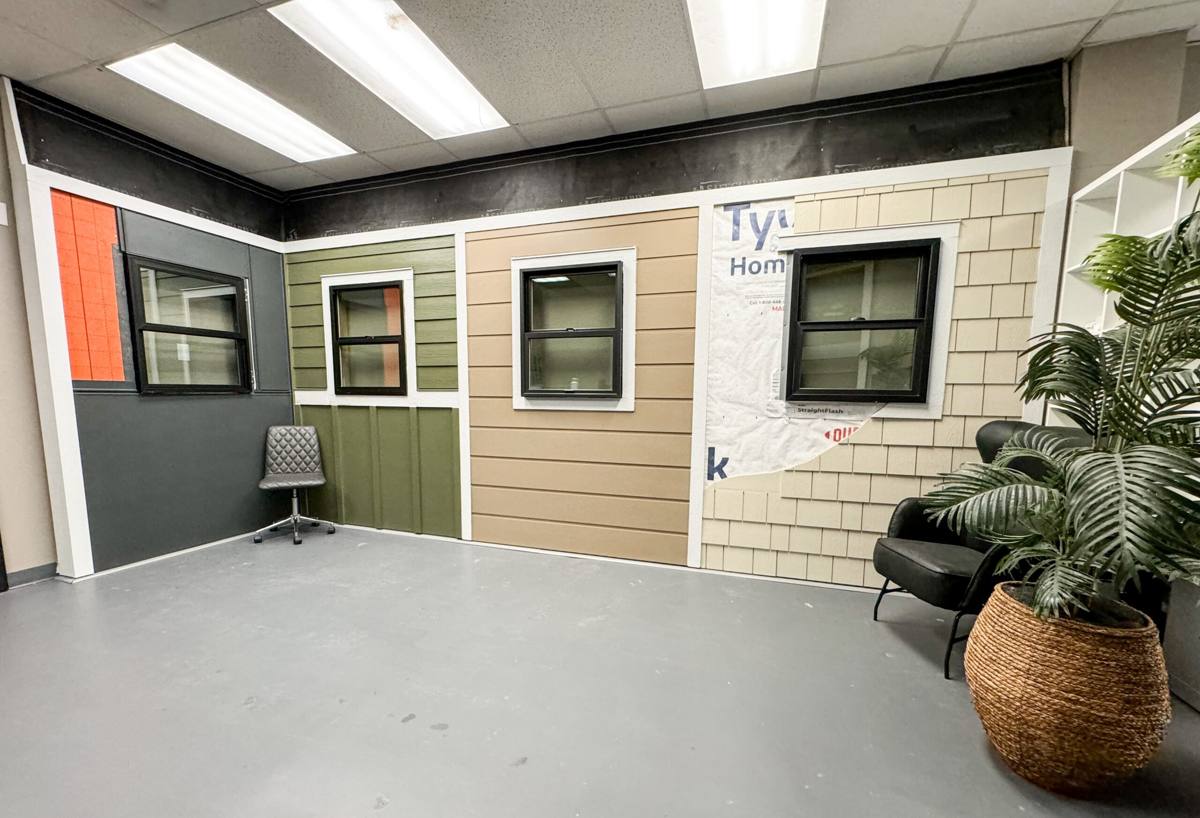
Any time siding comes off for repair, the water-resistive barrier and flashing underneath get inspected. If house wrap is torn, taped seams have failed, or flashing was missed at a window or door, that gets corrected before new siding goes back on — otherwise the repair is cosmetic only.
Match the Material and the Finish
Fiber cement siding has a specific profile, reveal, and factory finish. A patch using the wrong thickness or a mismatched paint will stand out and won't weather the same way as the surrounding panels. On James Hardie ColorPlus siding, we match panel profile and, where color has faded on an older section, discuss whether a color-matched refinish is the better call so the repair blends rather than patches over.
Fasten and Seal to Spec
Correct nailing pattern, correct gap at joints, and the right sealant in the right places — not just a bead of caulk wherever there's a gap. This is the step that gets skipped most often on quick handyman-style repairs, and it's the one that determines whether the repair lasts five years or fifteen.
Repair vs. Replacement: What Tips the Decision
Not every siding problem in Kendall calls for a full re-side. But when damage is widespread or the underlying moisture barrier has failed in multiple places, patch repairs stop making financial sense. Here's how we generally think about it:
| Factor | Repair usually makes sense | Replacement is the smarter call |
|---|---|---|
| Extent of damage | Isolated to one wall or a handful of panels | Multiple walls, or damage found in more than one area during inspection |
| Cause | Single identifiable issue (impact damage, one failed joint) | Systemic issue — poor original flashing, widespread moisture behind siding |
| Age of existing siding | Siding is mid-life and otherwise sound | Siding is near or past its expected service life |
| Material condition | Panels are stable, just locally damaged | Underlying material is failing broadly (common with some non-Hardie products) |
| Cost over time | Lower upfront cost, addresses the specific problem | Repeated repairs would eventually cost more than one correct replacement |
An honest inspection is what makes this call correctly. We'd rather tell a Kendall homeowner their siding needs one wall repaired and nothing else than talk them into work they don't need — and we'd rather tell them plainly when repeated patching is throwing money at a problem that needs a real fix.
Why We Repair — and Replace — Only With James Hardie Fiber Cement
We install one siding system: James Hardie fiber cement. That standard applies to repair work too. When we're patching a section of existing Hardie siding, we're working with a non-combustible, engineered product built for exactly this kind of climate — Hardie's HZ5 line is formulated for the freeze-thaw and moisture cycles of climates like Whatcom County's, and ColorPlus finishes are baked on at the factory rather than field-painted, which is part of why a well-maintained Hardie wall holds its color and its seal for years.
We don't install vinyl, LP SmartSide, Cemplank, Allura, primed spruce, or cedar, and that includes repair work on homes that already have one of those products. If a home is sided in something other than James Hardie, we'll say so plainly, explain what we can and can't do, and talk through whether a full re-side to fiber cement is worth considering given the condition of what's there now — not because those products can't be repaired by someone, but because it's not the system we stand behind. When we do repair or extend a section of existing Hardie siding, we're matching a product we know inside and out, with a warranty structure and installation spec we already follow on every job.
Our Process for Kendall Siding Repair Calls
- Inspection. We look at the damaged area and the surrounding wall, not just the spot that prompted the call — including gutters, downspouts, and grading nearby, since drainage issues are a common root cause out here.
- Diagnosis and plan. We identify why the damage happened and give a straightforward assessment: repair, extended repair, or replacement, with reasoning, not just a quote.
- Material match. For Hardie repairs, we source matching panel profile and color, and flag any refinishing needed to blend older, sun-faded sections with new material.
- Correct installation. Barrier and flashing checked and corrected, panels fastened to spec, joints sealed properly — the same standard we hold on full installs.
- Walkthrough and cleanup. We show you what was found and what was done before we leave, so there are no surprises later.
Before You Hire Someone for Siding Repair
Siding repair gets treated as a small job, which means it's often handed to whoever's available rather than whoever's qualified. A few things worth checking before you hire:
- Do they inspect what's behind the siding, or just patch the visible damage?
- Can they match your existing siding's profile and finish, or will the repair be visibly different?
- Do they explain why the damage happened, not just what they'll replace?
- Are they licensed and insured for exterior work in Washington?
- Will they put the scope of work and materials in writing before starting?
- Do they work in your area regularly, or is this a one-off trip out to Kendall?
Why Local Experience in Kendall Matters
A crew that regularly works Kendall and the surrounding parts of Whatcom County knows which walls take the worst of the driving rain, which lots hold moisture longer under tree cover, and how moss season actually behaves on the ground here versus in a drier, more open part of the county. That local pattern recognition shortens the diagnosis step and helps avoid repairs that address the symptom but miss the cause. It also means we're not a stranger showing up once — we're a crew based right in the area, which matters if a repair needs a follow-up look after the next big rain.
If you're seeing staining, a cracked panel, a soft spot near a window, or just want an honest read on whether a section of siding needs repair or replacement, we're happy to take a look. Reach out for a free, no-pressure estimate using the form below.