 Lynden Exterior
 Deck Replacement Built for Kendall's Climate
Kendall sits in a stretch of Whatcom County that puts real, sustained pressure on anything built outside year-round, and a deck takes more of that punishment than almost any other part of a home. Salt-tinged air works steadily on exposed fasteners and hardware. Wind-driven rain doesn't just fall on a deck surface, it gets pushed sideways and up underneath railings, into ledger connections, and between boards that were never gapped to handle it. And a long, damp moss season settles into shaded framing and horizontal surfaces and stays there for months at a stretch. A deck built or maintained without those specific stresses in mind usually looks fine for a few years and then starts failing all at once — soft boards, a loose railing, a ledger connection nobody thought to check until it's already wet underneath.
This page covers deck replacement specifically for a Kendall home — how to tell a deck has actually reached the end of its useful life rather than just needing repair, what a correct full replacement involves from the footings up, and how our process works from first inspection to final walkthrough.
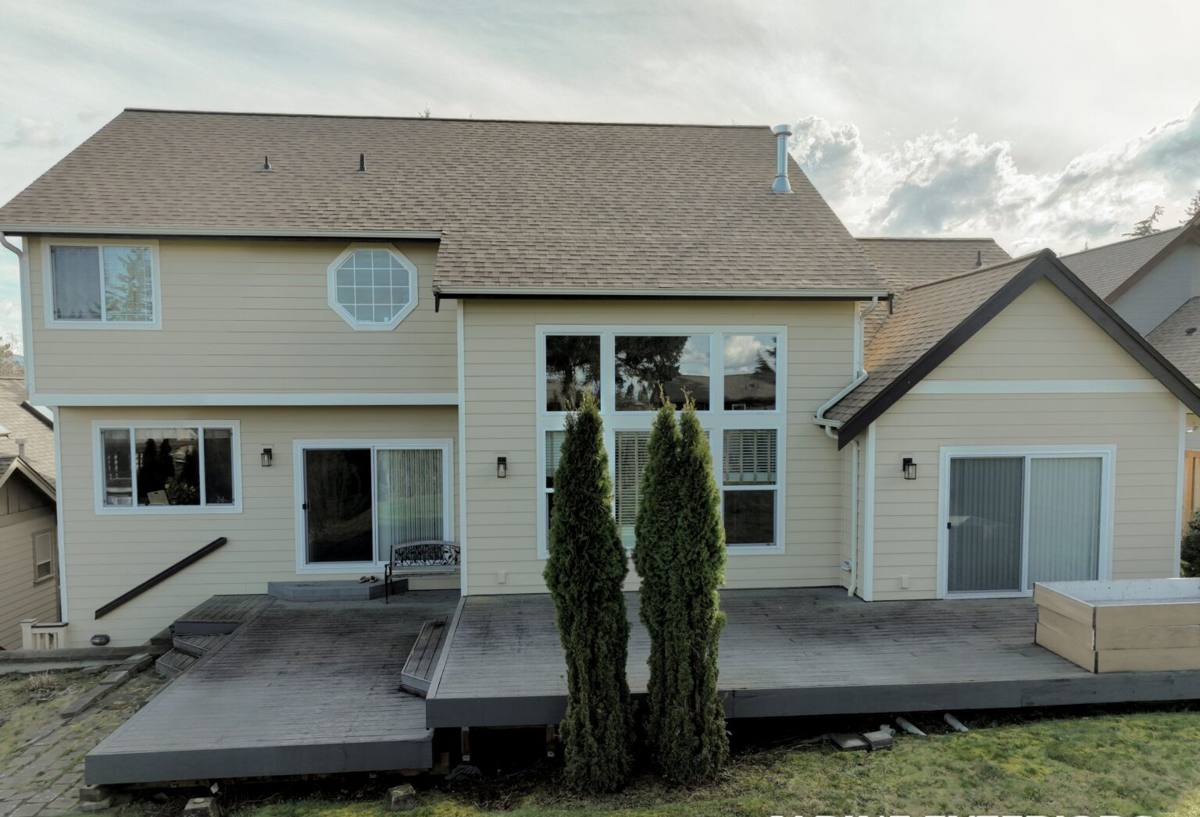
Repair or Replace? Reading the Signs Correctly
Not every tired-looking deck needs to come out entirely. The honest answer depends on where the problem actually sits — surface, framing, or foundation — and how far it's spread.
Signs a Repair Is Still a Reasonable Option
Localized issues on an otherwise sound structure are usually repairable: a handful of cupped or split boards, a single loose railing baluster, surface graying or minor moss on a deck that's still structurally solid underneath. If the framing, footings, and ledger connection are in good shape and the problems are cosmetic or limited to a small area, a targeted repair is the honest recommendation, not an upsell into a full replacement.
Signs That Point to Full Replacement
Once a problem shows up in the framing or foundation rather than just the surface, repair usually isn't the responsible answer anymore. That includes soft or spongy decking across multiple boards rather than just one or two, visibly rotted or rusted structural connectors, a ledger board pulling away from the house, posts or footings that have shifted or heaved, and railings that feel loose at the post itself rather than just at a single baluster. Any one of these on its own might be repairable in isolation, but once several show up together, it's usually a sign the whole structure has been absorbing moisture longer than it should have, and patching around the edges just delays a more expensive fix later on.
What a Correct Deck Replacement Actually Involves
Replacing a deck is not simply pulling up old boards and screwing down new ones. A correct replacement rebuilds the structure as a system, and most of what actually determines how long it lasts is invisible once the job is finished.
Full Tear-Out and Structural Inspection
A real replacement starts with taking the old deck down to the ground, not building a new surface over an existing frame of unknown condition. That's the only way to see what's actually happening at the footings, posts, and framing — damage that's often invisible from the top, and sometimes even from underneath, until things are physically moved aside.
Footings, Posts, and Ledger Attachment
Footings need to sit below frost depth and bear on solid, undisturbed soil, and posts need proper post bases that keep wood from sitting directly in standing water. The ledger board, where the deck attaches to the house, is one of the most common failure points on an older deck and deserves particular attention: correct flashing integrated with the house's water-resistive barrier, proper structural fasteners rather than common nails, and in most cases mechanical connectors rated for the actual load rather than relying on ledger bolts alone.
Framing and Fasteners
Joists and beams need to be sized correctly for the actual span and load, not just matched to whatever was there before, since older decks in this area were sometimes framed lighter than current standards call for. Every fastener and structural connector should be corrosion-resistant hardware suited to sustained moisture and salt-tinged air, not standard hardware that starts losing holding strength within a few seasons out here.
Decking Surface and Fastening
Board gapping needs to account for both drainage and the material's expansion and contraction, so wind-driven rain and standing moisture can actually move through and dry out rather than getting trapped between boards. Where the decking product supports it, hidden fastener systems reduce exposed screw heads on the walking surface, which means less exposed metal for moisture and salt air to work on over the years ahead.
Bringing an Older Deck Up to Current Code
A lot of deck replacements in this area aren't driven purely by rot or wear — they're driven by a structure that was legal when it was built decades ago but wouldn't meet current requirements today. Guardrail height, baluster spacing, stair rise and run, and ledger attachment methods have all been tightened up over the years, and an older deck can look perfectly fine on the surface while quietly failing several of those standards underneath. Replacing the deck is the natural point to correct all of that at once, rather than trying to retrofit code compliance onto a structure that was never designed for it. We handle the permitting that goes along with a full replacement as part of the job, since a deck of meaningful size and height in Whatcom County typically requires one before work starts.
Choosing the Right Decking Material for a Replacement
Material choice matters more on a replacement than it might seem, because you're not just picking a look — you're picking how much upkeep the deck will actually get over the next fifteen or twenty years, and how well it holds up against this specific climate's moisture and moss pressure.
| Material | Moisture & Moss Resistance | Upkeep | Relative Cost |
|---|---|---|---|
| Pressure-treated wood | Weak without regular treatment; first to show moss and graying | Regular sealing or staining | $ |
| Cedar | Moderate natural resistance, but needs sealing to hold up over time | Regular oiling or sealing | $$ |
| Uncapped composite | Moderate; some moisture absorption at exposed fiber | Periodic cleaning | $$ |
| Capped composite | Strong; cap layer resists moisture, staining, and moss buildup | Occasional washing | $$$ |
| Cellular PVC | Excellent; no wood fiber at all to absorb moisture | Occasional washing | $$$ |
For most Kendall replacements, capped composite hits the practical middle ground between upfront cost and how little attention it needs going forward. Wood remains a legitimate choice for homeowners who want that look and are genuinely committed to the maintenance schedule it requires, and PVC is worth the added cost on decks that sit in heavy shade or see the most sustained moisture exposure through the year.
Cost Factors That Actually Affect a Replacement Bid
Two bids for what looks like the same deck can come in far apart, and the gap almost always traces back to real differences in scope rather than one contractor simply padding the price.
| Factor | What It Affects |
|---|---|
| Extent of structural damage found at tear-out | Whether framing, footings, or posts need full replacement or just the decking surface |
| Ledger flashing and connection method | Long-term protection against the most common deck failure point |
| Decking material selected | Upfront material cost and years of maintenance ahead |
| Deck size, height, and layout complexity | Labor time, permitting requirements, and stair or railing complexity |
| Code upgrades needed | Guardrail, baluster, and stair changes required to bring an older deck current |
A written estimate that itemizes these pieces separately tells you far more than a single lump-sum number, and it's worth asking any contractor to walk through exactly what's driving the price before comparing bids side by side.
How Our Process Works
- In-person inspection: We look at the existing deck in person — framing, footings, ledger connection, and overall condition — rather than quoting from a photo.
- Written estimate: You get an itemized bid covering tear-out, framing, ledger work, decking material, railings, and any code upgrades needed, not a single vague number.
- Permitting: We handle the permit application and inspections that come with a full deck replacement in Whatcom County.
- Tear-out and structural rebuild: The old deck comes out completely, and footings, posts, framing, and the ledger connection are rebuilt correctly before any decking goes down.
- Decking, railings, and stairs: The surface material, railing system, and any stairs are installed to current code and manufacturer specification.
- Final walkthrough: We review the completed deck with you, including what your specific material choice needs going forward, before calling the job done.
Why Hiring a Crew That Already Works in Kendall Matters
A crew that regularly replaces decks in and around Kendall has already seen how salt-tinged air corrodes underspecified hardware, how wind-driven rain finds its way into a poorly flashed ledger connection, and which decking products actually hold up against this area's specific combination of moisture and a long moss season. That's the kind of practical knowledge that shows up in the small decisions made throughout a job — decisions a crew without that local track record might not think to make at all.
It also matters after the job is finished. A workmanship warranty only means something if the company behind it is still around and reachable a few years later, and a contractor with an established, ongoing presence in this area is the one you can actually call if a question comes up down the road.
A Practical Checklist Before You Choose a Contractor
- Do they perform a full tear-out and structural inspection, or just resurface over the existing frame?
- Does the estimate specify ledger flashing method and connector hardware, not just "new decking"?
- Are footings, posts, and framing addressed explicitly if damage is found, not left as an assumption?
- Do they handle permitting and code upgrades as part of the job?
- Do they carry current WA contractor licensing, liability insurance, and workers' compensation?
- Can they point to recent, real local work in or near Kendall?
Signs It May Be Time to Replace Your Deck
- Boards that feel soft, spongy, or spring back underfoot in more than one spot
- Visible gaps, staining, or moss buildup where the ledger board meets the house
- Railings or posts that feel loose or move when leaned on, not just a single loose baluster
- Footings or posts that appear to have shifted, tilted, or heaved out of position
- Persistent moss or dark staining across the deck surface despite regular cleaning
- A deck built more than 15-20 years ago that has never been evaluated against current code
If several of these sound familiar, it's worth having the deck evaluated before another wet season adds to whatever's already developing underneath.
If you'd like an honest look at your Kendall deck and a written estimate that spells out exactly what a replacement would involve, we're glad to come take a look. Use the form below to request a free, no-pressure estimate.