 Lynden Exterior
 Windows Built for Kendall's Weather, Not Just Kendall's Style
Kendall sits at the edge of the foothills northeast of Lynden, close enough to the Nooksack valley and the marine air moving in off Whatcom County to get the worst of both worlds: long stretches of driving rain in the fall and winter, damp low-lying air that never fully dries out, and a moss season that can run half the year on north-facing walls and rooflines. Windows out here don't just get wet — they stay wet, cycle between soaked and cold more often than homes closer to town, and take on grime and organic growth around the frame faster than a lot of homeowners expect. A window that was installed correctly for a drier climate can still fail here years earlier than it should.
When we talk about "custom windows" for a property in Kendall, we mean windows sized, flashed, and specified for this specific exposure — not a catalog unit dropped into an opening and caulked around the edges. That distinction matters more here than in a lot of places, because a mediocre install doesn't just look bad, it lets water in behind the siding where nobody sees it until there's a problem.
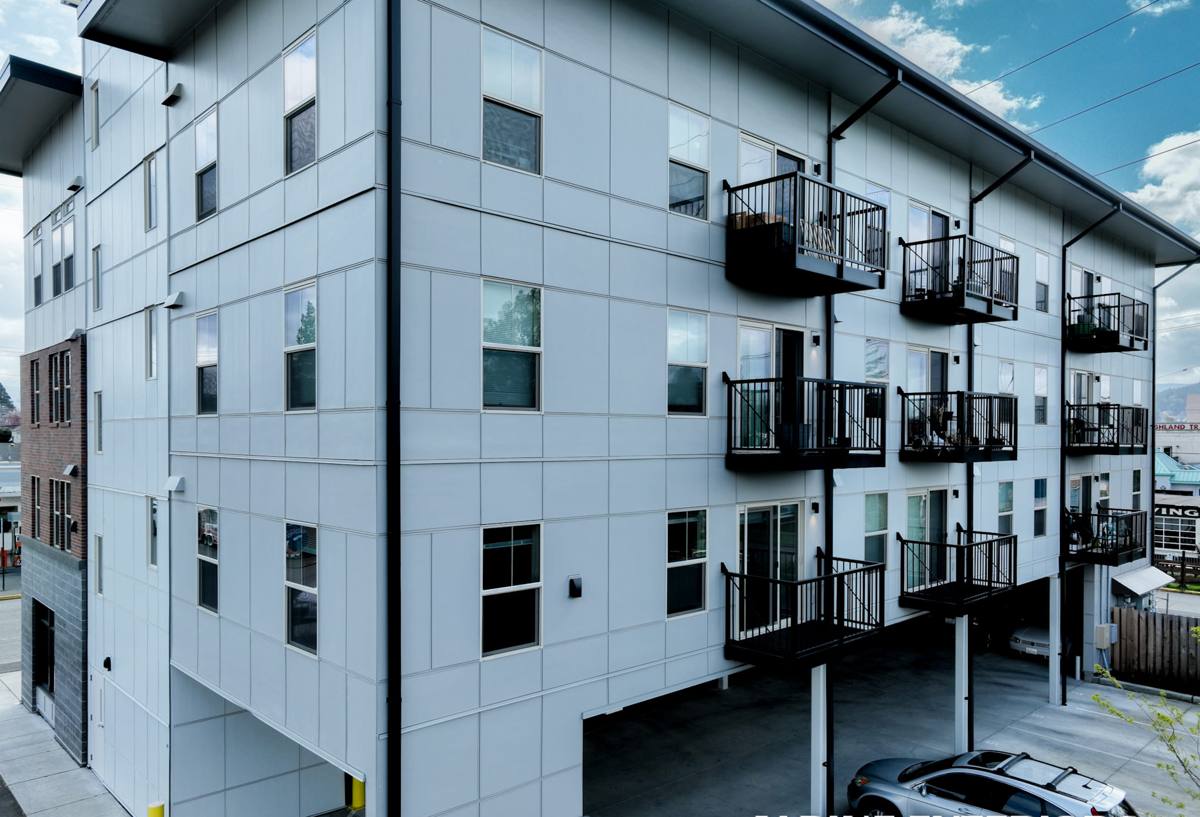
What Kendall's Climate Actually Does to a Window Over Time
Driving Rain and Wind-Driven Moisture
Storms coming through this part of Whatcom County tend to arrive with wind behind them, which pushes rain sideways into wall assemblies instead of letting it run straight down. That's a different load than a window is tested for under calm-weather rain, and it's why flashing detail and sill pan design matter as much as the window unit itself. A well-built window with a poorly integrated sill will still leak.
Moss, Algae, and Organic Growth
Shaded, tree-lined lots around Kendall hold moisture longer, and moss doesn't stay on the roof — it works its way onto window sills, tracks, and frame corners where debris collects. Left alone, it holds water against wood trim and vinyl seals far longer than open air would, which accelerates rot and gasket breakdown.
Condensation and Temperature Swings
Cold, wet nights followed by mild days create condensation cycles on both older single-pane glass and poorly sealed newer units. Persistent condensation between panes is a sign the seal has already failed, not just a cosmetic issue.
Wood Rot Around Frames and Sills
Older homes and outbuildings in the area often still have original wood-framed windows or early vinyl retrofits that were caulked over rather than properly re-flashed. Once moisture gets behind the trim, rot spreads inside the wall cavity long before it's visible from outside.
What a Correct Custom Window Job Actually Involves
"Custom" isn't a marketing word here — it means the window is built to the actual opening and the actual wall assembly, not the other way around.
- Accurate field measurement of each opening, since older Kendall-area homes rarely have perfectly square or consistent rough openings
- Sill pan flashing that directs any water that gets past the window back outside the wall, not into the framing
- Proper head flashing and integration with the existing house wrap or building paper, lapped correctly so water sheds downward and outward
- Backer rod and sealant selection rated for sustained wet exposure, not just standard exterior caulk
- Insulation packed correctly around the frame — not overpacked, which can bow the frame, and not skipped, which leaves a cold, drafty gap
- Interior and exterior trim reinstalled or replaced to match the home, with attention to any rot found during removal
Any one of these steps done wrong can undo the benefit of an otherwise good window. This is the part of the job that doesn't show up in a showroom brochure but is the actual difference between a window that lasts fifteen years and one that fails in five.
Frame Materials: What Holds Up in This Climate
| Material | Moisture Behavior | Maintenance | Typical Lifespan Here |
|---|---|---|---|
| Vinyl (quality, multi-chamber) | Won't rot; can warp if lower-grade or dark-colored under direct sun exposure | Low — occasional cleaning of tracks and weep holes | 20-30 years |
| Fiberglass | Very stable dimensionally; handles wet/cold cycling well | Low | 30+ years |
| Wood (clad exterior) | Exterior clad protects from rain; interior wood still needs the seal intact | Moderate — watch clad-to-frame seal over time | 20-25 years with good upkeep |
| Bare wood | Highest maintenance burden in a climate this wet; needs consistent repainting/sealing | High | Varies widely with upkeep |
| Aluminum (non-thermally-broken) | Conducts cold and condenses heavily in this climate | Low, but condensation issues are common | Not typically recommended here |
We generally steer Kendall customers toward vinyl or fiberglass for most window replacements, and clad-wood where the look matters and the budget allows for the added upkeep. It's not that other materials can't work — it's that this climate is unforgiving of anything that depends on a homeowner staying on top of maintenance every single year.
Glass and Seal Options Worth Understanding
Glass package matters as much as frame material in a climate with this much temperature and moisture swing.
- Double-pane with low-E coating: the standard baseline for this region — cuts heat loss and reduces condensation risk compared to older single-pane or basic dual-pane units
- Argon or krypton gas fill: improves insulating value between panes, which helps reduce the interior condensation that shows up on cold Kendall mornings
- Warm-edge spacers: the material separating the panes at the edge affects how much cold transfers to the edge of the glass — a common spot for condensation and, eventually, seal failure
- Laminated or impact glass: not required by code here, but some homeowners choose it for sound dampening or added durability on ground-floor windows
Our Process for a Kendall Window Project
- On-site assessment: we look at every opening individually — sun exposure, tree cover, existing rot or moss buildup, and how water has historically moved around the house
- Honest scope and options: we tell you which windows need full replacement, which can be repaired, and why — not every window on a house needs the same fix
- Accurate measurement and ordering: custom-sized units built to the real opening, not a stock size that gets shimmed to fit
- Careful removal: checking framing and sheathing behind each old window for hidden rot before anything new goes in
- Correct flashing and sealing: sill pans, head flashing, and sealant integrated with the existing wall assembly, sequenced so water always has a way out
- Trim and finish work: matching existing interior and exterior trim, or upgrading it where the old material was already compromised
- Final walkthrough: operation, seal, and finish checked with you before we call the job done
Signs Your Kendall Home's Windows Need Attention
- Fog or moisture visible between panes of double-glazed glass
- Soft, spongy, or discolored wood trim around the frame
- Windows that are difficult to open, close, or latch fully
- Visible moss or dark staining collecting on sills or in corners
- Drafts felt near the frame on windy, rainy days
- Peeling paint or bubbling on interior sills, often a sign of moisture intrusion rather than just age
- Noticeably higher heating costs compared to similar-sized homes nearby
What Affects the Cost of a Window Project
| Factor | Why It Matters |
|---|---|
| Number and size of openings | More or larger windows means more material and labor |
| Frame material chosen | Vinyl, fiberglass, and clad-wood carry different unit costs |
| Condition of existing framing | Rot repair found during removal adds time and material not visible in an initial quote |
| Access and site conditions | Second-story, tight setbacks, or steep lots can affect labor time |
| Trim and finish scope | Matching existing trim profiles or upgrading damaged trim adds to the job |
| Glass package | Upgraded low-E, gas fill, or laminated glass changes per-unit pricing |
We won't quote a job without seeing the actual openings — a phone estimate on windows is close to worthless once hidden rot or an odd rough opening enters the picture. What we can say broadly is that a correctly installed custom window, done once, costs less over the life of the house than repeated patch repairs on a poorly sealed original install.
Why Hiring a Crew That Already Works This Area Matters
Kendall isn't a place where a one-size-fits-all install approach holds up. A crew that mostly works drier, more sheltered neighborhoods may not think twice about sill pan flashing or weep hole placement, because their callbacks are rare enough that it doesn't force the issue. Out here, those shortcuts show up as a leak behind the trim two winters later. Working regularly in Lynden and the surrounding Whatcom County communities means we've already seen how moss, driving rain, and the wet-dry cycle particular to this part of the state actually behave against a house — not in theory, but on real jobs, in real weather.
That local familiarity also means straight answers: which windows on your house genuinely need replacing this year, which can wait, and which fixes are cosmetic versus structural. We'd rather tell a Kendall homeowner the truth about their windows than sell a bigger job than the house needs.
Get a Straightforward Estimate for Your Kendall Home
If you're seeing fogged glass, soft trim, drafts, or moss creeping into your window sills, it's worth having someone look before another wet season adds to the damage. We offer free, no-pressure estimates for custom window projects in Kendall and throughout the Lynden area — use the form below to get a time on the calendar.