 Lynden Exterior
 Decking Built for Kendall's Wet, Shaded Lots
Kendall sits among the tree-lined, rural properties north of Lynden, where mature trees, close-in tree lines, and river-bottom humidity keep a lot of decks damp long after the rain stops. That combination of shade and moisture is exactly the environment where a deck either performs for decades or starts showing problems in year three. Composite decking has become the default recommendation for homeowners in this area for a straightforward reason: it handles constant moisture exposure without the annual upkeep that wood demands.
This page covers what a composite deck actually needs to hold up on a Kendall property, what a correct installation looks like from the framing up, and why the details matter more here than they would on a dry, open lot on the other side of the county.
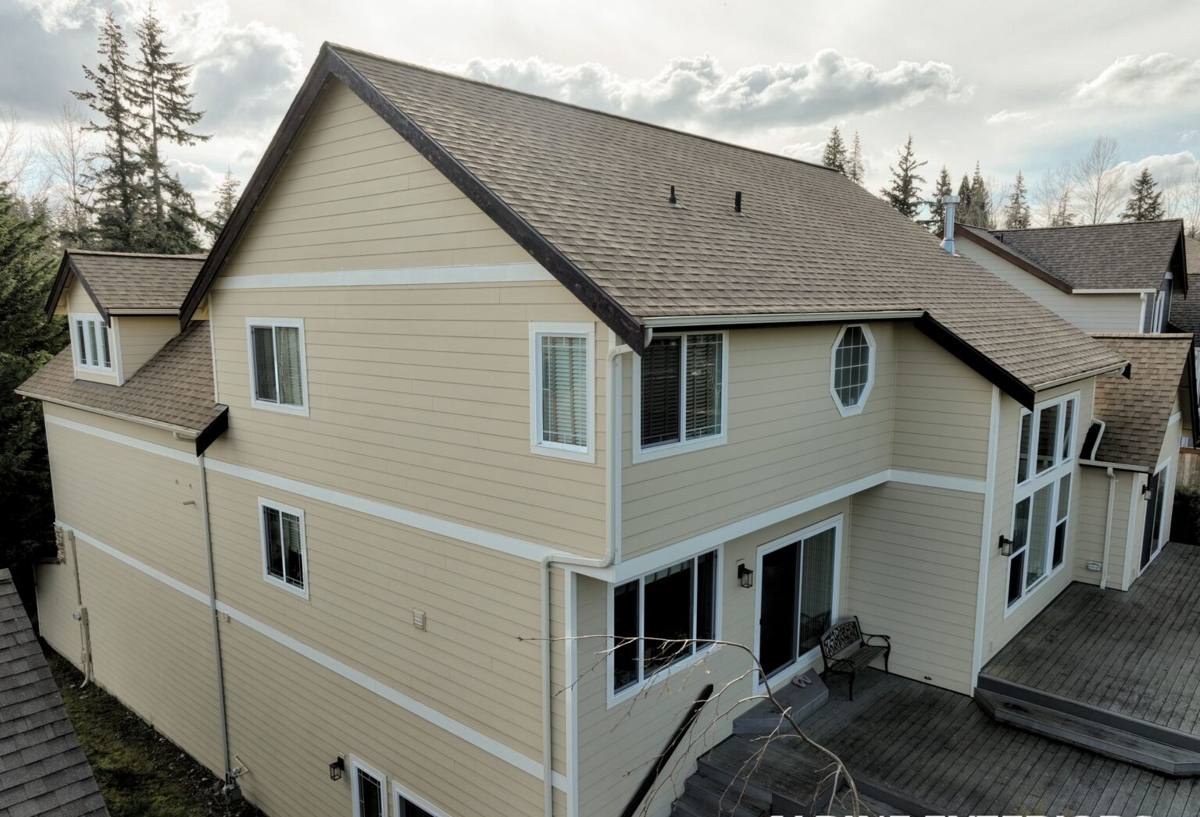
What Whatcom County's Climate Does to a Deck
Western Washington's marine-influenced weather brings driving rain that comes in sideways during winter storms, long stretches of overcast days that never fully dry out a shaded surface, and salt-tinged air moving in off the Sound that slowly works on exposed metal fasteners and hardware. None of that is unique to any one neighborhood, but Kendall's tree cover makes the effects worse in specific, predictable ways.
Moss Season Is Longer Under Tree Cover
A deck in full sun sheds moisture within a few hours of a rain stopping. A deck shaded by conifers or a close tree line can stay damp for days. That extended dampness is what feeds moss, algae, and mildew on any surface that can't dry out — and once moss establishes itself in the grain or grooves of a decking board, it holds water against the surface even longer, extending the problem into what should be a dry summer stretch.
Driving Rain Finds Every Gap
Wind-driven rain doesn't just fall on a deck surface — it gets pushed sideways into ledger connections, under poorly flashed rim joists, and into any fastener hole that wasn't properly sealed. On an older or poorly built deck, this is usually where rot starts: not on the visible boards, but in the framing underneath where nobody's looking.
Why Composite Holds Up Better on Shaded, Rain-Heavy Lots
Composite decking is manufactured from a blend of wood fiber and recycled plastic, and on capped boards, wrapped in a polymer shell that doesn't absorb water the way solid wood does. That matters directly for a property like the ones common in Kendall:
- It doesn't swell, cup, or splinter from repeated wet-dry cycling the way lumber does over a wet Whatcom County winter.
- A capped board resists moss and algae staining far better than wood, since there's no exposed wood grain for spores to root into.
- It doesn't need annual staining or sealing — a real advantage on a shaded deck where that maintenance window is already short.
- Color and texture hold up under UV and moisture exposure without the graying and roughening that untreated or under-maintained wood develops.
None of that means composite is maintenance-free. It still needs to be installed correctly, cleaned periodically, and matched to the right board profile for a shaded site — details we'll get into below.
Composite vs. Wood vs. PVC: How They Compare for This Climate
| Factor | Wood | Composite | PVC |
|---|---|---|---|
| Upfront material cost | Lowest | Mid-range | Highest |
| Annual maintenance | Staining/sealing required | Occasional cleaning only | Occasional cleaning only |
| Moisture resistance | Poor without upkeep | Strong (capped boards) | Very strong |
| Moss/algae resistance | Poor, especially in shade | Good on capped boards | Good |
| Feel/appearance | Natural wood grain | Wood-look, varies by line | Uniform, less wood-like |
| Long-term value on shaded lots | Lower — highest labor burden | Strong | Strong, higher entry cost |
We install composite on the large majority of Kendall decks because it lands in the middle: real moisture and moss resistance without the higher material cost of full PVC systems. Where a homeowner wants the added moisture margin of PVC — for a deck built low to the ground or over a drainage-challenged area — we'll say so directly rather than defaulting to one product for every job.
What a Correct Composite Deck Installation Actually Involves
The composite boards get the attention because they're what you see and stand on, but most of the failures we get called out to fix start below the surface. A composite deck is only as good as the framing and hardware underneath it.
Ledger Board and Flashing
Where the deck attaches to the house is the single most common failure point on any deck in this climate. It needs proper flashing that directs water away from the house band board, not just a bead of caulk. On a shaded, rain-heavy lot, a poorly flashed ledger is a slow, hidden leak that can rot the rim joist and even the house framing behind it for years before it's visible from the deck surface.
Joist Spacing and Substructure
Composite boards specify a maximum joist spacing from the manufacturer, and it's tighter than what's typically fine for solid wood decking — usually 16 inches on center, sometimes closer for angled or diagonal board patterns. Framing on wider spacing than the board is rated for leads to flex, bounce, and premature wear at the fastener points.
Fasteners and Hardware
Every screw, bracket, and joist hanger should be stainless steel or coated specifically for exterior, high-moisture use. In a region with salt-influenced air and near-constant humidity, standard galvanized hardware corrodes faster than most homeowners expect, and a rusting fastener under a composite board eventually stains the board around it and weakens the connection.
Board Spacing for Drainage and Airflow
Composite boards need a consistent gap between boards, both for thermal expansion and to let water drain through rather than pool on the surface. Under a shaded deck, adequate airflow underneath the structure is just as important — it's what lets the substructure actually dry out between rain events instead of staying damp for weeks.
Mistakes We Commonly Find on Existing Decks
When we're called out to look at an older deck in the Kendall area — composite or wood — the same handful of issues show up repeatedly:
- Moss and algae buildup concentrated on the shaded side of the deck, where boards were installed without enough gap for airflow.
- Ledger boards attached with minimal or missing flashing, leading to rot in the rim joist that isn't visible until the deck starts to feel soft near the house.
- Composite boards installed over joist spacing rated for wood, causing visible flex and premature fastener wear.
- Standard hardware used instead of stainless or coated fasteners, resulting in rust streaks and weakened connections within a few years.
- Boards butted tight with no expansion gap, causing buckling as the material expands and contracts with temperature swings.
Every one of these is preventable with correct installation. None of them show up as a warranty issue with the decking material itself — they're framing and installation problems that happen to surface through the boards.
Choosing the Right Board for a Shaded, Rain-Heavy Lot
Grooved vs. Solid-Edge Boards
Grooved-edge boards use a hidden fastener system that leaves no exposed screw heads on the surface — cleaner looking, and it removes one more spot for water and debris to collect. Solid-edge, face-screwed boards cost less and are simpler to repair individually, which can matter on a deck partially shaded by trees where one section may need a board swapped down the road.
Color Considerations
Darker composite colors show pollen, tree debris, and mineral deposits from rain less than very light colors do, but they also run hotter in direct sun. On a shaded Kendall lot, heat is rarely the deciding factor — debris visibility and how the board photographs against the surrounding tree line usually matter more. We'll walk through actual samples on site rather than recommending a color sight unseen.
Railing and Fastener Hardware
Whatever railing system goes with the deck should match the same moisture and corrosion standard as the decking hardware. A composite deck with a rusting aluminum or under-rated railing system just relocates the maintenance problem instead of solving it.
Our Process for Kendall Homeowners
We approach every deck project the same way, adjusted for the specifics of the site:
- Site walk and assessment. We look at sun and shade exposure, existing drainage patterns, tree proximity, and the condition of any existing structure.
- Structural inspection. If we're building over or replacing an existing deck, we check the ledger connection, framing, and posts before quoting anything — no surprises after the tear-out starts.
- Product selection. We walk through composite board options and railing systems suited to the site's actual light and moisture conditions, not a one-size answer.
- Permitting. Deck work in Whatcom County typically requires a permit depending on height and scope; we handle that process as part of the job.
- Build. Correct flashing, joist spacing matched to the product, stainless or coated fasteners throughout, and proper drainage gaps.
- Walkthrough and cleanup. We go over care and cleaning expectations specific to a shaded lot before we consider the job finished.
Maintenance a Composite Deck Still Needs in This Climate
Composite decking cuts the maintenance burden significantly compared to wood, but "low-maintenance" isn't "no-maintenance" — especially under tree cover. A short seasonal routine keeps a composite deck looking and performing the way it should:
- Sweep or blow off leaves, needles, and debris regularly, especially in fall — trapped organic matter is what feeds moss and mildew growth.
- Rinse the deck surface periodically with a garden hose to clear pollen and mineral film before it builds up.
- Use a soft-bristle brush and a manufacturer-approved composite cleaner for any moss or algae spotting rather than a wire brush or harsh chemicals.
- Keep gutters and downspouts near the deck clear so runoff isn't dumping extra water directly onto or under the structure.
- Check railing and stair fastener hardware annually for early signs of rust or looseness.
- Trim back overhanging branches where possible to improve airflow and sun exposure on the worst-shaded sections.
Why It Matters to Hire a Crew That Already Works Kendall
Deck-building fundamentals don't change from one neighborhood to the next, but the judgment calls do. Knowing how much shade a Kendall lot is realistically going to get through the year, how close to the ground drainage tends to sit on tree-covered properties, and what Whatcom County's permitting process actually requires for a given deck size all come from doing this work locally and repeatedly — not from a manufacturer's install manual alone. A crew that already understands this area's rain patterns and moss pressure builds in the right margin from the start, instead of learning it from a callback two years later.
If you're planning a new composite deck in Kendall or replacing one that's showing its age, we're happy to take a look and give you a straight, no-pressure estimate. Use the form below to get started.