 Lynden Exterior
 Why Laurel Homes Need Siding Built for This Climate
The Laurel area sits in a part of Whatcom County that gets the full Pacific Northwest treatment: long stretches of driving rain from fall through spring, damp marine air that drifts in off the Sound and settles into low-lying yards, and a moss and mildew season that can run most of the year on north-facing walls and shaded siding. None of that is unusual for this corner of Washington, but it's exactly the combination that wears out the wrong siding material fastest and makes correct installation of the right material non-negotiable.
Siding on a Laurel home isn't just a weather barrier — it's dealing with near-constant moisture cycling. Wood swells and dries, paint fails at the seams, and anything with a paper or foam core that gets a pinhole of water intrusion can hold that moisture against the wall for weeks at a time. Fiber cement siding, installed correctly, is built to shrug off that cycle instead of fighting it.
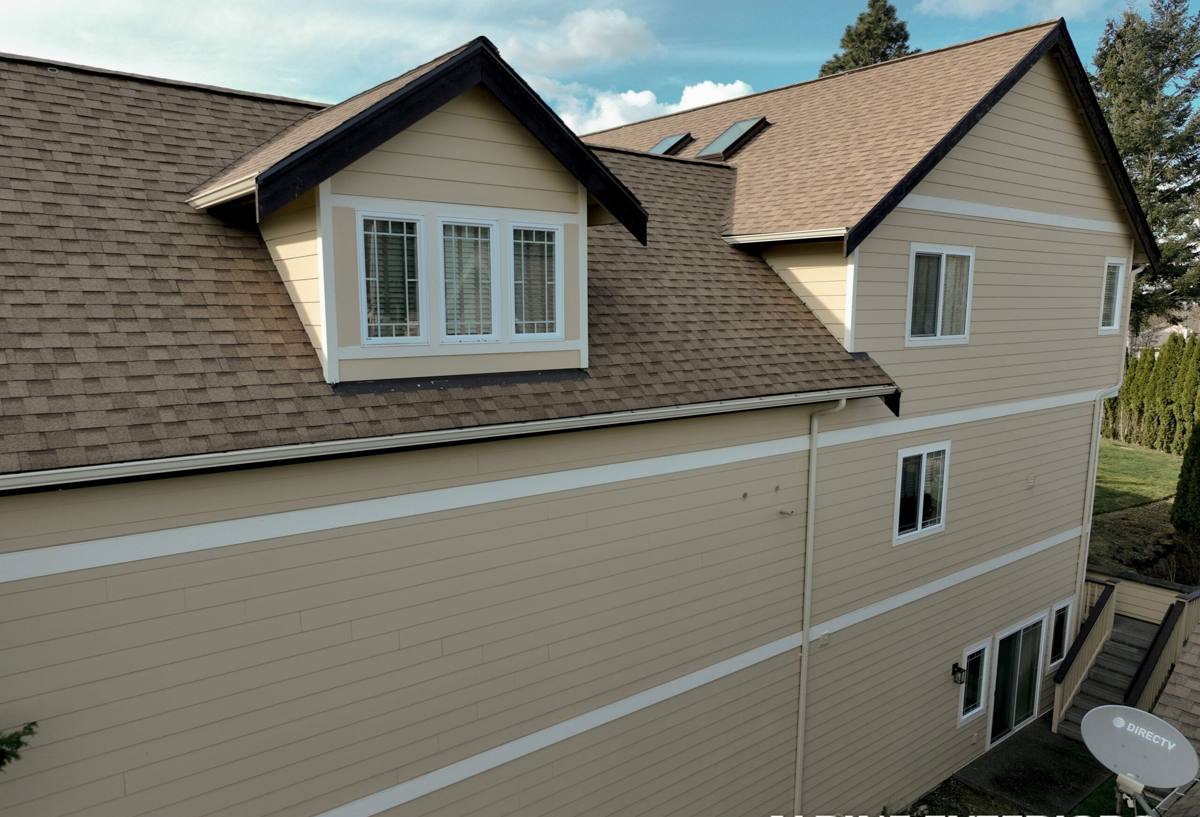
What "Correct Installation" Actually Means Here
James Hardie siding performs the way it's rated to perform only when it's installed to the manufacturer's specifications — and in a climate like this one, a few details matter more than they would in a drier region.
Flashing and Water Management
Every horizontal joint, window head, and penetration on a Laurel home needs proper flashing and weather-resistant barrier work behind the siding, not just caulk covering a gap. Caulk is a maintenance item; flashing is the actual water management system. In a climate with this much sustained rainfall, a house relies on the flashing doing its job long after the caulk has started to crack.
Fastening and Gapping
Hardie panels and lap siding need the correct fastener pattern, clearance from grade, and expansion gaps at butt joints and trim. Panels installed too tight, too close to the ground, or with the wrong nailing pattern are the most common cause of premature paint failure and edge swelling on fiber cement siding anywhere in the Pacific Northwest — not a flaw in the product, but a shortcut in the install.
Product Selection for Exposure
Not every wall on a Laurel home has the same exposure. A west-facing wall taking the brunt of driving rain and a shaded north wall holding onto moss and mildew both need to be accounted for in product choice, trim detailing, and touch-up plan — treating every elevation identically is how avoidable problems show up five years down the road.
James Hardie Product Lines We Use in This Area
James Hardie engineers its siding for different climate zones under its HZ5 and HZ10 designations, and for a marine-influenced climate like Whatcom County's, that engineering matters. The table below covers the lines most relevant to a Laurel-area home.
| Product | Typical Use | Why It Fits This Climate |
|---|---|---|
| HardiePlank Lap Siding | Primary wall cladding | Most common choice locally; holds ColorPlus finish well through repeated wet/dry cycles |
| HardiePanel Vertical Siding | Accent walls, gables, modern facades | Fewer horizontal joints means fewer water-entry points on high-exposure walls |
| HardieShingle | Accent siding, dormers | Gives a cedar-shake look without the moisture uptake of real wood shingles |
| HardieTrim | Corners, window and door trim | Fiber cement trim resists the swelling and rot that plagues wood trim in this rainfall pattern |
All of these come with the factory-applied ColorPlus finish, which is baked on under controlled conditions rather than field-applied. That matters in a climate where a job site paint window can be interrupted by rain for days at a time — the finish is already cured before the siding reaches the house.
Why We Only Install James Hardie
We don't install LP SmartSide, vinyl, Cemplank, Allura, or bare wood siding, and that's a deliberate standard, not a sales pitch. Vinyl flexes and gaps in temperature swings and doesn't hold up structurally against the wind-driven rain this area sees. Engineered wood products depend on an unbroken factory coating to resist moisture — any field cut, nail hole, or installation flaw becomes a point where water can get into the core. Cedar and primed spruce look good on day one but demand a repainting and caulking schedule that most homeowners underestimate, especially with this much annual rainfall.
James Hardie fiber cement is non-combustible, dimensionally stable in wet climates, and backed by a strong transferable warranty when installed by a factory-trained crew. That's the standard we hold every job to, and it's why we don't offer alternatives that we don't think hold up as well here.
Our Process for Laurel-Area Projects
1. On-Site Assessment
We walk the whole exterior, not just the visible siding — checking for existing moisture damage, rot at trim and window sills, and any areas where past patch jobs or caulk-only repairs are masking a bigger problem.
2. Prep and Moisture Check
Old siding comes off down to the sheathing where needed, and we check for hidden water damage before anything new goes up. Installing new siding over a wet or compromised wall just locks the problem in.
3. Weather Barrier and Flashing
House wrap, flashing, and trim go in before a single piece of Hardie siding is hung. This is the step that determines whether the house sheds water correctly for the next several decades.
4. Installation to Spec
Panels and lap siding go up following James Hardie's fastening, clearance, and gapping requirements — not a generalized "close enough" approach.
5. Final Walkthrough
We inspect trim lines, caulking at penetrations, and touch-up paint before calling the job done, and go over basic care with the homeowner.
What Drives Cost on a Job Like This
| Factor | Why It Matters |
|---|---|
| Condition of existing sheathing | Rot or water damage found during tear-off adds repair scope before new siding can go on |
| Wall complexity | Gables, dormers, and multiple elevations take more trim work and cutting than a simple rectangular wall |
| Product mix | Combining lap siding with panel accents or shingle detail costs more than a single product throughout |
| Access and site conditions | Tight lots, landscaping, or multi-story walls affect scaffolding and labor time |
| Trim and color selection | Custom trim profiles and specialty ColorPlus colors carry different material costs |
We give straightforward, itemized estimates rather than a single lump number, so homeowners can see what's driving the price rather than guessing at it.
Moss, Mildew, and Long-Term Maintenance
Whatcom County's damp, shaded microclimates are hard on any exterior surface, and Laurel is no exception. Fiber cement doesn't feed mold or moss growth the way wood does, but siding facing north or sitting under mature tree cover will still collect surface growth over time. That's a cleaning issue, not a material failure — a soft wash with the right technique keeps ColorPlus finishes looking correct without damaging the coating. Skipping that maintenance for years is really the only way moss becomes a bigger problem than cosmetic.
Gutters, downspouts, and grading around the house matter just as much as the siding itself. A lot of siding "failures" we get called out to inspect actually trace back to water being dumped against the wall from a clogged gutter or poor drainage, not a flaw in the siding material.
Why Hiring a Crew That Already Works Laurel Matters
A crew that's worked this specific pocket of Lynden knows which walls typically take the worst weather exposure, how the local moisture patterns behave through the year, and what a correct install needs to hold up against them — not generic textbook knowledge, but familiarity built from doing the work here repeatedly. That local experience shows up in the small decisions: flashing details at a tricky roofline, where to expect the most moss buildup, how much clearance to leave at grade given typical yard drainage in the area. Those are the details that separate a siding job that looks good for one season from one that performs correctly for thirty years.
A Few Questions Worth Asking Before You Hire Anyone
- Are they James Hardie certified, and can they explain their flashing and water-management approach in detail?
- Will they inspect and address sheathing condition before installing new siding, not just cover it up?
- Do they follow Hardie's specific fastening and gapping requirements, or a generalized approach used for any brand of siding?
- Is the warranty they're offering the manufacturer's transferable warranty, or just a limited labor guarantee?
- Can they speak specifically to how the local climate and this neighborhood's exposure affect the job?
If you're weighing a siding project for a Laurel-area home, we're happy to walk the property, look at what's actually going on with your current siding, and put together a straightforward, no-pressure estimate. There's no obligation — just an honest look at what your home needs.