 Lynden Exterior
 Custer's Climate Puts Real Stress on Siding
Custer sits close enough to the water that homes here deal with a combination most inland Whatcom County properties don't have to think about as much: salt-tinged air off the Strait, wind-driven rain that hits walls sideways instead of falling straight down, and a moss season that seems to start earlier and last longer every year. None of that is dramatic on its own. What it does is quietly wear down siding that wasn't built for the exposure, and it punishes installation shortcuts that might get away with it in a drier, more sheltered part of the county.
Salt air is corrosive to exposed fasteners and hardware, and it accelerates the breakdown of paint films that aren't rated for it. Driving rain finds every gap, seam, and poorly flashed penetration and pushes water where gravity alone wouldn't take it. And moss doesn't just grow on roofs — it takes hold on north-facing siding, behind trim, and in any spot that stays damp and shaded through the wet months. Over years, moss holds moisture against the wall assembly, which is exactly the condition that leads to rot, paint failure, and siding that looks tired long before it should.
This is the environment we're designing for on every Custer job — not a generic Pacific Northwest climate, but the specific combination of coastal exposure and Whatcom County wet-season duration that this area gets.
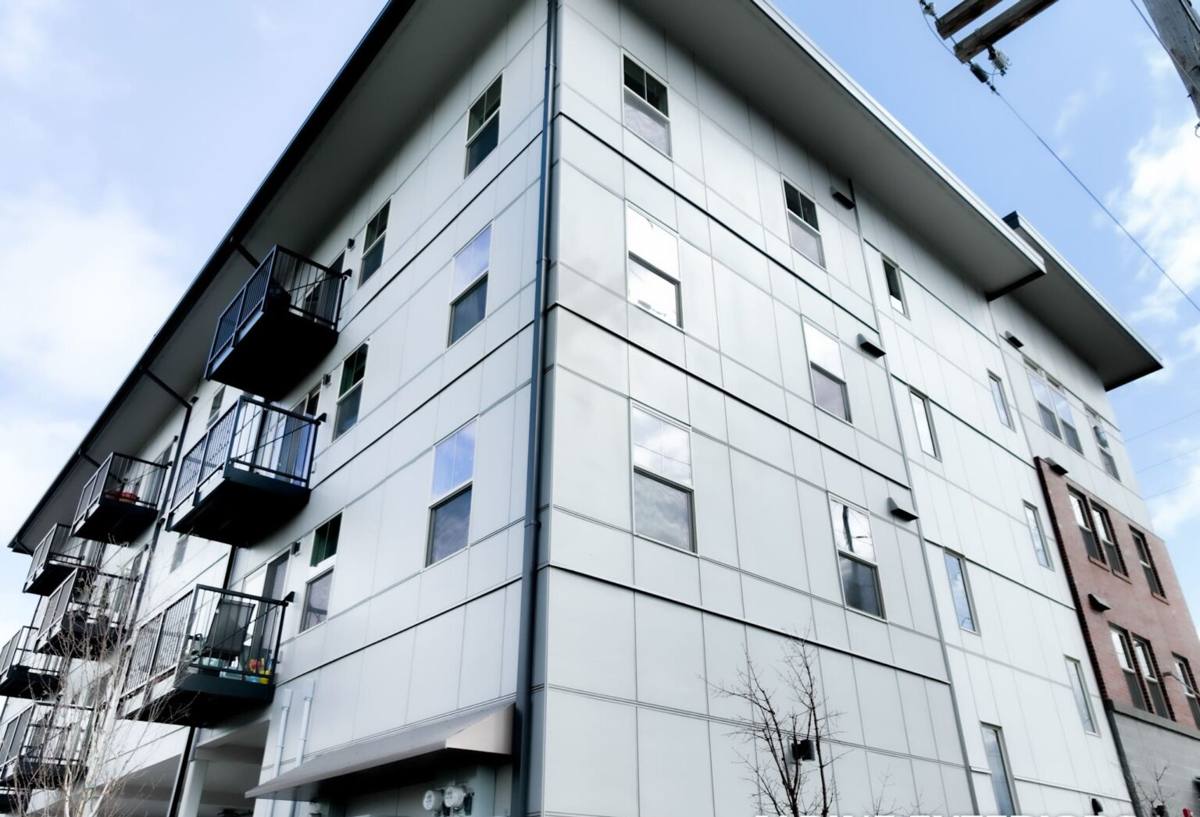
Why We Only Install James Hardie Siding in Custer
We made a decision as a company to install James Hardie fiber cement exclusively, and we don't deviate from that for cost or convenience — not vinyl, not LP SmartSide, not Cemplank or Allura, not primed spruce or cedar. That's not a marketing position; it's a standard we hold because of what we've seen these products do, and not do, in exactly this kind of climate.
Non-Combustible Fiber Cement
James Hardie siding is made from cement, sand, and cellulose fiber. It doesn't burn, it doesn't warp from heat, and it doesn't provide fuel to a fire the way wood-based or engineered-wood siding products can. In a region where wildfire smoke and dry-season fire risk are an increasing part of the conversation, that's a real, practical advantage — not a marketing point.
Engineered for This Exposure
Hardie's HardieZone system exists specifically because siding performs differently depending on climate. Western Washington falls in HZ5, the zone Hardie engineers for high moisture exposure, and the product formulation and installation specs are built around that reality rather than a national average. That matters more in Custer than it does thirty miles inland.
ColorPlus Factory Finish
Most Hardie siding we install carries a ColorPlus finish — baked on in a controlled factory environment, not brushed or sprayed on site. It resists fading and holds up to UV and salt exposure far better than field-applied paint, and it comes with its own finish warranty separate from the product warranty. In a salt-air environment, where field-painted finishes tend to chalk and fade unevenly, that factory bake matters.
HZ5 vs. Standard Product Lines — What Actually Matters in Custer
Not all fiber cement siding is engineered the same way for moisture exposure. Here's a straightforward comparison of what the HZ5 engineering standard addresses versus a generic, non-climate-zoned fiber cement product.
| Factor | HZ5 (Hardie, Wet Climate Engineering) | Generic / Non-Zoned Fiber Cement |
|---|---|---|
| Moisture resistance formulation | Engineered for prolonged wet-season exposure | Formulated to a national average, not zone-specific |
| Factory finish | ColorPlus baked-on finish available with its own warranty | Often field-finished only |
| Installation specification | Zone-specific fastening, clearance, and flashing details | Generic install guidance, less climate-specific |
| Warranty structure | Long-term, transferable product warranty | Varies widely by manufacturer |
The practical takeaway: the siding itself is only half the equation. It needs to be installed to the HZ5 spec — correct clearances, correct fastener pattern, correct flashing details — to actually deliver on that engineering. A Hardie board installed like a generic product doesn't get you Hardie performance.
What a Correct Installation Involves
Tear-Off and Inspection
Before any new siding goes up, we remove the old material and inspect the sheathing underneath. This is the step that gets skipped when a crew is trying to move fast, and it's the one that matters most in a wet climate. Hidden rot, compromised sheathing, or a failed water-resistive barrier from the previous installation won't fix itself under new siding — it gets covered up and left to keep spreading.
Water Management Details
Correct installation means a continuous drainage plane behind the siding, proper flashing at every window, door, and roofline intersection, and a rainscreen gap where the assembly calls for one so water that does get behind the cladding has somewhere to drain and dry out. In Custer's driving-rain conditions, these details are the difference between siding that sheds water and siding that traps it.
Fastening and Gaps
Hardie specifies exact fastener types, spacing, and penetration depth, along with minimum clearances from grade, roof lines, and abutting surfaces. Panels and joints need the correct gaps and sealant — not caulked tight everywhere, which can actually trap moisture instead of letting it move and dry. Getting this wrong doesn't usually show up in year one. It shows up in year five or six, as staining, soft spots, or paint failure at the seams.
Our Process, Start to Finish
- Free on-site estimate — we walk the exterior, check existing siding and trim condition, and talk through product lines and colors.
- Written scope and pricing, including any sheathing repair or moisture issues we flag during the walk-through.
- Tear-off of old siding and trim, with a stop-and-inspect step before anything new goes on.
- Repair of any compromised sheathing and installation of a proper water-resistive barrier.
- Hardie siding and trim installed to manufacturer spec — clearances, fastening, flashing, and rainscreen detailing.
- Final walk-through with the homeowner before we consider the job finished.
What Drives Cost on a Custer Job
Every home is different, so we don't quote off a flat per-square-foot number without seeing the house. These are the factors that typically move a project up or down in cost.
| Factor | Why It Matters |
|---|---|
| Sheathing condition | Rot or moisture damage found during tear-off adds repair scope before new siding can go up |
| Home size and wall complexity | More corners, dormers, and trim details mean more labor and material |
| Product line and profile | Lap, shingle, and panel styles vary in material and installation cost |
| Existing siding removal | Multiple layers or difficult-to-remove material (like old asbestos-cement siding) adds time |
| Trim and accessory scope | Full trim replacement versus reusing sound existing trim changes the total |
We give a real, written number after we've actually looked at the house — not a phone estimate — because sheathing condition alone can shift a budget significantly once tear-off starts.
Living With Hardie Siding in Custer's Climate
Hardie siding is low-maintenance compared to wood-based products, but "low-maintenance" doesn't mean "no maintenance" in a climate like this one. A little seasonal attention goes a long way toward protecting the investment.
- Rinse siding periodically to clear salt residue and organic buildup, especially on walls facing prevailing wind and rain.
- Keep an eye on north- and shade-facing sections for early moss or algae growth and address it before it spreads.
- Trim back vegetation and landscaping that keeps siding shaded and damp longer than it needs to be.
- Inspect caulking and sealant joints annually, particularly around windows, doors, and trim intersections.
- Watch gutters and downspouts — misdirected roof runoff onto siding is one of the most common causes of premature wear we see.
Why a Crew That Already Works Custer Matters
Installation quality is the biggest variable in how siding performs over time, and that quality depends on a crew that understands the conditions they're building for. A crew that regularly works this stretch of Whatcom County already accounts for the wind exposure, the length of the wet season, and the moss and mildew pressure that comes with proximity to the water — it's not a special adjustment, it's just how the job gets done correctly here. That familiarity also means fewer surprises during tear-off, because we've seen what years of coastal exposure typically do to sheathing and old siding systems in this area, and we know what to check for before we ever quote the job.
Questions to Ask Before You Hire
- Do they install Hardie to the HZ5 specification, or a generic fastening pattern?
- Will they inspect and, if needed, repair sheathing before new siding goes up — not just cover it?
- Does their scope include proper flashing and a drainage plane, not just panel installation?
- Do they give a written estimate after seeing the house, not a phone quote?
- Can they explain why they chose the products they install, in plain terms?
If a Custer home is due for new siding, we're glad to come take a look and walk through what your house actually needs — no pressure, no generic phone quote. The estimate is free, and you'll get a straight answer about condition, scope, and cost before anything is decided.