 Lynden Exterior
 Windows Built for Laurel's Corner of Whatcom County
Homes in the Laurel area near Lynden deal with a specific mix of weather most manufacturers' glossy brochures don't account for: long stretches of driving rain off the Nooksack Valley and Georgia Strait weather systems, a marine-influenced air that carries moisture and salt further inland than people expect, and a moss season that can run from late fall through spring. Windows here don't just need to look good and keep heat in — they need to survive a climate that's actively working to get past every seal, joint, and sill.
That's the lens we use for every energy-efficient window project in Laurel. It's not just about a lower U-factor on a spec sheet. It's about a window and an installation that will still be performing the way it should in year twelve, not just year one.
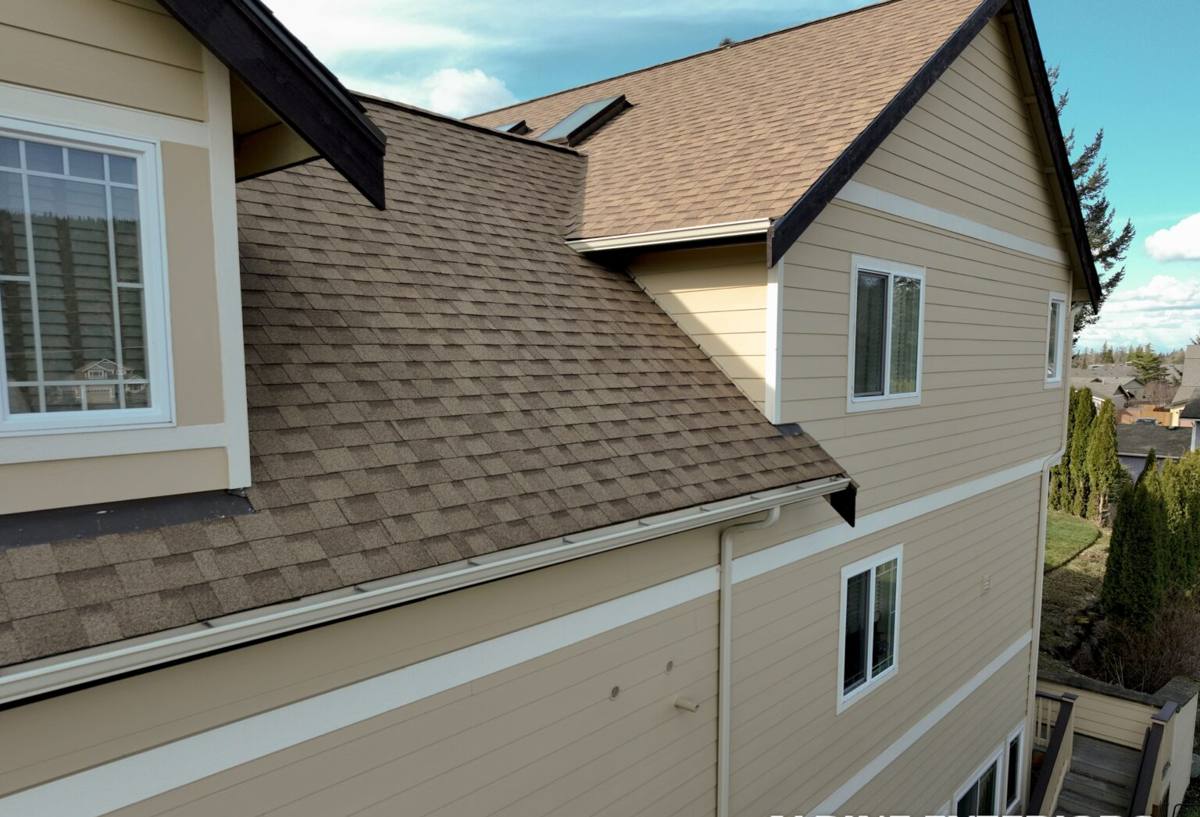
What "Energy-Efficient" Actually Means Here
Energy efficiency in a window comes down to a handful of measurable properties, and in Whatcom County some matter more than others.
The ratings that count
- U-factor — how well the window resists heat loss. Lower is better for our cool, wet winters.
- Solar Heat Gain Coefficient (SHGC) — how much solar heat passes through. Matters most on south and west-facing walls that catch summer sun.
- Air leakage rating — how much outside air sneaks through the frame and sash. This is where cheap installs fail even with a good window.
- Condensation resistance — how well the glass and frame resist interior moisture buildup, which matters a lot when a home is sealed tight against constant outdoor humidity.
A window with excellent lab ratings but a sloppy install will still leak air and let moisture behind the trim. In our experience, the installation quality determines as much of the real-world performance as the window unit itself — which is why we treat both as one job, not two.
Frame material trade-offs
| Frame type | Moisture behavior | Maintenance | Where it fits |
|---|---|---|---|
| Vinyl | Doesn't absorb water; won't rot | Low — occasional cleaning | Most Laurel homes; strong value for the climate |
| Fiberglass | Very stable, resists warping in wet/dry cycles | Low | Larger openings, higher-exposure walls |
| Wood (clad exterior) | Needs an intact exterior clad and sealed joints to keep moisture out of the core | Higher — finish and seals need periodic attention | Homes prioritizing a traditional interior look |
| Aluminum | Conducts cold, prone to interior condensation without a thermal break | Moderate | Rarely our first recommendation for this climate |
We don't push one brand or material on every job. What we won't do is install a product into conditions it's poorly suited for just because it's cheaper up front — that's a decision that tends to cost the homeowner more in the long run through callbacks, rot repair, or early replacement.
Signs Your Current Windows Are Costing You Money
Most homeowners in Laurel don't call us because a window shattered. They call because something felt off. Here's what usually prompts that call:
- Visible fog or moisture between the panes of a double-pane window (a failed seal, not fixable with cleaning)
- Cold air you can feel near the frame on a windy, rainy day even with the window latched
- Soft or discolored trim, sill, or drywall below or beside a window
- Condensation forming on the inside of the glass regularly, especially in winter
- Windows that are hard to open, close, or lock — often a sign the frame has shifted or swollen
- A noticeable draft or temperature difference near windows compared to the rest of the room
- Visible moss, algae, or dark staining on the exterior sill or frame that keeps coming back
Any one of these is worth a look. Several together usually means the window system — not just the glass — has reached the end of its useful life.
What a Correct Installation Actually Involves
The window unit itself is maybe half the job. The other half is everything around it, and it's the part that determines whether the window performs for two years or twenty.
Flashing and moisture management
Every opening gets flashed so that any water that reaches the rough opening is directed back out, not into the wall cavity. In a climate with as much driving rain as Whatcom County sees, this step is non-negotiable — it's also the step that's easiest to rush and hardest to inspect once trim goes back on.
Fit and sealing
A window that's shimmed square, sealed with the right materials at the right points, and insulated (not just caulked) around the perimeter will hold its air-leakage performance for years. A window that's forced into a slightly-wrong opening or sealed with caulk alone as a shortcut will underperform its rating from day one, even if the unit itself is excellent.
Interior and exterior finish
Trim, interior sills, and exterior cladding all get tied back in so there's no gap for moisture or air to find. On older Laurel-area homes, this sometimes means matching or adapting to existing trim profiles rather than a one-size-fits-all finish.
Our Process for a Laurel Window Project
- On-site assessment — we look at each opening individually. Sun exposure, wall orientation, existing rot or moisture damage, and how the current windows are performing all factor into the recommendation.
- Product selection — we walk through frame material, glass package, and grille or style options based on your home and budget, not a one-size pitch.
- Written estimate — a clear scope, so you know exactly what's being replaced, how, and what's included.
- Removal and prep — old units come out carefully, and we check the rough opening and sheathing for hidden moisture damage before anything new goes in.
- Installation — flashing, shimming, insulation, and sealing done to spec, not shortcuts.
- Finish work — interior and exterior trim restored or matched, site cleaned up.
- Final walkthrough — every window opens, closes, and locks the way it should before we call it done.
Cost Factors Worth Understanding
Every home is different, so we don't quote sight-unseen, but these are the main variables that move the price of a window project up or down:
| Factor | Why it matters |
|---|---|
| Number and size of openings | Larger and more numerous windows mean more material and labor |
| Frame material | Vinyl is typically the most economical; fiberglass and clad wood cost more |
| Glass package | Double vs. triple pane, and any specialty coatings, change both performance and price |
| Condition of the existing opening | Rot repair or reframing adds labor beyond a straightforward swap |
| Access and site conditions | Second-story or hard-to-reach windows take more time and equipment |
| Trim and finish work | Matching existing profiles or restoring interior finishes adds scope |
As a rough guide, homeowners should expect anywhere from several hundred to well over a thousand dollars per window installed, depending on these factors — which is exactly why we walk every job in person before giving a number.
Why a Crew That Already Works Laurel Matters
A crew that's worked openings in the Laurel area and around Lynden already knows what this climate does to a window over time — where moss tends to build on north-facing sills, how driving rain hits certain wall orientations harder, and what rot damage typically looks like when it's hiding behind old trim. That's not something you can fully compensate for with a good product alone. It shows up in how the opening is assessed, how the flashing is detailed, and what gets flagged before it becomes a bigger repair.
It also matters for accountability. A local crew is one you can call back easily if something needs adjustment, and one with a reputation in Whatcom County worth protecting.
Living With Windows in a Moss-and-Moisture Climate
Even a well-installed, high-quality window benefits from a little seasonal attention here:
- Clear debris and moss from sills and tracks before it holds moisture against the frame
- Check exterior caulking lines annually, especially after a hard winter
- Keep gutters and downspouts clear so water isn't sheeting down over window heads
- Wipe down interior sills if condensation collects during cold snaps
- Test locks and operation each season — a window that's hard to latch isn't sealing properly
None of this is heavy maintenance, but skipping it is how a well-installed window ages faster than it should in this climate.
If your Laurel-area home has windows that feel drafty, foggy, or just past their prime, we're happy to take a look and give you an honest read on what's going on — no pressure, no upsell. Use the form below to request a free estimate.