 Lynden Exterior
 Why Deming Homes Wear Out Their Siding Faster Than You'd Expect
Deming sits in the part of Whatcom County where weather doesn't do anything halfway. Homes here deal with driving rain that comes sideways off the wind, long stretches of damp shade from surrounding tree cover, and a moss season that can run most of the year in the right (or wrong) spot on a roofline or wall. Add in the salt-laden air that moves through the county from the coast, and you have a combination that's genuinely hard on exterior building materials.
Siding on a Deming home isn't just a weather barrier for a few storms a year — it's under near-constant low-grade moisture pressure. That changes what "good siding" means here compared to a drier climate. Products that hold up fine in Eastern Washington or the Southwest can fail early in Whatcom County conditions, and the failure is usually slow and hidden until it isn't.
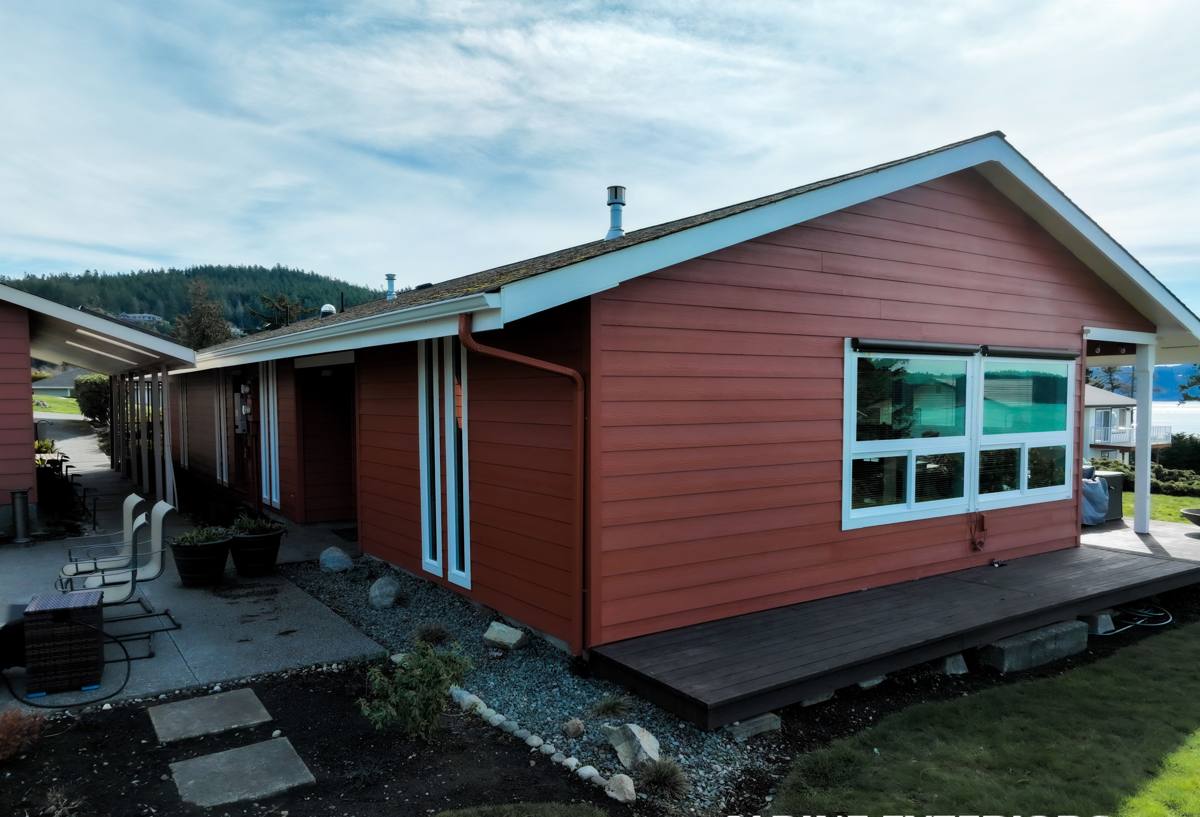
What This Climate Actually Does to Siding Over Time
Moisture Intrusion
Driving rain doesn't just hit siding — it gets pushed into every gap, seam, and fastener hole that isn't properly flashed or caulked. Over years, that moisture works its way behind the siding and into the wall assembly, where it can rot sheathing and framing long before anyone notices a problem from the outside.
Moss and Organic Growth
Shaded, damp walls in this area grow moss and algae readily. On porous or absorbent siding materials, that growth holds moisture against the surface and accelerates decay. On siding that isn't finished correctly, it also just looks bad within a few years, no matter how well it was installed.
Freeze-Thaw and Swelling
Whatcom County winters bring enough freeze-thaw cycling to stress any siding material that absorbs water. Wood-based products swell and contract; poorly sealed seams widen over time; caulk joints that seemed fine at installation start failing within a handful of seasons.
Signs a Deming Home Needs Siding Replacement, Not Just Repair
- Soft, spongy, or crumbling spots when you press on the siding, especially near the bottom courses
- Visible warping, buckling, or gaps between panels or boards
- Paint that won't hold — blistering, peeling, or needing repainting every couple of years
- Persistent moss or dark staining that returns quickly after cleaning
- Soft trim or corner boards, or staining around window and door casings
- Rising energy bills with no other explanation, suggesting the wall assembly is no longer sealing properly
Any one of these on its own might be a repair. Several at once, especially on a home more than 15-20 years old, usually means the siding system itself has reached the end of its useful life and patching it will just delay the real cost.
What a Correct Siding Replacement Actually Involves
Siding replacement done right is not simply "remove old siding, nail up new siding." A correct job addresses the whole wall system, because the siding is only as good as what's behind it.
Full Tear-Off and Inspection
We remove the old siding completely rather than installing over it. That lets us actually see the sheathing and framing underneath — which is often the only way to catch rot or moisture damage before it spreads further.
Sheathing Repair
Any water-damaged or compromised sheathing gets cut out and replaced before anything new goes up. Installing new siding over damaged sheathing just locks the existing problem behind a new wall.
Weather-Resistive Barrier
A properly lapped, correctly fastened weather-resistive barrier goes on next. This is the layer that manages any moisture that gets past the siding itself, and it has to be installed with the right overlaps and sealed penetrations to actually do its job in a wet climate like this one.
Flashing at Every Penetration
Windows, doors, hose bibs, vents, and any other wall penetration need proper flashing integrated with the weather barrier — not just caulk. Caulk fails; correctly lapped flashing sheds water by design and keeps working long after caulk has cracked.
Correct Fastening and Clearances
Fiber cement siding has specific fastening patterns, nail placement, and minimum clearances from grade, roofing, and decks that manufacturers specify for a reason. Skipping these details is one of the most common ways a siding job fails early, regardless of how good the material itself is.
Why We Only Install James Hardie Fiber Cement
We install James Hardie fiber cement siding exclusively. We don't install vinyl, LP SmartSide, cedar, primed spruce, or other fiber cement brands, and that's a deliberate standard, not a lack of options.
In a climate that puts constant moisture pressure on a home's exterior, the material matters as much as the installation. James Hardie's fiber cement is non-combustible, engineered specifically for wet climates through its HZ5 product line (the specification built for the Pacific Northwest's rain and humidity), and finished with a factory-applied ColorPlus coating that resists the fading, peeling, and touch-up cycle that plagues field-painted siding in this region. It also carries a strong, transferable manufacturer warranty backed by decades of real-world performance in climates like Whatcom County's.
Other products have real strengths — vinyl is inexpensive and low-maintenance in mild climates, engineered wood has a warmer look, cedar has genuine curb appeal. But each comes with trade-offs that show up specifically in high-moisture, high-moss environments: vinyl can warp and doesn't stop moisture behind it, wood-based products are more sensitive to sustained dampness, and even quality installs of these materials tend to need more frequent maintenance here than fiber cement does. We'd rather install one product correctly and stand behind it than offer several and hope the climate cooperates.
Our Siding Replacement Process
| Step | What Happens |
|---|---|
| On-site assessment | We walk the exterior, check for moisture damage, and identify problem areas specific to your home's exposure and shading |
| Written estimate | Clear scope, material selection, and pricing before any work begins — no surprises mid-project |
| Tear-off and sheathing inspection | Old siding removed, sheathing checked and repaired as needed |
| Weather barrier and flashing | New moisture management layer installed and integrated at every penetration |
| Hardie installation | Siding installed to manufacturer fastening and clearance specifications |
| Trim, caulking, and finish detail | Final detailing so seams, corners, and transitions perform as well as they look |
| Final walkthrough | We review the finished work with you before considering the job done |
What Affects the Cost of a Siding Replacement
| Factor | Why It Matters |
|---|---|
| Extent of sheathing damage found | Rot discovered during tear-off adds repair work that can't be quoted until the old siding is off |
| Home size and wall complexity | More corners, dormers, and cutouts mean more labor and material waste |
| Siding profile and accessories | Trim boards, corner treatments, and shake-style accents add cost over a plain lap profile |
| Access and site conditions | Slopes, tight side yards, and landscaping near the walls affect how quickly a crew can work |
| Current layer removal | Full tear-off costs more upfront than installing over existing siding, but it's the only way to actually inspect and fix what's underneath |
Why Hiring a Crew That Already Works in Deming Matters
Siding installation is detail work, and the details that matter shift with the climate. A crew that mostly works drier regions may not think twice about a flashing detail or clearance gap that's cosmetic elsewhere but critical in Whatcom County's rain and moss conditions. A crew that already works this area knows which walls take the worst weather exposure, how local moisture and shade patterns affect a home over time, and what installation details actually hold up here versus on paper.
That local experience also shows up in smaller, practical ways: knowing what permitting looks like in the county, understanding how a home's exposure to wind-driven rain should shape flashing choices, and not treating every Deming home like a generic install.
Maintaining Fiber Cement Siding in This Climate
- Rinse siding periodically to keep moss and algae from taking hold, especially on shaded walls
- Keep gutters clear so overflow doesn't run down the siding face
- Trim back vegetation that keeps walls damp and shaded longer than necessary
- Check caulking at trim and penetrations every year or two and re-seal as needed
- Address any impact damage or chipping promptly so the factory finish keeps doing its job
Fiber cement done right needs far less of this than wood or vinyl, but no siding material is entirely maintenance-free in a climate like this one.
If your Deming home is showing signs its siding has reached the end of its life, we're happy to take a look and give you a straightforward, no-pressure assessment of what it actually needs. Use the form below to request a free estimate.