 Lynden Exterior
 Why Deming Roofs Wear Differently Than Roofs Closer to Town
Deming sits in the forested, higher-rainfall country east of Lynden, and that setting changes how a roof ages. Homes tucked under tree cover get less direct sun, which means shingles and moss-prone surfaces stay damp longer after every storm passes through. Add in the salt-tinged marine air that pushes inland across Whatcom County, and you get a combination that drives moss growth, slow wood rot, and metal corrosion faster than you'd see on a roof in a drier, more open part of the county. We've worked on enough roofs out this way to know the failure patterns are consistent: north-facing slopes and valleys go first, moss builds up behind the leading edge of shingles where water backs up, and gutters clog with needle debris long before most homeowners expect it.
None of this means a Deming roof is doomed to constant problems. It means the repair work has to account for the actual conditions the roof lives in, not a generic checklist written for a roof in a sunnier neighborhood. That difference is what separates a patch that lasts one season from a repair that holds for years.
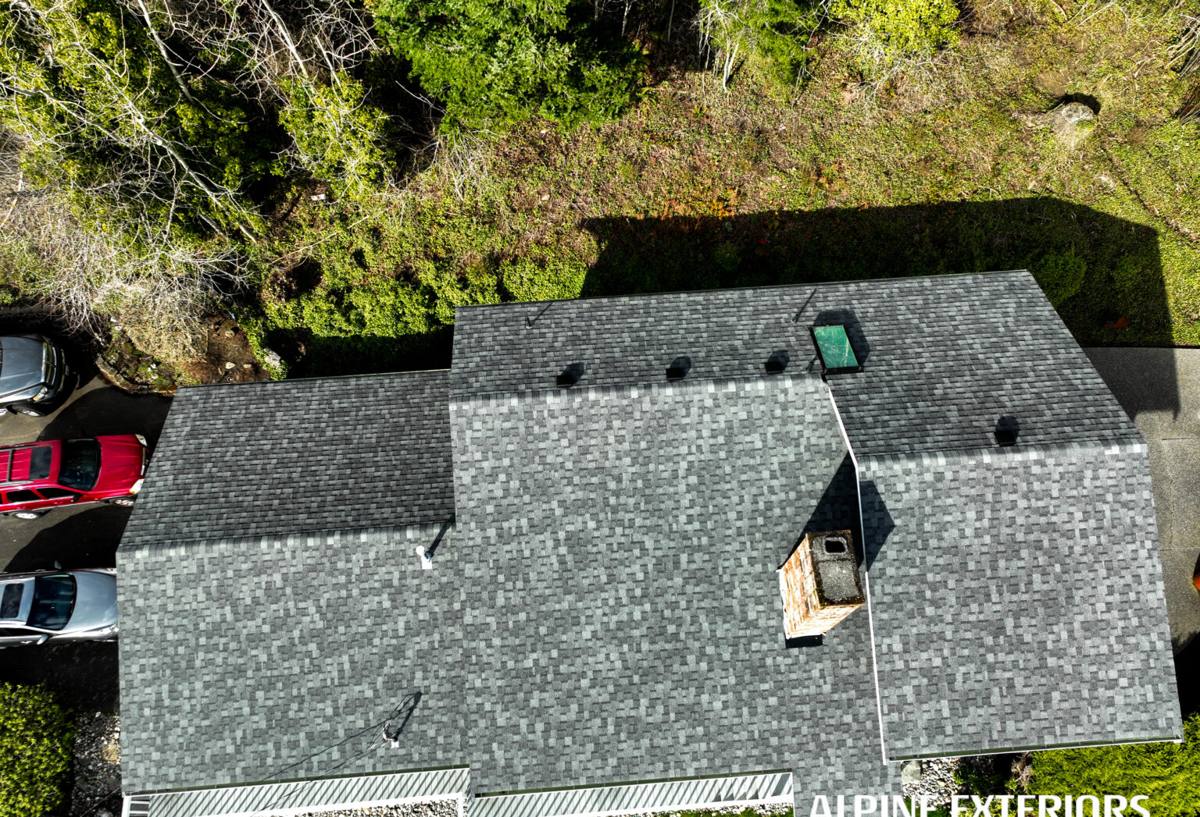
What Moss, Driving Rain, and Shade Actually Do to a Roof
Moss Isn't Just Cosmetic
A thin green tint on a north-facing slope looks like a minor issue, but moss works mechanically. Its root structure (rhizoids) lifts shingle edges and granules as it spreads, breaking the seal that keeps water moving down and off the roof instead of sideways and under it. Once moss gets a foothold in a valley or along a ridge, it holds moisture against the shingle surface around the clock, which accelerates granule loss and shortens the life of the roofing underneath it. Left alone through a full wet season, moss patches turn a minor repair into a much larger one.
Driving Rain Finds Every Weak Seam
Whatcom County storms don't always come straight down. Wind-driven rain hits roofs at an angle, which pushes water into laps, nail penetrations, and flashing joints that would stay dry in a calm rain. Valleys, chimney flashing, skylight curbs, and the transitions where a roof meets a wall are the spots that fail first under this kind of pressure. A repair that only addresses the visible leak point and ignores how driving rain actually travels across a roof tends to leak again at the first hard storm.
Long Wet Seasons Punish Deferred Maintenance
A short, dry summer window is really the only stretch of the year when roofing materials fully dry out and small problems stay small. Once the fall rains set in, they don't let up for months, so any weak spot left unaddressed gets steady exposure instead of a quick soak followed by drying time. That's why we push homeowners toward catching issues in late summer rather than waiting for a leak to show up inside the house in January.
Signs a Deming Roof Needs Repair Now, Not Next Spring
Some damage is obvious from the ground. Other signs only show up once you know what to look for. Here's what we tell homeowners to watch for between our visits:
- Dark streaking or visible green/black patches on north-facing or shaded slopes
- Granules collecting in gutters or at downspout outlets
- Shingles that look lifted, curled, or cupped at the edges
- Soft or spongy spots when walking the roof, or sagging visible from the ground
- Water stains on interior ceilings, especially near chimneys, skylights, or exterior walls
- Daylight visible through the roof deck from inside an attic or crawlspace
- Flashing that looks rusted, separated, or caulked over repeatedly instead of properly resealed
- Gutters overflowing during moderate rain rather than only in the heaviest storms
Any one of these on its own might not mean much. Two or three together, especially on a roof that's ten years or older, usually means it's time for an inspection before the next storm cycle.
What a Correct Roof Repair Actually Involves
Diagnosis Before Patching
The most common mistake we see from rushed repairs is treating the visible symptom instead of the source. A stain on a bedroom ceiling might trace back to a chimney flashing failure ten feet away, not the shingle directly above the stain. Water travels along the underside of roof decking before it drips through, so a correct repair starts with tracing the actual path of intrusion, not just patching where the drip appears indoors.
Matching Materials Correctly
Shingle color and profile change over time from sun exposure, even under partial shade. A patch using mismatched shingles is not just a cosmetic problem, it can also create a slightly different water-shedding profile at the seam, which becomes a new weak point. We match existing material as closely as possible, and where an exact match isn't available, we plan the repair location so any difference is minimized.
Flashing and Underlayment Are Not Optional
Shingles get the attention, but flashing and underlayment do most of the actual water management work at vulnerable points. Replacing shingles over failed flashing, or reusing old flashing to save time, is how a "repaired" roof leaks again within a year. Any repair we do around a valley, chimney, vent pipe, or wall transition includes fresh flashing and properly lapped underlayment, not just new shingles laid over old problems.
Ventilation Affects Repair Longevity
A roof deck that isn't ventilated properly traps moisture from the inside, which can rot decking and shorten shingle life regardless of how well the outer repair is done. When we're already up on a roof for a repair, we check soffit and ridge ventilation as part of the job, because a repair on a poorly ventilated roof section tends to fail again sooner than one where air is actually moving.
Repair or Replace? How We Make That Call
Not every roof problem calls for a full replacement, and not every leak should be treated with a quick patch. We walk homeowners through the honest trade-offs rather than defaulting to the bigger job.
| Factor | Leans Toward Repair | Leans Toward Replacement |
|---|---|---|
| Age of roofing material | Under 12-15 years, isolated wear | Nearing or past manufacturer's expected service life |
| Extent of damage | Localized to one slope, valley, or penetration | Granule loss, curling, or moss spread across multiple slopes |
| Decking condition | Solid, no soft spots found during inspection | Soft or rotted decking found in more than one area |
| History of repairs | First or second repair on this roof | Repeated patches in the same general areas |
| Underlying cause | Single identifiable failure point (flashing, nail pop, impact damage) | Systemic issue like poor original ventilation or widespread moss damage |
We'll tell you plainly which category your roof falls into, including when a repair is the right call even though a replacement would be more profitable for us. A roof that only needs targeted work doesn't need to be sold a full tear-off.
Our Process, Start to Finish
Inspection and Estimate
We walk the roof (not just look at it from the ground), check the attic or crawlspace for water tracking, and identify every contributing factor, not just the spot that's leaking. You get a written estimate that explains what we found and why we're recommending the scope of work we're proposing.
The Repair Itself
We remove damaged material back to solid decking and sound surrounding shingles, not just the immediate failure point. Flashing and underlayment get replaced where they're compromised, and moss-affected areas get treated and cleared, not just covered over. Materials are matched to your existing roof as closely as possible.
Cleanup and Walkthrough
We clear debris, run a magnetic sweep for stray nails around the work area, and walk the completed repair with you before we consider the job done. If the repair addressed an active leak, we'll also flag anything on the interior side (insulation, drywall) that may need separate attention from another trade.
Materials We Use, and the Trade-Offs We're Honest About
We work primarily with asphalt composition shingles because they perform reliably in this climate, are widely available for color and profile matching, and hold up well to Whatcom County's rain and wind patterns when installed and repaired correctly. For homes with wood shake, we approach repairs carefully, since untreated shake in a shaded, damp setting like Deming is more moisture- and moss-prone than composition shingle, and we'll walk you through that maintenance reality rather than downplay it. Metal roof sections require different flashing details and fastener considerations, and we account for that during any repair rather than treating metal like shingle.
| Consideration | Standard Asphalt Shingle | Wood Shake |
|---|---|---|
| Moss resistance in shade | Moderate; improved with zinc/copper strips | Lower; needs more frequent moss treatment |
| Repair-area matching | Generally easy to source and blend | Harder to match weathering and grain |
| Maintenance burden | Lower, periodic gutter and moss checks | Higher, regular treatment recommended |
| Typical lifespan in this climate | Longer under proper ventilation | Shorter without diligent upkeep |
We're not going to tell you a product is bad to steer you toward what we'd rather install. If you have wood shake and want to keep it, we'll repair it correctly and tell you honestly what upkeep it needs to keep performing in a wet, shaded setting.
Why It Matters That We Already Work in Deming
A crew that only occasionally works this side of Lynden doesn't have a feel for which slopes on which home styles fail first, or how fast moss comes back on a heavily shaded lot. We do. That familiarity means faster, more accurate diagnosis on the first visit, fewer surprises once we're on the roof, and repair recommendations based on what actually holds up out here, not a one-size-fits-all approach carried over from a different climate zone. It also means a shorter response time when a storm causes damage that needs attention before the next system rolls through, since we're not routing a crew from across the county to reach you.
Being local also means accountability. If a repair doesn't hold, we're not far away, and our name is attached to the work in a community where word travels.
Keeping a Repaired Roof From Needing Repair Again
A good repair buys you years, but a little seasonal attention keeps you from repeating the same fix. Between visits, homeowners can reasonably handle:
- Clearing gutters and downspouts at least twice a year, more often under heavy tree cover
- Trimming back overhanging branches to reduce shade, debris, and physical contact with the roof
- Doing a visual check from the ground after major windstorms for lifted or missing shingles
- Watching for moss regrowth on previously treated slopes and flagging it early
- Checking attic spaces occasionally for musty smells, damp insulation, or daylight through the deck
- Scheduling a professional inspection every year or two rather than only after a leak appears
Roof repair in a climate like this isn't a one-and-done event. It's an ongoing relationship between the roof, the weather, and a bit of regular attention, and a repair done right the first time makes that relationship a lot less stressful.
If you're dealing with a leak, moss buildup, or storm damage on a Deming-area roof, we're glad to take a look and give you a straight, no-pressure estimate. There's no cost or obligation to have us walk the roof and tell you exactly what we find.