 Lynden Exterior
 Why Siding Choice Matters More in Deming Than It Does Elsewhere
Homes in Deming sit in a different micro-climate than a house a few miles away out in open farmland. The Nooksack Valley holds moisture longer, tree cover from the surrounding foothills keeps yards and walls shaded for more of the day, and that combination means siding here dries out slower after every rain. Add in Whatcom County's broader marine-influenced weather — damp air moving in off the Salish Sea, long stretches of driving rain through fall and winter, and a moss season that can run eight months or more — and you've got a climate that is genuinely hard on exterior materials. Siding that would look fine after ten years in a drier part of the state can be showing rot, staining, or panel failure much sooner out here if it isn't matched to the conditions or installed correctly.
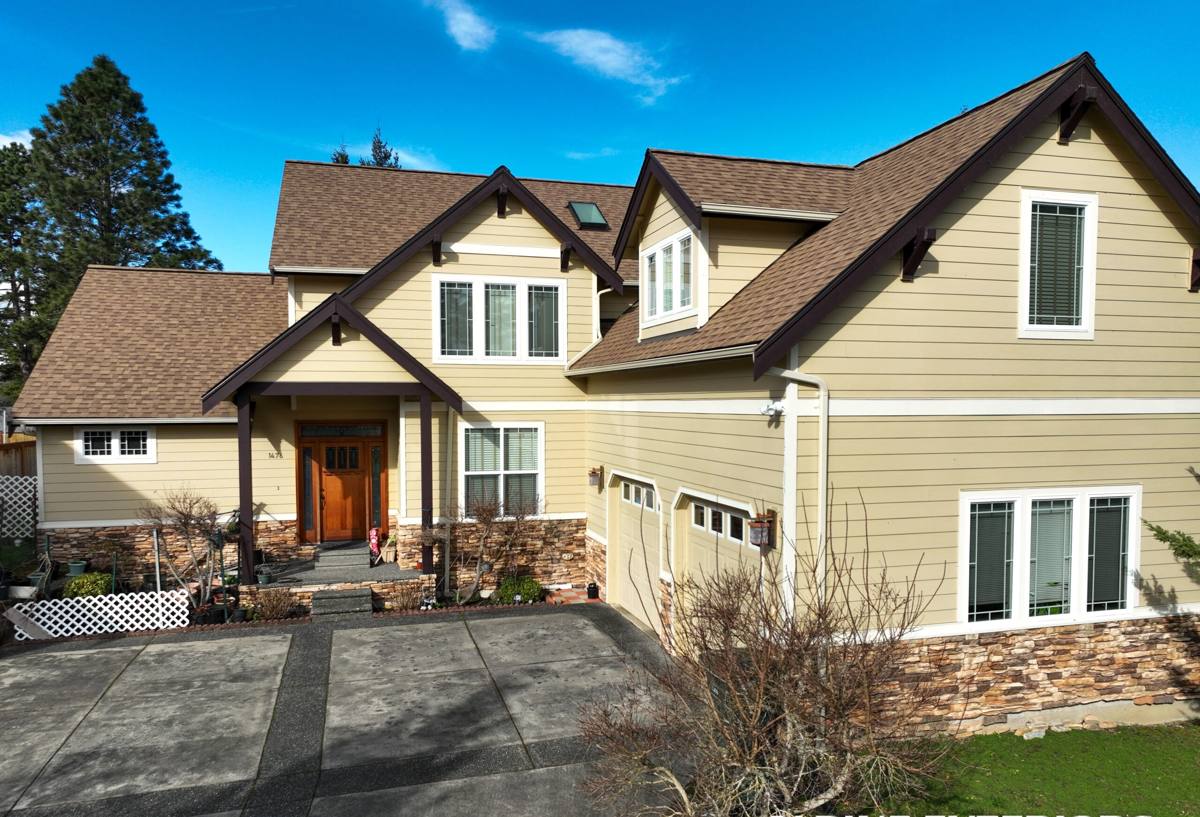
What Constant Moisture and Shade Actually Do to Siding
It's not one dramatic event that wears out siding in Deming — it's the slow, repeated cycle. Wood-based products swell when they take on moisture and shrink as they dry, and that back-and-forth movement eventually opens up seams, lifts paint, and telegraphs through to soffits and trim. Shaded north- and west-facing walls, common on lots tucked against tree lines, stay damp longer after every storm, which is exactly the environment moss and mildew need to take hold. Once moss establishes on a wall, it holds water against the surface around the clock, not just during rain — that's what turns a cosmetic problem into a moisture problem underneath the cladding.
This is why we don't treat siding as a cosmetic decision here. In Deming specifically, it's a moisture-management decision first and a look-of-the-house decision second.
Why We Install Only James Hardie Fiber Cement
We made a deliberate call years ago to install James Hardie exclusively and turn down jobs that call for vinyl, LP SmartSide, cedar, primed spruce, or other fiber cement brands. It's not that those products have no merit — vinyl is inexpensive and low-maintenance in mild climates, cedar has real natural appeal, and engineered wood siding has improved a lot. But every one of them asks something of the climate that Deming doesn't reliably give: vinyl distorts and gaps in temperature swings and doesn't stop moisture at seams as well as a rigid board; wood-based products need consistent drying time between wet spells to perform as designed, which this valley doesn't always provide; and other fiber cement brands vary in factory finish quality and regional engineering, which matters a lot in a climate this consistently wet.
James Hardie's fiber cement is non-combustible, doesn't swell and rot the way wood-based sidings can, and comes with a factory-applied ColorPlus finish that's baked on rather than field-painted — which matters when a wall stays damp for days at a stretch and paint adhesion becomes the weak point. We'd rather install one product correctly, every time, than juggle several and hope each one holds up.
Choosing the Right Hardie Line for a Nooksack Valley Home
James Hardie engineers its lap siding and panels by climate zone, and that distinction matters more in Deming than it would in a drier part of the county. The two relevant options are HZ5 and HZ10:
| Feature | HZ5 | HZ10 |
|---|---|---|
| Built for | Standard exposure, hot-and-cold swings | Damp, cold, high-moisture climates |
| Moisture resistance | Good | Enhanced for prolonged wet exposure |
| Typical use in Whatcom County | Open, sunnier lots with good airflow | Shaded, tree-lined, or valley-bottom lots |
| Where it fits Deming | Higher, more exposed sites with regular sun | Most river-valley and foothill-shaded homes |
Most homes in and around Deming's shaded, low-lying lots do best with HZ10, but we make that call site by site — a home on a sunnier rise a mile away might be perfectly served by HZ5. This is the kind of decision that gets skipped by crews who don't spend regular time in this specific micro-climate.
What a Correct Installation Actually Involves
James Hardie siding performs the way it's engineered to only when it goes on right. In a climate like Deming's, a few details matter more than they would elsewhere:
- Weather-resistive barrier and flashing first — every window, door, and penetration gets flashed and sealed before a single board goes up, so water is directed out, not trapped behind the cladding.
- Correct clearances — Hardie specifies a minimum gap between the bottom edge of siding and roof lines, decks, and grade. In a moss-prone, damp climate, skipping this is one of the fastest ways to trap moisture and invite rot in the framing behind it.
- Proper fastener placement and spacing — nailed too high, too low, or too far apart, and boards can work loose or crack over repeated wet-dry cycles.
- Correctly lapped and caulked joints — sloppy butt joints are one of the most common failure points we find on redos, and they're invisible until water starts finding its way in.
- Ventilation behind the cladding — a rainscreen gap where conditions call for it lets any moisture that does get past the surface actually dry out instead of sitting against the wall.
None of this is exotic. It's just easy to shortcut when a crew is moving fast, and the consequences don't show up until a few wet seasons later.
Mistakes We Commonly Find on Older or Poorly Installed Siding
When we're called out to a Deming home for an inspection or a tear-off, a handful of issues show up again and again: siding installed tight to the ground or a deck surface with no clearance, caulk used to cover gaps instead of proper flashing, missing or undersized J-channel around windows, and moss allowed to establish along lower courses for years without being addressed. Each of these is fixable when caught early, but left alone in this climate they compound — moss holds moisture, moisture reaches fasteners and sheathing, and what started as a cosmetic issue becomes a structural repair.
Our Process, Start to Finish
We keep the process straightforward and don't skip the parts that protect the house long after we've left:
- On-site assessment — we look at sun exposure, shading, drainage, and the current condition of the walls and trim, not just square footage.
- Product and color selection — HZ5 or HZ10 based on the specific site, plus ColorPlus color and profile choices that fit the home.
- Tear-off and prep — removal of old siding, inspection of sheathing for hidden rot or moisture damage, and repair of anything found before new material goes on.
- Weather barrier and flashing installation — done to spec around every opening and penetration.
- Hardie installation — correct clearances, fastener schedule, and joint treatment throughout.
- Final walkthrough — trim, caulking, and touch-up review with the homeowner before we call the job done.
Living With Hardie Siding in a Damp, Mossy Climate
James Hardie siding is low-maintenance compared to wood or vinyl, but "low-maintenance" doesn't mean "no maintenance" in a climate that grows moss on roofs and fences as readily as it does here. A little seasonal attention keeps it looking and performing the way it should:
- Rinse siding down at least once a year, more often on shaded or north-facing walls where moss and mildew take hold fastest.
- Keep gutters clear so overflow doesn't run down the face of the siding repeatedly.
- Trim back trees and shrubs that keep walls shaded and damp longer than necessary.
- Check caulking at trim and joints every couple of years and refresh it before gaps open up.
- Address any moss on lower courses promptly with a gentle wash rather than letting it spread.
What Influences the Cost of a Deming Siding Project
| Factor | Why It Matters Here |
|---|---|
| HZ5 vs. HZ10 product selection | HZ10 is priced slightly higher but is often the right call for shaded, damp lots |
| Condition of existing sheathing | Hidden moisture damage found during tear-off adds repair scope |
| Home size and wall complexity | More corners, gables, and trim detail add labor time |
| Access and site conditions | Tree cover, slope, and driveway access affect setup and staging |
| Trim and flashing scope | Full flashing correction on an older home costs more than a straightforward re-side |
We give straightforward, itemized numbers rather than a single flat estimate, so you can see exactly what's driving the cost on your specific home.
Why Hiring a Crew That Already Works This Area Matters
Deming isn't a generic job site. A crew that mainly works drier, more open parts of the county can install Hardie siding competently and still get the climate call wrong — the wrong HZ line, the wrong clearance assumptions, or a rainscreen detail skipped because it wasn't needed on their last job somewhere else. We work this specific stretch of Whatcom County regularly enough to know which lots hold moisture longer, which walls need the extra moss-resistant spec, and where past installations in this area have gone wrong. That local pattern recognition is worth more than a generic install crew's price quote.
If you're weighing a re-side or replacing failing siding on a Deming home, we're happy to walk the property, look at your specific sun and shade exposure, and put together a straightforward, no-pressure estimate — no obligation, just a clear look at what your home actually needs.