 Lynden Exterior
 Why Decks Age Faster in the Nooksack Area
Homes around Nooksack and Lynden deal with a specific combination of conditions that's harder on a deck than most homeowners realize. Marine-influenced air moving up the Nooksack River valley carries moisture and salt content most of the year, driving rain comes in sideways off the fields more often than straight down, and the shoulder seasons stretch long and damp enough that moss and algae get a real foothold on any horizontal surface that doesn't dry out quickly. A deck here isn't just outdoor furniture — it's a structure that's wet, or close to it, for a large chunk of the year.
That combination doesn't destroy a deck overnight. It works slowly, at the joints, the fastener heads, the ledger connection to the house, and anywhere water can sit instead of shed. By the time rot or soft spots are visible from the surface, the framing underneath has usually been compromised longer than the boards show. Whatcom County's climate rewards decks built with drainage and material choices in mind from the start, and it punishes decks that were built for a drier region's assumptions.
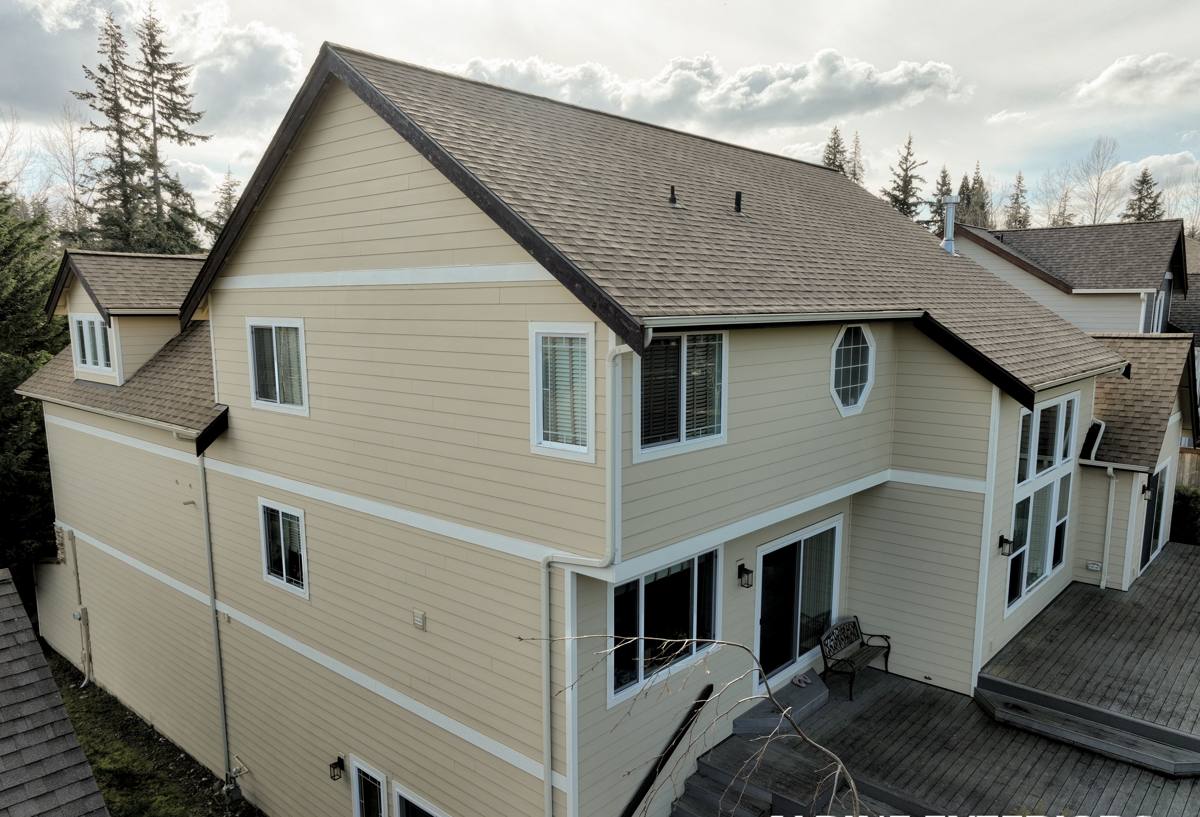
Repair, Restore, or Replace: How to Tell
Not every tired-looking deck needs to come out. But there's a point where patching boards or re-staining a surface is just delaying a bigger job and spending money that won't carry forward into the eventual replacement. The table below covers the factors we actually weigh when a Nooksack-area homeowner asks us to look at an aging deck.
| Condition | Usually Repairable | Usually Needs Replacement |
|---|---|---|
| Surface graying, minor moss on boards | Yes — clean, treat, refinish | No |
| A few soft or cracked deck boards | Yes — spot replacement | No, unless widespread |
| Soft or spongy feel near the ledger board | Sometimes, if caught early | Often — ledger rot affects the whole structure |
| Rust streaks or loose fasteners throughout | No | Yes — fastener failure is systemic, not isolated |
| Posts or footings showing movement or rot at grade | No | Yes — structural, safety issue |
| Deck is 20+ years old with mixed wear | Case by case | Usually more cost-effective long-term |
If the framing is sound and the issues are cosmetic or limited to a handful of boards, repair is the honest recommendation and we'll say so. Replacement makes sense when the problems are structural, spread across the deck, or when the cost of doing repairs right approaches what a proper rebuild would cost anyway.
What a Correct Deck Replacement Actually Involves
The Substructure Comes First
The part of a deck that fails first in this climate is almost never the visible decking — it's what's underneath. Footings, posts, beams, and the ledger connection to the house all need to be sized and spaced for the actual load and span, not just matched to whatever was there before. A replacement is the one time to correct undersized framing, inadequate footing depth, or a ledger that was never properly flashed against the house wall in the first place.
Drainage and Airflow Under the Deck
Given how much of the year this area spends wet, a deck that traps moisture underneath is a deck that rots from the bottom up. Correct grading away from the house, gaps that allow airflow between boards, and keeping vegetation and debris from building up under low decks all matter more here than in a drier climate. We build for drying, not just for keeping water out.
Fasteners and Flashing
Galvanized or coated fasteners that aren't rated for ground contact and moisture exposure will streak, corrode, and eventually loosen — and once fasteners start failing, the whole connection is compromised even if the wood around it still looks fine. Ledger flashing that directs water away from the house band board, rather than letting it wick in behind the siding, is one of the most important and most commonly skipped details on older decks in this region.
Choosing a Decking Material for This Climate
There's no single "best" decking material — there's a best fit for how much maintenance a homeowner wants to do and what they're willing to spend up front versus over time. Here's how the common options actually perform under Whatcom County's wet, moss-prone conditions.
| Material | Moisture / Moss Resistance | Maintenance | Typical Lifespan | Relative Upfront Cost |
|---|---|---|---|---|
| Pressure-treated wood | Fair — needs sealing to perform well | Annual cleaning and re-sealing recommended | 10–15 years with upkeep | Lowest |
| Cedar | Good natural resistance, but surface still needs care | Periodic cleaning and finish | 15–20 years with upkeep | Moderate |
| Composite decking | Very good — doesn't absorb moisture like wood | Occasional washing; moss can still grow on the surface film | 25–30 years | Higher |
| Capped composite / PVC | Best — fully sealed surface resists moss and staining | Low; rinse as needed | 25–30+ years | Highest |
Wood costs less up front but asks the most of the homeowner every year in cleaning and sealing to keep moss from taking hold — skip a year in this climate and it shows. Composite and capped composite cost more initially but hold up with far less seasonal maintenance, which for a lot of Nooksack-area homeowners ends up being the deciding factor once they've owned a wood deck through a few wet winters already.
Our Deck Replacement Process
- On-site assessment of the existing deck, ledger, and framing to confirm whether replacement is actually the right call.
- Straightforward written scope and pricing before any demolition — no surprise change orders on things we could have identified up front.
- Removal of the old deck, including proper disposal, with attention to what condition the ledger and house connection are in once it's exposed.
- Framing correction where needed — footings, posts, beams, and ledger flashing brought up to a standard that accounts for this region's moisture exposure.
- Installation of the chosen decking material with fastening and spacing appropriate to that product and to local wet-dry cycling.
- Final walkthrough so you understand what was done, what maintenance (if any) the material needs, and what to watch for going forward.
Permits and Building Requirements
Deck replacement work in and around Lynden and Whatcom County generally falls under local building permit requirements once you're dealing with structural framing, footings, or a deck attached to the house — the specifics depend on size, height, and scope, and the local building department is the authority on what applies to a given project. We handle that coordination as part of the job rather than leaving it for the homeowner to sort out, and we build to code rather than to "what the last deck looked like."
Why a Crew That Already Works in Nooksack Matters
A deck built or repaired by someone unfamiliar with this specific stretch of Whatcom County is a deck built on assumptions from somewhere drier. We're not guessing at how much moisture exposure a ledger connection needs to handle here, or whether a given decking product actually resists moss the way it's marketed to — we see the results on homes in this area year after year, through the same driving rain and the same long damp stretch between fall and spring that your deck sits through. That familiarity shows up in the details: footing depth, flashing choices, board spacing for drainage, and knowing which materials are worth the extra cost here and which aren't.
It also means a shorter distance for warranty follow-ups, inspections, or questions once the project is done — you're not waiting on a crew that has to drive in from somewhere unfamiliar with local conditions to even diagnose a problem.
Deck Maintenance Checklist for This Climate
Whatever material you choose, a few habits go a long way toward getting the full lifespan out of a deck in this area:
- Sweep debris and leaves off the deck surface regularly, especially in fall — trapped organic matter is what feeds moss and mildew.
- Keep gutters and downspouts near the deck clear so runoff isn't draining directly onto or under it.
- Check the ledger board area at the house connection once a year for staining, softness, or gaps in flashing.
- For wood decking, plan on cleaning and re-sealing on the schedule the product actually requires — skipping years is what shortens lifespan the most.
- Trim back vegetation that's shading the deck or blocking airflow underneath.
- Address loose or rust-streaked fasteners promptly rather than waiting for a board to fail.
If your deck is showing its age or you're just not sure whether it needs repair or full replacement, we're happy to take a look and give you an honest assessment — no pressure, no obligation. Use the form below to request a free estimate for your Nooksack-area property.