 Lynden Exterior
 Building Decks for Custer's Particular Climate
Custer sits close enough to the water and open farmland north of Lynden that decks here take a different kind of beating than decks built forty miles inland. Salt-laden air moves in off the Strait and Bellingham Bay on a regular basis, driving rain comes in sideways more often than straight down, and the wet season stretches long enough that moss doesn't just grow on roofs — it grows on deck boards, railings, and anywhere else moisture sits without a chance to dry out. A deck that's built to a generic spec sheet, without accounting for any of that, tends to show its age fast: cupped boards, rusted fasteners, slick green film on the walking surface, and rot starting at the spots nobody thinks to check until it's already a problem.
None of that is exotic knowledge. It's just what happens when a structure sits outside, exposed, in Whatcom County's climate for years at a time. The fix isn't complicated either — it's about choosing the right materials, detailing the framing correctly, and building in drainage and airflow from the start. That's the difference between a deck that needs real attention every few years and one that just needs a rinse and an occasional check-up.
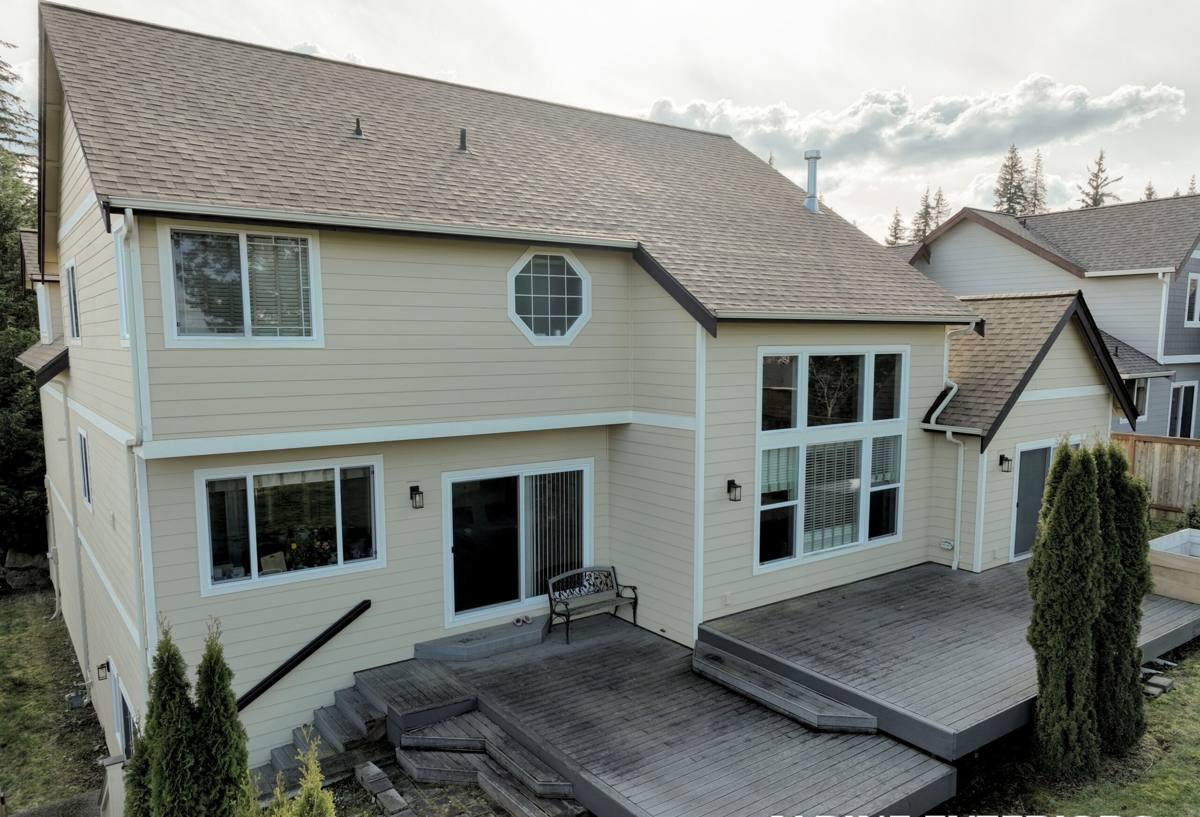
What Salt Air Actually Does to a Deck
Salt in the air doesn't have to come from a direct ocean view to matter. Airborne salt travels with the wind and settles on any exposed metal, where it accelerates corrosion far faster than it would happen inland. On a deck, that means:
- Fasteners and structural hardware corrode faster if they're not rated for coastal or treated-lumber exposure
- Uncoated steel brackets, joist hangers, and screws can start showing rust streaks within a season or two in the wrong spec
- Aluminum and vinyl railing components generally hold up better than untreated steel, but connection points still need attention
- Any place where two materials meet — flashing to ledger, hanger to joist — is where corrosion starts first
Our standard is to spec hot-dip galvanized or stainless fasteners and connectors rated for use with modern treated lumber (which is more corrosive to standard fasteners than older treatment chemicals were), not because a lesser fastener will fail immediately, but because the cost difference is small and the alternative is hardware that starts failing while the rest of the deck still has decades of life left in it.
Driving Rain and Where Decks Actually Fail
Most deck problems in this region don't start on the open, sun-exposed deck surface — they start at the connections. The ledger board where the deck attaches to the house, the space under railing posts, the gaps between deck boards where debris collects: these are the spots where rain that comes in at an angle gets trapped rather than running off.
The Ledger Connection
A deck ledger that isn't properly flashed is one of the most common failure points we see, and it's almost invisible until the rot is well underway, because it's hidden behind the rim joist and siding. Correct flashing directs water away from the house structure instead of letting it wick behind the ledger board, and it's not optional — it's the difference between a deck that lasts and one that quietly damages the house it's attached to.
Board Spacing and Drainage
Decking boards need consistent gaps to let water drain through rather than pool on the surface or wick into end grain. Too tight, and the boards trap moisture and debris — a recipe for both rot and moss growth. Too loose, and you get an uneven, less comfortable walking surface. Getting this dialed in correctly at installation avoids a maintenance headache for the life of the deck.
Comparing Decking Materials for This Climate
There's no single "best" decking material — the right choice depends on budget, maintenance appetite, and how the deck will be used. Here's how the common options actually perform under Whatcom County conditions:
| Material | Moisture & Moss Resistance | Maintenance | Typical Lifespan |
|---|---|---|---|
| Pressure-treated wood | Good if sealed regularly; moss and mildew will colonize an unsealed surface | Annual cleaning, re-sealing every 1–2 years | 15–20 years with upkeep |
| Cedar | Naturally resists rot and insects but still needs sealing against moss and graying | Regular cleaning and periodic sealing | 15–20 years with upkeep |
| Composite decking | Strong moisture resistance; some early-generation composites held moss in surface texture | Periodic washing, no sealing or staining needed | 25–30+ years, manufacturer-warrantied |
| PVC/capped polymer | Best moisture and moss resistance of the common options; fully sealed surface | Occasional washing only | 25–30+ years, manufacturer-warrantied |
For a lot of Custer homeowners, composite or capped polymer decking ends up being the practical choice specifically because of the moss and rain factor — less time spent scrubbing green film off boards every spring, and no re-staining schedule to keep up with. That said, real wood still has a place, especially where the homeowner wants a specific look or is working with a tighter budget, as long as they go in understanding the maintenance commitment.
What's Underground Matters As Much As What's On Top
A deck is only as good as its framing and footings, and this is where corners get cut on decks that fail early. Footings need to be sized and set to local frost depth and soil conditions, not guessed at. Joists need correct spacing for the decking material chosen — composite and PVC boards often require tighter joist spacing than solid wood to avoid flexing over time. Ground-contact areas — posts set in or near soil — need ground-contact-rated treated lumber or approved post bases that keep wood from sitting directly against wet ground.
We also pay attention to airflow underneath the deck. A low deck with poor ventilation underneath traps moisture against the framing from below, which is a slower but just as real contributor to rot as rain hitting the surface from above.
Moss: The Slow, Steady Problem
Moss on a deck isn't just a cosmetic issue — a mossy surface holds moisture against the wood or composite cap far longer than a clean, dry surface would, and it makes stairs and walking surfaces genuinely slippery, which is a real safety concern on stairs and ramps. Whatcom County's long wet season gives moss plenty of time to establish, especially on decks with heavy shade, poor drainage, or gaps too tight to let boards dry between rains.
Design choices that reduce moss pressure over the life of the deck include proper board spacing, avoiding overly dense railing or skirting that blocks airflow, and choosing a decking material and finish that doesn't give moss spores an easy surface to grip. No deck in this climate will be entirely moss-proof, but the difference between a deck that needs a yearly wash and one that needs a pressure washer and a scrub brush twice a season usually comes down to decisions made during design and construction.
How We Approach a Deck Build
Every deck project follows roughly the same sequence, adjusted for the specific site and design:
- Site assessment — grade, drainage, sun/shade exposure, and how the deck will tie into the house
- Design and material selection — sized to the space and budget, with material recommendations based on how the deck will actually be used and maintained
- Permitting — pulling the required permit through Whatcom County or the applicable local jurisdiction before any work begins
- Footings and framing — set to code-required depth, with correct hardware and flashing at every connection
- Decking and railing installation — including proper board spacing and secure, code-compliant guardrails on any elevated deck
- Final walkthrough and inspection — confirming the work passes required inspections and walking the homeowner through care and maintenance expectations
We don't skip the permit step even on smaller projects. An unpermitted deck can create real problems at resale and with insurance, and permitted work gets a second set of eyes on the footings and framing before they're covered up — which matters more in a climate that punishes shortcuts.
Permits and Code Basics for Custer Decks
Deck construction in and around Custer falls under Whatcom County building code (or the relevant local jurisdiction, depending on exact location), and most decks above a certain height off grade require a permit, proper guardrails, and code-compliant stair and railing dimensions. Setback requirements from property lines can also apply depending on the lot. We handle the permit application and inspection scheduling as part of the build so homeowners don't have to navigate that process themselves — but it's worth knowing going in that a deck build is a permitted project, not a weekend add-on, in most cases.
Why a Crew That Already Works Custer Is Worth Something
Custer isn't a huge market, but it has its own conditions — proximity to open water and farmland, wind exposure, and soil that isn't identical to what you'd find closer to town. A crew that's already built and repaired decks in this specific area has a working sense of which details actually matter here versus which ones are boilerplate from a manual written for a different climate. That shows up in small decisions: which hardware grade to spec without being asked, where to add extra flashing, how tight to run the board gaps. It also means faster response if something needs a look after the first year or two — a local crew doesn't have to travel far to stand behind its own work.
Questions Worth Asking Before You Hire
Whoever you choose to build your deck, these are reasonable things to ask before signing anything:
- Are you licensed and insured to do deck construction in Whatcom County?
- Will you pull the required building permit, and is that included in the quote?
- What fastener and hardware grade do you use, and is it rated for treated lumber and coastal exposure?
- How is the ledger board flashed where the deck meets the house?
- What's the expected maintenance schedule for the decking material you're recommending?
- Can you walk me through how the footings will be sized for this specific site?
A contractor who answers these clearly and specifically, without vague reassurances, is generally one who's actually thought through the build rather than treating it as a generic job.
Get a Free, No-Pressure Estimate
If you're weighing a new deck or replacing one that's showing its age, we're happy to come take a look, talk through material options for your specific site, and put together a straightforward estimate — no pressure, no obligation. Use the form below to get started.