 Lynden Exterior
 Why Decks in Custer Wear Out Faster Than Homeowners Expect
Custer sits close enough to the water and open farmland that decks here take a beating most inland homes never see. The combination of salt-laden air drifting in off the Strait, long stretches of driving rain through fall and winter, and a moss season that can run from October well into April creates conditions that attack wood and hardware from multiple directions at once. A deck that might last two decades in a drier climate can start showing real structural problems in half that time out here if it wasn't built or maintained correctly.
Salt air accelerates corrosion on fasteners, joist hangers, and any exposed metal connectors. Once those components start to rust and weaken, the deck's structural integrity is compromised even if the decking boards on top still look fine. Meanwhile, near-constant moisture from Whatcom County's rain keeps wood fibers saturated for days at a time, which is exactly the condition that promotes rot in framing lumber, especially where boards meet at ledgers, stair stringers, and post bases.
Moss and algae add a third problem. They hold moisture against the deck surface long after a storm has passed, and on walking surfaces they create a genuine slip hazard. Left untreated, moss growth between boards traps organic debris that breaks down and feeds further rot. None of this means a deck in Custer is doomed — it means the build has to account for these conditions from the start, not treat them as an afterthought.
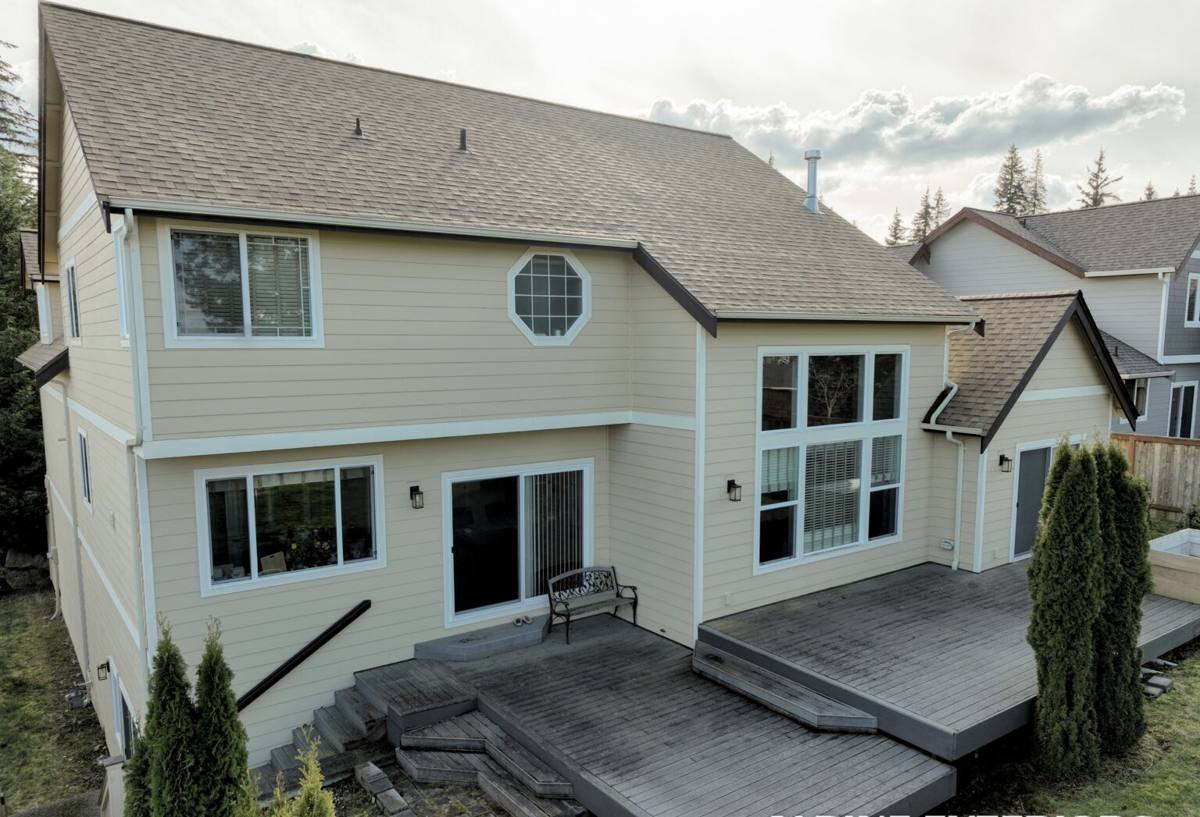
How to Tell a Deck Needs Replacement, Not Just Repair
Not every aging deck needs to come out completely. But there's a point where patching individual boards stops being a real fix and starts being a way to delay an inevitable full rebuild. Knowing which side of that line your deck is on saves money in the long run.
Signs pointing toward repair
- A handful of individual boards are cupped, splintering, or soft, but the framing underneath is solid
- Railings are loose but posts and framing show no rot
- Surface graying or moss growth with no soft spots when probed with a screwdriver
Signs pointing toward full replacement
- The ledger board where the deck attaches to the house is soft, discolored, or pulling away
- Joists or beams flex noticeably underfoot or show rot when probed
- Post bases are rotted, rusted, or no longer making solid contact with footings
- Multiple structural connections show corroded or failing hardware
- The deck was built without permits or proper flashing and has been failing repeatedly
If the framing is compromised, resurfacing on top of it just hides the problem and puts a new investment on top of an unsafe structure. A correct replacement starts at the framing, not the boards you can see.
What a Correct Deck Replacement Actually Involves
A deck is only as good as what's underneath it. In a climate like ours, the parts you don't see matter more than the decking material on top.
Ledger attachment and flashing
Where the deck connects to the house is the single most common failure point in this region. It has to be properly flashed to keep water from wicking behind the siding and into the house framing, and bolted with lag screws or through-bolts rated for the load, not just nailed. Given how much rain Custer sees, this connection deserves more attention than it usually gets in a quick patch job.
Footings and posts
Footings need to be sized and set below frost depth per code, with posts anchored using post bases that keep the wood off the concrete so water doesn't wick up into the post end grain. This detail alone prevents a huge share of the post rot we see on older decks in the area.
Framing and hardware
Joists, beams, and hangers should all be rated for exterior, coastal-adjacent use. Given the salt air here, we favor hot-dip galvanized or stainless connectors and fasteners over standard coated hardware, since the coating on lower-grade hardware breaks down faster in salt-influenced air.
Decking surface and drainage
Boards need consistent gapping for drainage and airflow underneath, and the substructure should be designed so water sheds away from the house rather than pooling near the foundation. Poor drainage under a deck is a quiet contributor to moss growth and mildew on the surface above.
Choosing a Decking Material for Custer's Climate
There's no single right answer for every homeowner — budget, maintenance tolerance, and how the deck will be used all factor in. What matters is picking with eyes open about how each material behaves under our specific conditions.
| Material | How it handles our climate | Maintenance |
|---|---|---|
| Pressure-treated lumber | Affordable and strong when detailed well, but needs consistent sealing to resist moss and moisture staining | Annual cleaning, re-sealing every 1-2 years |
| Cedar | Naturally rot-resistant and handles moisture well, but softer surface can show wear near the coast | Cleaning and oiling every 1-2 years |
| Composite decking | Resists moisture absorption and moss gets less foothold on the surface, though algae can still grow if not cleaned | Periodic washing, no sealing needed |
| PVC decking | Fully moisture-resistant surface, performs well in wet, salt-influenced air | Occasional washing |
Whatever surface material a homeowner chooses, we treat it as separate from the framing decision. The framing has to be built to last regardless of what decking goes on top, since replacing worn boards is a far smaller job than rebuilding a structure that was never properly protected underneath.
Our Deck Replacement Process
1. On-site assessment
We inspect the existing deck's framing, ledger connection, post bases, and footings before recommending anything. This tells us honestly whether a full tear-out is warranted or if a targeted rebuild of specific sections makes sense.
2. Design and material selection
We walk through decking, railing, and hardware options with the homeowner, including realistic maintenance expectations for each, so the choice fits the household's budget and how much upkeep they actually want to do.
3. Permitting
Deck replacements in Whatcom County typically require a building permit, particularly for structural work involving footings, framing, or attachment to the house. We handle that process as part of the job rather than leaving homeowners to navigate it alone.
4. Demolition and disposal
The old structure comes out cleanly, with attention to protecting the surrounding landscaping and hauling debris off-site.
5. Framing and structural work
New footings, posts, ledger flashing, and joists go in to current code, using hardware suited to our coastal-adjacent air.
6. Decking, railing, and finish work
Surface material and railings are installed with proper gapping and fastening, and the site is cleaned up before we walk the finished deck with the homeowner.
Permits and Code Considerations in Whatcom County
Homeowners in Custer sometimes assume a deck rebuild is exempt from permitting, especially if the old deck was there without one. In most cases, replacing a deck involves the same structural requirements as new construction — proper footing depth, guardrail height and spacing, stair geometry, and ledger attachment all get reviewed. Skipping this step doesn't just risk a fine; it means there's no third-party check confirming the structure is actually safe to stand on. We build to code and coordinate inspections as part of the job, so the finished deck is documented and won't cause problems at resale.
Keeping a New Deck in Good Shape Through Whatcom County Winters
Even a correctly built deck needs some seasonal attention in this climate. A little maintenance goes a long way toward avoiding an early repeat replacement.
- Sweep leaves and debris off the surface regularly through fall, before they trap moisture against the boards
- Clean moss and algae off the surface at least once a year, ideally before the wet season sets in
- Check that gaps between boards stay clear so water can drain rather than pool
- Inspect railings and stair connections annually for looseness
- Reseal wood decking on the schedule appropriate to the species, don't wait for visible graying
- Confirm gutters and downspouts near the deck are directing water away, not onto the structure
Why It Matters to Hire a Crew That Already Works in Custer
A deck built to a generic spec sheet doesn't account for what actually happens to lumber and hardware a few miles from the water in Whatcom County. Crews who work this area regularly know which hardware grades hold up, how deep footings need to go for our soil and frost conditions, and where moisture tends to collect on a typical Custer lot. That local pattern recognition is the difference between a deck that needs attention again in five years and one that holds up for decades.
There's also the practical side: a local crew is easier to reach for a warranty question, a follow-up inspection, or advice on maintenance timing, without the runaround of dealing with a company based hours away.
Get a Straightforward Deck Replacement Estimate
If your deck in Custer is showing soft spots, loose railings, or persistent moss you can't keep ahead of, it's worth getting an honest look before deciding between repair and replacement. Request a free, no-pressure estimate using the form below and we'll walk the deck with you and lay out what we find.