 Lynden Exterior
 Blaine's Climate Puts Windows to the Test
Blaine sits right on the water at the northern edge of Whatcom County, and that location matters more than most homeowners realize when it comes to windows. Salt-laden air off the bay works its way into hardware, frame seams, and exterior fasteners year-round. Add in driving rain that comes sideways during winter storms, and a moss season that stretches for months in our wet, shaded corners of the county, and you have a climate that finds every weakness in a window installation within a few years, not a few decades.
This isn't a page about windows in general. It's about what it takes to install windows correctly on a home in Blaine, where the combination of coastal exposure and Pacific Northwest moisture is more aggressive than what you'd deal with a few miles inland. A window that's installed to a "good enough" standard elsewhere can fail early here — not because the window itself is bad, but because the installation didn't account for what this specific location throws at it.
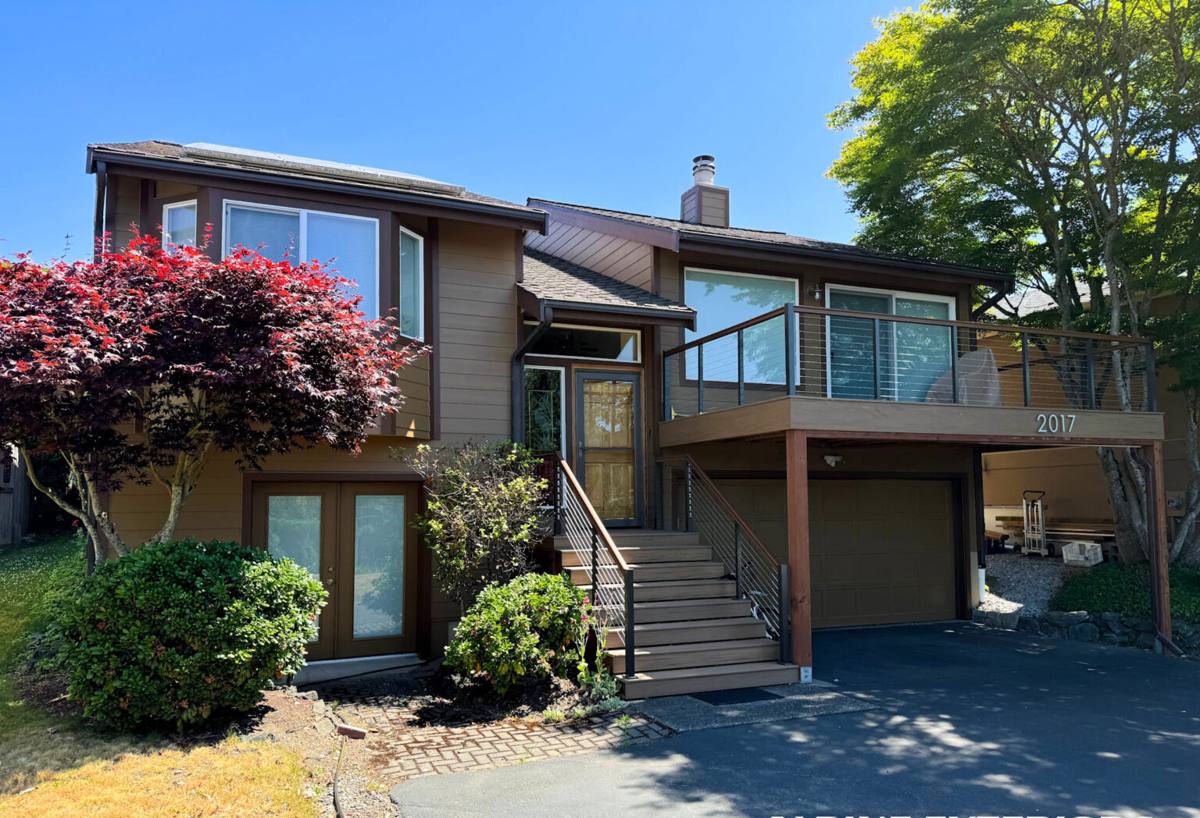
What Salt Air, Rain, and Moss Actually Do to Windows
Salt Air
Airborne salt is corrosive to exposed metal — hinges, cranks, screws, and lesser-grade flashing all take a hit over time. It also accelerates the breakdown of some sealants and finishes faster than manufacturers' general climate ratings assume. Homes closer to the water see this first, but it affects the whole area to some degree.
Driving Rain
Wind-driven rain doesn't fall straight down — it gets pushed sideways and upward into gaps that would stay dry in calmer weather. This is why flashing detail and sealant placement matter more here than the window brand itself. A perfect window with a mediocre installation will still leak in a Blaine winter storm.
Extended Moss Season
Moss and algae thrive in the shaded, damp conditions common around Whatcom County homes, especially on north-facing walls and under eaves. Around windows, moss growth on adjacent siding or trim holds moisture against the wall longer, which puts extra stress on the seal between the window and the building envelope.
What Correct Window Installation Involves Here
A window installation is really a small waterproofing project with a window in the middle of it. In Blaine, we treat it that way. The details that matter most:
- Proper flashing sequence — sill pan flashing first, then side flashing, then head flashing, layered so water is always directed outward and down, never trapped behind the window.
- Weather-resistant barrier integration — the window's flashing has to tie into the home's existing house wrap or building paper correctly, with no gaps or reverse-lapped seams that let water behind the siding.
- Sealant selection and placement — using sealants rated for exterior, coastal exposure, and applying them at the joints that actually need them (not everywhere, which can trap moisture instead of releasing it).
- Corrosion-resistant fasteners and hardware — standard fasteners can start corroding within a few years this close to the water; we use hardware suited to salt-air exposure.
- Insulation without over-packing — the gap around the window frame needs to be insulated and air-sealed, but not stuffed so tight that it distorts the frame or blocks drainage paths.
Skip or rush any one of these steps and the window can still look fine from the curb for a year or two while moisture works its way into the framing behind it — which is a far more expensive problem to fix later than the installation would have cost to do right the first time.
Signs a Blaine Home Needs New Windows
Some of these show up gradually, which is why homeowners often live with a failing window for a while before addressing it:
- Fogging or moisture between panes (a sign the seal has failed on a double- or triple-pane unit)
- Drafts you can feel near the frame on windy days
- Soft or discolored trim or sill wood, especially on walls facing prevailing weather
- Windows that are difficult to open, close, or lock — often from frame swelling or warping
- Visible corrosion on hardware, cranks, or hinges
- Moss or persistent green staining on siding directly around or below a window
- A noticeable rise in heating costs without other explanation
Any one of these on its own isn't necessarily urgent. Several at once, especially on a wall that takes the brunt of our weather, usually means it's time for a real assessment.
Choosing Window Materials for a Coastal, High-Moisture Climate
There's no single "best" window material for every home — it depends on exposure, budget, and how much upkeep you're willing to do. Here's how the common options hold up specifically in Blaine's conditions:
| Frame Material | Coastal/Moisture Performance | Maintenance | Typical Trade-Off |
|---|---|---|---|
| Vinyl | Good — won't rot or corrode; seams are the main watch point | Low | Fewer color/finish options; can flex in temperature extremes |
| Fiberglass | Very good — dimensionally stable, resists moisture and salt exposure well | Low to moderate | Higher upfront cost than vinyl |
| Aluminum | Fair — durable but prone to corrosion near salt air unless properly coated | Moderate | Poor insulator unless thermally broken |
| Wood / Wood-clad | Weakest in this climate unless meticulously maintained | High | Best natural appearance, but the highest moisture-management burden |
We're straightforward with homeowners about wood: it can look great, but it demands consistent upkeep — repainting, resealing, and vigilance about any point where the cladding is breached — to hold up against Blaine's rain and salt exposure. For most homes here, we steer clients toward vinyl or fiberglass for primary living areas exposed to weather, and reserve wood or wood-look options for more sheltered elevations where the maintenance burden is lower.
Our Window Installation Process
- On-site assessment — we look at the specific window, wall assembly, and exposure, not just take a phone-based measurement.
- Product and material recommendation — based on that wall's exposure to wind, rain, and salt air, not a one-size-fits-all pitch.
- Removal and inspection of the opening — we check the sheathing and framing behind the old window for hidden rot or moisture damage before installing anything new.
- Flashing and weather barrier work — done in the correct sequence so water is shed outward, every time, regardless of which window brand is going in.
- Installation, leveling, and fastening — with corrosion-resistant hardware appropriate for coastal exposure.
- Sealing and insulation — interior and exterior, placed where it does the most good.
- Final check — operation, seal, and appearance, inside and out.
If we find deteriorated sheathing or framing during removal — which does happen on older Blaine homes that have taken on water over the years — we'll stop and talk with you about it before proceeding, rather than installing a new window over a compromised wall.
What Affects the Cost of Window Installation in Blaine
Costs vary by home, so we won't quote invented numbers here — but these are the real factors that move the price up or down:
| Factor | Why It Matters |
|---|---|
| Window material and glass package | Fiberglass and multi-pane, coastal-rated glass cost more than basic vinyl and standard double-pane units |
| Number and size of openings | More or larger windows means more labor, flashing, and material |
| Condition of the existing opening | Hidden rot or water damage found during removal adds repair work before the new window goes in |
| Wall exposure | Walls facing prevailing wind and rain often warrant upgraded flashing and sealant details |
| New construction vs. retrofit | Retrofitting into existing siding takes more care and time than installing into open framing |
The most reliable way to get an accurate number is an on-site look — we'll walk you through what we see and why it affects the price before any work starts.
Why It Matters to Hire a Crew That Already Works in Blaine
Window installation isn't identical everywhere in Whatcom County. A crew that mostly works drier, more sheltered inland areas can still do competent work, but they may not default to the flashing details, sealant choices, and hardware that Blaine's salt air and driving rain call for — because they don't run into those conditions as often. We work throughout the Lynden and Whatcom County area, and jobs on the coast get treated differently from jobs inland, because the weather they'll face is genuinely different.
Local experience also means we recognize what a well-maintained Blaine home versus a struggling one tends to look like, which helps us catch problems — like early moss intrusion or a slowly failing seal — before they become structural issues.
Keeping New Windows Performing After Installation
A correct installation buys you years of trouble-free performance, but a little upkeep extends that considerably in this climate:
- Rinse salt residue off frames and glass periodically, especially after storms
- Keep gutters and downspouts clear so water isn't sheeting down over window heads
- Remove moss and organic buildup from nearby siding and trim promptly rather than letting it hold moisture against the wall
- Check exterior caulking annually and have any cracked or missing sealant addressed before the rainy season
- Operate hardware (locks, cranks, sliders) periodically so it doesn't seize from corrosion or disuse
If you're weighing whether it's time to replace aging windows, or you're planning a new opening as part of a larger project, we're happy to take a look and give you a straight, no-pressure assessment. Fill out the form below for a free estimate — there's no obligation, and you'll get a clear picture of what your home actually needs before you decide anything.