 Lynden Exterior
 Storm Damage Roof Repair for Blaine Homes
Blaine sits right on the water at the top of Whatcom County, and that location shapes what a roof out here has to deal with. Homes near Semiahmoo Bay and Drayton Harbor take a different kind of beating than roofs even a few miles inland: salt-laden air off the water, wind-driven rain that comes in sideways during winter storms, and a moss season that runs longer than most homeowners expect. When a storm rolls through and knocks loose shingles, lifts flashing, or drives water under a roof edge, the repair needs to account for all of that — not just patch the visible damage and move on.
This page covers what storm damage roof repair actually involves for a Blaine property, what we look for during an inspection, and how we approach the work so the repair holds up through the next storm season instead of becoming a repeat call.
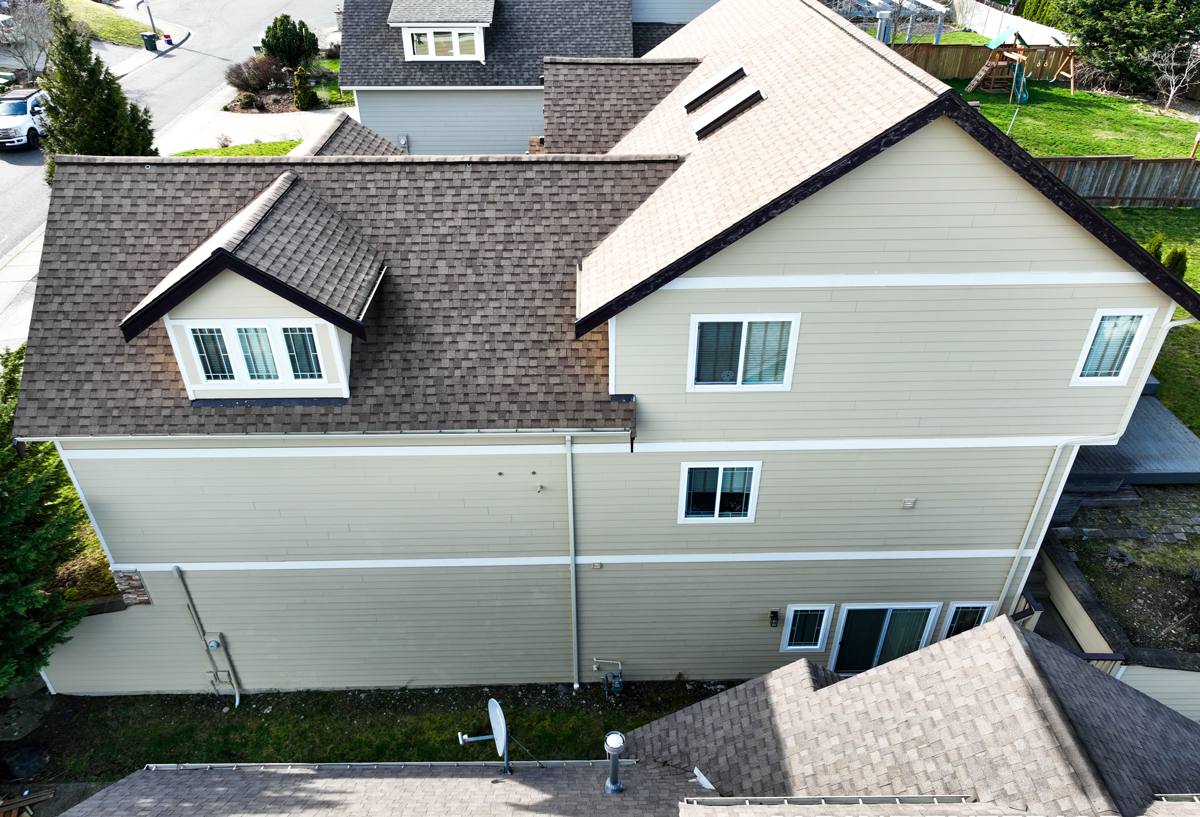
Why Blaine's Climate Is Hard on Roofs
Salt Air and Corrosion
Proximity to the bay means airborne salt settles on roofing metal — flashing, fasteners, gutters, and vent caps — faster than it would on a roof further from the water. Salt exposure accelerates corrosion on unprotected or lower-grade metal, which is one reason we pay close attention to flashing condition on every Blaine repair, even when the shingles themselves look fine.
Wind-Driven Rain
Storms coming off the Strait of Georgia and Boundary Bay often bring rain that hits roofs at an angle rather than falling straight down. That matters because wind-driven rain can find its way under shingle tabs, around chimney flashing, and into any gap that a straight-down rain would never reach. A repair that only addresses the surface damage and ignores how water moves during a wind event tends to leak again in the next storm.
Moss and Moisture
Whatcom County's wet season runs long, and Blaine's marine exposure keeps roofs damp for extended stretches. That combination is ideal for moss growth, which holds moisture against roofing material, lifts shingle edges over time, and can hide storm damage from view until it's already caused a leak. Any storm repair on an older roof should include a look at moss buildup, because moss-related lifting can mimic or mask wind damage.
What Counts as Storm Damage
Not all storm damage is obvious from the ground. Some of it shows up as a missing shingle after a windstorm; some of it is a slow leak that only becomes visible weeks later. Common storm damage we see on Blaine roofs includes:
- Shingles torn loose, cracked, or blown off entirely by high wind
- Lifted or bent flashing around chimneys, vents, skylights, and roof-to-wall transitions
- Granule loss from shingles pelted by heavy, wind-driven rain
- Damaged or clogged gutters and downspouts that can no longer move storm water away from the roofline
- Soft spots or staining on interior ceilings that trace back to a roof breach
- Debris impact damage from branches or limbs during wind events
- Fastener or nail pops where wind flex has worked shingles loose over time
Some of this is repairable in isolation. Some of it is a sign of a bigger problem underneath — which is why the inspection step matters as much as the repair itself.
How We Inspect and Diagnose Storm Damage
We start every storm damage call with a full roof inspection, not just a look at the spot the homeowner noticed. Wind and rain rarely damage a roof in just one place, and a repair that only addresses the obvious problem can leave a second, less visible issue to cause a leak later. Our inspection covers:
- A visual survey of the entire roof surface, not just the reported problem area
- Close inspection of all flashing points — chimneys, vents, skylights, and roof-to-wall transitions — since these are where wind-driven rain most often gets in
- A check of the underlayment and decking wherever shingles have lifted or gone missing, to confirm whether water has already reached the wood
- Gutter and downspout function, since storm damage to drainage compounds roof problems by holding water against the roof edge
- Interior attic or ceiling checks where staining or a reported leak suggests water has already made it inside
We document what we find with photos and a written summary of the damage, which is useful both for your own records and if you're working with an insurance carrier on the claim.
What a Correct Repair Involves
A correct storm damage repair does more than replace what's missing. It addresses why the damage happened and makes sure the repaired section performs at least as well as the surrounding roof. That generally means:
- Matching replacement shingles as closely as possible in type, weight, and color to the existing roof
- Replacing damaged flashing with new material rather than re-bending or re-sealing compromised pieces — especially important given how salt air accelerates metal fatigue here
- Checking and, where needed, replacing underlayment beneath the repaired area so the repair has a proper water barrier, not just a new shingle layer
- Re-securing fasteners to current wind-resistance standards rather than just reusing the original nailing pattern
- Confirming the repaired section ties into the existing roof's drainage path correctly, so water doesn't pool or redirect into a new problem spot
Skipping any of these steps might make a repair look finished, but it doesn't make the roof storm-ready again. A patch that's cosmetically fine but structurally incomplete is the most common reason we get called back to the same roof after the next storm.
Repair vs. Replace: What Factors In
Not every storm-damaged roof needs a full replacement, and not every roof can be reasonably patched. The right call depends on the roof's age, the extent of the damage, and what condition the rest of the roof is in. Here's how we generally weigh it:
| Factor | Leans toward repair | Leans toward replacement |
|---|---|---|
| Roof age | Under 10-12 years, or well-maintained | Nearing or past expected lifespan |
| Extent of damage | Isolated to one section or a few spots | Widespread across multiple roof planes |
| Underlying decking | Dry, sound wood beneath damaged area | Soft, rotted, or water-stained decking |
| Moss and wear history | Minor, surface-level moss presence | Long-term moss damage affecting shingle integrity broadly |
| Flashing condition | Localized corrosion or damage | Widespread flashing failure from salt exposure |
We'll walk you through where your roof falls on this before recommending either option — a repair should never be pitched as a replacement just because it's the bigger job, and a roof that genuinely needs replacement shouldn't be patched repeatedly just to defer the cost.
Our Storm Damage Repair Process
When you call us after a storm, here's what the process looks like from start to finish:
- Initial contact and scheduling — we get basic details about what you're seeing and get a visit scheduled, prioritizing active leaks
- Full roof inspection — covering the whole roof, not just the reported damage, with photo documentation
- Written assessment — a clear explanation of what's damaged, what's causing it, and what repair (or replacement) makes sense
- Estimate — a straightforward cost breakdown before any work begins, no surprise add-ons
- Repair work — completed with matched materials and proper flashing and underlayment work, not just surface patching
- Final walkthrough — we confirm the repair with you and make sure any drainage or flashing changes are visible and explained
If you're filing an insurance claim for storm damage, our documentation from the inspection step is written to support that process — clear photos and a plain description of cause and extent, not vague language that leaves your adjuster guessing.
Why a Local Blaine Crew Matters
Storm damage repair isn't a one-size-fits-all job, and a crew that regularly works Blaine and the surrounding Whatcom County coastline knows the specific failure points that come with this location — where salt air tends to eat through flashing first, which roof orientations catch the worst of the wind-driven rain, and how moss behaves on roofs this close to the water. That local pattern recognition speeds up diagnosis and helps avoid repairs that look right on paper but miss the actual cause of the leak.
It also means faster response when storms hit. A crew that's already working in the area isn't starting from scratch to figure out logistics, material sourcing, or scheduling around the next weather system — which matters when a storm-damaged roof is actively letting water in.
Preventing Repeat Storm Damage
A good repair addresses the immediate problem, but a few ongoing habits reduce how much storm damage your roof takes in the first place:
- Keep gutters and downspouts clear so storm water has somewhere to go
- Trim back branches that overhang the roof and could drop debris during high wind
- Address moss buildup before it lifts shingles rather than after
- Have flashing checked periodically, especially on older roofs, given how salt air accelerates wear here
- Get a post-storm inspection after any significant wind event, even if nothing looks obviously wrong from the ground
Roofs in Blaine work harder than roofs in drier, inland parts of the county, and staying ahead of small issues is a lot cheaper than repairing water damage after it's spread into the decking or interior of the home.
If a recent storm has left you with missing shingles, a leak, or damage you're not sure how serious it is, we're happy to take a look. Use the form below to request a free, no-pressure estimate, and we'll give you a straight answer on what's needed and what it'll take to fix it right.